

SoCal business disputes cost companies thousands in legal fees and operational disruption every year. Contract breaches, partnership conflicts, and intellectual property theft are reshaping how Orange County businesses protect themselves.
We at Raul Garcia Law Firm see these conflicts firsthand. This guide walks you through the most common disputes affecting local companies and how to prevent them.
What Causes Contract Disputes in Orange County Businesses
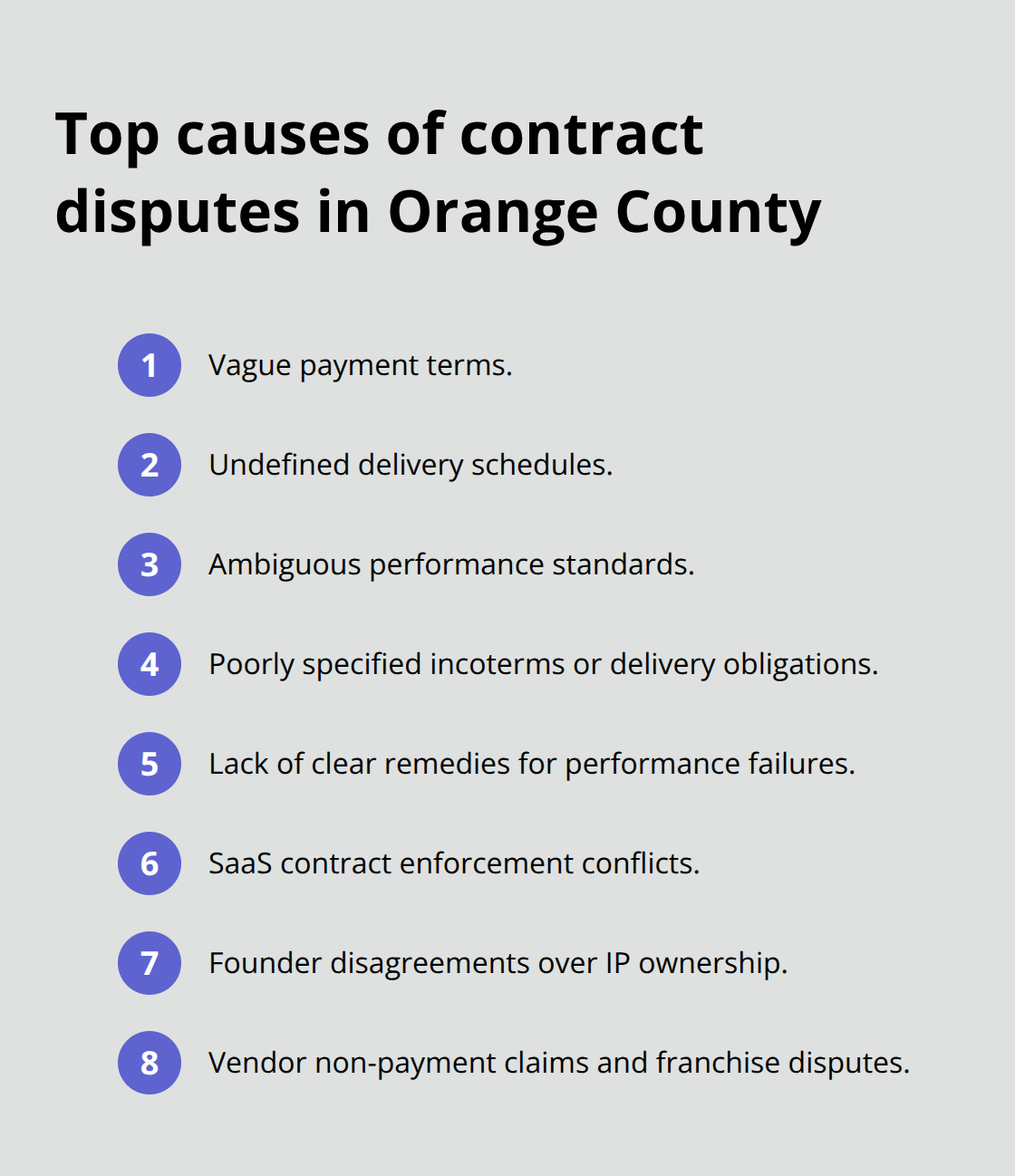
Contract disputes dominate Orange County’s commercial litigation landscape, and most stem from vague payment terms, undefined delivery schedules, or ambiguous performance standards. Irvine’s tech and medical-device corridor frequently sees SaaS contract enforcement conflicts, founder disagreements over IP ownership, and partnership buyout disputes where valuation language leaves room for costly interpretation battles. Costa Mesa’s retail and hospitality sectors face vendor non-payment claims and franchise disputes when contracts lack clear remedies for performance failures. Huntington Beach’s industrial operations commonly encounter vendor agreement breaches where incoterms or delivery obligations are poorly specified.
The pattern is consistent: when contract language leaves room for competing interpretations, litigation becomes expensive. A vendor non-payment dispute might cost $50,000 to resolve through negotiation, but the same dispute in court-with discovery, depositions, and motions-can easily exceed $200,000 to $400,000 in legal fees. California’s broad discovery rules mean both sides exchange extensive electronic records, emails, and communications, multiplying costs and timelines. The Federal Judicial Center reports that business contract cases average 26 months from filing to trial, though many settle within 12 to 18 months if early negotiation or mediation occurs.
Misaligned Terms Drive Unnecessary Litigation in Orange County
Misaligned contract terms-where parties interpret clauses differently-are the single largest preventable source of disputes. A contract that says payment is due upon invoice versus upon delivery creates immediate conflict when cash flow expectations differ. Similarly, contracts that fail to specify which party bears risk for delayed shipments, force majeure events, or regulatory changes invite disputes when circumstances shift. Orange County businesses often inherit poorly drafted contracts from startup phases or previous counsel and fail to update them as operations scale. The solution is proactive contract review before disputes arise. Draft clear definitions for key terms: define what “delivery” means, specify payment deadlines tied to invoices or milestones, clarify who bears liability for product defects, and explicitly address dispute-resolution mechanisms like mediation or arbitration. Arbitration clauses can streamline proceedings with faster timelines and lower costs compared to court litigation, though they limit appeal rights. A contract with a clear arbitration clause and defined remedies reduces dispute resolution time from 24 months to 12 months on average.
Documentation Practices Strengthen Your Position in Orange County Disputes
Documentation practices also matter significantly. Maintain organized records of amendments, email confirmations, and payment tracking. When disputes arise, strong documentation strengthens your negotiating position and reduces legal fees because attorneys spend less time reconstructing what happened. Orange County businesses that track contract modifications and payment histories avoid costly discovery battles later. Store contracts, amendments, and related communications in a centralized system so you can quickly produce evidence if a dispute escalates. This approach (combined with clear contract language) positions you to negotiate from strength rather than scramble to prove your case after conflict erupts.
Early Legal Review Prevents Costly Disputes in Orange County
Early legal advice helps preserve evidence, identify preservation obligations, and position your business for a better outcome when disputes arise. An Orange County business litigator can review your existing contracts, flag ambiguous language, and recommend revisions before problems develop. This preventive approach costs far less than defending a $200,000 litigation battle. Partnership agreements, vendor contracts, and service agreements all benefit from legal review that identifies risk areas and clarifies obligations. The cost of a contract review-typically a few thousand dollars-pales against the expense of discovery, depositions, and settlement negotiations that follow a poorly drafted agreement. When disputes do emerge, early legal counsel helps you understand your rights, evaluate settlement options, and determine whether negotiation, mediation, arbitration, or litigation makes sense for your situation. Partnership conflicts and shareholder disagreements often escalate quickly, making early intervention critical to preserving business relationships and protecting your financial stake.
Partnership Disputes in Orange County
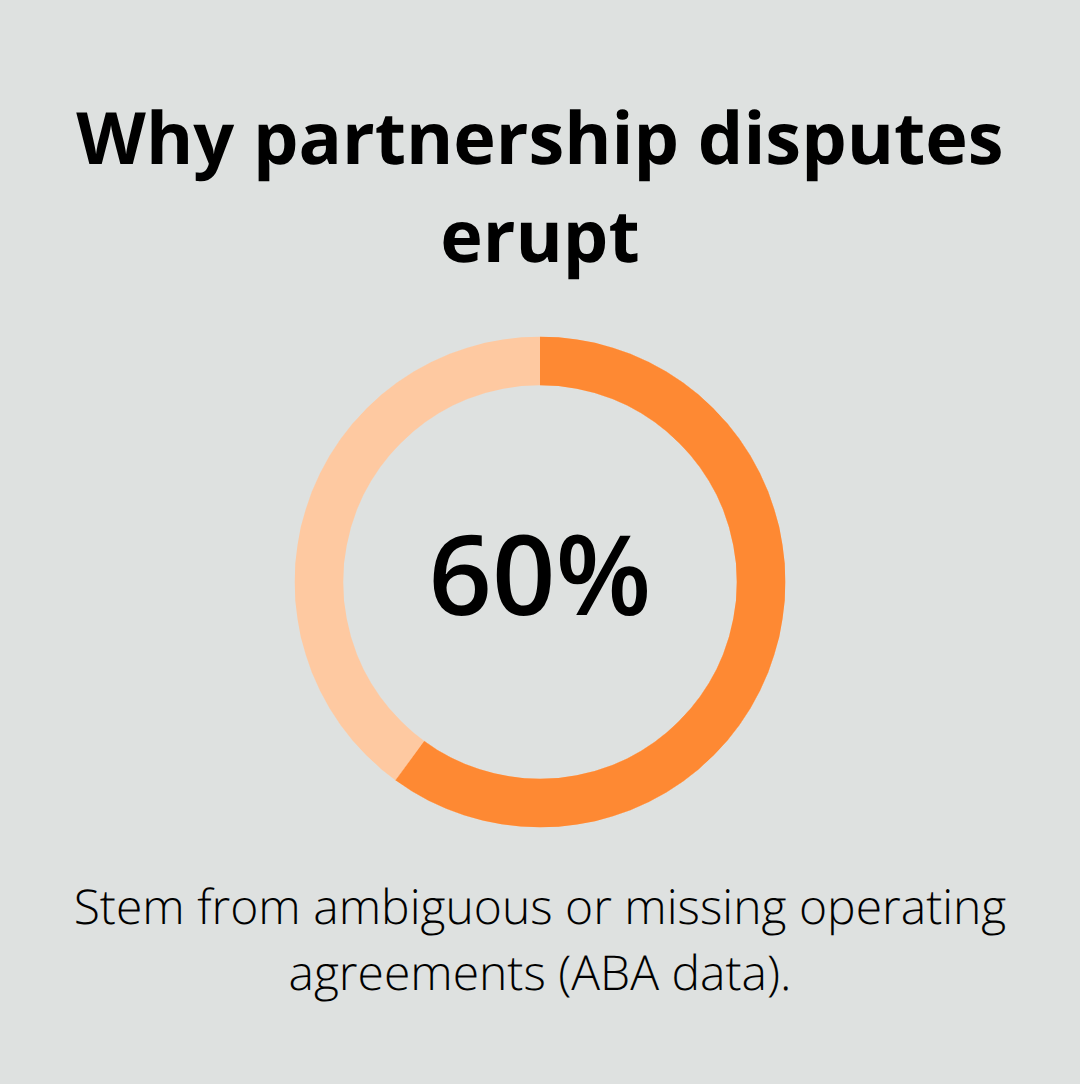
Partnership and shareholder conflicts in Orange County often explode because founders or co-owners fail to clarify capital contributions, profit splits, or decision-making authority upfront. South County’s family-owned businesses frequently face succession battles and intra-family ownership disputes where one partner wants to exit but the operating agreement lacks buyout provisions or valuation formulas. Irvine’s tech corridor sees founder breakups where one co-founder claims they contributed more intellectual property while another claims they funded operations-and the partnership agreement says nothing about IP ownership or contribution weighting. When capital contributions are vague (one partner invested $100,000 in cash, another invested equipment valued at $100,000, but no written agreement documents this), disputes over profit distribution become inevitable. The real problem: most partnerships operate without written agreements or with outdated agreements drafted on the cheap. A partner who contributed 40 percent of capital but receives 25 percent of profits will eventually demand a restructuring, triggering costly conflict. The American Bar Association data shows that 60 percent of partnership disputes stem from ambiguous or missing operating agreements.
If a partnership generates $500,000 in annual profit and a profit-split disagreement forces litigation, legal fees easily consume $150,000 to $300,000 before the dispute settles.
Valuation Disagreements Turn Buyouts Into Litigation in Orange County
Buyout disputes and valuation disagreements represent the most expensive partnership conflicts. One partner wants to exit, triggering a buyout, but the partners disagree on company valuation. Is the business worth three times revenue or five times EBITDA? If the business generates $1 million in annual revenue, the difference between a $3 million and $5 million valuation means a $2 million gap in buyout price. Without a predetermined valuation method in the operating agreement, the exiting partner argues for a high valuation (to maximize their payout) while remaining partners argue for a low valuation (to minimize their cost). These disputes become protracted because valuation requires expert appraisals, financial analysis, and competing interpretations of market conditions.
Management Control Conflicts Escalate Without Clear Decision-Making Authority in Orange County
Management control and decision-making conflicts compound this problem significantly. One partner wants to invest profits into expansion while another wants to distribute cash to owners. One partner makes a major business decision without consulting the other, violating implied fiduciary duties. These conflicts escalate because partners often lack clear voting structures, tie-breaking mechanisms, or dispute-resolution clauses. One partner cannot unilaterally make major decisions if the operating agreement defines management roles clearly. A shotgun clause or Russian roulette provision forces a fair resolution if partners deadlock on buyout terms.
Operating Agreements Prevent Partnership Disputes in Orange County
The solution is straightforward: draft an operating agreement that specifies capital contribution percentages, profit-split formulas, buyout triggers, valuation methodology, voting rights, and dispute-resolution mechanisms before conflict erupts. Include language that addresses what happens if a partner dies, becomes disabled, or wants to exit. These provisions cost a few thousand dollars to draft properly and prevent disputes that cost hundreds of thousands to litigate. An operating agreement with clear buyout formulas, defined valuation methods tied to EBITDA or revenue multiples, and arbitration clauses resolves disagreements faster than court litigation. When partnership conflicts do emerge, the stakes shift quickly to intellectual property ownership and trade secret protection-areas where competitive advantage and confidential information become central to the dispute.
Intellectual Property and Trade Secret Disputes in Orange County
Trade secret theft represents the most underestimated threat to Orange County businesses, and the damage compounds quickly once confidential information walks out the door. Irvine’s tech and medical-device companies lose proprietary software code, customer lists, and manufacturing processes to departing employees who join competitors or launch startups. Costa Mesa retailers see former managers take vendor relationships and pricing strategies to rival shops. Huntington Beach industrial firms watch departing operations leads share production techniques with competitors across the harbor. The problem intensifies because most Orange County businesses lack formal trade secret protection protocols. A trade secret loses legal protection the moment it becomes publicly known or fails reasonable secrecy measures. California courts define trade secrets broadly-customer lists, pricing formulas, supplier relationships, manufacturing processes, software algorithms, and business strategies all qualify-but only if the company took reasonable steps to keep them confidential. The Uniform Trade Secrets Act, adopted across California, lets you recover damages and attorney fees if someone misappropriates your trade secrets, but you must prove you implemented reasonable security measures. A business that stores customer lists on an unlocked shared drive, allows employees to email proprietary documents to personal accounts, or fails to require confidentiality agreements cannot claim trade secret status in court. Courts in Orange County consistently rule that sloppy information-handling practices waive trade secret protection entirely. When a former employee joins a competitor and uses your customer list or production methods, you lose leverage to recover damages if you never documented security procedures.
Confidentiality Agreements Replace Non-Competes in Orange County
Non-compete agreements face strict scrutiny in California, making poorly drafted agreements worthless in court. California Business and Professions Code Section 16600 voids most non-compete clauses that restrict employees from working in their field after employment ends. Courts permit narrow exceptions: agreements tied to the sale of a business, dissolution of a partnership, or protection of trade secrets can survive if they are reasonable in scope, duration, and geography. An Orange County tech company cannot prohibit a departing software engineer from working for any competing firm statewide for two years-courts will strike that provision as overbroad. However, a confidentiality agreement that protects source code, customer data, and proprietary algorithms remains enforceable because it protects legitimate trade secrets rather than restricting employment itself. The distinction matters enormously. Instead of relying on non-competes, draft robust confidentiality and invention-assignment agreements that clearly identify what information qualifies as confidential, require employees to return all proprietary materials upon departure, and assign all work-product intellectual property to the company. Include provisions requiring employees to acknowledge they understand confidentiality obligations and specify remedies if they breach. These agreements withstand judicial scrutiny in Orange County courts because they protect legitimate business interests without outright employment restrictions. A confidentiality agreement costs $1,500 to $3,000 to draft properly, prevents costly litigation, and gives you legal standing to pursue damages if an employee misuses your information.
Access Controls and Documentation Protect Trade Secrets in Orange County
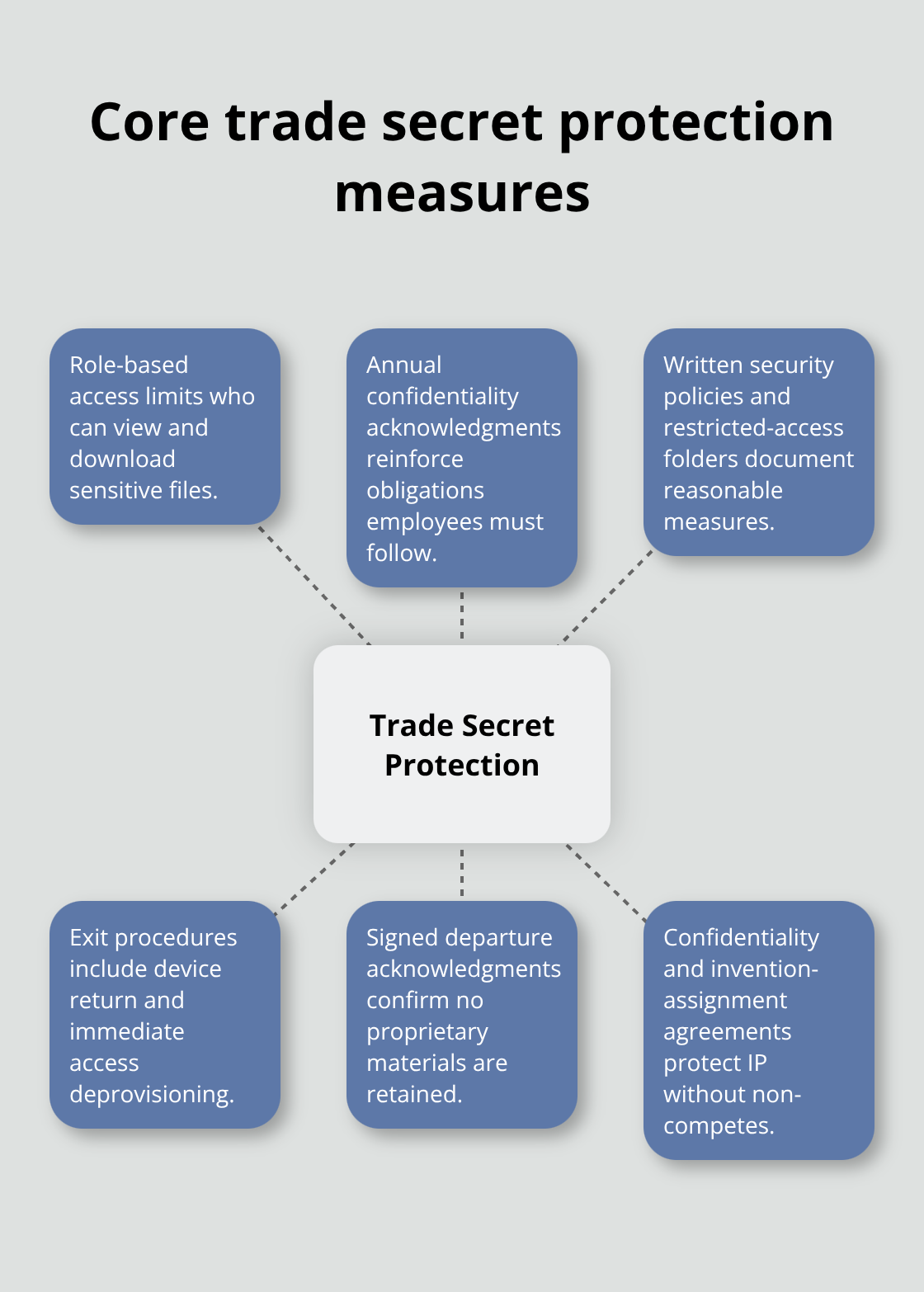
Information access controls separate businesses that survive trade secret theft from those that collapse. Limit access to sensitive information to employees who need it for their specific role. If a junior accountant does not need access to your customer list, they should not have it. Implement role-based access controls in your systems so departing employees cannot download files after termination. Require confidentiality acknowledgments at hire and again annually so employees cannot claim ignorance about what qualifies as confidential. Document your security measures in writing-describe your password policies, restricted-access folders, confidentiality training, and exit procedures. This documentation becomes critical evidence if you later pursue a trade secret misappropriation claim. When employees depart, conduct exit interviews, retrieve all company devices and documents, and disable system access immediately. Require departing employees to sign acknowledgments confirming they returned all proprietary materials and understand ongoing confidentiality obligations.
These procedures sound administrative, but they transform your ability to recover damages in court. Without documented security measures, Orange County judges dismiss trade secret claims because you failed to take reasonable precautions. A business that implements these controls, combined with clear confidentiality agreements drafted by counsel familiar with California law, can pursue legal action against former employees who misuse trade secrets and recover damages for competitive harm.
Final Thoughts
Orange County businesses operate in three overlapping risk zones that demand immediate action. Contract disputes cost $200,000 to $400,000 in legal fees when they reach litigation, partnership conflicts consume $150,000 to $300,000 in dispute resolution, and trade secret theft leaves you unable to recover damages without documented security procedures. SoCal business disputes accelerate when you wait to address problems, transforming a $5,000 contract review into a $250,000 litigation battle.
Start now by auditing your existing contracts for ambiguous language around payment, delivery, and liability. Draft or update operating agreements that specify profit splits, buyout formulas, and decision-making authority, and implement confidentiality agreements for all employees with role-based access controls that limit who views sensitive information. These preventive steps cost thousands upfront but prevent disputes that consume hundreds of thousands to resolve.
When disputes emerge, early legal counsel helps you understand your rights and evaluate whether negotiation, mediation, arbitration, or litigation serves your interests. SoCal business disputes often settle faster through mediation or arbitration than court litigation, saving months and substantial legal fees. Contact us at Raul Garcia Law Firm to discuss your situation and explore how strategic representation protects your financial interests and minimizes operational disruption.