
Landlord lease disputes in California create costly headaches for property owners who lack clear legal strategies. Rent disagreements, maintenance conflicts, and eviction complications drain time and money when left unmanaged.
We at Raul Garcia Law Firm help Orange County property owners navigate these disputes with practical solutions. This guide covers the remedies available to you and the risk mitigation steps that prevent problems before they start.
What Triggers Landlord-Tenant Disputes in Orange County
Rent Payment Issues and Late Fee Violations
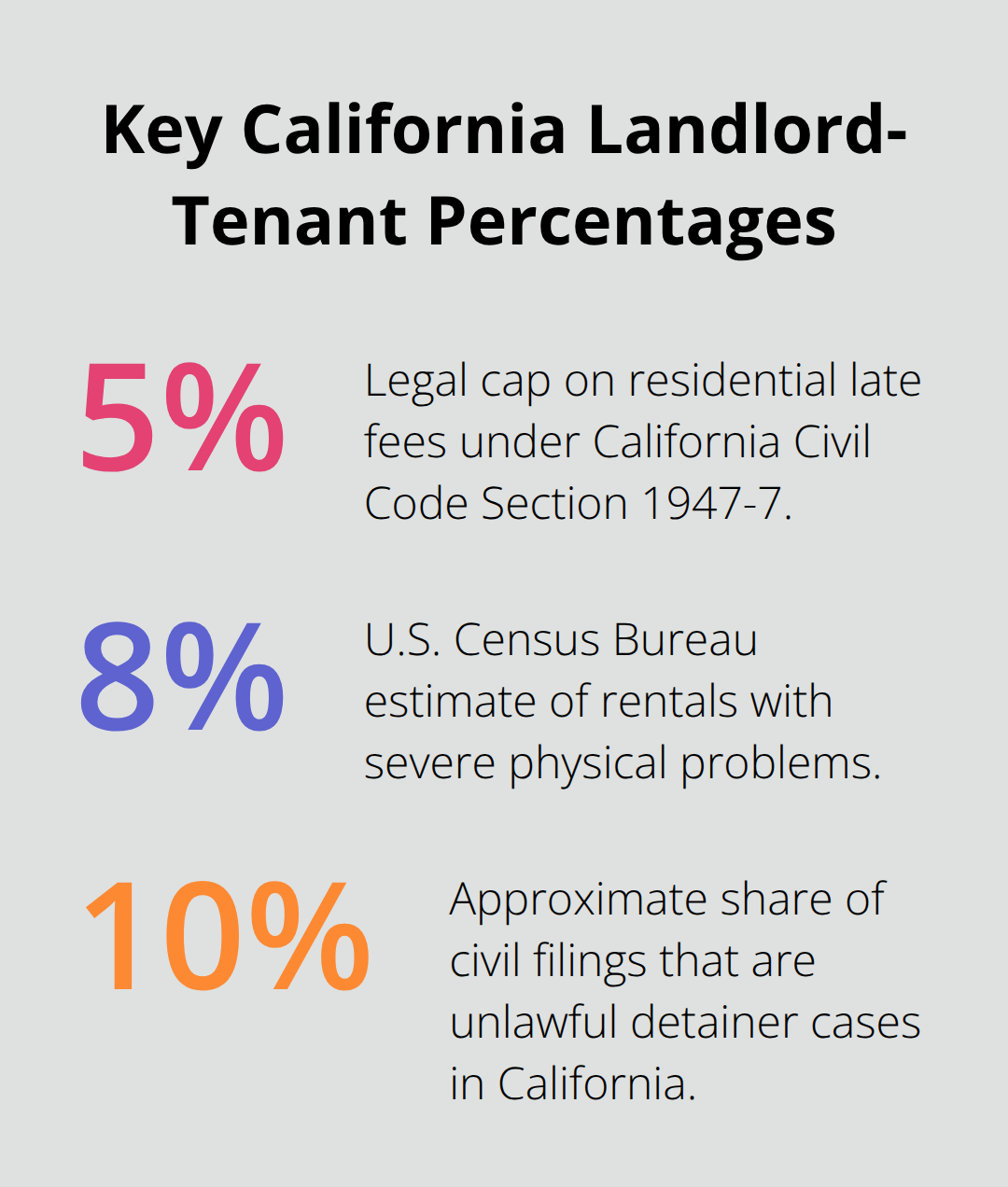
Rent payment issues represent the most frequent source of conflict between landlords and tenants in Orange County. Late payments happen for various reasons-financial hardship, miscommunication about due dates, or tenants deliberately withholding rent as leverage. California law permits landlords to charge late fees, but the amount matters legally. Under California Civil Code Section 1947-7, late fees cannot exceed 5% of the monthly rent or 5% of the portion of rent owed, whichever is greater, if rent is paid weekly or more frequently. Many property owners incorrectly impose excessive fees, which courts reject and can expose you to liability. State your exact late fee structure in writing before issues arise-not after a tenant misses a payment.
Property Maintenance and Habitability Violations
Property maintenance disputes create the second major category of conflict. Tenants have the right to habitable housing under California law, meaning functional plumbing, heating, weatherproofing, and structural integrity. When landlords delay repairs or ignore maintenance requests, tenants can legally withhold rent, repair-and-deduct the cost themselves, or terminate the lease. According to the U.S. Census Bureau, roughly 8% of rental properties have severe physical problems, and California courts take habitability violations seriously. Document all maintenance requests in writing through email or a property management platform, then complete repairs promptly.
Tenants cannot claim uninhabitable conditions if you have records proving you responded within reasonable timeframes (typically 24 to 48 hours for urgent issues).
Lease Termination and Eviction Procedure Failures
Lease termination and eviction conflicts round out the third major dispute category. Many landlords attempt evictions without following California’s strict procedural requirements, which leads to dismissed cases and wasted legal fees. An unlawful detainer action-the formal eviction process in California-requires proper notice periods that vary by reason: 3 days for non-payment of rent, 30 days for month-to-month tenants without cause, or 60 days in some situations. Serving the wrong notice or failing to wait the full period gives tenants grounds to contest the eviction in court. Property owners who move forward without legal guidance frequently lose cases they should have won, making professional review of your eviction strategy essential before filing.
How Orange County Property Owners Can Enforce Their Rights After a Dispute Arises
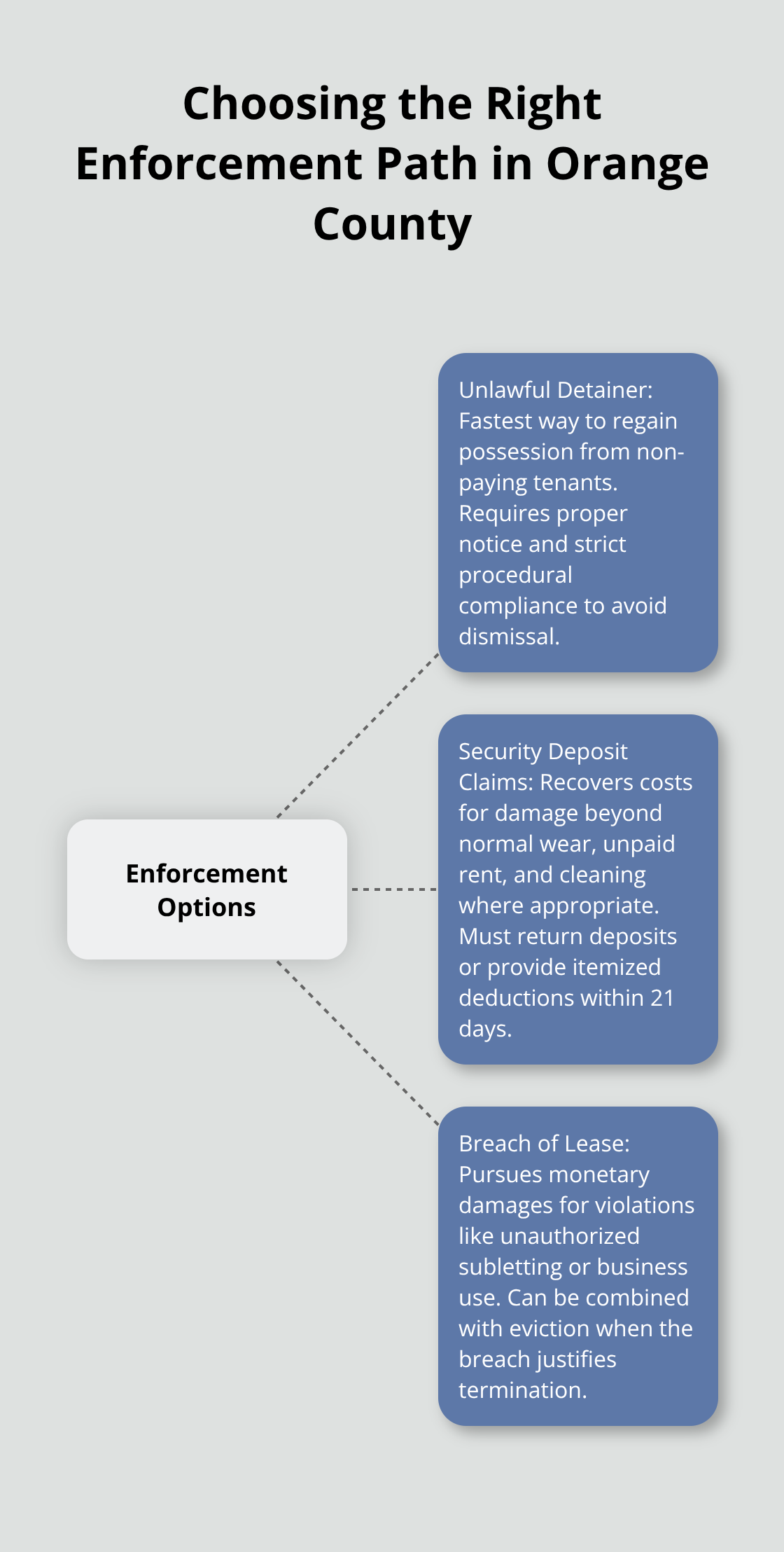
When rent stops flowing or a tenant damages your property, knowing which legal remedy applies saves thousands in wasted attorney fees and court costs. California law provides property owners with three primary enforcement mechanisms, each designed for different dispute scenarios. The unlawful detainer action remains the fastest path to remove a non-paying tenant, typically resolving within 30 to 60 days if executed correctly. Security deposit claims and breach of lease remedies address property damage and financial losses that occur before or after a tenant vacates.
Understanding which remedy matches your situation before filing anything prevents delays and dismissals that result from choosing the wrong legal path.
Unlawful Detainer Actions Remove Non-Paying Tenants Fastest
An unlawful detainer action is California’s formal eviction process, and speed matters because every month a non-paying tenant remains costs you approximately one month of lost rental income. The process begins with serving proper notice-three days for non-payment of rent, 30 days for month-to-month terminations without cause, or 60 days for lease terminations in specific circumstances. After the notice period expires, you file the unlawful detainer complaint in Orange County Superior Court, and if the tenant does not respond, judgment typically enters within two to four weeks. The California Courts reported that unlawful detainer cases constitute roughly 10% of all civil filings statewide, meaning courts process these cases efficiently when paperwork is correct.
Mistakes in this process prove costly and common. Serving notice on the wrong person, calculating the notice period incorrectly, or failing to follow California Code of Civil Procedure Section 1166 requirements gives tenants grounds to dismiss your case. Property owners who attempt self-representation in eviction matters frequently lose cases they should have won because they misunderstand notice requirements or fail to properly document service.
Security Deposit Claims Recover Legitimate Property Damage Costs
Security deposit disputes represent a secondary but important remedy when tenants leave property damaged beyond normal wear and tear. California law caps security deposits at two months’ rent for unfurnished units and three months’ rent for furnished units, and landlords must return deposits within 21 days of move-out or provide an itemized statement explaining deductions. The California Department of Consumer Affairs reports that security deposit disputes generate thousands of complaints annually, with many landlords losing cases because they deduct improper items or fail to document damage with photographs and repair estimates.
Legitimate deductions include unpaid rent, damage beyond normal wear, and cleaning costs if the unit was left substantially dirtier than when the tenant moved in-but you cannot deduct for pre-existing damage or normal carpet wear. Photograph the property condition before move-in and again after move-out, obtain written repair estimates from contractors, and itemize every deduction with specificity. Tenants can sue for up to twice the wrongfully withheld deposit amount in small claims court or civil court, making documentation your strongest defense.
Breach of Lease Claims Address Ongoing Financial Losses
When a tenant breaches lease terms beyond non-payment of rent (such as subletting without permission, operating a business from residential space, or causing property damage), you can pursue a breach of lease remedy for damages. This remedy differs from eviction because you can recover monetary damages without removing the tenant, or combine it with an eviction if the breach justifies termination. Calculating damages requires documentation of the financial impact: lost rental income if the breach reduces property value, repair costs for damage, or costs to enforce lease restrictions.
Orange County courts expect specific damage calculations rather than general estimates, so maintain records of all lease violations, communication attempts to cure the breach, and receipts for resulting expenses. Send a written cure notice before filing suit, giving the tenant a reasonable opportunity to correct the violation-this demonstrates good faith and strengthens your legal position if the case proceeds to trial. The remedy you select determines your timeline and financial recovery, making the distinction between these three paths essential before you take action.
How Orange County Property Owners Stop Disputes Before They Start
Preventing disputes costs far less than litigating them, yet most property owners neglect the foundational steps that eliminate 70% of landlord-tenant conflicts before they escalate. A poorly written lease agreement creates ambiguity that tenants exploit, maintenance lapses trigger habitability claims, and missing documentation makes it impossible to prove your position in court. Property owners lose winnable cases because they failed to prepare properly during the lease signing and early occupancy phases. The three practices below form the backbone of effective risk mitigation for Orange County property owners.
Write Lease Language That Prevents Misinterpretation in Orange County
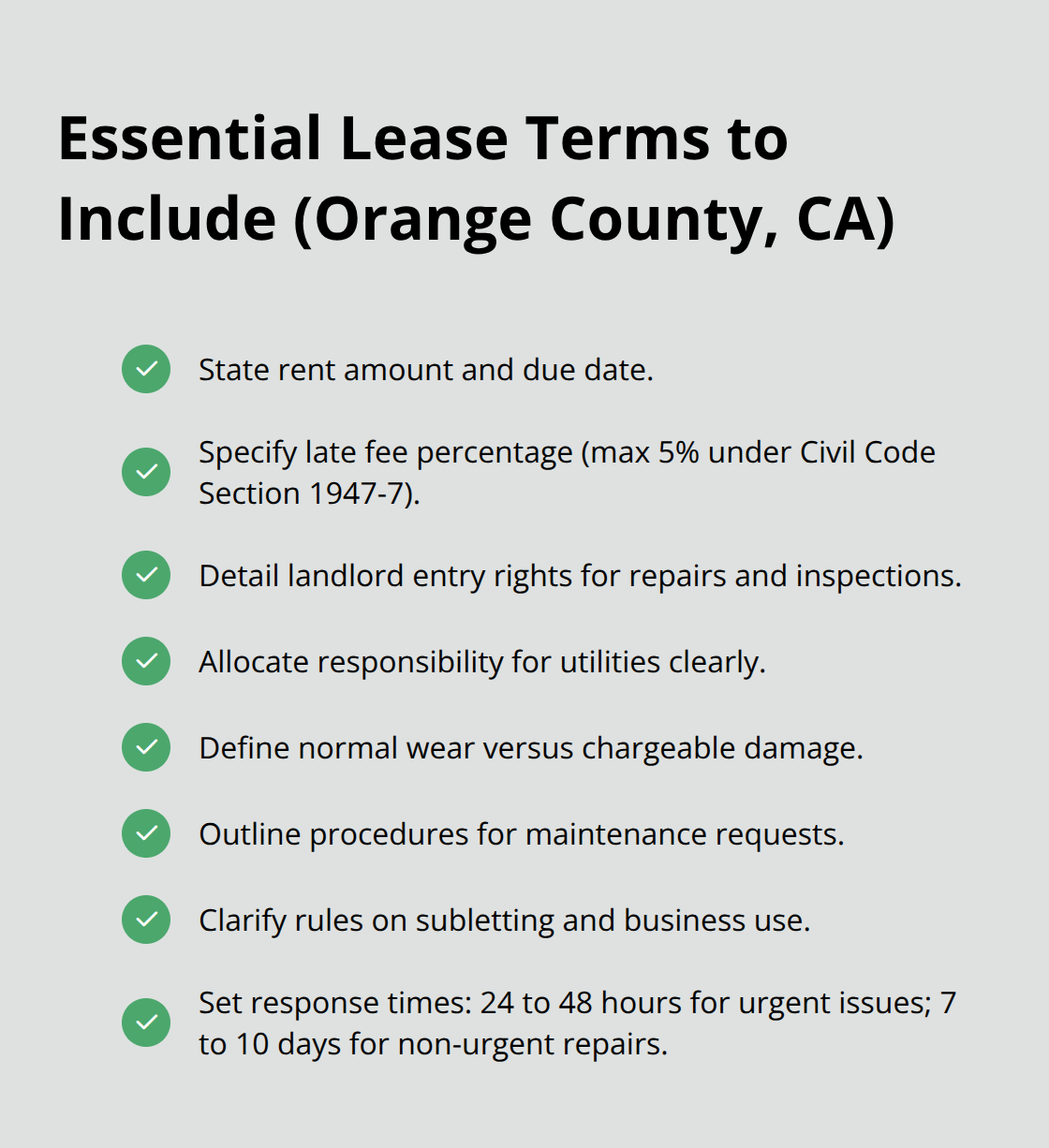
Your lease agreement functions as your primary defense against disputes, yet many property owners use generic templates that omit Orange County-specific requirements or fail to address common conflict scenarios. California law requires leases to clearly state rent amounts, due dates, late fee percentages (capped at 5% under Civil Code Section 1947-7), and the landlord’s right to enter for repairs or inspections. Beyond these legal minimums, your lease should specify which party pays for utilities, define normal wear and tear versus chargeable damage, establish procedures for maintenance requests, and clarify rules about subletting or business use. Include specific language about how many days you will respond to maintenance requests-state 24 to 48 hours for urgent issues like heating or water damage, and 7 to 10 days for non-urgent repairs-so tenants cannot later claim you ignored requests.
Many property owners skip the detail work and pay thousands in attorney fees to resolve disputes that clear lease language would have prevented entirely. An attorney experienced in Orange County rental law should review your lease before you use it with tenants, because correcting flawed language mid-tenancy costs significantly more than getting it right upfront.
Document Everything in Writing From Day One in Orange County
Verbal agreements about repairs, rent adjustments, or lease modifications vanish when disputes arise, leaving you with no evidence to support your position. Photograph the property condition before a tenant moves in-document walls, flooring, appliances, and any existing damage with date-stamped images-then store these photos securely. Require all maintenance requests to come through email or a documented platform like Buildium or AppFolio rather than accepting phone calls or text messages, because written records prove you received the request and when. When a tenant reports an issue, respond in writing within 24 hours confirming receipt and your planned repair timeline, even if the repair takes longer to schedule. If a tenant claims habitability violations or demands rent withholding, you need timestamped evidence showing you acted promptly. California courts favor landlords who maintain detailed records because documentation demonstrates compliance with legal obligations and good faith efforts to resolve problems. Save all lease violations, payment histories, repair invoices, and communication records for at least three years after a tenant vacates, since disputes sometimes emerge long after move-out when security deposit claims arise.
Schedule Regular Inspections and Maintain Properties Consistently in Orange County
Properties that deteriorate between tenant turnovers invite habitability claims and costly repairs later. Conduct walkthroughs every six months during occupancy-not for harassment, but to identify maintenance issues before tenants complain. Check HVAC systems, plumbing fixtures, weatherproofing, and structural elements, then address any problems within your documented response timeframes. Tenants cannot claim uninhabitable conditions if you have inspection records and repair receipts showing you maintained the property to livable standards. When a tenant reports a repair need, complete or schedule the work within your stated timeline and document the completion with photos or contractor invoices. Properties that receive consistent maintenance generate fewer disputes because tenants perceive the landlord as responsive and professional. This proactive approach also reduces your liability exposure-a tenant injured due to a maintenance problem you knew about but ignored faces a much stronger case than one involving a condition you actively addressed.
Final Thoughts
Landlord lease disputes in California drain resources and damage your rental business when you lack a clear action plan. The disputes covered in this guide-rent payment conflicts, maintenance disagreements, and eviction complications-follow predictable patterns that you can prevent or resolve efficiently with proper preparation. Three core principles separate property owners who win disputes from those who lose winnable cases: your lease agreement must address Orange County-specific requirements with precise language, documentation from day one protects you in court, and consistent property maintenance eliminates habitability claims.
When disputes arise despite your prevention efforts, the remedy you select determines your timeline and financial recovery. Unlawful detainer actions remove non-paying tenants fastest, security deposit claims recover legitimate damage costs, and breach of lease remedies address ongoing financial losses. Early intervention matters significantly-tenants who receive written notice of lease violations and clear expectations for cure often comply without escalation, while property owners who wait months before addressing problems face stronger tenant defenses and more complicated litigation.
We at Raul Garcia Law Firm represent Orange County property owners in landlord lease disputes, contract conflicts, and real estate matters that threaten your financial interests. Contact us for a consultation if you face an active dispute or need your lease agreement reviewed before problems develop.