

California’s ban on noncompete agreements is one of the strictest in the nation. Yet businesses still face real threats from departing employees and competitors stealing their trade secrets and client relationships.
We at Raul Garcia Law Firm help Orange County companies navigate noncompete agreement litigation in California by using legal tools that actually work within state law. This guide shows you what protections are available and how to enforce them.
What California Law Actually Bans
California Business and Professions Code Section 16600 voids agreements that restrain individuals from engaging in lawful professions, trades, or businesses. This rule operates broadly, with no narrow exceptions hiding in the fine print. The California Supreme Court in Edwards v. Arthur Andersen LLP rejected attempts to carve out a “narrow restraint” exception, making clear that the statute means what it says. As of January 1, 2024, Senate Bill 699 reinforced this by codifying that noncompete agreements are unenforceable regardless of where the agreement was signed. If your Orange County business hired someone in California, that employee’s noncompete is void under California law even if they signed it in another state. The statute applies broadly to employment contracts, independent contractor agreements, and any arrangement that restricts someone from working in their field after leaving your company.
The Three Narrow Exceptions That Actually Matter
California law permits noncompete restrictions in exactly three situations: the sale of a business under Section 16601, dissolution of a partnership under Section 16602, and dissolution or sale of an LLC under Section 16602.5. These exceptions require that geographic restrictions stay limited to the area where the business actually operated. A noncompete tied to a business sale can be enforceable if it reasonably protects the goodwill and customer relationships transferred in that sale, but courts scrutinize these carefully and strike overly broad language. If you sell your Orange County business, the restriction must be geographically tailored to where you operated, not statewide or nationwide.
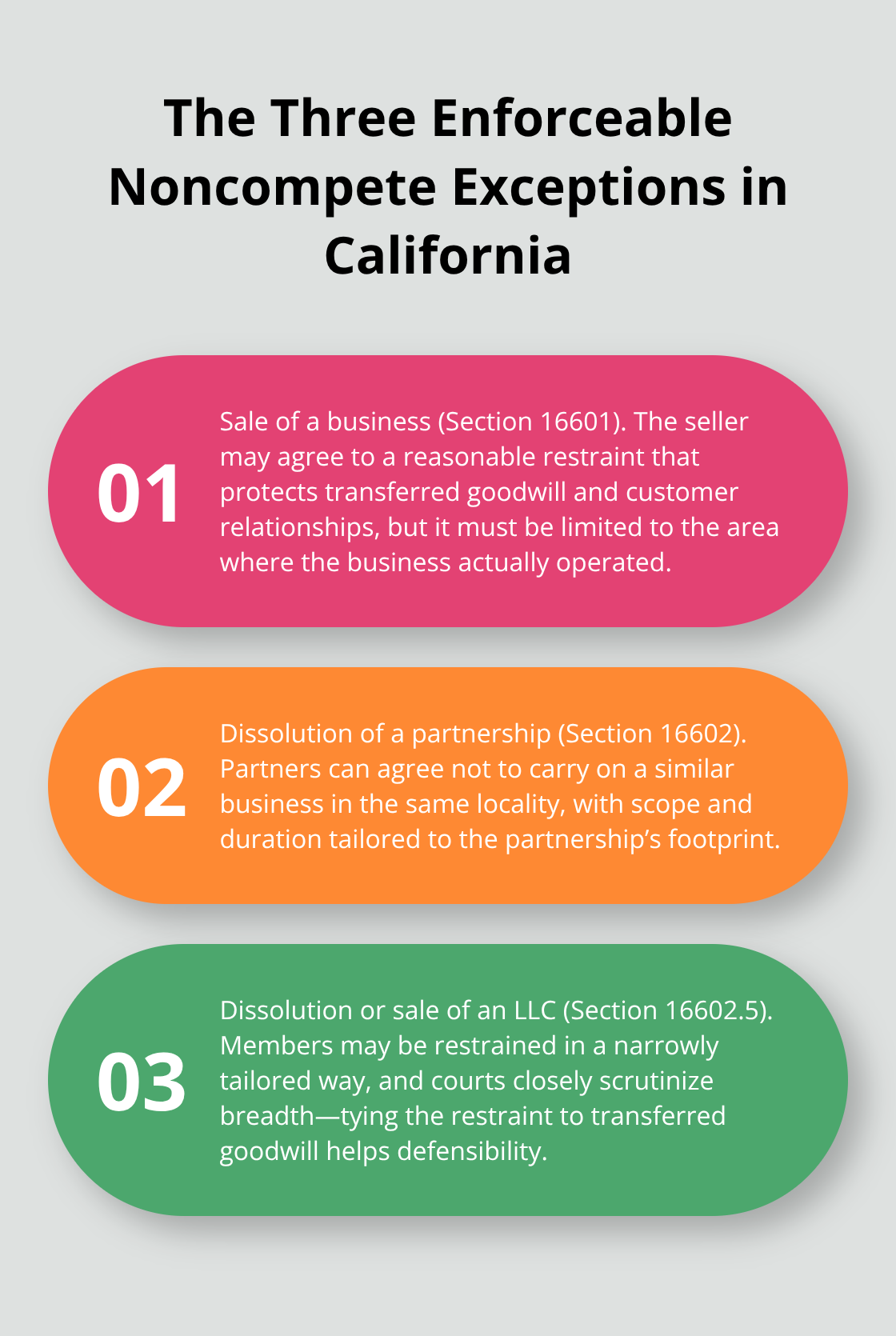
Outside these three contexts, noncompete language is void, period. Courts will not enforce it, and attempting to do so exposes your business to civil liability, including damages and attorney fees to the employee or former contractor under SB 699.
What Courts Actually Strike Down
California courts routinely void noncompetes in employment relationships because the statute contains no exception for employment. A customer non-solicitation clause that effectively prevents someone from working in their profession also gets struck down, as shown in AMN Healthcare, Inc. v. Aya Healthcare Services, Inc. Overly broad confidentiality agreements that restrict future work rather than protecting actual trade secrets fail as well. Courts view these provisions as restraints on the profession disguised under different names. If your agreement uses language like preventing employees from working with competitors, soliciting clients, or entering similar businesses, California courts will void it. Many standard employment agreement templates from other states create enforceability problems in California. Identifying and removing void language before disputes arise saves businesses from litigation exposure and shifts focus to protections that actually work under California law.
What Actually Protects Your Business in California
Trade Secret Protection as Your Primary Defense
Orange County businesses must build defense strategies around tools California courts actually enforce since noncompete agreements are off the table. Trade secret protection stands at the top of this list because California recognizes both the Uniform Trade Secrets Act and the federal Defend Trade Secrets Act, offering injunctive relief, damages, and attorney fees when misappropriation occurs. Courts will block departing employees from using your proprietary processes, customer lists, pricing data, or technical information if you can show the information qualifies as a trade secret and you took reasonable steps to protect it.
Documenting what counts as confidential matters significantly. You need to restrict access to employees who need it and implement role-based access controls so not everyone in your company sees everything. This foundation lets you pursue damages if someone breaches confidentiality obligations.
Nondisclosure Agreements That Courts Will Enforce
A nondisclosure agreement that narrowly defines what information is confidential-rather than using catch-all language that courts view as overreach-gives you enforceable protection. The key difference from a noncompete is that an NDA focuses on protecting specific information, not preventing someone from working in their field. California courts routinely enforce these because they serve a legitimate business interest without restricting lawful employment.
Non-Solicitation and Garden Leave Strategies
Non-solicitation agreements occupy gray territory in California, and the AMN Healthcare case shows why caution matters. That case struck down a customer non-solicitation clause because it effectively prevented someone from practicing their profession, crossing the line from protecting relationships into restricting trade. A narrowly tailored non-solicitation-one that prevents direct solicitation of specific clients you worked with together during employment, limited to a defined period like six months-has better odds of surviving scrutiny than a blanket prohibition on client contact.
Garden leave arrangements sidestep these enforceability problems entirely. You pay a departing employee during a transition period while they refrain from new employment, essentially purchasing time without restricting their future work. Some Orange County businesses use this approach for senior employees with deep client relationships, paying them to step back for three to six months while relationships stabilize.
Invention Assignments and Layered Protection
Invention assignment agreements under California Labor Code Section 2870 let you claim ownership of work-related inventions if the agreement complies with statutory limits, protecting intellectual property without restricting employment. The practical strategy involves layering these tools: robust trade secret measures, carefully drafted confidentiality agreements, selective non-solicits for key relationships, and invention assignments where applicable (each addressing specific competitive threats while remaining enforceable under California law).
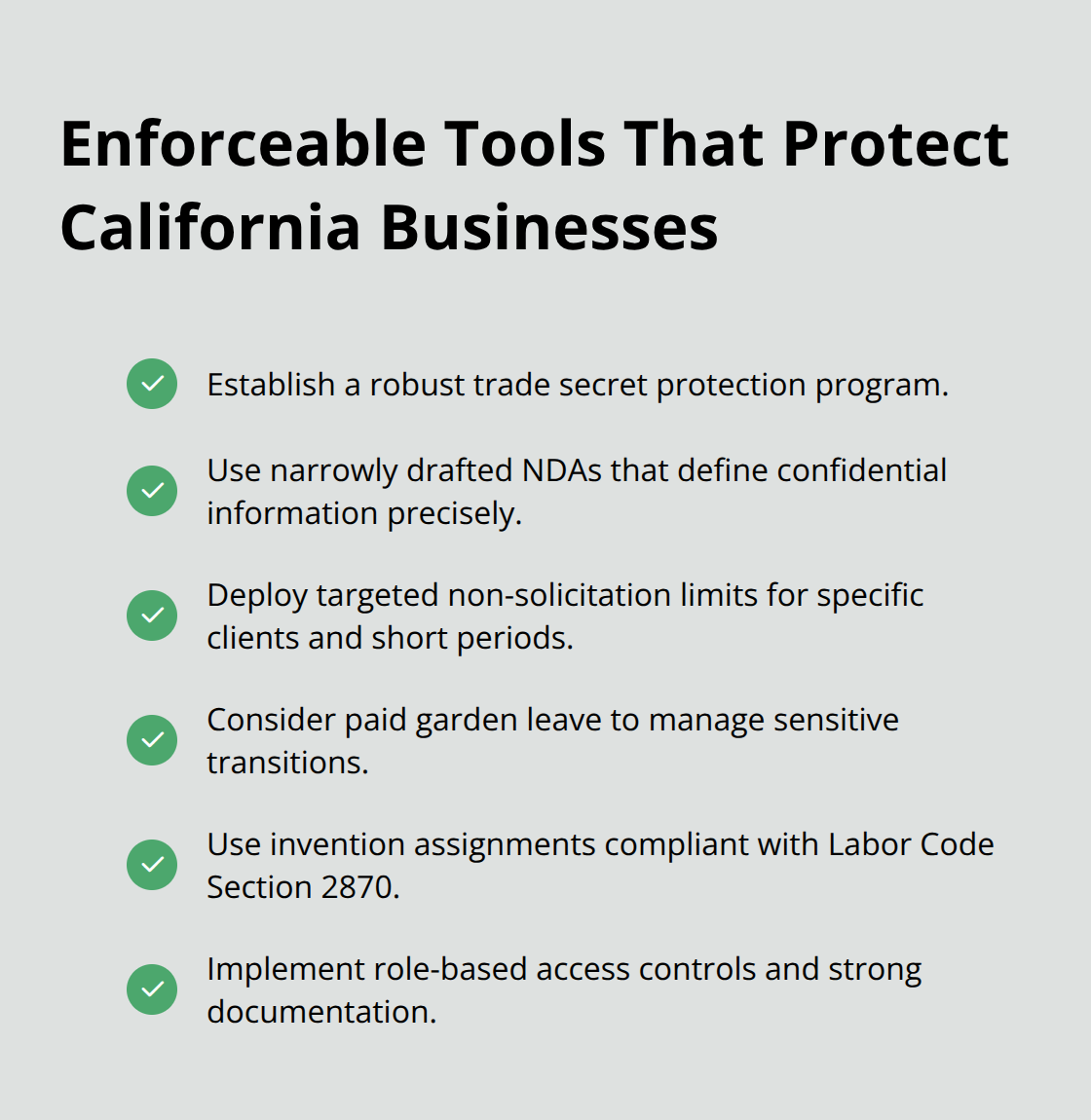
This combination addresses real competitive threats while keeping your agreements enforceable and avoiding the litigation exposure that comes from attempting to enforce void noncompetes. When disputes do arise over these legitimate protections, experienced litigation counsel becomes essential to navigate enforcement actions and protect what you’ve built.
When Departing Employees Become Your Competitors
Orange County businesses face three recurring litigation problems once employees walk out the door with access to your operations and client relationships. The first involves former employees immediately joining competitors or launching rival ventures, which sounds like a noncompete violation until you realize California law makes noncompetes unenforceable in employment contexts. Courts will not stop someone from competing against you simply because they worked for you previously. What courts will stop is misuse of trade secrets, breach of confidentiality obligations, and improper client solicitation-the actual weapons departing employees use to damage your business. Litigation in Orange County increasingly focuses on these concrete harms rather than the employment relationship itself.
Trade Secret Misappropriation and Confidentiality Breaches
When a former sales manager takes your customer list to a competitor and converts accounts within weeks, that constitutes trade secret misappropriation and breach of confidentiality, not a noncompete violation. When a technical employee copies your proprietary software code before leaving, that triggers liability under the Defend Trade Secrets Act and California’s Uniform Trade Secrets Act, with potential damages including lost profits and reasonable attorney fees. The distinction matters enormously because these claims actually work in court, whereas noncompete claims fail immediately under Section 16600.
Building Your Litigation Foundation
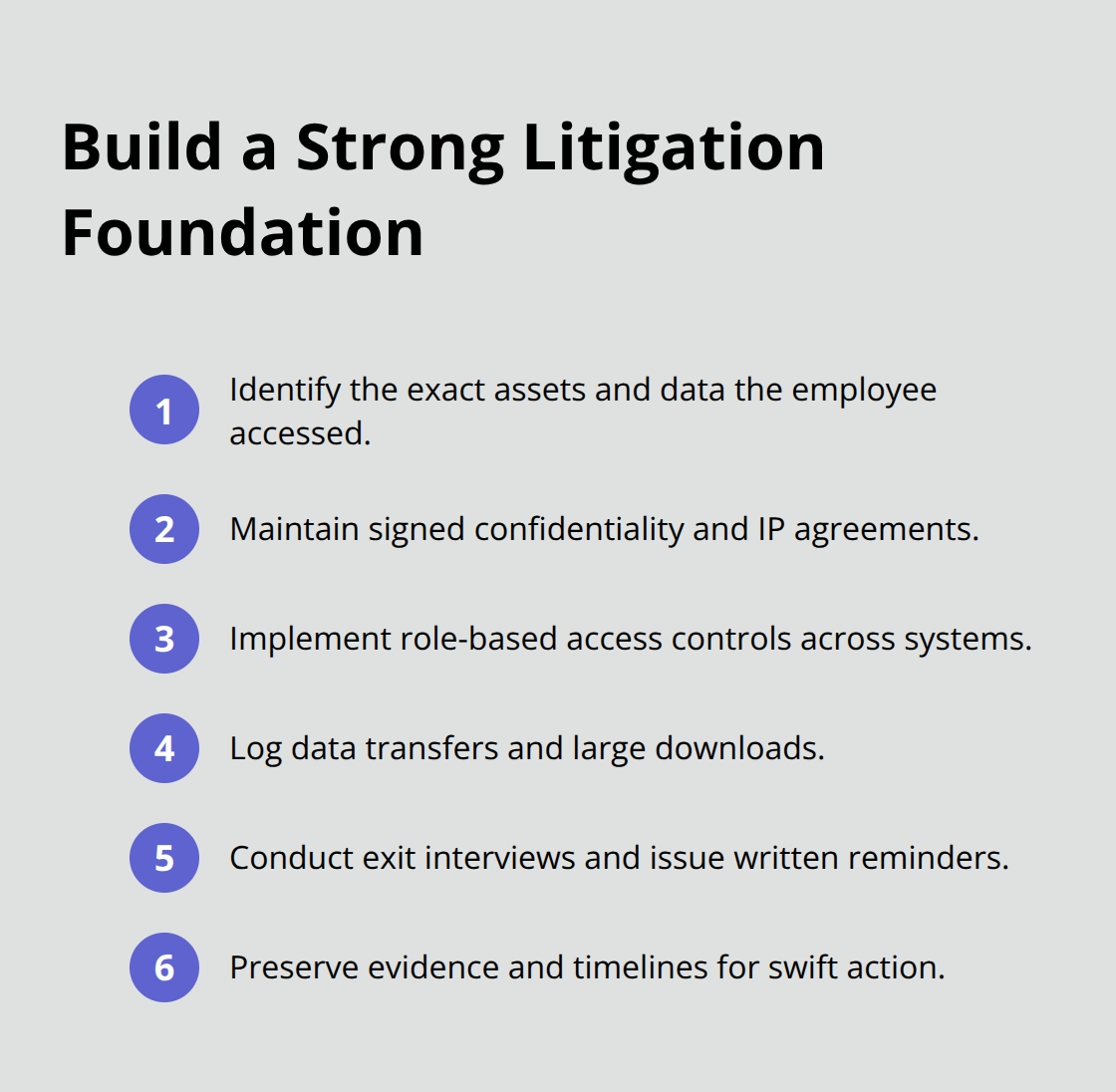
Litigation strategy in Orange County requires identifying what specific assets or information the departing employee accessed and whether you documented its confidential status beforehand. Did the employee sign a confidentiality agreement that specifically listed trade secrets, client lists, and pricing data? Did your company implement access controls restricting who could view sensitive information? Courts examine these facts closely when evaluating whether you took reasonable steps to protect what you claim is confidential. An employee who downloaded thousands of files the night before resignation faces stronger liability than one accused of simply remembering client names.
Documentation and Exit Procedures
Exit interviews that identify what information the employee accessed, written reminders of confidentiality obligations, and preservation of system logs showing data transfers create evidence courts rely on. Orange County businesses that treat departures as litigation preparation points rather than administrative formalities recover damages far more frequently. Non-solicitation claims occupy shakier ground after AMN Healthcare, so focus enforcement energy on trade secret misappropriation and confidentiality breaches where courts consistently award relief.
Preventing Unfair Competitive Tactics
The practical reality is that you cannot prevent competition itself, but you can prevent unfair competitive tactics involving your confidential information and client relationships. When disputes arise over these legitimate protections, experienced litigation counsel becomes essential to navigate enforcement actions and protect what you have built.
Final Thoughts
California’s approach to noncompete agreements leaves no room for ambiguity: employment-based noncompetes are void, and courts will not enforce them. This reality forces Orange County businesses to build competitive protection strategies around tools that actually work-trade secret safeguards, confidentiality agreements, and targeted non-solicitation clauses. The shift from noncompete reliance to legitimate protections requires intentional contract drafting, documented access controls, and clear confidentiality policies before disputes arise.
Noncompete agreement litigation in California increasingly focuses on misappropriation of trade secrets and breach of confidentiality rather than employment restrictions. When former employees take customer lists, proprietary processes, or pricing data to competitors, you have enforceable claims under the Uniform Trade Secrets Act and the Defend Trade Secrets Act. These statutes provide injunctive relief and damages that actually compensate for competitive harm.
Your competitive interests remain protectable under California law, but the strategy requires precision. Exit procedures that document what information departing employees accessed, confidentiality agreements that specifically identify trade secrets, and role-based access controls that restrict sensitive information create the foundation for successful litigation. Contact Raul Garcia Law Firm to discuss your specific circumstances and develop a litigation strategy that protects what you have built.