

Mid-market business disputes are becoming more complex and costly. Supply chain breakdowns, partnership conflicts, and intellectual property battles are hitting Orange County companies harder than ever.
We at Raul Garcia Law Firm see these cases regularly, and timing is everything. Understanding the trends, tactics, and legal deadlines that govern mid-market business litigation can mean the difference between protecting your interests and losing your right to sue.
What’s Driving Orange County Mid-Market Disputes Right Now
Contract Disputes and Supply Chain Fragility
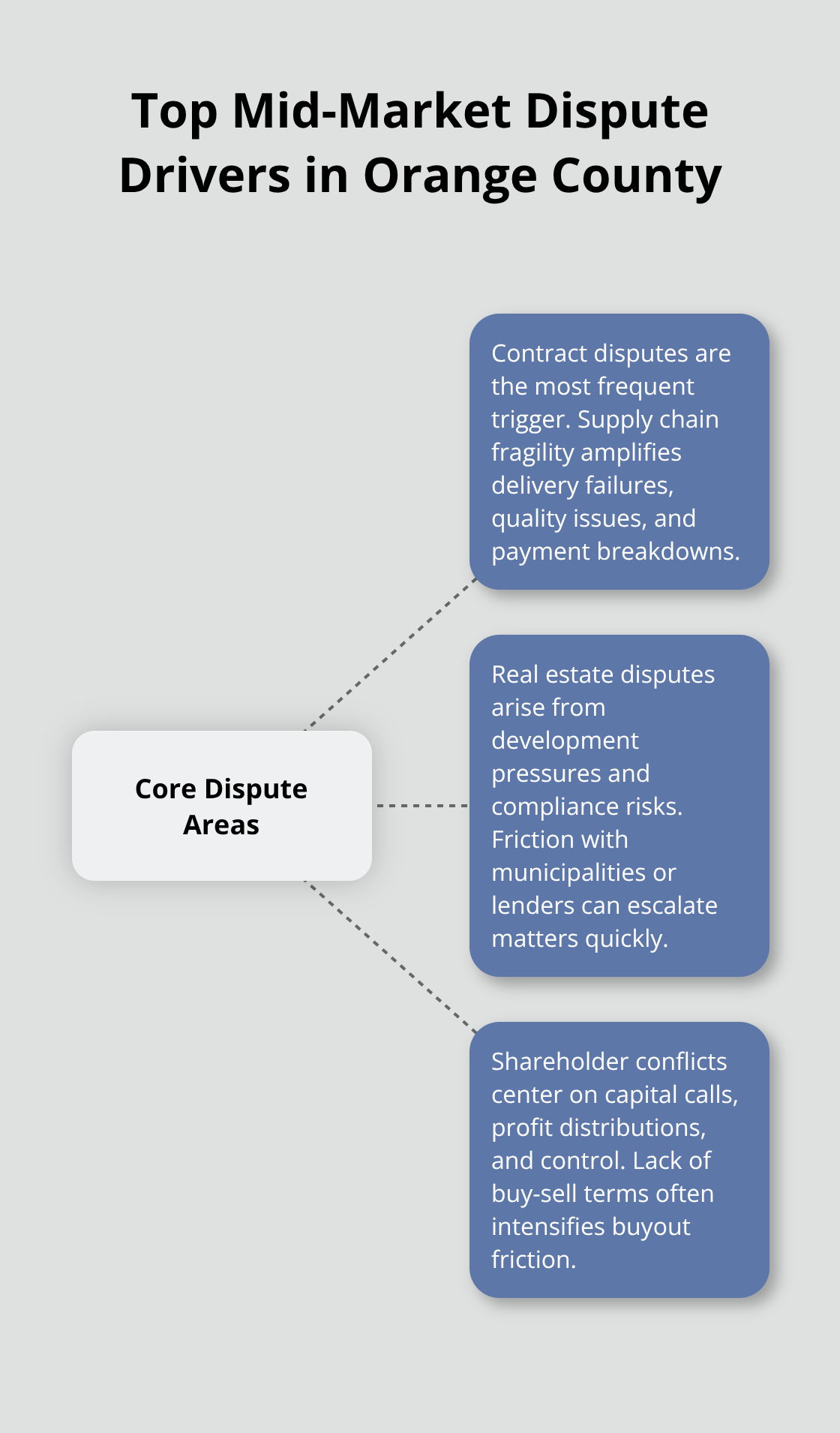
Contract disputes remain the most frequent litigation trigger for mid-market companies in Orange County, and supply chain fragility amplifies the problem. When vendors fail to deliver, quality drops, or payment terms collapse, disputes escalate fast. The three primary dispute areas disrupting mid-market growth in Orange County are contract disputes, real estate disputes, and shareholder conflicts.
Contract disputes typically cost $50,000 to $150,000 in state court litigation and often extend beyond a year if discovery expands or the matter reaches trial. The financial pressure hits hard: a December 2023 US Chamber of Commerce study found that small businesses bear roughly $160 billion in liability costs annually despite representing only about 20% of commercial lawsuit revenue. Cost intensity proves brutal for smaller firms-commercial tort costs exceed $35 per $1,000 of revenue for companies with under $1 million in annual revenue, compared to under $5 per $1,000 for firms with $50 million or more. Supply chain disputes hit smaller mid-market players disproportionately hard.
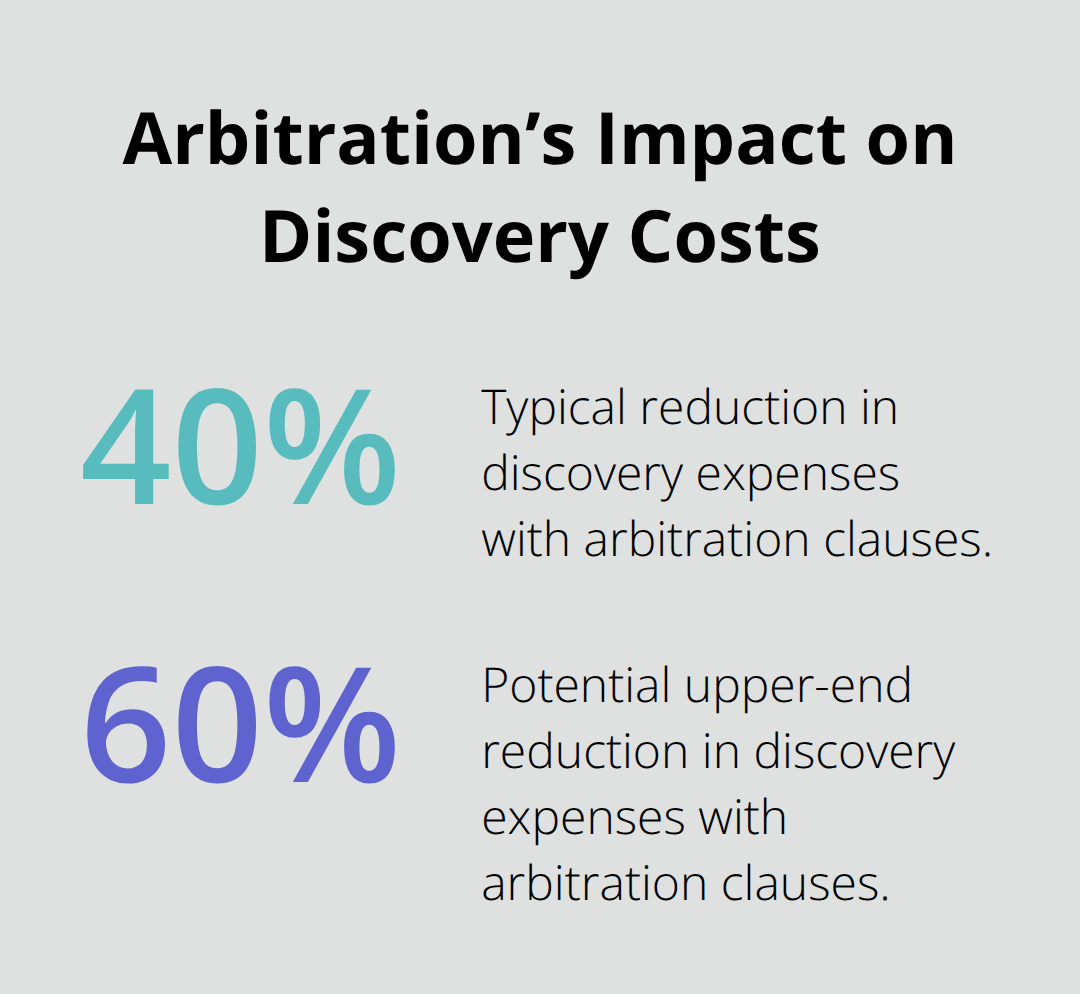
The practical response demands speed. Conduct an early assessment within the first 30 days after a breach, document all communications, preserve emails in original format, and engage counsel before replying to breach notices. Arbitration clauses cut discovery costs by 40–60% and shorten timelines to 6–9 months, so for existing contracts, add dispute-resolution protocols through amendments to protect cash flow and operations.
Partnership, Shareholder, and Real Estate Conflicts
Partnership and shareholder conflicts, along with real estate disputes tied to Orange County’s 56 new housing development laws effective in 2026, escalate quickly due to CEQA compliance risks and friction with municipalities or lenders. Internal shareholder conflicts often involve capital calls, profit distributions, and control, with buyout frictions if no buy-sell terms exist.
Title defects and lease disputes typically incur $30,000 to $80,000 in pre-settlement legal fees, and title insurance may exclude the issue entirely. Perform environmental diligence and secure robust lease terms plus dispute-resolution triggers and independent appraisal-based buyout mechanisms to protect deal value.
Intellectual Property and Trade Secret Exposure
Trade secret and intellectual property litigation grows as technology and biotech companies concentrate in Orange County, and the stakes run high. Mishandled IP disputes expose confidential processes, customer lists, or proprietary technology to competitors. Protect intellectual property with written assignments for employees and contractors, conduct annual IP audits, and enforce robust confidentiality protocols (critical for creator economy exposure or licensing models) to avoid downstream disputes.
Building Your Defense Strategy
The strongest defense hinges on early counsel, clearly drafted contracts, and pre-agreed dispute-resolution mechanisms. Embed counsel into growth plans rather than treating legal as a cost center-this approach reduces litigation, speeds deals, and ensures your attorney understands supply chains, customer concentration risks, and regulatory changes affecting your business. These foundational steps position you to respond effectively when disputes arise, and they shape how you’ll navigate the statutes of limitations and tolling rules that govern your right to sue.
How to Win Orange County Mid-Market Disputes Before They Reach Trial
The first 30 days after a breach notice arrives determine whether you control the narrative or spend the next year fighting an uphill battle. Mid-market companies often stumble at this critical juncture by ignoring the demand or responding defensively without strategy. The reality is stark: contract disputes in Orange County state courts cost $50,000 to $150,000 and often stretch beyond a year when discovery expands or trial looms. That timeline and expense are avoidable if you move fast and deliberately.
Assess Your Position in the First 30 Days
Within those first 30 days, conduct a thorough assessment of the breach claim, document all relevant communications, preserve emails in original format, and engage counsel before you reply to any breach notice. This window is your chance to identify weaknesses in the other party’s position, assess your own exposure, and decide whether settlement, mediation, arbitration, or litigation serves your business interests. Many mid-market companies treat this phase as a defensive scramble when it should be a calculated offense. Your early assessment determines your leverage. If the other party has weak documentation, inconsistent communications, or ambiguous contract language, you have negotiating room. If you are genuinely liable, early acknowledgment and a settlement offer often cost far less than discovery and trial preparation. The data supports this: disputes that move to mediation or arbitration before formal litigation resolve faster and cheaper than those that proceed to court discovery.
Use Arbitration Clauses to Control Costs
Arbitration clauses embedded in your contracts are your most powerful cost-control tool, cutting discovery expenses by 40–60% and compressing timelines to 6–9 months instead of 12 months or more. If your existing contracts lack arbitration or other dispute-resolution protocols, amend them now to add those mechanisms and protect future cash flow.
This single step transforms your financial exposure and timeline predictability.
Preserve Documents With Discipline
Document preservation is equally non-negotiable. Courts and arbitrators view companies that lose or fail to preserve emails and internal records as hiding evidence, and that suspicion alone shifts settlement dynamics against you. Establish a litigation hold immediately upon notice of a dispute, instruct relevant employees to preserve all communications, and segregate files in their original format without alteration. The cost of this discipline is negligible compared to the cost of adverse inferences at trial or during settlement negotiations.
Organize Evidence to Reduce Legal Spend
E-discovery in Orange County commercial disputes typically accounts for 20–30% of total legal spend, so managing document volume and organization upfront directly reduces your attorney fees. Work with counsel to identify the core documents that support your defense-signed contracts, payment records, delivery confirmations, emails showing good faith efforts or the other party’s breaches-and prioritize those for early production or settlement discussion. This focused approach accelerates negotiations and prevents your legal team from wading through irrelevant material.
Build a Compelling Case for Settlement
Negotiation before trial is not about splitting the difference; it is about presenting a factual and legal case so compelling that the other side sees the cost of continuing as worse than settling. That case rests on clear evidence, credible timelines, and a realistic assessment of what a judge or arbitrator would award. Mid-market owners who embed this discipline into their operations win disputes on favorable terms or avoid them entirely. The strength of your position at this stage determines what happens next-and what happens next is where statutes of limitations and tolling rules enter the picture.
When Do You Lose the Right to Sue in Orange County
Statutes of limitations set the deadline for filing a lawsuit, and in Orange County business disputes, missing that deadline means your claim vanishes regardless of merit. For contract disputes, California law gives you four years from the breach date to file suit.
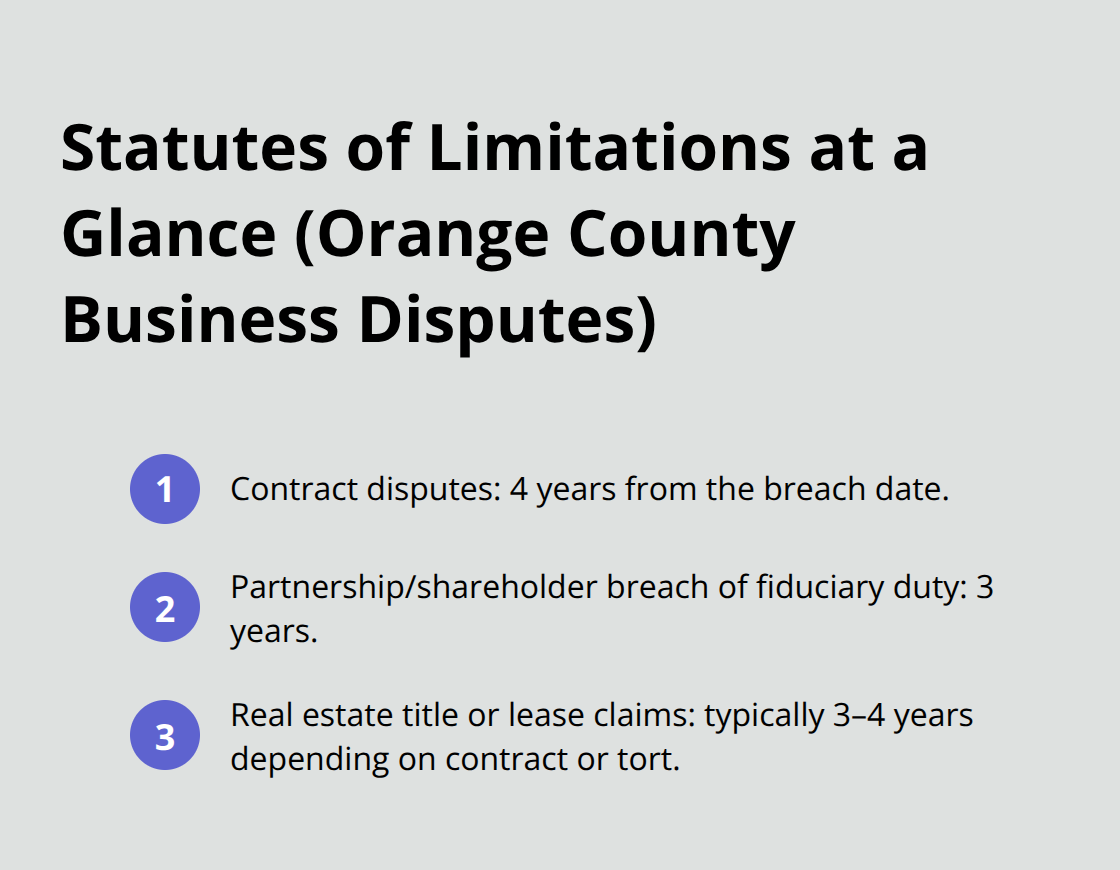
Partnership and shareholder disputes fall under a three-year statute for breach of fiduciary duty, while real estate claims tied to title defects or lease violations typically run three to four years depending on whether the claim sounds in contract or tort.
How Tolling Extends Deadlines in Contract Claims
Tolling-legal mechanisms that pause or extend these deadlines-creates false confidence and costly mistakes. Tolling applies in narrow circumstances: when the defendant fraudulently conceals a breach, when you lack knowledge of the injury despite reasonable diligence, or when a written agreement explicitly suspends the clock. Courts interpret tolling restrictively, so relying on it is dangerous. The moment a breach occurs, the countdown begins, and you cannot afford to wait for perfect information or delay while hoping for settlement.
Mid-market companies squander their right to sue because they misunderstand when tolling actually applies. A contract breach that you discover triggers the four-year clock immediately, and informal negotiations do not pause that deadline. Courts have rejected arguments that settlement discussions or internal remediation efforts toll the statute of limitations.
Tolling Rules for Partnership and Real Estate Disputes
Partnership and shareholder disputes operate under different rules. A shareholder conflict that simmers for two years without formal notice or demand does not get tolled simply because parties were negotiating informally-the statute runs from the moment the breach of duty happened, not from when you filed a lawsuit or sent a demand letter.
Real estate title defects discovered during due diligence do not toll the clock backward; you have three years from discovery to act. A delayed environmental assessment or appraisal can consume months of that window before litigation even begins. Orange County’s 56 new housing development laws (effective in 2026) and CEQA compliance risks make real estate disputes particularly time-sensitive. A delayed title search compresses your three-year window to months, forcing you into rushed litigation or settlement decisions.
Common Mistakes That Cause Claims to Be Time-Barred
The practical response demands brutal honesty about timing. Within days of identifying a breach or dispute, consult with counsel to establish the exact statute of limitations and determine whether tolling applies to your facts. Do not assume that informal negotiations, settlement discussions, or internal remediation efforts pause the deadline-they do not.
If you discover a contract breach, title defect, or shareholder wrongdoing, document the discovery date, preserve all evidence, and immediately engage counsel to file a complaint or demand if settlement seems unlikely. The cost of filing a lawsuit to preserve your claim (even if you settle later) is trivial compared to losing your right to sue entirely. Partnership disputes involving capital calls, profit distributions, or control similarly demand speed because the statute runs from the breach, not from when you recognize the wrongdoing. Mid-market companies that treat statutes of limitations as operational deadlines, not legal abstractions, preserve leverage, avoid default judgments, and maintain their ability to negotiate from strength rather than desperation.
Final Thoughts
Mid-market business litigation in Orange County demands that you act fast, preserve evidence with discipline, and understand that statutes of limitations are absolute deadlines. Contract disputes cost $50,000 to $150,000 in state court and stretch beyond a year without early intervention, while partnership conflicts and real estate disputes tied to Orange County’s 56 new housing development laws compress your timeline further. The companies that win these disputes assess their position within 30 days of a breach, use arbitration clauses to cut costs by 40 to 60 percent, and present a factual case so strong that continuing litigation becomes irrational for the other side.
Tolling rarely applies, and courts reject arguments that informal negotiations pause the clock on your four-year window for contract claims or three-year window for partnership breaches. You cannot afford to wait for perfect information or delay while hoping for settlement-the moment a breach occurs, the countdown begins. Embed counsel into your business rather than treating legal as a cost center, update contracts with dispute-resolution protocols, and maintain a legal budget tied to revenue (approximately 0.5 to 1.5 percent) allocated to prevention rather than crisis response.
When a dispute arises, consult with counsel immediately to establish your exact statute of limitations and file a complaint if settlement seems unlikely. Raul Garcia Law Firm represents Orange County businesses in complex commercial and real estate disputes, combining practical business insight with aggressive negotiation and courtroom representation to protect your financial interests and minimize operational disruption.