

Orange County’s midmarket business landscape is thriving, but success requires more than ambition. The region’s competitive environment brings real legal complexities that demand strategic attention.
At Raul Garcia Law Firm, we’ve guided countless midmarket leaders through Southern California business law challenges. This guide covers the legal insights you need to protect your business and grow with confidence.
Why Orange County Thrives as a Midmarket Business Center
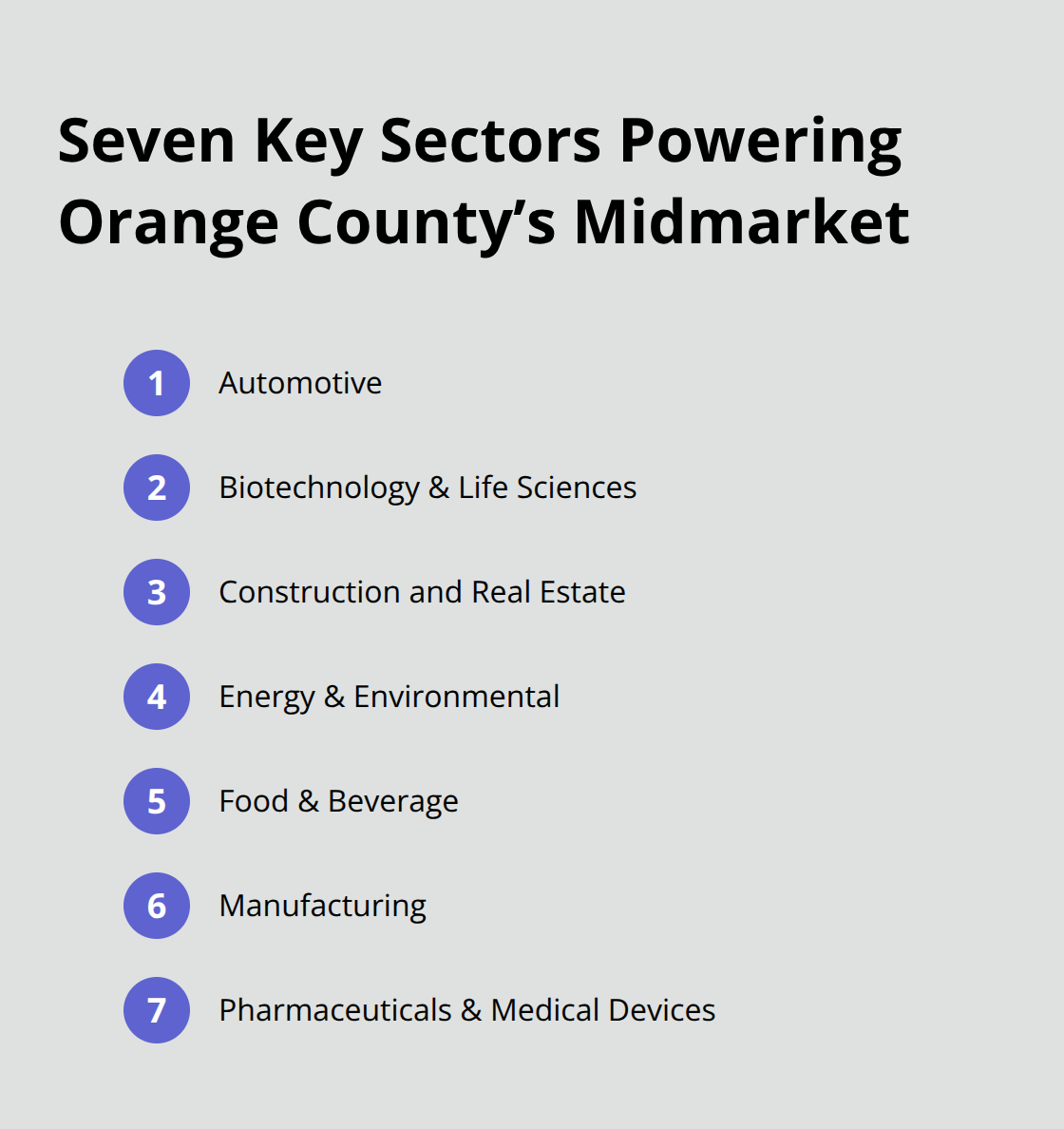
Orange County’s economy generated approximately $280 billion in gross regional product as of 2024, making it one of California’s strongest regional economies outside the Bay Area and Los Angeles. The region’s industrial base spans seven major sectors: Automotive, Biotechnology & Life Sciences, Construction and Real Estate, Energy & Environmental, Food & Beverage, Manufacturing, and Pharmaceuticals & Medical Devices. This diversity matters because midmarket firms gain access to specialized supply chains, regulatory networks, and customer bases that reduce dependency on any single industry downturn.
The region’s unemployment rate has remained below the state average, sitting around 3.8% in early 2026, which signals both labor availability and competitive wage pressures that midmarket leaders must navigate carefully when recruiting talent.
Outside capital stabilizes growth
Outside capital has become a survival tool for midmarket firms in Orange County, not a threat to core operations. Litigation financing portfolios-which can effectively double a contingency practice from five to ten cases up to ten to twenty cases-now offer non-recourse funding that spreads risk across multiple matters and stabilizes cash flow. Midmarket firms pursuing this path report improved capacity to take on larger matters and compete with hourly-rate firms, though the economics require careful alignment with client expectations and settlement timelines.
Real estate financing adapts to new regulations
Real estate transactions have also benefited from expanded financing structures, with OC developers adapting to 56 new housing development laws effective in 2026. Compliance calendars for CEQA reviews, permitting, and local housing mandates demand early counsel engagement, yet firms that build these guardrails upfront reduce delays and protect deal value.
Strategic capital attracts talent and partnerships
Strategic outside capital-whether through portfolio litigation funding or real estate financing-enables lateral recruitment and signals financial backing to potential partners, offering a practical alternative to large firms’ guaranteed compensation models that smaller midmarket operators cannot match. This financial positioning matters when competing for experienced attorneys and when structuring partnerships that require credible backing. The next section examines the specific legal challenges that emerge as midmarket companies scale within this competitive environment.
What Legal Disputes Disrupt Midmarket Growth in Orange County
Midmarket companies in Orange County face three legal battlegrounds that drain capital and distract leadership: contract breakdowns that spiral into commercial litigation, real estate disputes that halt transactions or trap capital in tied-up properties, and shareholder conflicts that fracture ownership structures. These aren’t theoretical risks-they’re operational emergencies that demand immediate, strategic response.
Contract disputes demand early intervention
Contract disputes represent the highest-frequency legal challenge for midmarket firms across Orange County’s diverse industries. Supply chain relationships, vendor agreements, and customer contracts often lack the precision required when disputes emerge, leaving ambiguity around payment terms, performance obligations, and remedies. When a supplier fails to deliver on schedule or a customer disputes invoice amounts, midmarket leaders face a choice: litigate or negotiate a settlement under pressure. Early case assessment matters here-the first 30 days after a breach determines whether you control the narrative or react defensively. Document all communications immediately, preserve emails and contracts in their original format, and engage counsel before responding to any breach notice. The cost of litigation in Orange County state courts ranges from $50,000 to $150,000 for standard contract disputes that settle within 12 months, but that figure skyrockets if discovery expands or the case reaches trial.
Arbitration clauses reduce costs and timelines
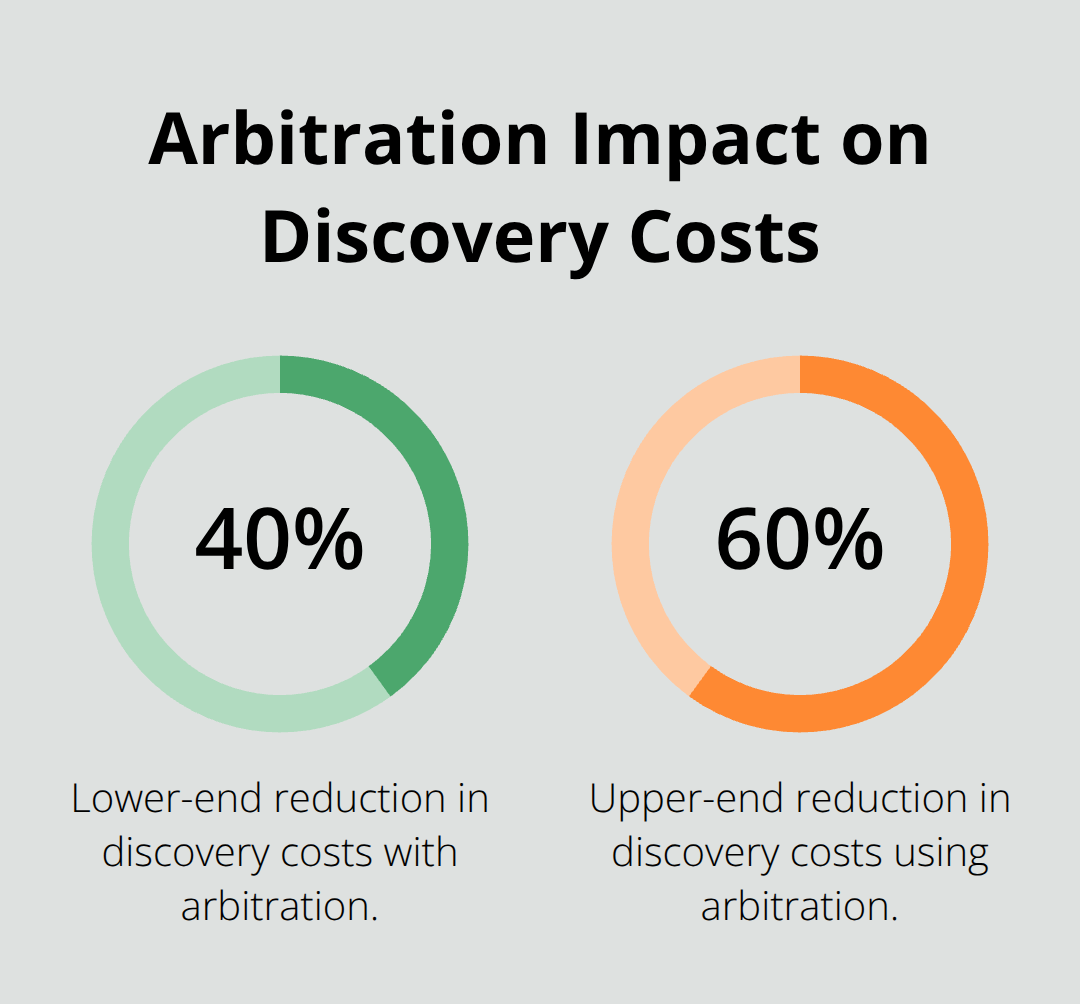
Arbitration clauses inserted into new contracts now offer a practical escape route-they reduce discovery costs by 40 to 60 percent and compress timelines to 6 to 9 months. For existing contracts lacking arbitration language, negotiate amendment clauses that add dispute-resolution protocols before conflict erupts. This proactive step protects your cash flow and keeps operational focus on growth rather than litigation management.
Real estate and partnership disputes compound quickly
Orange County’s 56 new housing development laws effective in 2026 have created permitting delays and CEQA compliance risks that pit developers against municipalities and, occasionally, against co-owners or lenders who grow impatient. Shareholder and partnership disagreements over capital calls, profit distributions, or operational control often surface when cash flow tightens or market conditions shift. One partner wants to exit; another demands buyout terms the departing partner refuses. These internal conflicts require clear operating agreements drafted upfront-not negotiated in crisis. Midmarket firms lacking buy-sell provisions or valuation formulas face six-month standoffs that freeze business decisions and erode enterprise value.
Title defects and lease disputes require preventive action
Real estate disputes involving title defects, boundary disagreements, or lease disputes cost midmarket owners $30,000 to $80,000 in legal fees alone before settlement, and title insurance often excludes the specific problem at hand. Conduct environmental due diligence and title searches before closing, negotiate clear lease termination and renewal language, and establish written operating agreements with explicit dispute-resolution triggers and buyout mechanics tied to predetermined valuation methods or independent appraisal protocols. These protections transform reactive crisis management into controlled risk mitigation.
Building your legal defense strategy
The pattern across all three dispute categories remains consistent: early counsel engagement, clear contractual language, and predetermined dispute-resolution mechanisms separate midmarket winners from those trapped in costly litigation. The next section examines how to construct these legal partnerships and compliance frameworks that keep your business moving forward.
Building Counsel Into Your Growth Strategy
Midmarket leaders in Orange County often treat legal counsel as a cost center that activates only when disputes erupt. This approach costs money. The opposite pattern succeeds: firms that embed counsel into quarterly business reviews, contract negotiations, and partnership structures spend less on litigation and close deals faster. A strategic legal partnership means your attorney understands your supply chain, knows your customer concentration risks, and flags regulatory changes before they create compliance gaps.
Select counsel with industry-specific expertise
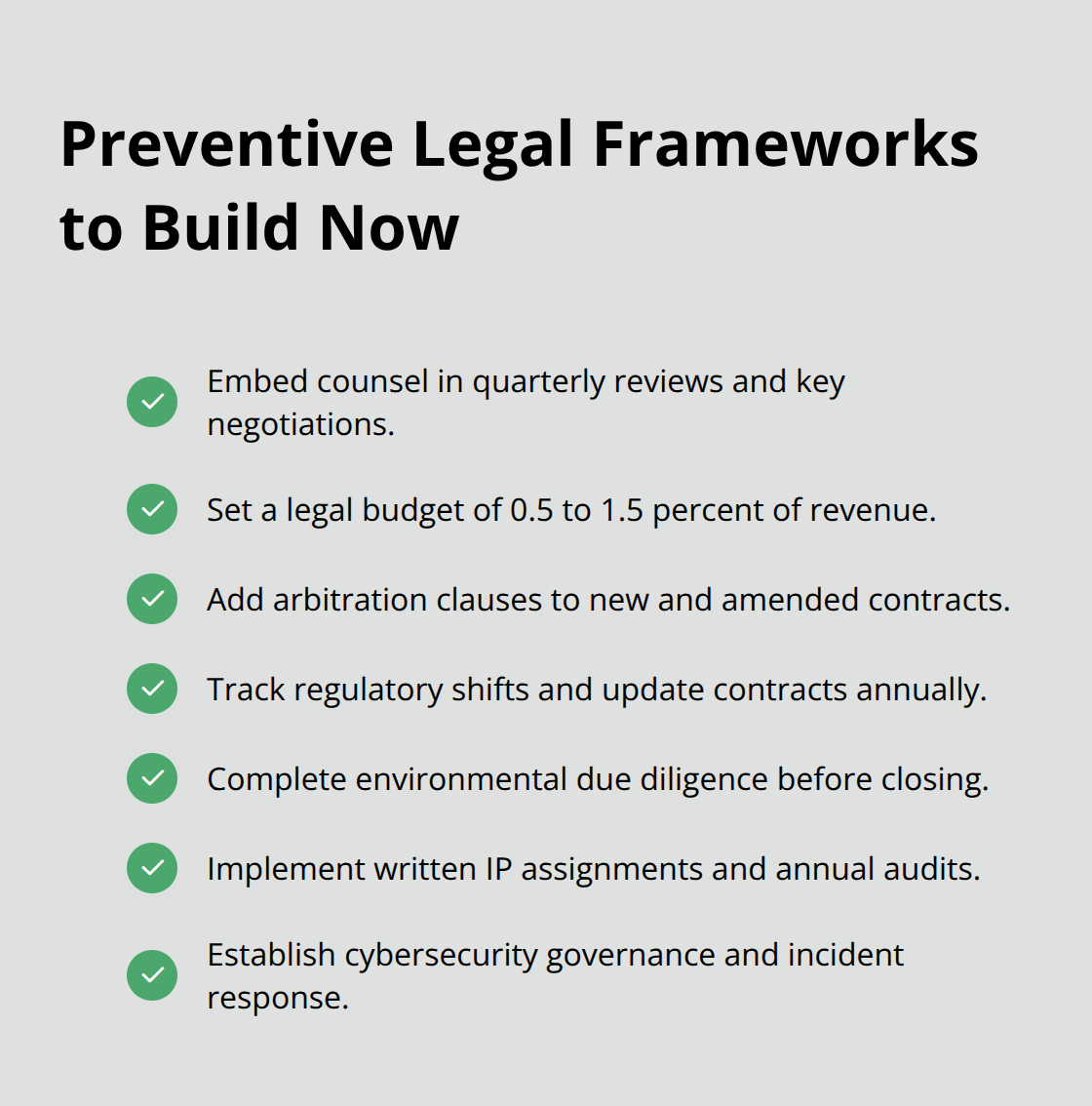
When you evaluate outside counsel, ask for specific experience in your industry sector-automotive, biotech, food and beverage, or manufacturing-because generic business law doesn’t capture the specialized compliance burden each sector carries. Request references from midmarket clients, not Fortune 500 firms, because their problems mirror yours. Interview multiple firms and compare their response time to urgent questions; counsel that returns calls within four hours signals the commitment you need. Cost matters, but flat-fee or hybrid arrangements for core services like contract review, lease negotiation, and compliance calendars often beat hourly billing for predictable work. Establish a legal budget tied to revenue-typically 0.5 to 1.5 percent for midmarket firms depending on litigation exposure-and allocate it to prevention rather than crisis response.
Track regulatory shifts and update your contracts
Compliance in Orange County demands constant vigilance because California’s regulatory environment shifts annually. The State Bar of California continues to evolve guardrails around outside capital, meaning litigation financing structures that worked in 2025 require updated documentation and disclosure protocols in 2026. Your counsel must track these changes and translate them into operational reality: updated employment agreements, vendor contracts with PFAS testing clauses, cybersecurity incident response plans, and data privacy inventories aligned with CPRA requirements.
Conduct environmental due diligence before closing deals
Environmental due diligence remains non-negotiable in real estate transactions-title searches alone miss PFAS contamination in textiles and consumer goods, so independent environmental assessments protect deal value and prevent post-closing liability exposure. This step separates successful transactions from those that trap capital in remediation costs or regulatory disputes.
Protect intellectual property through written frameworks
Intellectual property protection requires more than trademark registration; implement written assignment agreements with all employees and contractors, conduct annual IP audits to document ownership, and build confidentiality protocols into employment handbooks. For midmarket firms with creator economy exposure or media licensing components, robust IP ownership frameworks prevent unfair competition disputes and monetization conflicts downstream.
Establish cybersecurity governance and incident response
Cybersecurity governance has moved from optional to mandatory-implement a formal program that includes vendor risk management and an incident response plan, because the 2026 regulatory landscape expects board-level attention to data protection. These compliance layers cost money upfront but prevent the $50,000 to $150,000 legal fees that erupt when disputes surface and records are incomplete or contradictory.
Final Thoughts
Orange County’s midmarket business environment rewards leaders who treat Southern California business law as a competitive advantage, not an afterthought. The three core patterns that separate thriving firms from those trapped in costly disputes remain consistent: embed counsel into your business operations before conflicts emerge, build contractual frameworks with dispute-resolution mechanisms already in place, and stay ahead of regulatory shifts that reshape compliance obligations annually. A 30-day response window after a breach notice determines whether you control the narrative or react defensively, and arbitration clauses reduce litigation costs by 40 to 60 percent compared to court proceedings.
Your legal partner must understand your supply chain, know your customer concentration risks, and flag regulatory changes before they create gaps (this level of engagement costs less than managing crises after they erupt). Allocate 0.5 to 1.5 percent of revenue to legal services focused on prevention rather than crisis response, and select counsel with proven experience in your industry sector. Implement the protective frameworks outlined in this guide: clear contracts with arbitration clauses, environmental due diligence before closing deals, written IP assignment agreements, and cybersecurity governance with incident response protocols.
We at Raul Garcia Law Firm work with midmarket leaders across Orange County to build strategic legal partnerships that protect financial interests and minimize operational disruption. Contact us to discuss how proactive legal strategy can accelerate your growth and reduce the legal risks that slow midmarket companies down.