
Orange County’s real estate market moves fast, and disputes follow just as quickly. Property owners and businesses here face unique challenges shaped by local market conditions, development pressures, and regional legal nuances that differ from the rest of California.
At Raul Garcia Law Firm, we’ve handled hundreds of SoCal real estate litigation cases, and we know what works in Orange County courts. This guide walks you through the market dynamics driving disputes, the conflicts we see most often, and the practical tactics that protect your interests.
What’s Driving Orange County’s Real Estate Disputes
Orange County’s real estate market operates at a different pace than the rest of Southern California, and that intensity creates the disputes we handle every day. The county’s population has reached approximately 3.1 million residents, making it one of California’s most densely populated coastal regions, and that density directly fuels property conflicts. Housing demand remains relentless despite price volatility-median home prices in Orange County hover around $850,000 to $900,000 depending on submarket, which means every transaction carries substantial financial stakes and higher litigation risk when problems emerge. When buyers invest that capital into a property, they scrutinize disclosures, inspections, and title work with intensity. Construction defect claims have surged across Orange County because the region experienced aggressive development cycles over the past decade, and California law gives homeowners up to ten years to pursue certain latent defect claims under Civil Procedure Code Section 337.1. This statute applies to disputes involving foundation problems, water intrusion, and code violations-issues that become exponentially more costly to litigate the longer they remain hidden.
Commercial Development Pressure and Boundary Conflicts
Orange County’s commercial real estate sector generates constant redevelopment activity, particularly in Irvine, Newport Beach, and Costa Mesa, and that activity breeds boundary disputes and easement conflicts. Property values in commercial corridors have climbed steadily, making even minor boundary misalignments expensive to resolve through litigation. Clients should obtain updated boundary surveys before purchasing or making improvements-not as a precaution, but as a necessity. Easement descriptions in older properties frequently contain vague or outdated language, and when access rights become contested, the cost of litigation often exceeds the value of the underlying dispute. Environmental and climate-related disputes have intensified in Orange County because coastal properties face wildfire and flood risks that directly impact insurance premiums and property marketability. Thorough environmental risk assessments before closing prevent post-purchase claims and damages exposure.
Regulatory Changes and Landlord-Tenant Tensions
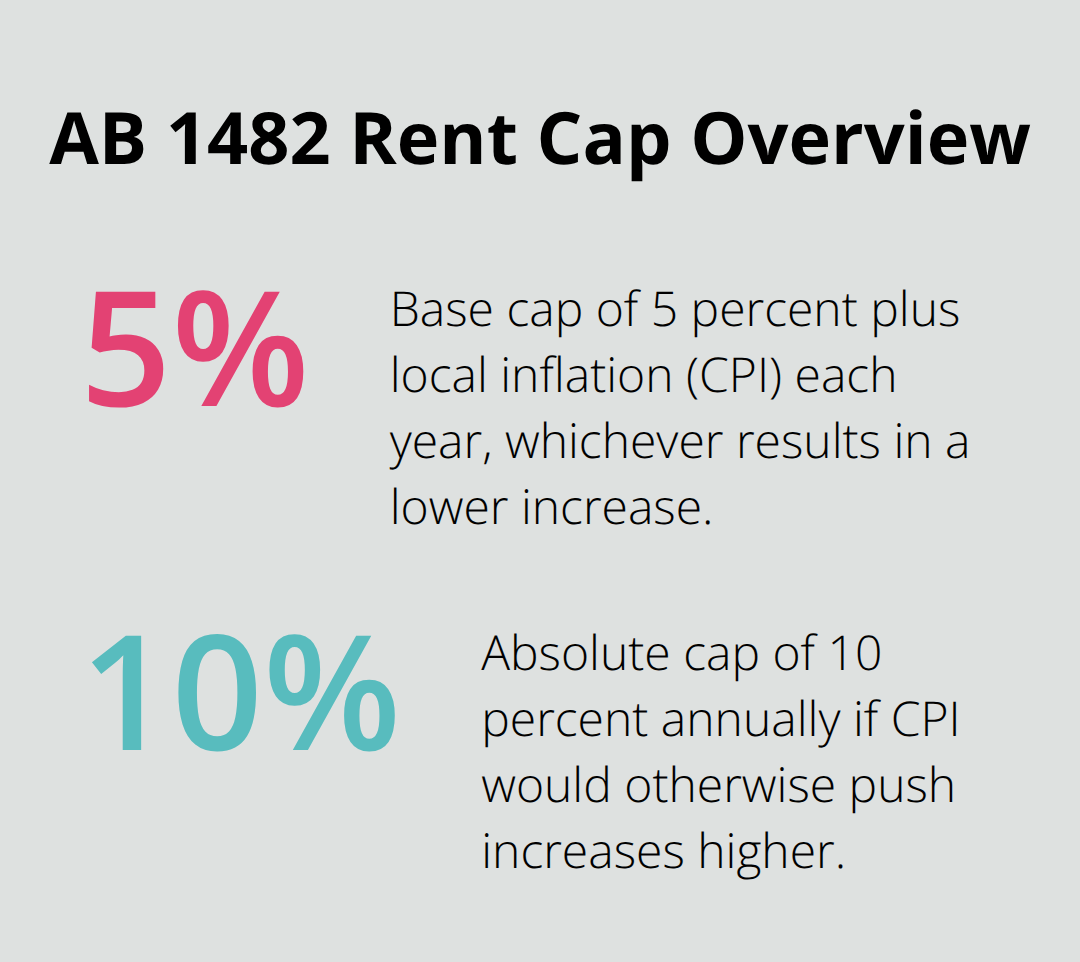
Assembly Bill 1482, enacted in 2019, fundamentally reshaped landlord-tenant dynamics across California, including Orange County. The law caps rent increases at 5 percent plus inflation or 10 percent annually (whichever is lower) and strengthened eviction protections substantially.
Property owners who fail to comply with AB 1482’s notice requirements or attempt to evict without following statutory procedures face liability for damages and attorney fees. Non-compliance with habitability standards, security deposit handling, and notice timelines generates the majority of tenant disputes in Orange County. Clear maintenance schedules, prompt repair documentation, and annual lease template updates protect owners from costly disputes. Market volatility also affects dispute frequency-when interest rates rise and property values soften, buyers and sellers become more litigious over contract performance and closing obligations.
Why Local Expertise Matters for Your Case
Orange County’s courts, local regulations, and market conditions require litigation strategies tailored to this specific region. Irvine’s planned community structure, Newport Beach’s coastal restrictions, and Santa Ana’s urban density each present distinct legal challenges that demand regional knowledge. Attorneys unfamiliar with Orange County’s particular development patterns, HOA enforcement practices, and judicial tendencies often miss critical settlement opportunities or fail to anticipate how local judges approach real estate disputes. The combination of high property values, aggressive development cycles, and strict environmental regulations means that disputes here escalate quickly and demand immediate, strategic intervention.
Three Dispute Types That Define Orange County Litigation
Boundary Disputes and Survey Failures
Boundary disputes dominate Orange County’s real estate litigation docket because property values are high enough that even small misalignments trigger expensive legal action. A boundary line error of just a few feet can represent tens of thousands of dollars in property value, and commercial properties multiply those stakes significantly. Orange County’s dense development patterns place neighboring properties close together, and older deed descriptions often lack the precision that modern surveys provide. Property owners who purchase without obtaining updated boundary surveys discover encroachments or easement conflicts years later when they attempt to develop or refinance. Obtain a current survey before closing, and verify that survey against title reports and recorded easements-this step prevents costly disputes from materializing.
Title Clouds and Ownership Conflicts
Title disputes in Orange County frequently involve competing claims on properties that changed hands multiple times, particularly in areas experiencing rapid redevelopment. When you cannot clearly establish ownership or when liens cloud the title, refinancing becomes impossible and marketability evaporates. Quiet title actions resolve these conflicts, but they require solid documentation of your ownership chain and proof that competing claims are invalid or expired. Environmental liens, unpaid property taxes, and old mechanics’ liens frequently create title clouds in Orange County, and each requires a specific legal strategy to remove.
Landlord-Tenant Compliance and Liability
Landlord-tenant disputes in Orange County have intensified since AB 1482’s implementation in 2019, and property owners who ignore the statute’s requirements face substantial liability. The law mandates specific notice periods before rent increases, restricts increases to 5 percent plus inflation or 10 percent annually (whichever is lower), and requires detailed documentation of eviction justifications. Owners must maintain habitability standards including functioning plumbing, heating, and structural integrity, and California courts interpret these requirements broadly. Security deposit disputes represent another flashpoint: AB 1482 requires landlords to return deposits within 21 days with itemized deductions, and failure to comply triggers statutory damages of up to one month’s rent plus attorney fees.
Construction Defects and Extended Liability Windows
Construction defect claims represent the third major category, and Orange County’s aggressive development over the past decade created a backlog of latent defects now surfacing. Foundation problems, water intrusion, electrical code violations, and improper material installation are the most common defects encountered in litigation. California’s ten-year statute under Civil Procedure Code Section 337.1 gives homeowners a long window to sue, which means builders and contractors face extended liability exposure. Developers and contractors must maintain comprehensive construction documentation, require current building code compliance from subcontractors, and secure long-tail insurance coverage that extends beyond typical project completion dates. The cost of defending a construction defect claim often exceeds the cost of proper quality control and timely remediation during construction, making prevention the most cost-effective strategy.
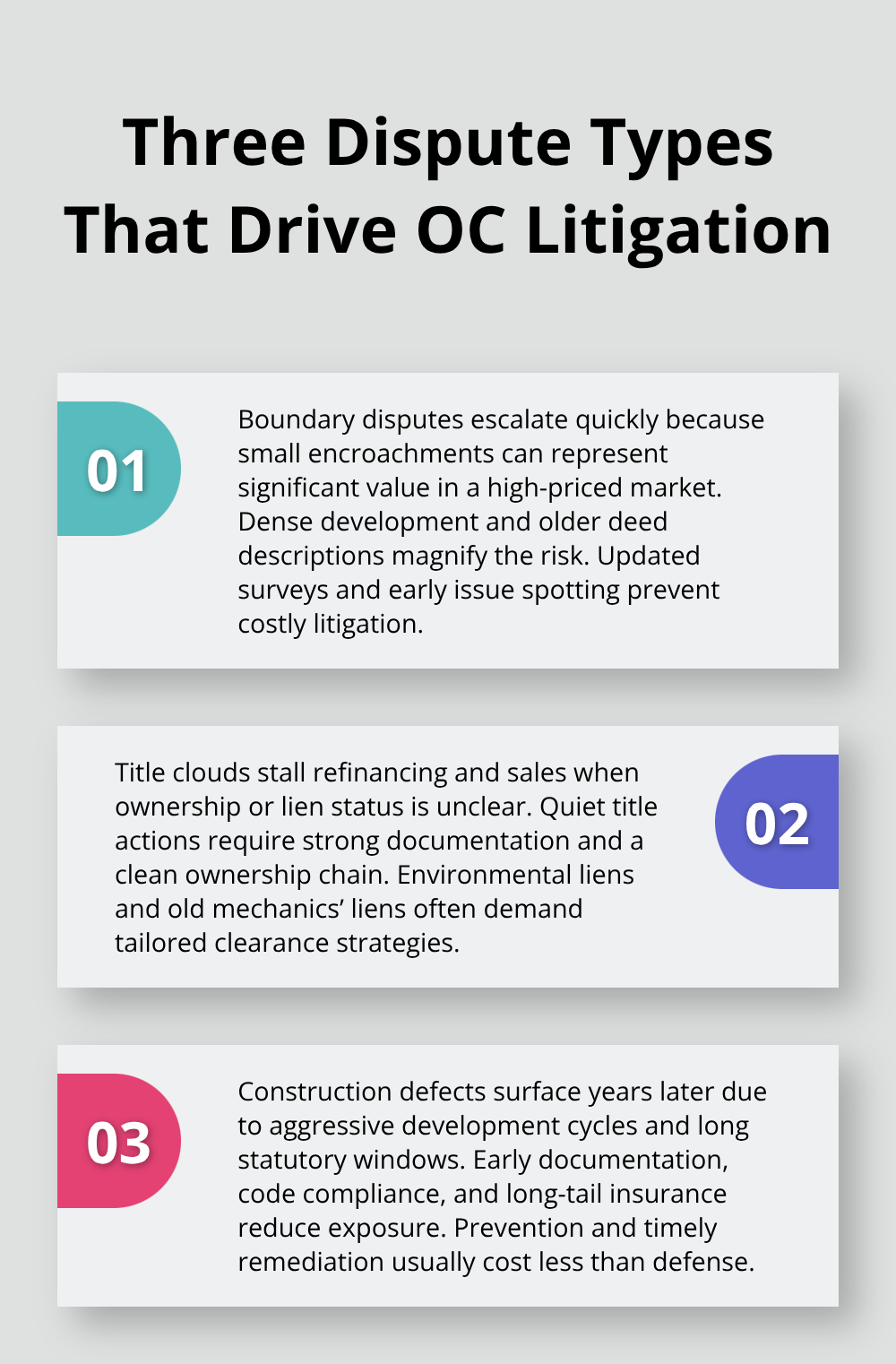
These three dispute categories shape Orange County’s litigation landscape, but the specific facts of your case determine which legal tools and negotiation approaches will protect your interests most effectively.
How to Position Your Case Before Trial
Act Fast: The First 30 Days Determine Your Outcome
The first 30 days after identifying a real estate dispute determine whether you settle efficiently or spend years in litigation. Most property owners wait months before contacting counsel, which destroys evidence, allows statute of limitations deadlines to approach, and eliminates negotiation leverage. You must immediately assess four concrete factors: the strength of your contractual position based on actual document language, the recoverable damages with specificity rather than estimates, the opposing party’s financial capacity to satisfy a judgment, and the timeline pressure created by California’s statute of limitations.
Breach of written contract claims must be filed within four years, but fraud claims expire within three years of discovery, and some construction defect claims face earlier deadlines despite the ten-year window for certain latent defects. You should document your position immediately by demanding copies of every transaction document, email exchange, inspection report, and communication within the first week because memories fade and parties destroy evidence intentionally or through normal business operations.
Contract Review and Damage Quantification
A thorough contract review identifies which specific obligations the opposing party violated and whether the breach was minor, material, or anticipatory-this distinction directly affects the damages calculation and settlement value. If a seller failed to disclose known defects, you must quantify the repair costs through licensed contractors and compare those costs against the purchase price to establish actual damages. If a buyer breached a purchase agreement, you calculate the seller’s losses as the difference between the agreed sale price and the current market value, supported by recent comparable sales in the same Orange County submarket.
This specificity transforms vague claims into negotiable positions that mediators and opposing counsel take seriously. Documented figures backed by contractor quotes, appraisals, and market data command respect in settlement discussions, while vague damage estimates signal weakness and invite dismissal.
Targeted Discovery Using Local Orange County Records
Discovery in Orange County real estate cases requires targeted requests to local property records and county databases that most attorneys outside the region overlook. Orange County Assessor records reveal prior sales prices, property tax valuations, and ownership history that establish baseline property values and identify hidden ownership interests.
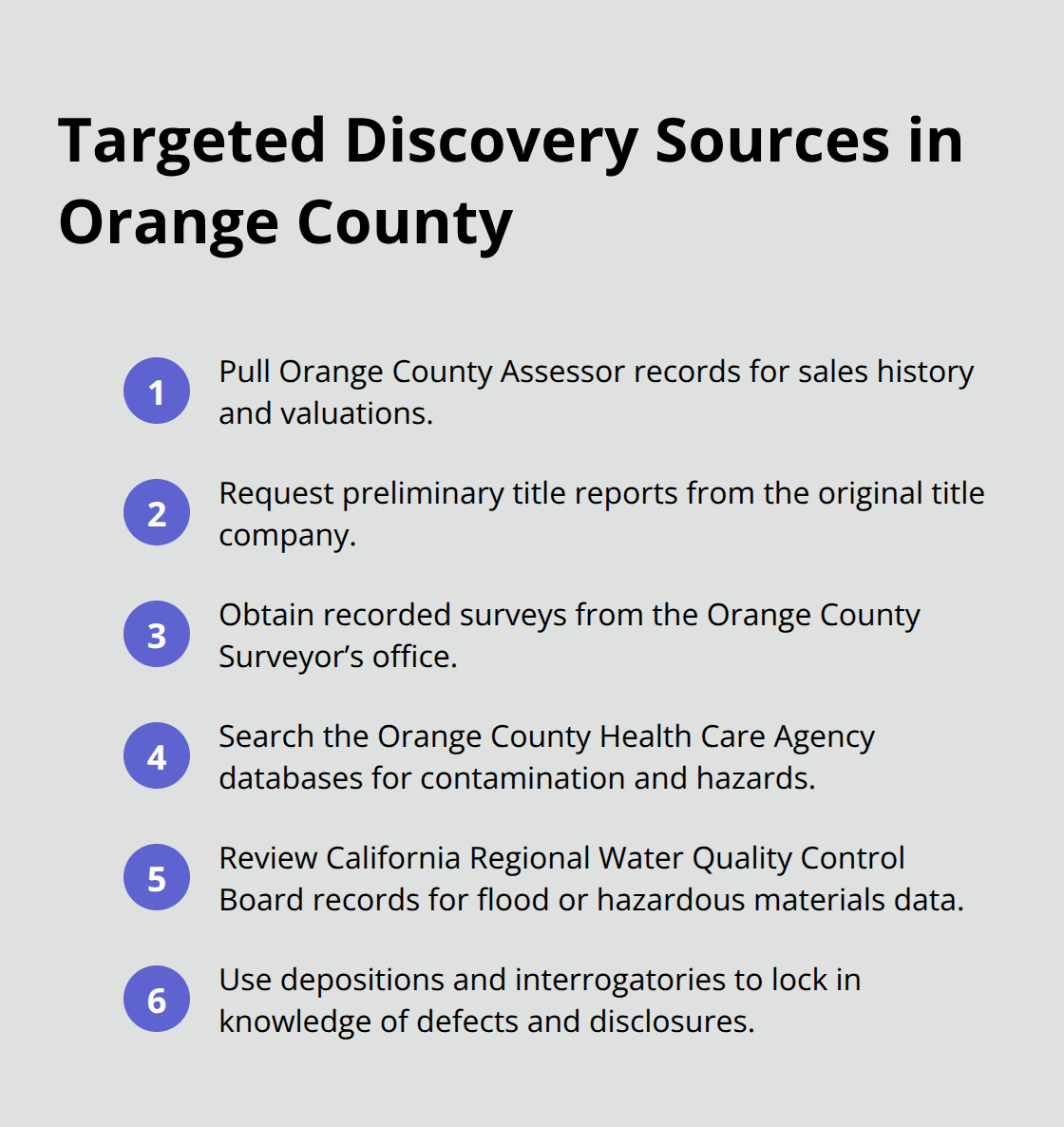
You should request preliminary title reports from the title company that handled the original transaction because these reports document easements, liens, and encumbrances that may have triggered the dispute.
If boundary issues are involved, contact the Orange County Surveyor’s office and obtain all recorded surveys for the property dating back at least 20 years because older surveys often contain different boundary lines than current descriptions. Environmental disputes require searches through the Orange County Health Care Agency and California Regional Water Quality Control Board databases for documented contamination, flood zones, or hazardous materials.
During depositions, ask opposing parties specific questions about their knowledge of defects or disclosure obligations rather than general questions about the property-a contractor who claims ignorance of foundation problems can be confronted with building permits, inspection reports, and subcontractor communications that prove awareness. You should serve interrogatories that require written responses under oath asking for identification of all communications, inspections, and repairs related to the disputed issue, which creates a paper trail that either supports or undermines their credibility.
Settlement Positioning Through Evidence-Based Negotiation
Mediation in Orange County succeeds when both parties understand their actual litigation risk, which is why you must present damage calculations, statute of limitations deadlines, and courtroom win-loss probabilities based on the evidence assembled during discovery. Judges in Orange County’s central courthouse in Santa Ana and in satellite courthouses across the county tend to enforce contracts strictly when language is unambiguous and to award damages that match documented losses rather than speculative figures.
Settlement discussions should occur after discovery is substantially complete because incomplete information leads to unrealistic demands that stall negotiations indefinitely. You gain leverage when the opposing party recognizes that your evidence supports your position and that trial carries genuine risk for them. This recognition typically emerges only after they review your discovery responses, deposition transcripts, and expert reports-not before.
Final Thoughts
Orange County’s real estate disputes follow predictable patterns shaped by high property values, dense development, and strict regulatory requirements that demand immediate action. The boundary conflicts, title clouds, landlord-tenant compliance failures, and construction defects we outlined require attorneys who understand Orange County’s specific court procedures, local judges’ tendencies, and the regional property records that support your position. Your response in the first 30 days determines whether you settle from a position of strength or spend years defending against escalating claims.
Targeted discovery through the Orange County Assessor, title reports, and county databases uncovers evidence that transforms vague disputes into negotiable positions backed by documented damages. Settlement discussions succeed when both parties recognize their actual litigation risk, which emerges only after comprehensive discovery and expert analysis. Strategic advocacy protects your financial interests by preventing disputes from escalating into years-long litigation that drains resources and disrupts operations.
If you face a real estate dispute in Orange County or across Southern California, contact Raul Garcia Law Firm immediately to clarify your position and identify your options under California law. We represent businesses, owners, and professionals in complex SoCal real estate litigation, delivering strategic advocacy that protects your interests and minimizes operational disruption. Early intervention and evidence-based negotiation create the leverage that resolves conflicts efficiently before they consume years of your time and resources.