

Nondisclosure agreements in Southern California are only as strong as their enforcement. Courts in Orange County and across the region regularly strike down poorly drafted NDAs, leaving businesses vulnerable to theft of trade secrets and confidential information.
We at Raul Garcia Law Firm have seen firsthand how small drafting mistakes can render an NDA unenforceable when it matters most. This guide walks you through what actually works in Southern California courts and how to protect your business before a breach happens.
How Orange County Courts Actually Enforce NDAs
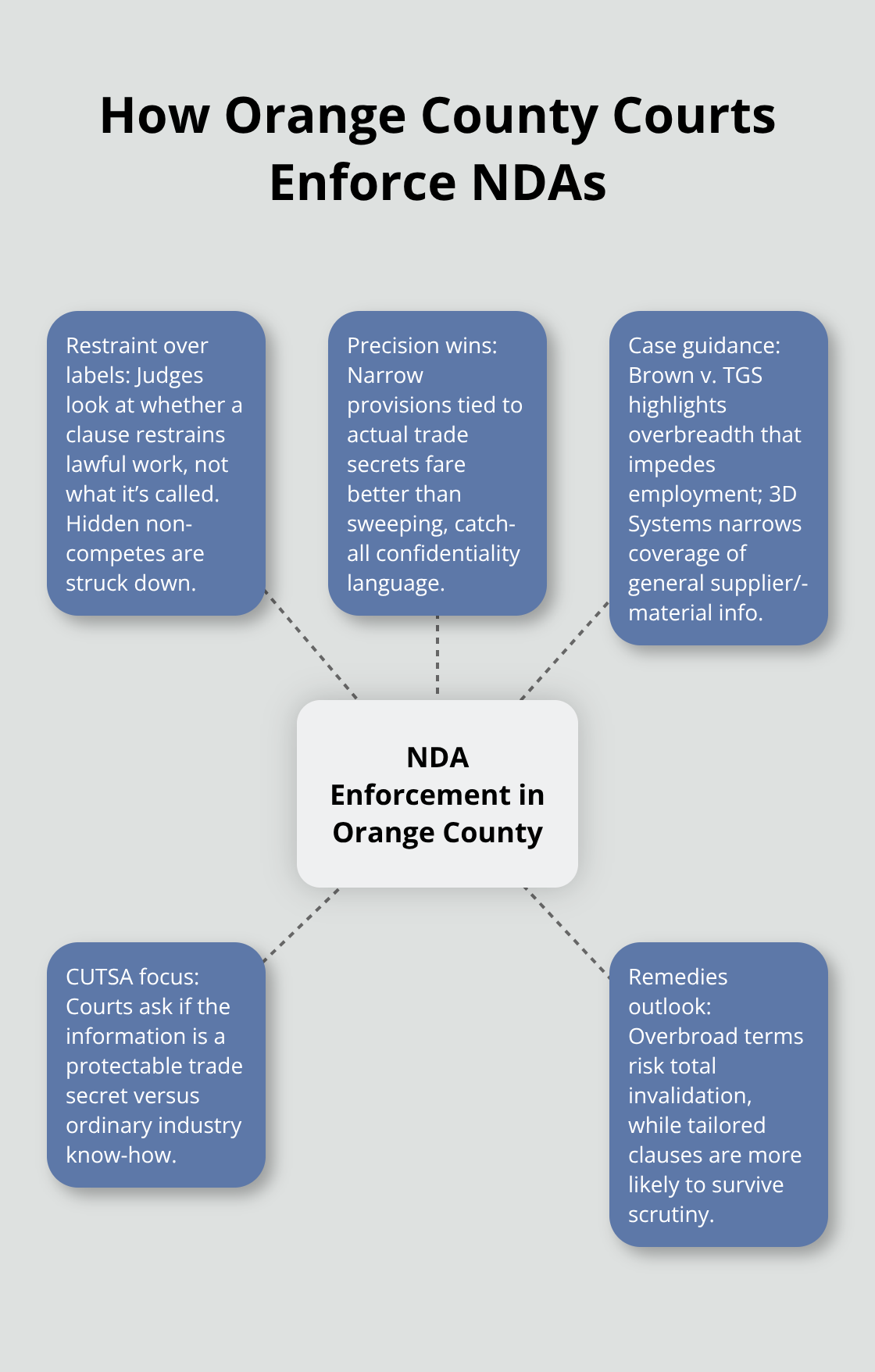
California law treats NDAs differently than most states, and that difference cuts both ways. Section 16600 of the California Business and Professions Code prohibits contracts that restrain someone from engaging in a lawful profession or business. Courts in Orange County apply this statute broadly, meaning an NDA that functions as a hidden non-compete will be struck down entirely. The 2020 case Brown v. TGS Management Co. invalidated a confidentiality clause so sweeping it effectively prevented the employee from working in the securities industry. More recently, the 2025 decision 3D Systems, Inc. v. Wynne narrowed NDA scope even further, ruling that confidentiality provisions barring use of information about materials and suppliers-information not limited to genuine trade secrets-can be unenforceable. Orange County judges focus on actual restraint, not the label on the clause. If your NDA prevents someone from competing or working in their field, courts will void it regardless of whether you called it confidentiality or something else.
What Information Orange County Courts Will Actually Protect
The strongest NDAs in Orange County rest on the Uniform Trade Secrets Act (CUTSA), which protects customer lists, pricing formulas, vendor relationships, product roadmaps, and manufacturing processes when the business takes reasonable security measures. The 2024 case Galderma Laboratories v. Tisckos upheld a confidentiality provision restricting disclosure of customer lists, demonstrating that courts will enforce narrow, specific protections. The key difference is precision. Broad language like protecting all proprietary information fails; specific categories tied to genuine business value succeed. Courts also require carve-outs for information that is publicly available, independently developed, or lawfully obtained from third parties. Without these carve-outs, judges treat the clause as overbroad and void the entire provision. Orange County courts increasingly scrutinize whether the confidential information actually qualifies as a trade secret under CUTSA or merely represents general industry knowledge that employees routinely use. If your NDA sweeps in ordinary know-how, it will not survive judicial review.
Building Enforceability in Orange County Before Disputes Happen
Enforceability starts before any breach occurs. Document your security measures-restricted access, password protection, confidentiality training records-because courts require evidence that you actually treated the information as confidential. Without documentation, judges question whether the information qualifies for protection. Define confidential information with explicit examples rather than catch-all language. Instead of stating all proprietary information is confidential, list customer lists with specific customer names or relationships, pricing structures with actual formula categories, and product roadmaps with development timelines. Set duration based on information type; trade secrets warrant longer protection while general confidential data typically justifies one to five years. Include explicit language permitting disclosures required by court order, subpoena, or legal compliance, plus disclosures to counsel. Orange County judges have invalidated NDAs lacking these carve-outs as unreasonably broad.
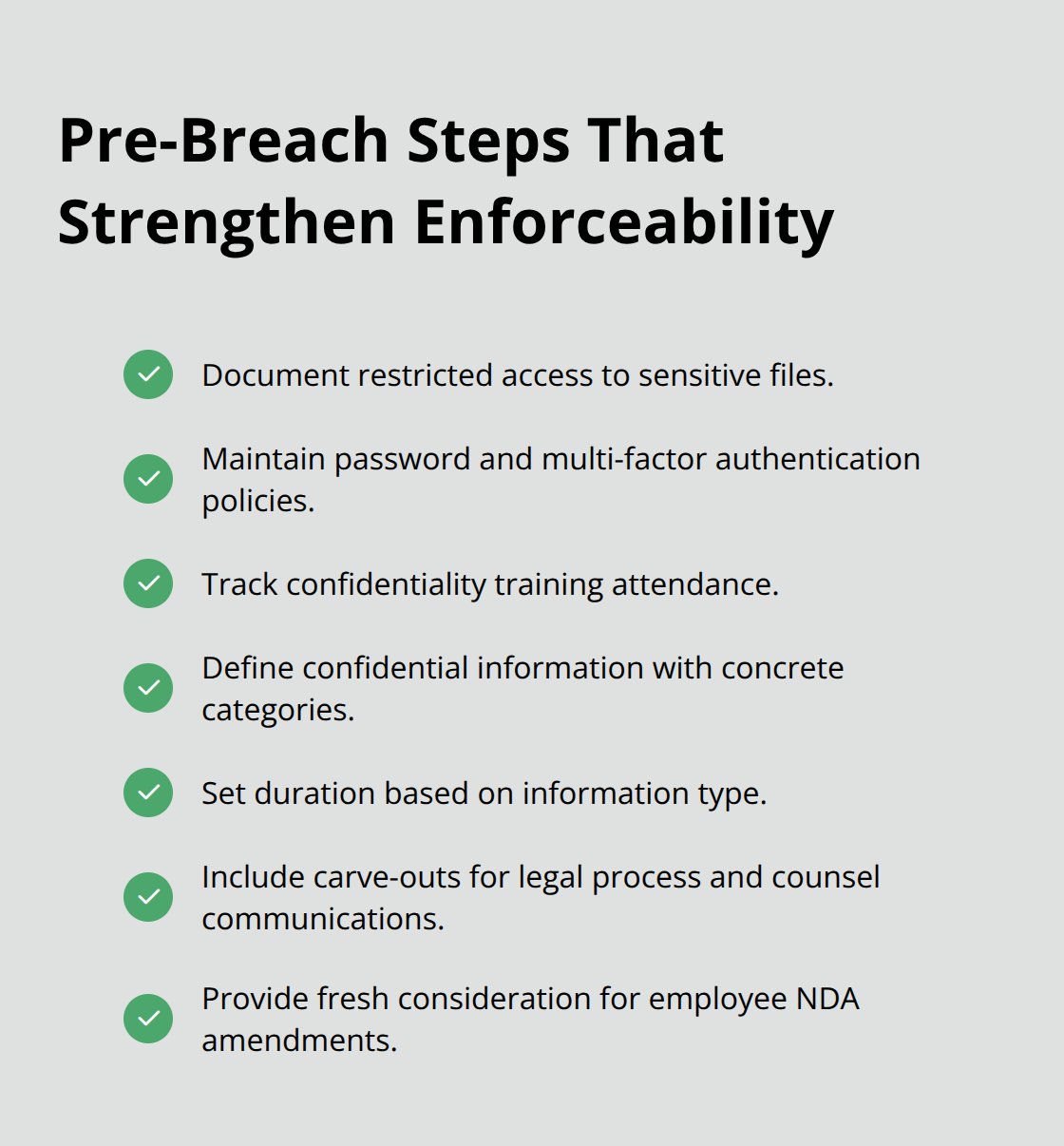
Consider separate agreements for different information categories rather than a single sweeping document. When you amend an NDA with existing employees, provide new consideration beyond continued employment-additional pay, promotion, or benefits-or the amendment weakens enforceability. Courts in Orange County treat consideration seriously and will reject amendments lacking it.
Responding to Breaches in Orange County
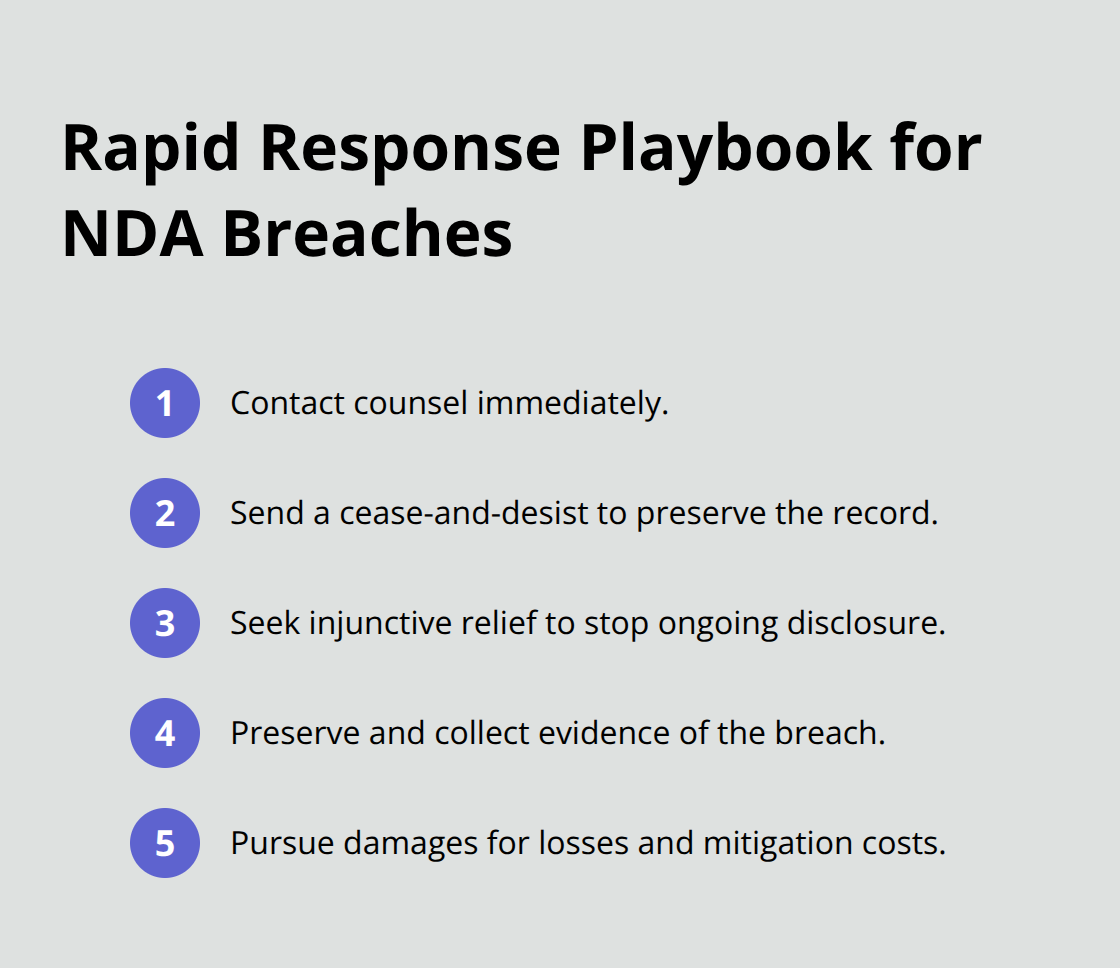
Once a breach occurs, your response determines whether the NDA actually protects you. Courts in Orange County examine whether you took prompt action to stop the violation and whether you preserved evidence of the breach. Delay signals that the information was not truly confidential, and judges use that signal against you. Consult with counsel immediately upon discovering a breach rather than attempting internal resolution first. Counsel can send a cease-and-desist letter that preserves your legal position and creates a record of your diligence. If the breaching party ignores the letter, you move toward injunctive relief-a court order stopping the disclosure or use of confidential information. Orange County courts grant injunctions when you show a likelihood of success on the merits and irreparable harm (meaning money damages alone cannot fix the injury). Damages claims follow, covering lost profits, diminished business value, or costs incurred to mitigate the breach. The strength of your NDA language and your documentation of security measures directly affect whether Orange County judges award damages and how much they award. Weak NDAs result in reduced damages or dismissal; strong NDAs with clear definitions and carve-outs support full recovery.
Common Pitfalls That Weaken NDA Enforcement in Orange County
Overly Broad Language Courts Will Strike Down
Broad language kills NDAs in Orange County. Courts consistently void agreements that use sweeping terms like protecting all proprietary information, trade secrets, confidential data, or business information without defining what actually qualifies. The 2025 decision 3D Systems, Inc. v. Wynne demonstrates this reality-the court invalidated provisions that barred use of supplier and materials information because the NDA failed to distinguish between genuine trade secrets and ordinary industry knowledge. Orange County judges apply a simple test: if the language is so wide it prevents someone from working in their field or using skills they developed elsewhere, the entire clause fails.
This happened in Brown v. TGS Management Co., where a securities industry confidentiality provision was struck down because it functionally operated as a non-compete. The mistake most businesses make is copying NDA language from templates or competitors without tailoring it to their actual confidential information. Instead of listing specific customer names, pricing formulas, or manufacturing processes, they write catch-all language that sounds protective but collapses in court. Overly broad NDAs also trigger Section 16600 scrutiny because judges ask whether the clause restrains lawful business activity rather than protecting legitimate secrets.
Failure to Identify What Information Is Actually Confidential
Identifying what is actually confidential separates enforceable NDAs from worthless ones. Many agreements fail because they never specify which information receives protection, making it impossible for courts to determine whether a breach occurred. Courts require you to identify confidential information with concrete categories-not vague references to proprietary knowledge.
Customer lists with specific account names, pricing structures with formula components, vendor relationships with supplier details, product roadmaps with development timelines, and manufacturing processes with technical specifications all work because they describe real, protectable information. The Galderma Laboratories v. Tisckos decision upheld confidentiality restrictions on customer lists because the agreement clearly identified what customer information mattered. Without this specificity, judges assume the business did not actually protect the information and deny relief.
Inadequate Consideration or One-Sided Agreement Terms
Adequate consideration-the legal term for what one party gives in exchange for the agreement-determines whether courts will enforce your NDA. Initial employment agreements bundled with an NDA typically contain sufficient consideration; the job itself satisfies this requirement. But amending an existing NDA with current employees requires new consideration beyond continued employment. Courts in Orange County reject amendments lacking additional pay, equity grants, promotions, or other tangible benefits.
This matters because businesses often try strengthening weak NDAs through amendments, only to find the changes unenforceable. One-sided terms also weaken enforcement. If your NDA restricts employees but not the company, or protects information indefinitely, Orange County judges view it as unreasonably oppressive. Including carve-outs for lawful disclosures, setting duration tied to information type, and ensuring both parties have obligations creates a balanced agreement courts will uphold. These structural choices directly affect whether Orange County judges will enforce your NDA when a breach actually occurs, making the next step-building enforceability before disputes happen-essential to protecting your business.
Strengthening Your Orange County NDA With Concrete Documentation
Define Confidential Information With Specificity
The difference between an NDA that courts enforce and one that fails comes down to how specifically you define what you are protecting. Start by cataloging your actual confidential information rather than using generic language. Instead of writing all proprietary information is confidential, list customer accounts with names and contract values, pricing formulas with specific cost components and markup percentages, vendor relationships including supplier names and negotiated terms, product roadmaps with development phases and timelines, and manufacturing processes with technical specifications. This specificity matters because Orange County judges ask a direct question: can the business identify what it claims to protect? Vague language fails this test.
The Galderma Laboratories v. Tisckos decision upheld restrictions on customer lists because the agreement identified exactly which customer information mattered. Courts also require you to demonstrate that you actually treated this information as confidential through documented security measures. Restricted access logs showing who viewed sensitive files, password protection records, confidentiality training attendance sheets, and written policies limiting distribution all create a paper trail that judges examine. Without documentation, courts assume you did not truly protect the information and deny relief regardless of your NDA language.
Set Duration Based on Information Category
Set protection duration based on information category rather than using a blanket timeframe. Trade secrets under California’s Uniform Trade Secrets Act warrant longer or indefinite protection when the information remains secret, while general confidential data typically justifies one to five years. This differentiation shows Orange County judges that you understand what actually needs protection and strengthens enforceability. The timing of your protection directly affects how courts view the legitimacy of your confidentiality claims.
Include Explicit Carve-Outs and Amendments
Your NDA also needs explicit carve-outs stating what information is not confidential. Include language permitting disclosure when required by court order, subpoena, or legal compliance, and when necessary to consult with counsel. These carve-outs prevent judges from striking down your entire NDA as overbroad, a fatal flaw that appears repeatedly in weak agreements. When you amend an NDA with existing employees, provide documented consideration beyond continued employment-additional compensation, equity grants, or promotional benefits create enforceable amendments while continued employment alone does not. Orange County courts take consideration seriously and will reject amendments lacking tangible value.
Document Disclosure Timing and Circumstances
Document the timing and circumstances of every disclosure. When you share confidential information with a new employee, contractor, or partner, create a record showing the date of disclosure, what information was shared, why it was necessary, and what confidentiality obligations applied. This documentation proves you made deliberate choices about information protection rather than treating everything as equally confidential. Courts use this evidence to determine whether the information actually qualifies for protection under CUTSA or represents general industry knowledge.
Combine Three Essential Elements
The strongest Orange County NDAs combine three elements: precise definitions of what information receives protection, documented security measures showing the business actually protected it, and explicit carve-outs and duration limits preventing overbreadth. Businesses that invest in this foundation before any breach occurs find that Orange County courts enforce their agreements when disputes arise.
Enforcing Your NDA in Orange County When Breaches Occur
Contact counsel immediately upon discovering that someone has disclosed or used your confidential information without authorization. Delay weakens your position because Orange County courts view prompt action as evidence that the information was genuinely confidential and valuable to your business. A cease-and-desist letter from counsel creates a formal record of the breach and your response, which judges examine when evaluating damages and injunctive relief.
Injunctive relief stops the breach before it causes irreparable harm (meaning money damages alone cannot repair the injury). Orange County courts grant injunctions when you demonstrate a likelihood of success on the merits and show that the damage becomes permanent once confidential information spreads. Damages claims follow, covering lost profits from diverted customers, diminished business value, or costs incurred to mitigate the breach.
The strength of your nondisclosure agreements Southern California language directly affects the damages you recover.
Settlement offers a faster path than litigation when the breaching party acknowledges wrongdoing and agrees to stop using your information. Litigation costs time and money, while settlement preserves business relationships and confidentiality. We at Raul Garcia Law Firm help businesses respond to breaches with the strategic approach that maximizes recovery and stops further damage. Contact us to discuss your NDA enforcement options.