

Your company’s competitive edge depends on protecting what makes you unique. Trade secret litigation in California is increasingly common, with businesses losing millions when proprietary information walks out the door.
At Raul Garcia Law Firm, we help Orange County companies defend their innovations before disputes spiral into costly court battles. This guide covers what California law protects, where disputes typically arise, and how to build a defense that actually works.
What California Law Actually Protects as Trade Secrets
California Civil Code Section 3426.1 defines a trade secret as information that derives independent economic value from not being generally known and is subject to reasonable secrecy efforts. This definition matters because it sets a two-part test courts apply when disputes land in litigation. First, the information must have actual competitive value because competitors don’t know it. Second, your company must take reasonable steps to keep it secret. Generic customer lists don’t qualify if your industry regularly shares contact information. Proprietary algorithms, manufacturing processes, pricing formulas, and vendor relationships do qualify if you’ve locked them down with access controls and confidentiality agreements. The distinction matters in court because judges examine what you actually did to protect the information, not what you claim its value to be. Companies that fail to implement basic safeguards-password protection, limited access, exit procedures-lose trade secret status even when the information would otherwise qualify.
Information That Courts Actually Recognize
Client lists with special relationships or pricing structures win protection more often than generic contact databases. Manufacturing methods, production sequences, and process improvements consistently qualify because they directly impact competitive advantage. Software source code, algorithms, and technical specifications receive strong protection when properly secured.
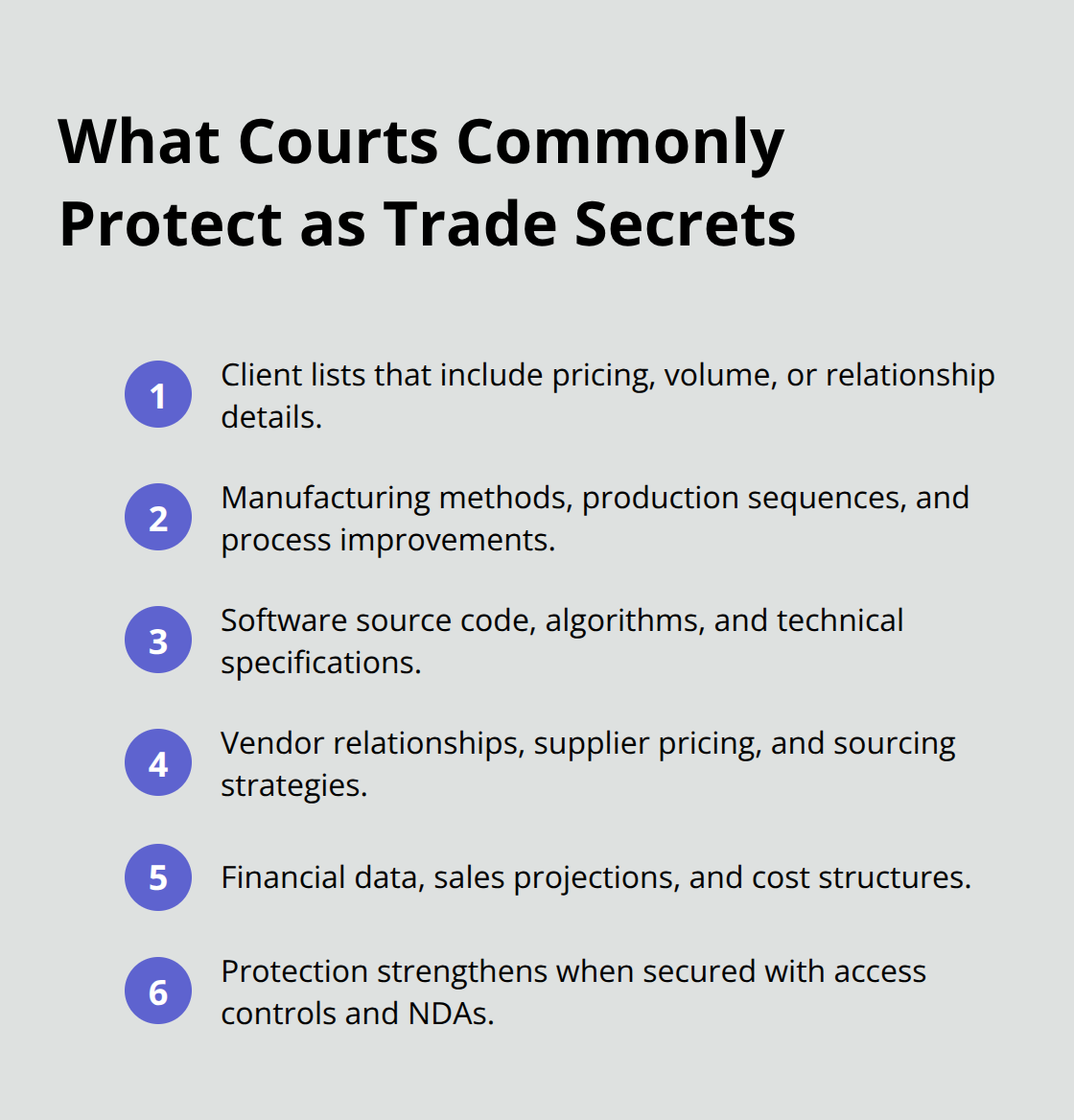
Vendor relationships, supplier pricing, and sourcing strategies qualify if documented and restricted. Financial data, sales projections, and cost structures protect competitive position and gain recognition. The California Uniform Trade Secrets Act does not require registration, which means protection depends entirely on your internal controls and documentation. Courts in Orange County have consistently found that companies maintaining separate access logs, requiring confidentiality agreements at hire, and implementing role-based permissions demonstrate reasonable secrecy measures that strengthen litigation positions.
Where Trade Secrets End and General Knowledge Begins
Information that competitors can reverse engineer through lawful means is not a trade secret under California law. If someone can legally purchase your product and figure out how it works through analysis, that information loses protection. Industry standards, publicly available techniques, and information your employees learned before joining your company do not qualify. The critical distinction is whether the information maintains secrecy through your protective efforts or whether it has become common knowledge in your industry. Courts reject overly broad claims that treat entire business areas as trade secrets when significant portions are actually public or readily derivable. This matters because weak trade secret claims damage your credibility in litigation and can lead to fee-shifting against your company under California Civil Code Section 3426.4 if courts find bad faith in bringing or resisting claims.
Moving From Definition to Defense
Once you understand what California law protects, the next step involves identifying which information in your business actually qualifies and how trade secret disputes typically arise. Most trade secret litigation in Orange County stems from specific situations-former employees departing with client lists, competitors obtaining pricing data, or vendors sharing proprietary processes with rivals. Understanding these common dispute patterns helps you recognize where your vulnerabilities lie and what protective measures matter most.
Common Trade Secret Disputes in Orange County
Former Employees and Client List Departures
Former employees departing with client lists represent the single largest category of trade secret disputes we see in Orange County. The transition period creates maximum vulnerability because employees maintain legitimate access to sensitive information right up until their last day. An employee who spent three years managing relationships with your top clients knows exactly which accounts generate the highest margins, what pricing you’ve offered, and which competitors have tried to poach them. The moment that person accepts a position at a rival firm or launches their own startup, that knowledge becomes a competitive weapon.
California courts recognize this risk, which is why Section 3426.1 explicitly protects client lists as trade secrets when they include pricing, volume data, or relationship details that give competitive advantage. The problem intensifies because the employee has done nothing illegal by knowing the information or remembering client names. Misappropriation occurs when they use that knowledge to solicit your clients or provide it to a competitor.
Exit procedures matter enormously here. Companies that conduct no exit interviews, fail to collect devices with access to client data, or neglect to document what information the departing employee handled significantly weaken their litigation position. Orange County businesses that implement structured offboarding-including device collection within hours of departure, confirmation of data deletion, and documented handoff meetings-create evidence trails that courts view favorably when disputes arise. Non-disclosure agreements signed at hire provide the contractual foundation, but the real protection comes from demonstrating you actually treated the information as confidential through access controls and restricted distribution.
Vendor Breaches and Competitor Access
Competitors obtaining your pricing data or manufacturing specifications through breached NDAs create a different but equally damaging scenario. This typically involves a vendor, contractor, or business partner who signed confidentiality agreements but shared your proprietary information with a competitor or used it themselves. Vendors often work with multiple companies in your space, giving them access to your processes, costs, and supplier relationships simultaneously.
A manufacturing partner who knows your production methods can offer faster timelines or lower prices to competitors who approach them directly. A logistics contractor holding your supply chain data can reveal your sourcing strategies to rivals. The challenge in these cases involves proving the competitor actually received and used the information rather than independently developing similar approaches.
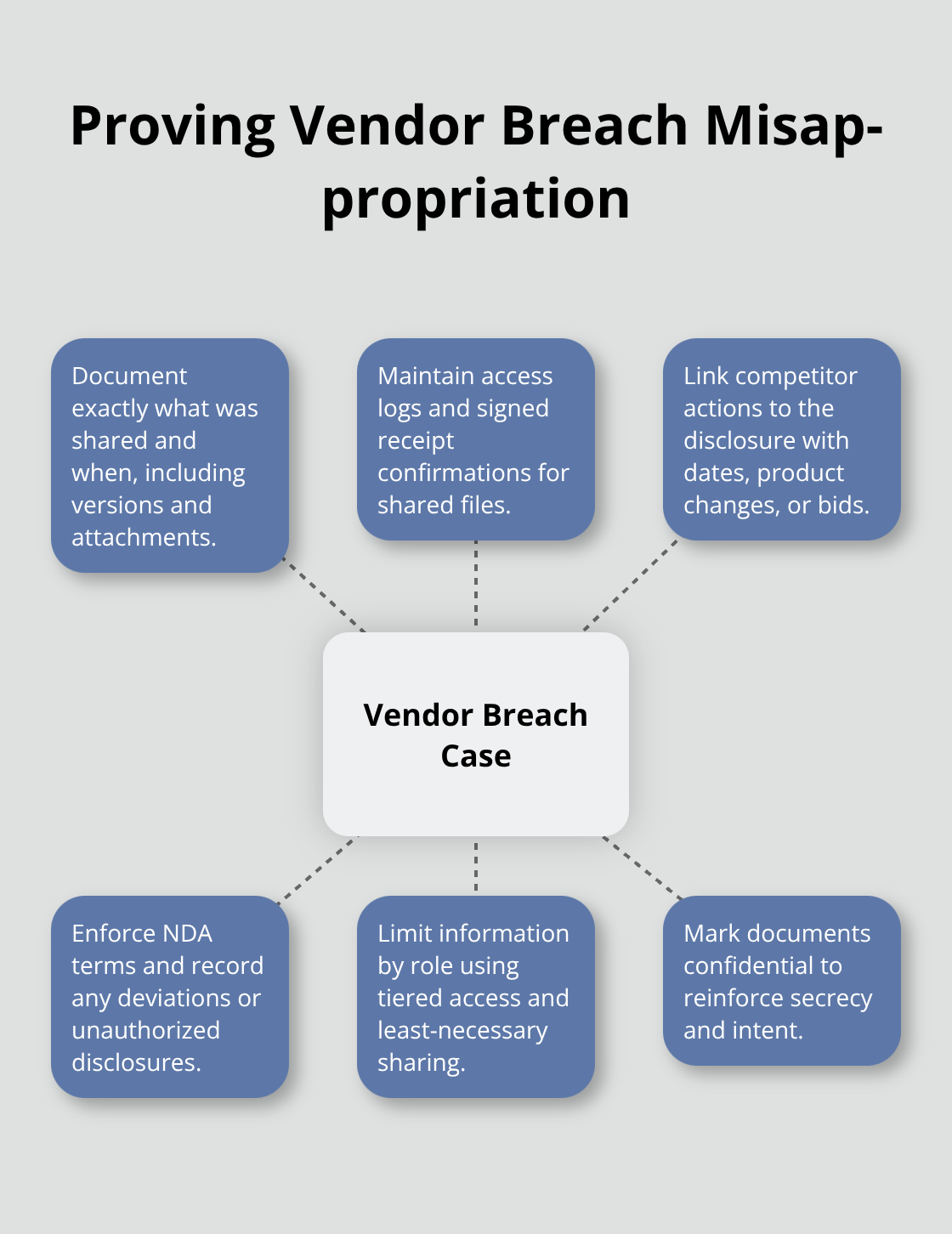
Courts require documentation showing what information was provided, when it was shared, and evidence linking the competitor’s subsequent actions to that disclosure.
Companies that fail to mark confidential documents, maintain access logs for shared data, or require signed receipt confirmations struggle to establish this chain of custody. The practical defense involves implementing tiered access for different partners, providing only information necessary for their specific role, and maintaining detailed records of what each party received.
Swift Action Against Breaches
When a partner violates an NDA, swift action matters. Waiting months before sending a cease-and-desist letter signals you didn’t view the information as valuable, which undermines damages claims. Immediate preservation letters that document the breach, demand return of materials, and notify the competitor that continued use will trigger litigation protect your position and demonstrate the seriousness of your claim.
The speed of your response directly affects how courts evaluate your damages and whether injunctive relief becomes available. Courts question whether information truly qualifies as a trade secret when companies delay enforcement for extended periods. This enforcement pattern also influences whether competitors face liability for willful and malicious misappropriation, which can trigger exemplary damages under California Civil Code Section 3426.3(c).
Understanding where disputes originate helps you recognize which protective measures prevent problems before litigation becomes necessary. The transition from identifying vulnerabilities to implementing safeguards requires a strategic approach that addresses both employee departures and vendor relationships simultaneously.
Litigation Strategy and Protection Measures
Establish Preventive Controls Before Disputes Arise
The most effective trade secret protection happens before a dispute reaches court. Companies that wait until information walks out the door face exponential costs and diminished legal options. Businesses that invested $5,000 in preventive measures early avoid litigation expenses exceeding $250,000 later. The difference lies in documentation, access controls, and contractual frameworks that demonstrate you treated information as genuinely confidential.
Non-disclosure agreements matter, but only when paired with concrete actions. A signed NDA sitting in a file cabinet while employees email client lists to personal accounts provides minimal protection in court. Courts examine what you actually did, not what agreements say you should have done.
Start with a confidentiality audit identifying which information qualifies as a trade secret under California Civil Code Section 3426.1. Separate truly valuable proprietary data from general business information. Then implement tiered access controls matching information sensitivity to employee role.
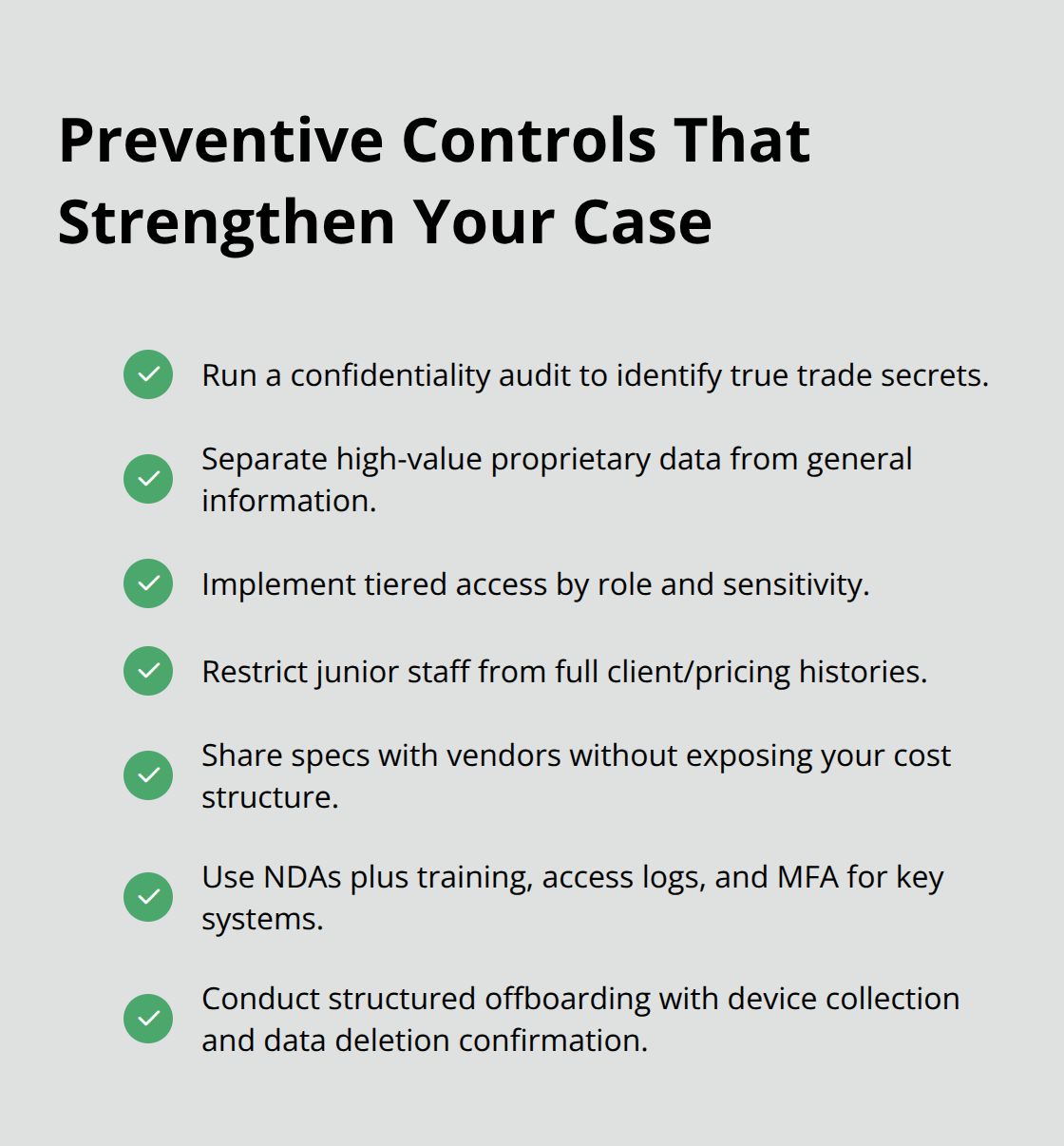
A junior salesperson should not access your entire client database with pricing history. A vendor needs your specifications but not your cost structure.
Implement Technical and Administrative Safeguards
Password-protect sensitive information and require multi-factor authentication for systems holding your most valuable data. Maintain access logs showing who viewed what information and when. Require signed confidentiality agreements at hire and document that employees received training on handling proprietary information.
Conduct exit interviews collecting all devices and confirming data deletion. These steps cost minimal money but create the evidence trail courts require when disputes arise. Companies implementing structured offboarding procedures reduce litigation risk substantially because they can demonstrate reasonable secrecy measures.
Leverage State and Federal Remedies When Misappropriation Occurs
When misappropriation occurs despite prevention efforts, California law provides powerful remedies that operate at both state and federal levels. The California Uniform Trade Secrets Act authorizes injunctive relief stopping current and threatened misappropriation, damages covering actual losses and unjust enrichment, and recovery of attorney fees when the other side acts in bad faith. Willful and malicious misappropriation triggers exemplary damages up to twice your actual damages under California Civil Code Section 3426.3(c).
The federal Defend Trade Secrets Act adds a civil seizure mechanism allowing courts to seize property protecting trade secret confidentiality in urgent circumstances. This federal option proves valuable when competitors actively use stolen information and ordinary injunctions cannot stop the damage. However, accessing federal remedies requires establishing that your trade secret relates to a product or service used in interstate or foreign commerce. Most Orange County businesses meet this threshold.
Act Swiftly to Preserve Your Legal Position
The critical factor determining which remedies apply involves speed of action. Courts question whether information truly qualifies as a trade secret when companies delay enforcement for months. A preservation letter sent within days of discovering misappropriation demonstrates your claim’s legitimacy and supports injunctive relief requests. This letter documents the breach, demands immediate cessation of use, and notifies the recipient that continued violation triggers litigation.
The timing signals you view the information as genuinely valuable and strengthens arguments for preliminary injunctions stopping competitor activity before trial. An experienced litigation attorney can assess your situation, identify which remedies apply, and execute the strategic response that protects your financial interests while minimizing operational disruption during the dispute.
Final Thoughts
Trade secret litigation in California demands action before disputes spiral into expensive court battles. The companies that protect their innovations successfully treat confidentiality as a business priority, not a legal afterthought. Your competitive advantage vanishes the moment proprietary information reaches a competitor’s hands, and recovery becomes exponentially harder once that happens.
Identify which information in your business actually qualifies as a trade secret under California Civil Code Section 3426.1, then implement reasonable secrecy measures that demonstrate you genuinely protected the information. Password controls, access logs, confidentiality agreements, and structured exit procedures create the evidence trail courts examine when disputes arise. Respond immediately when misappropriation occurs-a preservation letter sent within days of discovering a breach signals legitimacy and supports injunctive relief requests that stop competitor activity before trial.
The moment you suspect a former employee has taken client lists, a vendor has shared your specifications, or a competitor obtained your pricing data, contact an experienced trade secret attorney. Waiting weeks or months allows competitors to entrench themselves deeper into your market position and damages your litigation claims. We at Raul Garcia Law Firm represent Orange County companies in trade secret litigation California, combining strategic assessment of your situation with aggressive enforcement that protects your financial interests and minimizes operational disruption.