

Closing a business in Orange County involves complex legal and financial decisions that can make or break your financial future. We at Raul Garcia Law Firm help business owners navigate Orange County business dissolution with clarity and confidence.
The steps you take now determine whether you preserve maximum value or face unnecessary losses and liability exposure. This guide walks you through the critical actions that protect your assets and minimize risk during the dissolution process.
Understanding Business Dissolution in Orange County
Three Paths to Closing Your Orange County Business
Dissolution in Orange County comes in three distinct forms, and selecting the right path saves time and money. Voluntary dissolution occurs when owners decide to close the business on their own terms-they file a Certificate of Dissolution with the California Secretary of State and manage the wind-down systematically. Involuntary dissolution happens when a court orders closure due to deadlock between partners, misconduct, or breach of fiduciary duty, a costly and adversarial process that drains resources and damages relationships. Administrative dissolution offers the fastest option for qualifying entities: if your business has been inactive for 12 months, carries no debts, and has issued no outstanding shares, you can request voluntary administrative dissolution with a written certification, and the Franchise Tax Board may abate unpaid taxes, interest, and penalties.
Timeline Expectations for Orange County Dissolutions
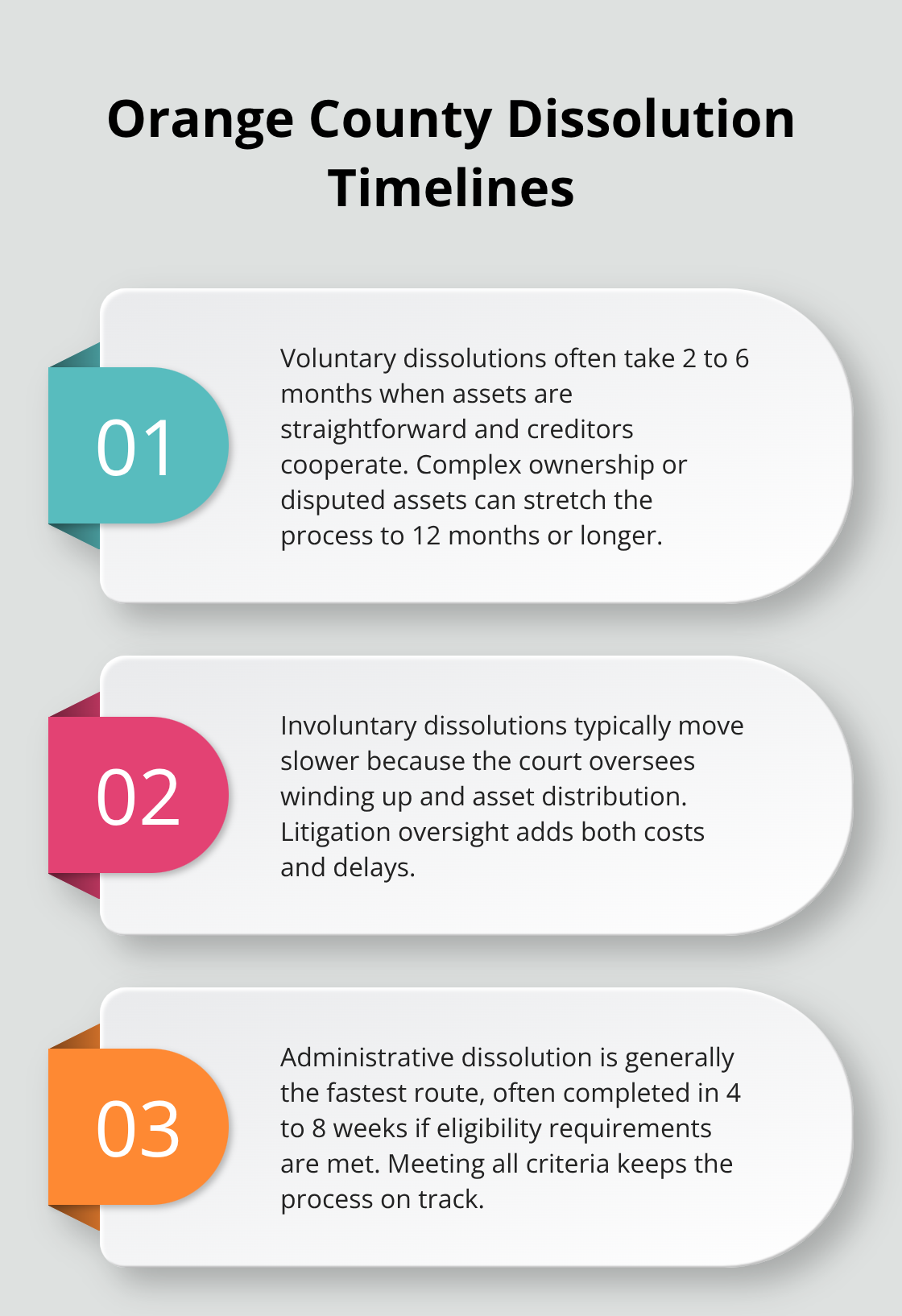
The timeline varies dramatically based on your dissolution type. Voluntary dissolutions typically take 2 to 6 months if assets are straightforward and creditors cooperate, but complex cases with multiple owners or disputed assets stretch to 12 months or longer. Involuntary court-ordered dissolutions move slower because the court oversees winding up and asset distribution, adding litigation costs and delays. Administrative dissolution is the fastest route-often completed in 4 to 8 weeks if you meet all eligibility requirements.
Why Orange County Businesses File Dissolution Papers
Most Orange County business owners dissolve because profitability has dried up or market conditions have shifted. Deadlock between partners triggers another major wave of dissolutions-when partners cannot agree on direction, continuing the business becomes impossible and dissolution becomes the only exit. Loss of key personnel, regulatory changes, or mounting debt also push owners toward closure.
Critical Tax and Filing Requirements
The California Franchise Tax Board requires you to file final tax returns and pay all delinquent balances, including penalties and interest, before the Secretary of State approves dissolution. You must cease doing business in California and file the appropriate dissolution forms within 12 months of your final tax return. If your entity is suspended or forfeited, you must first file all delinquent returns and submit a revivor request to restore good standing before dissolution can proceed.
Protecting Creditors and Closing Operations
Creditor notification is critical-publishing a notice in a local Orange County newspaper of general circulation alerts creditors and reduces the risk of surprise claims after closure. Close all business checking accounts, corporate credit cards, licenses, permits, and fictitious business name registrations to prevent new liabilities from accumulating. These operational steps, combined with proper tax filings and creditor communication, form the foundation for protecting your assets during the dissolution process.
Critical Steps to Protect Assets During Orange County Dissolution
Your intellectual property and trade secrets represent some of your business’s most valuable assets, yet dissolution often exposes them to unnecessary risk. The moment you file dissolution papers, competitors and departing employees become aware that your business is closing, creating a window of vulnerability. Before you file anything with the Secretary of State, conduct a complete audit of your intellectual property portfolio-patents, trademarks, copyrights, proprietary processes, and client lists all need protection strategies.
Securing Intellectual Property Before Closure
If your business holds patents or trademarks, transfer ownership to a holding entity or individual owner before dissolution finalizes. This action prevents assets from being trapped in the dissolved entity or seized by creditors. Trade secrets require different handling: implement confidentiality agreements with any employees or contractors involved in the wind-down, restrict access to sensitive information, and document which assets are proprietary versus general business knowledge. Many Orange County business owners fail to secure these assets early and watch competitors capitalize on technology or processes they spent years developing.
Managing Creditor Claims from Day One
Creditor claims and liability exposure demand aggressive management from the start of dissolution. The California Secretary of State requires you to notify creditors, but publishing a single notice in a local newspaper isn’t enough-contact known creditors directly in writing, specify a deadline for claims, and document every communication. Unknown creditors pose the real danger; they can surface months or years after dissolution and pursue personal liability if you distributed assets prematurely.
Creating a Liability Schedule and Payment Priority
Create a detailed liability schedule listing every debt, contract obligation, lease, and potential claim, then rank them by priority and payment deadline. Pay secured creditors first, then unsecured creditors, then tax obligations to the Franchise Tax Board and IRS. This hierarchy protects you from personal liability and potential clawback actions.
Distributing Assets Fairly and Legally
Asset distribution among owners and shareholders must follow the creditor-first hierarchy; distributing cash or assets before creditors are satisfied exposes you to personal liability. If disputes arise over asset valuations or ownership percentages, mediation costs far less than litigation and preserves relationships among departing partners. Document every distribution decision with written approvals from all owners, including the specific assets transferred, fair market values used, and the date of transfer. This paper trail protects you if creditors later challenge whether distributions were proper or if partners dispute fairness.
The next critical phase involves navigating the legal and financial risks that emerge once assets are secured and creditors are managed-tax obligations, regulatory compliance, and pending contracts all demand immediate attention to prevent costly penalties and post-dissolution liabilities.
Navigating Legal and Financial Risks in Orange County Dissolutions
Tax Obligations That Determine Your Financial Outcome
Tax obligations tied to dissolution hit harder than most business owners expect, and missed deadlines or filing requirements trigger penalties that wipe out remaining value. The California Franchise Tax Board requires you to file final tax returns before the Secretary of State approves dissolution. You must file returns for the final tax year and mark them clearly as final on the first page. The IRS applies the same requirement for federal returns, and both agencies retain audit rights until the statute of limitations expires (typically three to four years from the filing date). This means you cannot simply close your books and walk away-you need complete financial records maintained for years after dissolution.
Pay all delinquent balances, including penalties and interest, to the Franchise Tax Board before filing dissolution papers. Suspended or forfeited entities must undergo a revivor process that costs time and money. If your business owes employment taxes from prior years, settle those accounts with the IRS immediately, as unpaid payroll taxes create personal liability that pierces corporate protections. Close all business credit cards and bank accounts within 30 days of filing dissolution to prevent new charges or overdrafts that trigger additional tax complications.
Regulatory Compliance and License Cancellations
Regulatory compliance during dissolution extends far beyond tax filings and demands systematic attention to avoid post-closure liabilities. Cancel all business licenses, permits, and fictitious business name registrations within 60 days of filing your Certificate of Dissolution with the Secretary of State. Continuing registrations obligate you to file annual statements and pay renewal fees even after the business closes.
Intellectual property licenses you hold as a licensee require formal termination to prevent ongoing royalty obligations. If your business licensed technology or content to others, notify those parties of termination and set specific transition dates.
Managing Contracts, Leases, and Employment Obligations
Pending contracts and leases create the most dangerous exposure during dissolution. Contact every vendor, landlord, service provider, and client in writing to notify them of closure and specify contract termination dates. For long-term leases, negotiate early termination to avoid years of rent obligations; most landlords prefer a lump-sum settlement to collecting from a dissolved entity.
Employment contracts demand immediate attention: provide final paychecks, accrued vacation payouts, and COBRA health insurance notices to all employees within the timeframes required by California law. Review all insurance policies and cancel them effective on the dissolution date, then notify insurers of the business closure to prevent premium assessments on a non-operating entity.
Final Thoughts
Preserving value during Orange County business dissolution requires you to act systematically across three critical areas: securing assets before filing, managing creditors aggressively, and completing tax and regulatory obligations on time. The businesses that emerge from dissolution with maximum value intact share one trait-they execute early and document everything. Waiting until after you file dissolution papers to address intellectual property, creditor communication, or tax compliance creates unnecessary exposure and erodes the financial outcome you worked years to build.
The dissolution process tests your ability to balance speed with thoroughness, and the right pace depends on your specific situation-the complexity of your ownership structure, the number of creditors involved, and whether disputes exist among partners or shareholders all affect timeline and strategy. Many Orange County business owners attempt dissolution without professional guidance and face costly consequences: personal liability from premature asset distributions, surprise creditor claims months after closure, or tax penalties that eliminate remaining value. These outcomes are preventable with proper planning and execution from the start.
We at Raul Garcia Law Firm represent business owners navigating complex commercial transitions, including dissolution disputes, creditor negotiations, and asset protection strategies. Contact us today to discuss your specific situation and develop a dissolution plan that protects your interests and preserves maximum value.