

Closing a business in Orange County California involves complex legal and financial decisions that require careful planning. We at Raul Garcia Law Firm help business owners understand the California business dissolution remedies available to them, from voluntary liquidation to court-ordered options.
The right dissolution path depends on your company’s circumstances, creditor situation, and shareholder interests. This guide walks you through each option and the critical steps to protect yourself throughout the process.
When to Dissolve Your Orange County California Business
Most Orange County business owners wait too long to dissolve. Cash flow dries up, creditors pile on, and the legal mess compounds daily. The decision to dissolve should come when continuing operations costs more than winding down, not when bankruptcy becomes inevitable. California had 2 million business establishments as of September 2025 according to the Orange County Register, yet many owners operate at a loss for months or years before taking action.
Signs That Dissolution Makes Financial Sense
Several warning signs indicate that dissolution preserves more value than continued operation. Consistent monthly losses that restructuring cannot fix signal the need to act. Inability to meet payroll or vendor obligations for two consecutive quarters means your business cannot sustain itself. Key customer loss representing over 30% of revenue creates an unsustainable revenue gap. Shareholder deadlock that prevents operational decisions paralyzes the company. If your business cannot service debt or generate positive cash flow within a realistic 12-month window, dissolution often preserves more value than continued operation.
California’s Legal Framework and Filing Requirements
The legal framework in California requires you to file dissolution documents with the Secretary of State within 12 months of your final tax return, but you must first handle tax obligations with the Franchise Tax Board. You need to file final state tax returns marked Final, close your seller’s permit with the California Department of Tax and Fee Administration, settle all employment accounts with the Employment Development Department (including final payroll deposits and wage reports), and file final federal returns with the IRS. If your business has employees, these payroll filings must be completed within 10 days of your final operating day.
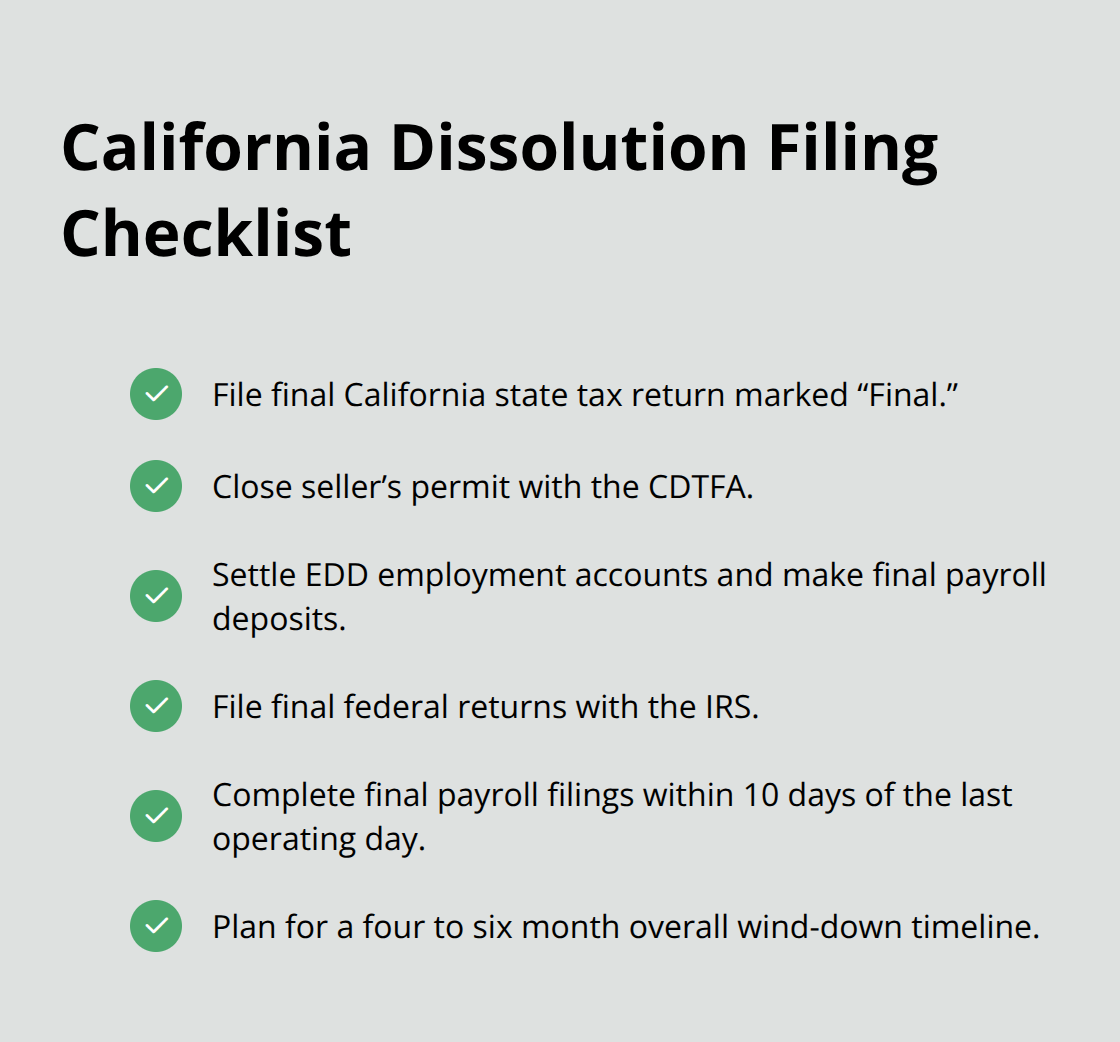
The entire dissolution timeline typically spans four to six months from decision to complete legal wind-down, assuming no tax disputes or creditor complications.
Understanding Your Dissolution Timeline
The California Franchise Tax Board and Secretary of State coordinate the dissolution process across two separate agencies, creating overlapping deadlines that trip up unprepared owners. Your tax filings come first-delinquent returns must be filed and all balances paid before the SOS will accept dissolution documents. After the FTB receives your final return, you have 12 months to file dissolution paperwork with the Secretary of State. If your business entity is suspended or forfeited for tax delinquency, you cannot dissolve until filing a revivor request, paying back taxes, and achieving good standing status. This adds two to four weeks to your timeline. Voluntary dissolution works fastest if your business qualifies-the entity must have ceased active business operations, never transacted business, or holds no remaining assets. The SOS processes voluntary dissolution requests within 15 to 20 business days once filed correctly.
Managing Multi-Agency Coordination
California’s dissolution process demands coordination that most owners underestimate. The FTB and SOS do not communicate automatically, so gaps in filing create legal complications. You must close your business checking accounts and credit cards immediately to prevent ongoing charges that trigger additional tax liability. Local steps include notifying your city and county offices of business license closures and updating fictitious business name registrations. The California Department of Tax and Fee Administration requires specific notice procedures for seller’s permit closure-permits are not transferable and must be formally closed rather than abandoned. The Employment Development Department allows online account inactivation through e-Services for Business once final payroll returns are submitted. Each agency has its own timeline and forms, making professional guidance valuable to prevent costly filing errors or missed deadlines that delay dissolution completion.
The complexity of these multi-agency requirements means that understanding your specific dissolution options becomes essential before you file any paperwork.
Your Three Main Dissolution Paths in Orange County California
Voluntary Dissolution: The Fastest Route
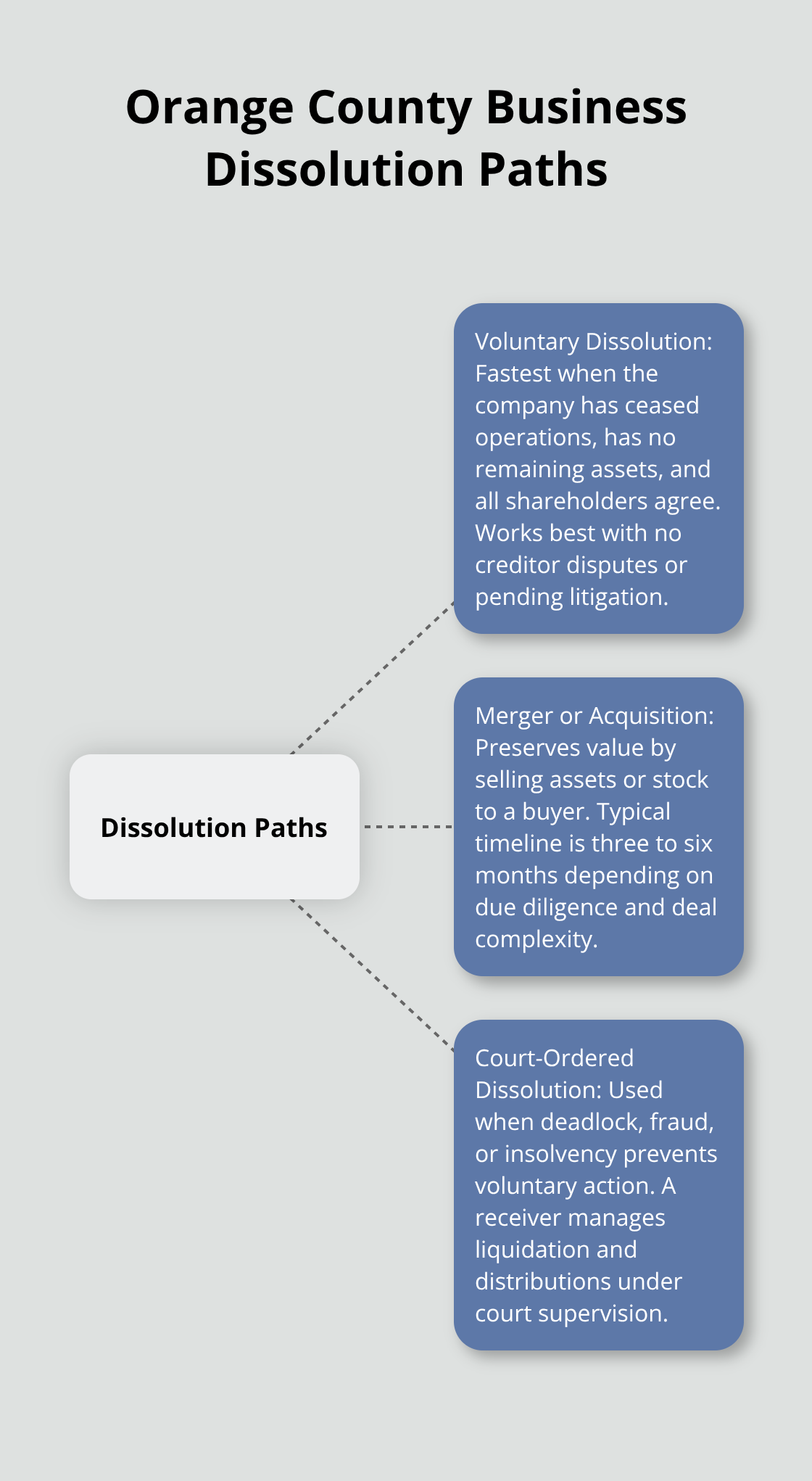
Voluntary dissolution works best when your business qualifies and time is not critical. Your company must have stopped active operations, never conducted business, or retained no remaining assets to file a simple voluntary dissolution request with the Secretary of State. The SOS processes these requests within 15 to 20 business days once filed correctly, making this the fastest path to formal wind-down. However, voluntary dissolution only works if you have no creditor disputes, no pending litigation, and all shareholders agree to the dissolution. If creditors challenge the closure or shareholders cannot reach consensus, voluntary dissolution fails and forces you into a more complex remedy.
The cost runs between $800 and $2,000 in professional fees plus state filing fees, making it the cheapest option available. Liquidation follows naturally after voluntary dissolution-you sell remaining assets, distribute proceeds to shareholders according to ownership percentages, and close all business accounts. California requires you to notify creditors before liquidating, typically through written notice and local newspaper publication near your principal place of business. The liquidation timeline typically spans 60 to 90 days if assets sell quickly, but can extend to six months if you hold real estate or specialized equipment that requires time to market and close.
Merger or Acquisition: Preserving Business Value
Merger or acquisition offers an alternative when your business holds value but operations have stalled or ownership conflicts paralyze decision-making. A strategic buyer acquires your assets or company stock, paying shareholders and creditors from the purchase price. This remedy preserves shareholder value and avoids the negative stigma of closure, but requires that your business still attracts buyer interest-struggling companies often cannot command attractive valuations. The acquisition process typically takes three to six months from initial buyer contact to closing, depending on deal complexity and due diligence requirements.
Court-Ordered Dissolution: When Voluntary Action Fails
Court-ordered dissolution becomes necessary when shareholder deadlock prevents any voluntary action, when the business commits fraud or violates corporate formalities persistently, or when insolvency forces creditor-driven wind-down. Orange County courts appoint a receiver to manage asset liquidation, creditor claims, and distribution under court supervision, removing decision-making from deadlocked owners entirely. Receivership costs significantly more than voluntary dissolution-professional receiver fees, court costs, and extended legal proceedings can consume 15 to 25 percent of remaining assets before distribution. The timeline stretches to 12 to 18 months in contested receiverships.
Your choice among these three paths depends on asset value, creditor relationships, shareholder agreement, and whether external parties (courts, receivers, or buyers) must step in to force resolution. Once you select your dissolution path, protecting your financial interests and managing creditor claims becomes your next critical focus.
Protecting Your Interests During Business Dissolution in Orange County California
Notifying Creditors and Managing Claims
Creditor claims consume most dissolution disputes in Orange County, and managing them poorly destroys shareholder value faster than operational losses ever could. You must notify all known creditors in writing before liquidating any assets, then publish notice in a local newspaper of general circulation near your principal place of business stating that your business no longer operates. The California Secretary of State requires this notification step before you can legally distribute remaining assets to shareholders. Creditors have a statutory window to file claims against your business, typically 30 to 60 days depending on your dissolution type. Do not liquidate assets or pay shareholders until this period expires, or you expose yourself to personal liability for unpaid creditor claims.
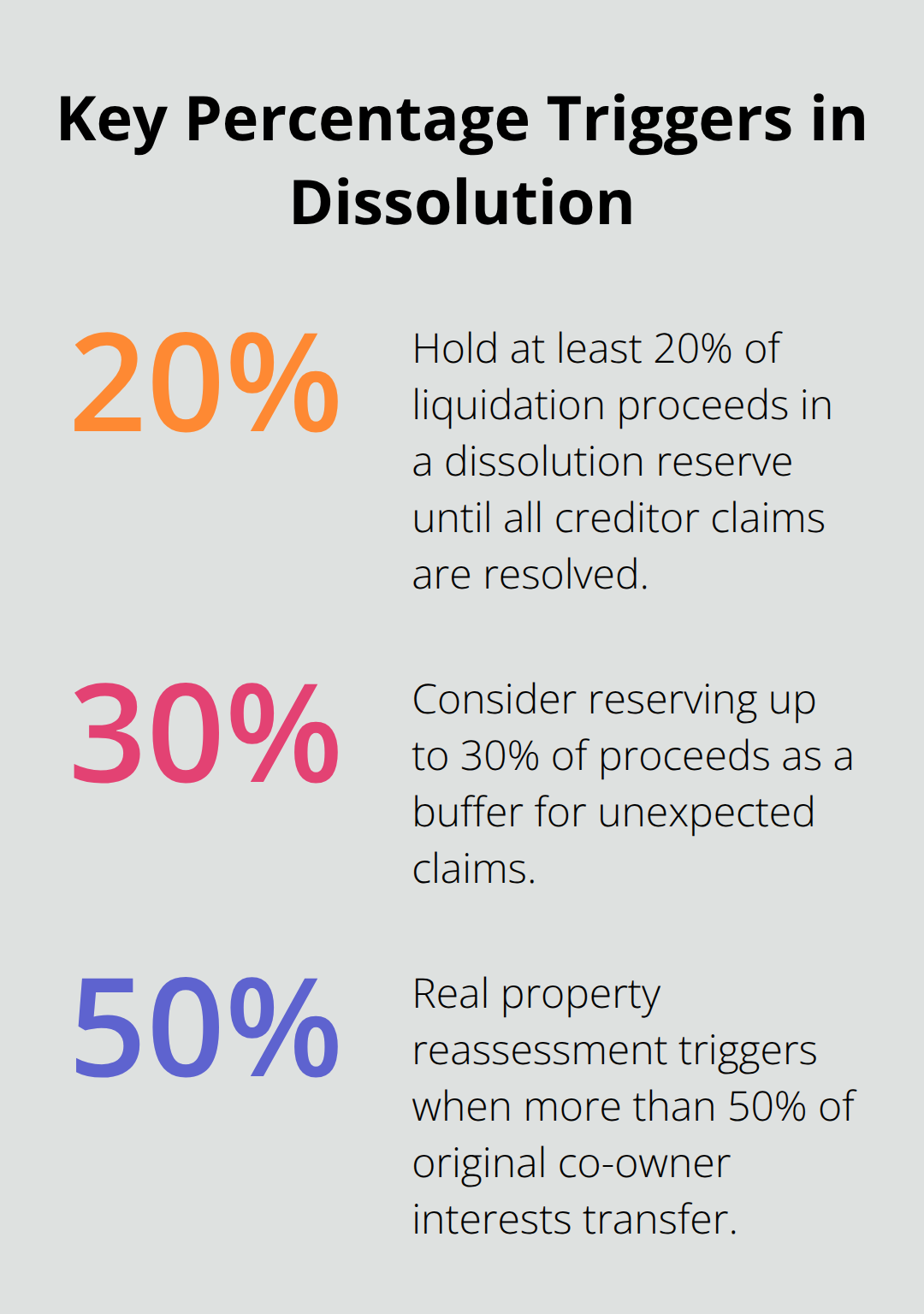
Your business assets must satisfy creditor obligations before any shareholder receives distributions. If liabilities exceed assets, shareholders receive nothing and must accept the loss. The FTB may abate unpaid taxes, interest, and penalties related to your dissolved entity once the Secretary of State formally cancels your business, but this relief only applies after dissolution completes. Establish a dissolution reserve account holding 20 to 30 percent of liquidation proceeds until all creditor claims are resolved. This prevents the scenario where you distribute assets too quickly, then face unexpected claims that you cannot satisfy.
Documentation and Liability Protection
Document every creditor notification, every asset sale, and every distribution payment. Courts scrutinize dissolution distributions closely, and poor documentation creates personal liability exposure for owners and officers who approve distributions. Maintain complete records for at least seven years after dissolution completes, as these filings remain subject to audit until the statute of limitations expires. Protecting your business interests during this phase requires careful attention to procedural compliance and record-keeping standards.
Asset Distribution and Priority Order
Asset distribution to shareholders follows a strict priority order under California law, and deviating from this order creates personal liability. Secured creditors receive payment from their collateral first, then unsecured creditors share remaining assets, then employees receive unpaid wages and benefits, then tax agencies collect outstanding balances, and finally shareholders receive what remains. If your business owes back payroll taxes to the EDD, those claims rank ahead of shareholder distributions. A dissolution agreement that clearly establishes this priority order protects all parties involved.
Real Property Reassessment Considerations
Real property owned by your business triggers reassessment rules if more than 50 percent of original co-owner interests transfer during dissolution, according to the California State Board of Equalization. This means your property tax basis resets to current market value, potentially doubling or tripling annual tax liability for remaining owners who acquire shares. Leased real property with remaining terms exceeding 35 years qualifies as real property for reassessment purposes, so do not overlook operating leases when calculating distribution impacts.
Final Tax Filings and Compliance
File your final California tax return marked Final on the first page with Final written at the top, then submit final federal returns to the IRS for the year you cease operations. If you had employees, file final payroll tax deposits and returns with the EDD within 10 days of your final operating day. These filings remain subject to audit until the statute of limitations expires, even after you close your business, so maintain complete records for at least seven years after dissolution completes. Partnership and shareholder disputes sometimes arise during this final phase, making professional guidance essential.
Final Thoughts
California business dissolution remedies require careful execution across multiple agencies and strict adherence to statutory timelines. The path you select-voluntary dissolution, merger, or court-ordered wind-down-depends entirely on your asset position, creditor relationships, and shareholder alignment. Voluntary dissolution works fastest when your business qualifies and all parties agree, typically completing within four to six months, while merger or acquisition preserves value if buyers exist, but court-ordered dissolution becomes necessary when deadlock or insolvency forces external intervention.
The financial stakes justify professional guidance from the start, as missed deadlines with the Franchise Tax Board or Secretary of State delay closure by months, improper creditor notification exposes you to personal liability, and real property reassessment triggered by ownership transfers can double your tax burden unexpectedly. Asset distribution that violates statutory priority order creates shareholder disputes that consume remaining value in legal fees. We at Raul Garcia Law Firm represent Orange County business owners navigating complex dissolutions, ownership conflicts, and creditor disputes that complicate wind-down, combining practical business insight with aggressive advocacy to protect your financial interests throughout the dissolution process.
Start your dissolution planning now rather than waiting until cash flow collapses or creditors force action, as the difference between proactive planning and reactive crisis management often determines whether you preserve shareholder value or lose everything to legal complications and missed deadlines. Contact our team to discuss your specific situation and develop a dissolution strategy that protects your position.