

Closing a business is one of the hardest decisions a Southern California owner can make. Whether you’re facing cash flow problems, partner conflicts, or shifting market conditions, understanding your SoCal business dissolution options matters.
At Raul Garcia Law Firm, we help business owners navigate this process with clarity and confidence. The right path depends on your specific situation, finances, and goals.
When Business Dissolution Makes Sense in Orange County
Financial Hardship and Cash Flow Problems
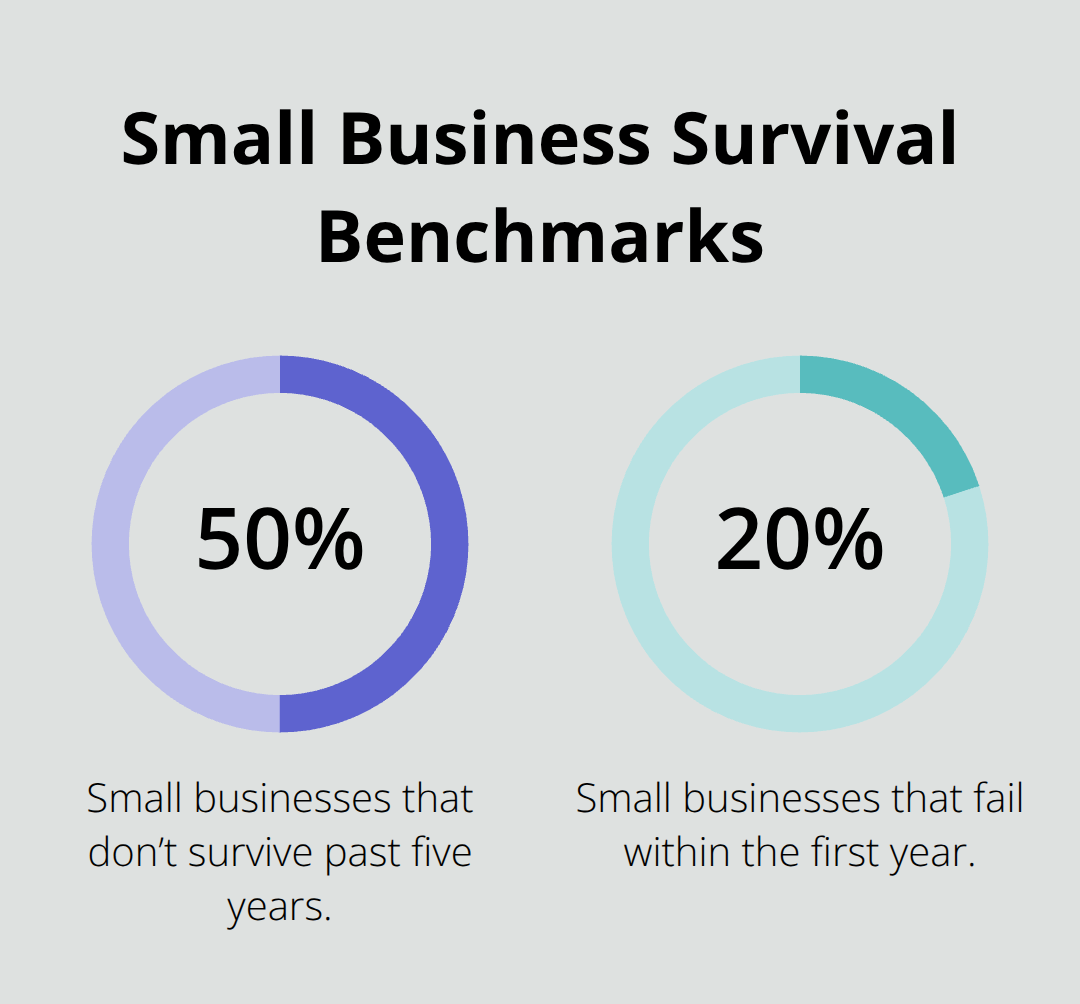
Financial stress often arrives suddenly. The U.S. Bureau of Labor Statistics reports that roughly 50% of small businesses don’t survive past five years, and about 20% fail within the first year. Cash flow problems hit hardest when revenue drops faster than you can cut expenses.
If your firm burns through reserves month after month, carries debt that grows instead of shrinks, or misses payroll obligations, dissolution may be the realistic path forward rather than a slow decline that damages your reputation and personal finances.
Calculate your total liabilities against liquid assets. If debts exceed what you can pay in the next 6–12 months and no revenue recovery appears likely, continuing operations typically increases personal exposure and creditor pressure. Waiting longer often means accumulating payroll tax liability, which the IRS treats as a priority claim that follows you personally.
Partnership Breakdown and Irreconcilable Differences
Partnership breakdown destroys businesses faster than market downturns. Irreconcilable differences between owners-whether over strategy, finances, or management style-create gridlock that paralyzes decision-making and erodes value. If you’re locked in a 50/50 ownership structure with a partner you can no longer work with, and no buy-sell agreement exists to force a buyout or valuation process, dissolution may be your only exit without years of litigation.
Market Shifts and Structural Decline
Market shifts also demand honest assessment. If your industry faces structural decline, regulatory changes make your service model unworkable in California, or your target clients have moved to other regions, fighting to keep the business open wastes capital that could be preserved and redirected. The decision to dissolve isn’t failure-it’s recognizing that continuing operations costs more than closing them.
Understanding whether dissolution or alternative paths like buyouts or bankruptcy make financial sense requires careful analysis of your specific circumstances. The key is acting before creditor pressure, tax penalties, or legal disputes force your hand and limit your options.
Dissolution Options Available to Orange County Businesses
Voluntary Dissolution and Orderly Wind-Down
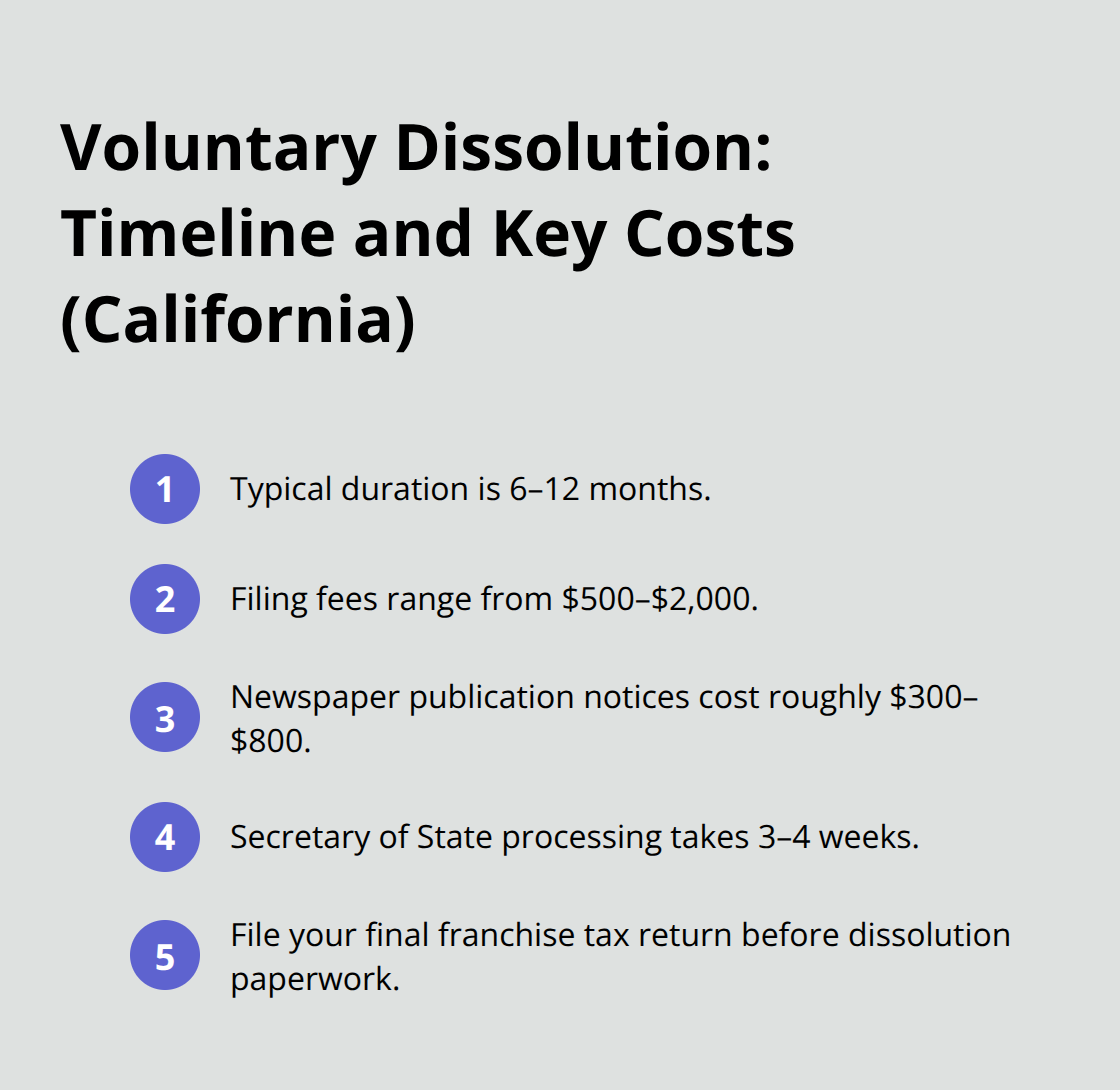
Voluntary dissolution offers the cleanest exit when you have sufficient assets to settle creditors and cooperative partners willing to wind down operations. This path typically takes 6–12 months and costs $500–$2,000 in filing fees plus roughly $300–$800 for required newspaper publication notices. The California Secretary of State processes dissolution filings in 3–4 weeks, and you must file your final franchise tax return with the Franchise Tax Board before submitting dissolution paperwork.
During this wind-down, you settle creditor claims in a defined order: secured creditors first from specified assets, then unsecured creditors, then state and federal tax authorities including the IRS and California Franchise Tax Board. Employees receive final wages and accrued vacation under California law regardless of closure timing. You decide the timeline, manage creditor negotiations directly, and avoid court involvement-this control matters when you want to preserve relationships and reputation.
Voluntary dissolution only works if debts don’t exceed assets and creditors accept settlement offers. Many creditors prefer certainty and favorable terms over formal proceedings, so draft settlement offers with clear 30-day deadlines and prepare to negotiate. You’ll also face California franchise taxes during the wind-down period, which can add $800–$2,000 annually until dissolution finalizes. File Form 966 with the IRS to notify them of the closure, and distribute remaining funds to owners only after all creditors are satisfied per your operating agreement.
Liquidation and Asset Sales
Liquidation and asset sales differ from voluntary dissolution in speed and structure. If you need cash immediately or creditors are pressing, selling assets quickly often means accepting discounted prices-sometimes 30–50% below fair market value depending on industry and asset type. This path works when you have tangible inventory, equipment, or real property that buyers want.
The tax consequences hit harder with liquidation. Asset sales trigger ordinary income tax on gains, which increases your overall tax burden compared to other exit strategies. You’ll also face the liquidation discount problem: buyers know you’re under pressure and offer less than fair value.
Merger or Acquisition as an Alternative Exit
Merger or acquisition represents an entirely different exit: instead of closing, you sell the entire business as a going concern to a buyer who continues operations. This preserves goodwill value and avoids the liquidation discount problem that dissolution creates. Acquisitions work best when your revenue remains stable, employees and client relationships have value, and a clear market exists for your type of business.
The tax implications differ significantly from asset sales. A stock or membership interest sale may qualify for capital gains treatment, which often produces better tax outcomes than selling individual assets. If you’re considering this path, timing and valuation become critical-act before business conditions deteriorate further.
Bankruptcy When Dissolution Isn’t Viable
If debts exceed assets or creditors become aggressive and won’t cooperate, bankruptcy becomes necessary instead of voluntary dissolution. Chapter 7 bankruptcy costs $300–$500 in filing fees plus $1,000–$3,000 in attorney fees and completes in 3–6 months, while Chapter 11 reorganization runs $1,000 in filing fees plus attorney fees often exceeding $10,000 and takes 2–5 years.
Bankruptcy triggers an automatic stay that halts collection efforts and can discharge certain debts without taxable income consequences, unlike dissolution where debt forgiveness counts as taxable income. This distinction matters significantly for your personal finances and future tax liability. The court-supervised process removes negotiation burden from your shoulders, though it costs more and takes longer than voluntary dissolution.
Choosing between these paths requires honest assessment of your asset position, creditor relationships, and timeline. The next section addresses how to protect your interests once you’ve selected your dissolution route.
Protecting Your Interests During Orange County Business Dissolution
Understanding Creditor Payment Hierarchy
Creditor claims follow a strict legal hierarchy that you must respect before distributing any funds. The IRS and California Franchise Tax Board hold priority status, meaning payroll taxes, employment taxes, and state income taxes receive payment before unsecured creditors like vendors or service providers. Secured creditors (those holding liens on specific assets like equipment or real property) come next, paid from the proceeds of those assets. General unsecured creditors stand last in line.
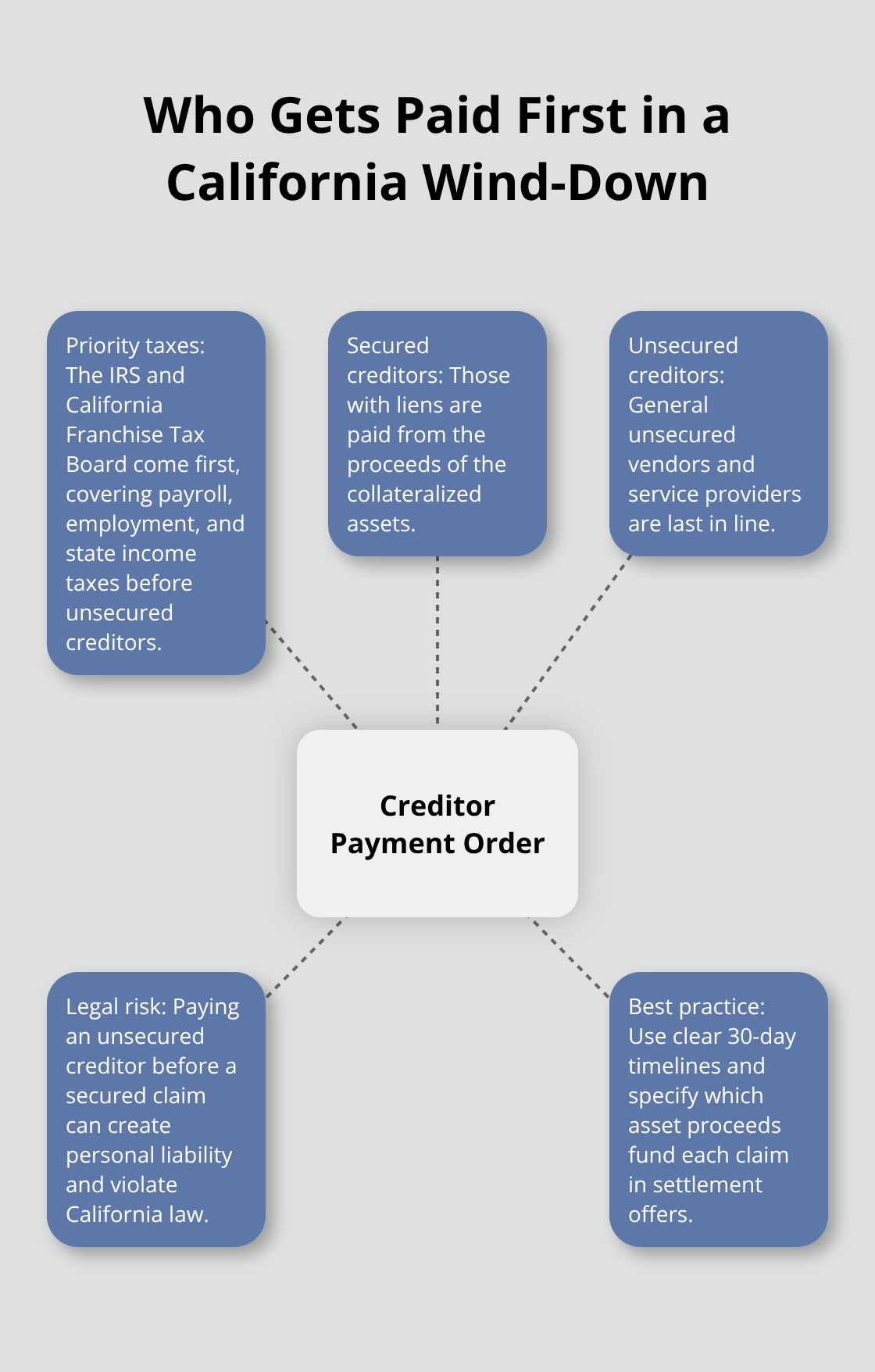
This order matters because many business owners mistakenly assume they can negotiate freely with all creditors simultaneously. You cannot. If you pay an unsecured creditor before satisfying a secured creditor’s lien, you create personal liability exposure and violate California law. Draft settlement offers with clear payment timelines, typically 30 days, and specify which asset proceeds will fund each claim.
Negotiating and Documenting Settlements
Many creditors accept 70–80 cents on the dollar if you offer certainty and a defined payment schedule, which beats the uncertainty and delays of formal proceedings. Document every settlement agreement in writing and obtain signed releases before making final distributions to owners. The California Secretary of State requires that you file your final franchise tax return and confirm all taxes are current before dissolving, so verify your tax clearance status with the Franchise Tax Board before offering settlement amounts to creditors.
Managing Asset Distribution to Owners
Asset distribution to owners comes last and only after all creditors are satisfied. Your operating agreement dictates the distribution order and percentages, so review it carefully before taking action. Many owners distribute funds as they close operations, then discover unpaid creditor claims months later. Instead, hold reserves equivalent to 10–15% of total assets for at least 90 days after operations cease to cover late-arriving creditor claims or tax adjustments.
The California Franchise Tax Board can assess penalties of $800–$2,000 annually during wind-down, so budget for this ongoing obligation until dissolution finalizes. Asset sales trigger ordinary income tax on gains, which differs sharply from capital gains treatment in acquisitions or buyouts. If you sell business equipment or inventory at a loss, document those losses carefully because they offset other income on your final tax return.
Handling Tax Obligations and Final Filings
Debt forgiveness in dissolution counts as taxable income unless you file for bankruptcy protection, so calculate this liability before distributing remaining funds. File Form 966 with the IRS within 30 days of the dissolution decision to notify them of closure and avoid surprise assessments later. Your final California tax return must show the Final Return box checked and the word Final written at the top of the form (this step protects you from ongoing liability and ensures clean separation from the business entity).
Final Thoughts for Orange County Business Owners
Choosing between SoCal business dissolution options requires honest assessment of your financial position, creditor relationships, and long-term goals. Voluntary dissolution works when assets cover debts and creditors cooperate, while liquidation moves faster but sacrifices value through discounted asset sales. Acquisitions preserve goodwill if your business remains viable, and bankruptcy becomes necessary when debts exceed assets or creditors won’t negotiate.
Acting early preserves options and reduces accumulated penalties that mount quickly during extended wind-downs. Calculate your actual asset position, identify all creditors, and understand the payment hierarchy before committing to any path, since tax implications vary sharply across these options (debt forgiveness in dissolution triggers taxable income unless bankruptcy protection applies, asset sales create ordinary income tax on gains, and acquisitions may qualify for capital gains treatment). These differences can shift thousands of dollars in your final tax bill.
Business closure involves both financial and emotional complexity, and the right dissolution path depends on your specific circumstances, not generic advice. Before making final decisions, consult with a California business attorney who can review your operating agreement, analyze your tax position, and structure your exit to minimize personal liability.