

Closing a business is one of the hardest decisions an owner makes. Whether you’re facing financial challenges, changing markets, or personal circumstances, understanding your California business dissolution options matters.
At Raul Garcia Law Firm, we help Orange County business owners navigate this process with clarity. The path you choose-dissolution or bankruptcy-affects your finances, timeline, and legal obligations for years to come.
When Business Closure Becomes Necessary in Orange County
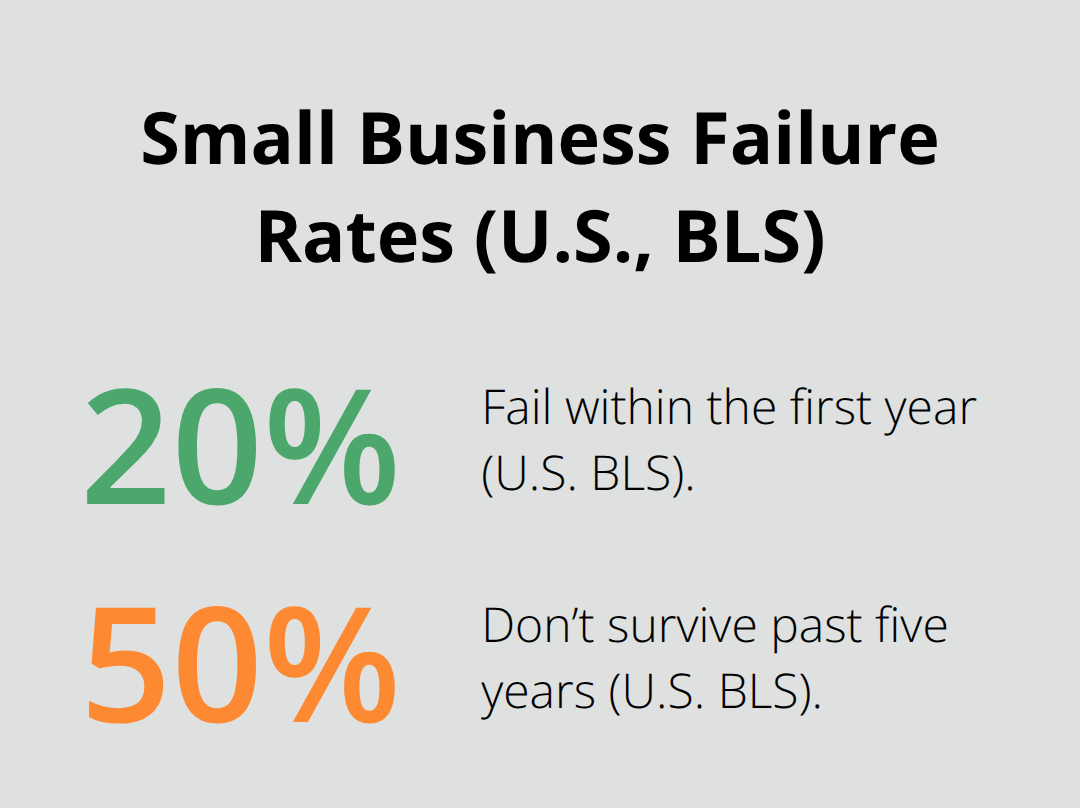
Most Orange County business owners don’t wake up one day planning to close. The decision typically comes after months or years of financial strain, market shifts, or personal circumstances that make continuing operations unsustainable. According to the U.S. Bureau of Labor Statistics, about 20% of small businesses fail within the first year, and roughly 50% don’t survive past five years. The reasons vary widely-some owners face declining revenue that won’t reverse, others encounter unexpected legal disputes or partnership breakdowns, and a few realize the business model no longer fits the market.
Whatever the catalyst, understanding what triggered your situation helps determine whether dissolution or bankruptcy makes more sense for your specific circumstances.
Timing Matters More Than You Think
The moment you recognize closure is inevitable, time becomes your most valuable asset. California law requires business owners to file dissolution paperwork within specific windows, and missing deadlines creates serious complications. For corporations, you must file articles of dissolution with the California Secretary of State, typically within 30 days of the board decision to dissolve. Limited liability companies follow similar timelines. The longer you wait after making the closure decision, the more liabilities accumulate. Unpaid payroll taxes, creditor claims, and employee obligations continue accruing. Many Orange County business owners delay this process because they hope circumstances will improve or they feel emotionally attached to their company. This hesitation costs money. The Internal Revenue Service doesn’t pause collection efforts while you deliberate. State tax agencies continue assessing penalties. Employees remain entitled to final wages and accrued benefits regardless of your timeline. Acting decisively protects both your remaining assets and your personal liability exposure.
Your Obligations Don’t Disappear
Closing a business doesn’t erase what you owe. You have legal responsibilities to employees, creditors, and taxing authorities that demand immediate attention. Employees must receive final paychecks within California’s strict timeframes, typically within 72 hours of separation. You must also pay out accrued vacation time, which California law treats as earned wages. This requirement surprises many owners who assumed they could simply stop operations. Creditors have legal claims against business assets, and the order of payment matters significantly. Secured creditors (like banks with liens on equipment) get paid first. Unsecured creditors come later. If assets don’t cover all debts, some creditors receive nothing. Understanding this hierarchy helps you anticipate which parties will pressure you and which claims have legal priority.
What Happens Next Depends on Your Choices
The path forward splits into two distinct directions: dissolution or bankruptcy. Each option carries different timelines, costs, and consequences for your personal finances. Dissolution works well when you have assets to distribute and can pay creditors in an orderly fashion. Bankruptcy becomes necessary when debts exceed assets or when creditors threaten legal action. The choice you make now affects your credit, tax obligations, and ability to start fresh. Understanding these differences (and their specific implications for your situation) requires careful analysis of your financial position and legal exposure.
Dissolution vs. Bankruptcy: Understanding Your Options in Orange County
Dissolution and bankruptcy serve fundamentally different purposes, and confusing them costs Orange County business owners thousands in unnecessary fees and prolonged timelines. Dissolution is an orderly wind-down process where you liquidate assets, pay creditors according to California law, and formally close your business with the state. It works when you control the process and have enough assets to satisfy creditor claims. Bankruptcy, by contrast, is a court-supervised proceeding that forces creditors to accept partial or deferred payment, protects you from personal liability for certain debts, and can eliminate obligations entirely through discharge.
When Dissolution Makes Sense
Approximately 50,000 business bankruptcies are filed annually in the United States, while dissolutions happen far more frequently but receive less attention because they don’t involve court proceedings. You should choose dissolution if you want to avoid court involvement, maintain control over asset distribution, and settle debts within 6 to 12 months. Dissolution works best when you have sufficient assets and cooperative creditors. If creditors are suing you, debts exceed assets, or you need the legal shield that Chapter 7 or Chapter 11 protection provides, bankruptcy becomes the better option. Many Orange County owners incorrectly assume dissolution is cheaper, but that’s only true if you have adequate resources and willing creditors. If creditors are aggressive or you face personal liability exposure, bankruptcy’s automatic stay provision stops collection calls, lawsuits, and wage garnishments immediately, which often saves money despite higher upfront costs.
Tax Consequences That Differ Sharply
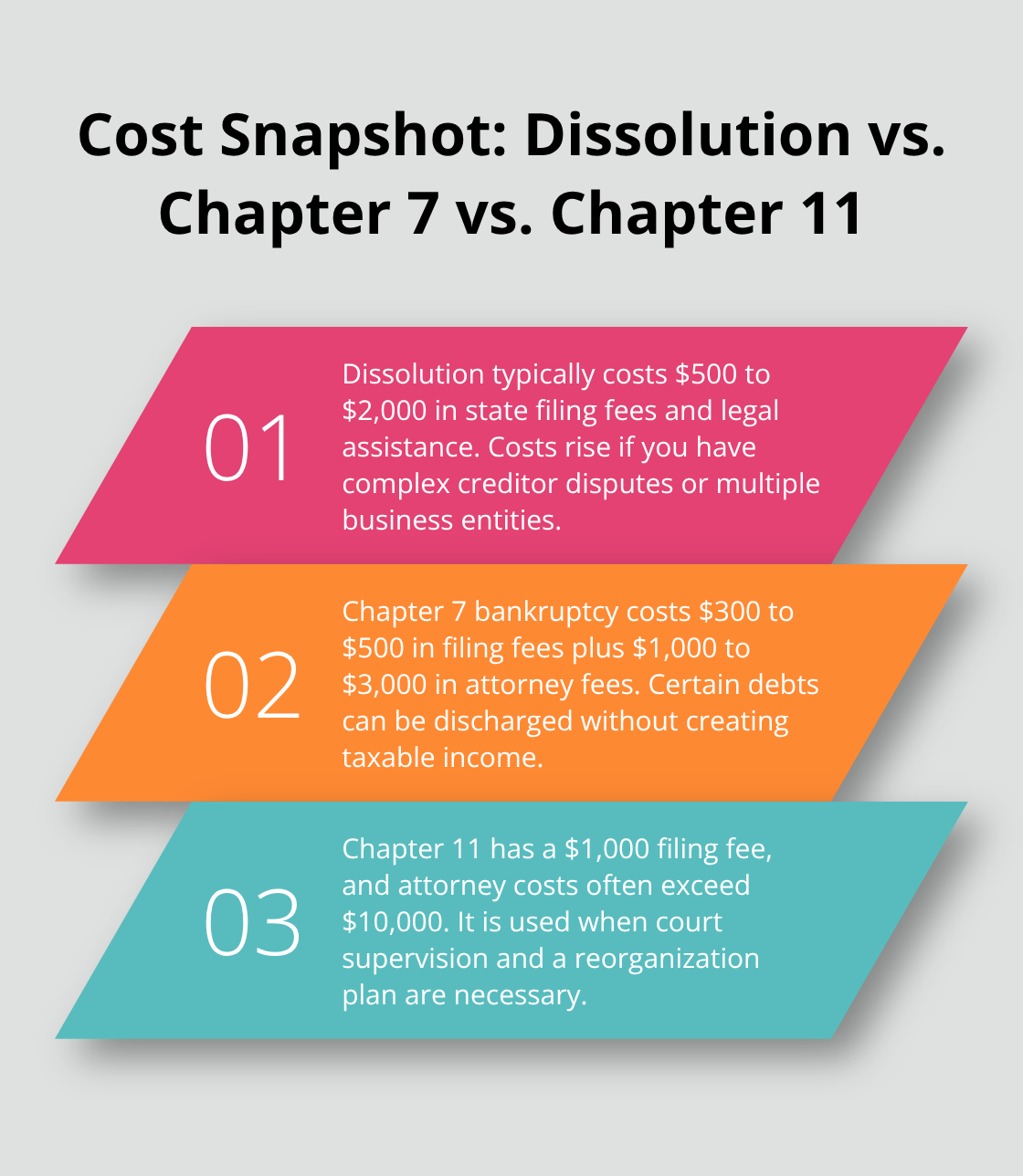
Dissolution triggers ordinary income tax on asset sales, and you’ll owe California franchise taxes until the state formally approves your dissolution paperwork (typically within 60 to 90 days of filing). The IRS treats debt forgiveness in dissolution as taxable income, meaning if you settle a $100,000 debt for $60,000, that $40,000 difference counts as income on your 1040. Bankruptcy discharges certain debts without creating taxable income, a critical advantage for owners with substantial liabilities. Chapter 7 bankruptcy costs $300 to $500 in filing fees plus attorney fees ranging from $1,000 to $3,000, while Chapter 11 runs $1,000 in filing fees alone with attorney costs often exceeding $10,000. Dissolution typically costs $500 to $2,000 in state filing fees and legal assistance, but those numbers climb if you have complex creditor disputes or multiple business entities.
Timeline and Cost Realities
Dissolution completes in 6 to 12 months if uncontested, while Chapter 7 bankruptcy takes 3 to 6 months and Chapter 11 extends 2 to 5 years depending on your reorganization plan. California’s Franchise Tax Board continues assessing penalties during dissolution proceedings, adding $800 to $2,000 annually to your closing costs. If you owe back payroll taxes, the IRS pursues dissolution proceeds aggressively, claiming priority over general creditors. This hierarchy means employees receive payment first, then the IRS, then state tax agencies, leaving general creditors with remaining funds. Bankruptcy reverses this dynamic in Chapter 13, where you establish a repayment plan and debts are restructured rather than eliminated, protecting more creditors while giving you breathing room.
Creditor Pressure Changes Everything
The moment creditors threaten legal action, your options narrow significantly. An aggressive creditor can force you into involuntary bankruptcy, stripping away your control over the process entirely. Dissolution requires creditor cooperation or at least their willingness to accept payment through the formal process. Bankruptcy’s automatic stay halts all collection efforts immediately, giving you time to reorganize or liquidate without constant pressure. The choice between these paths depends entirely on your creditor situation, asset position, and personal liability exposure. Understanding which creditors hold priority claims and which ones might negotiate settlements helps you anticipate what comes next.
The financial realities of each path demand careful analysis before you commit to a direction. Your next step involves calculating your actual assets, identifying all creditors, and determining whether you can satisfy claims through dissolution or whether bankruptcy protection becomes necessary.
Steps to Properly Dissolve Your Business in Orange County
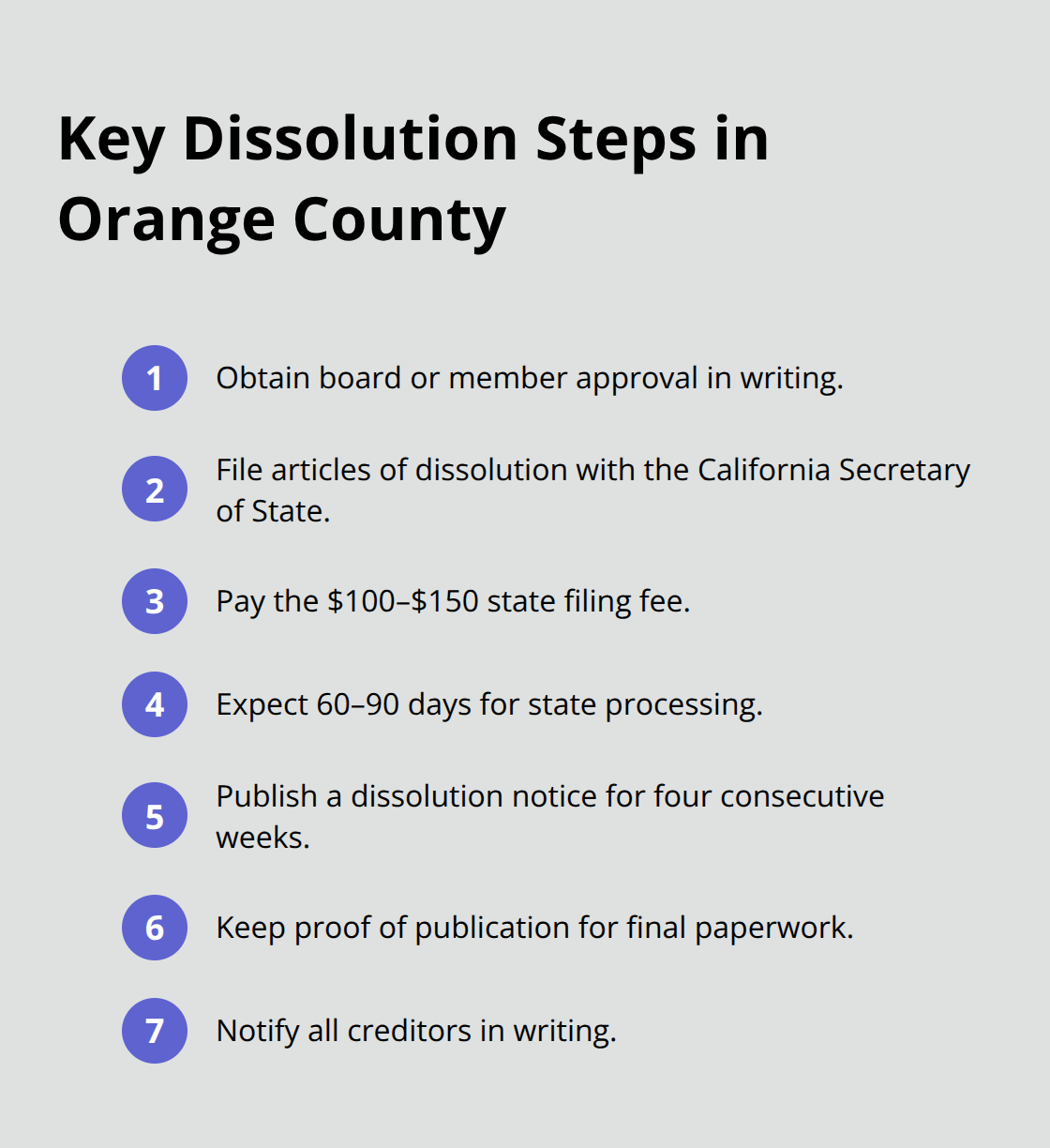
Dissolving your business requires three concurrent processes that must happen in the right sequence, and most Orange County owners mishandle the timing. You need to file state paperwork, settle creditor claims, and distribute whatever assets remain to owners-but the order matters because missteps create personal liability exposure and tax complications. Start by gathering your corporate records, identifying all creditors (including tax agencies), and calculating your actual asset position. California requires corporations to obtain board approval for dissolution before filing articles of dissolution with the Secretary of State, and LLCs need member approval documented in writing. The filing fee costs $100 to $150, and the state typically processes it within 60 to 90 days.
File Your Dissolution Documents First
During the state processing period, you must notify creditors in writing-not just hope they find out through public records. California law requires you to publish a notice of dissolution in a newspaper of general circulation in the county where your principal business office is located, which costs $300 to $800 depending on the publication. This notice must run for four consecutive weeks, and you need to keep proof of publication because the state requires it before finalizing your dissolution.
Many owners skip this step thinking it’s optional, then face delays or rejection when they submit final paperwork. The publication requirement exists to protect creditors and establish a formal record of your intent to wind down operations.
Settle Debts According to Legal Priority
Settling debts demands that you create a priority list because not all creditors get paid equally. The Internal Revenue Service claims priority for unpaid payroll taxes and employment taxes before general creditors receive anything, and California’s Franchise Tax Board operates similarly. Employee final wages and accrued vacation must be paid within 72 hours of separation, and these claims rank ahead of most other obligations. Secured creditors (banks holding liens on equipment or vehicles) receive payment from the sale proceeds of those specific assets before unsecured creditors see a penny. Once you’ve paid priority claims, remaining funds go to general creditors proportionally-if you have $50,000 left and $200,000 in unsecured claims, each creditor receives 25 cents on the dollar.
Send settlement offers in writing with a clear deadline for acceptance, typically 30 days. Many creditors will negotiate rather than fight, especially if they know your business has limited assets. The negotiation process often yields better outcomes than formal creditor meetings because individual creditors prefer certainty over prolonged collection efforts.
Distribute Assets and File Final Tax Returns
California law requires that you only distribute remaining funds to owners after all creditors are satisfied or set aside in escrow. The distribution order follows your operating agreement or articles of incorporation-if you have multiple owners, distributions typically go proportionally to ownership percentages. You’ll need to file final tax returns for your business, including a final Form 1120 or 1065 depending on your entity type, and report the dissolution to the IRS using Form 966 if you’re a corporation. State franchise tax obligations continue until the Secretary of State formally approves your dissolution certificate, so plan for $800 to $1,500 in additional state tax assessments during the wind-down period. The timing of these filings affects your personal tax liability, making accuracy essential.
Final Thoughts
Choosing between dissolution and bankruptcy requires careful analysis of your financial position, creditor situation, and personal liability exposure. The wrong decision costs thousands in unnecessary taxes, extends your timeline by months, or leaves you personally liable for debts you thought were eliminated. Your California business dissolution options depend entirely on your specific circumstances, and getting this right demands someone who understands both the legal requirements and the financial realities of closing a business in Orange County.
We at Raul Garcia Law Firm help Orange County business owners navigate complex commercial situations, including the disputes and obligations that arise during business closures. Whether you face aggressive creditors, partnership conflicts, or unclear liability exposure, having someone in your corner who understands both the law and your business situation makes the difference between a clean exit and years of lingering problems. The sooner you act, the more control you maintain over the process and the faster you can move forward.
Your next step is straightforward: gather your financial records, identify all creditors and their claims, and calculate your actual asset position. Then contact us to discuss which path makes sense for your situation. Visit our website to schedule a consultation and get clarity on your options.