

California’s ban on noncompete agreements is one of the strictest in the nation. If you’re an Orange County business owner, understanding noncompete enforceability in California is essential to protecting your company without running afoul of state law.
We at Raul Garcia Law Firm help employers navigate these restrictions and find practical alternatives that actually hold up in court. This guide breaks down what’s illegal, what works, and how to safeguard your business interests.
California’s Noncompete Ban: What the Law Actually Prohibits
California Business and Professions Code Section 16600 voids noncompete agreements in nearly all employment situations. The statute reads broadly: it voids any contract that restrains someone from engaging in a lawful profession, trade, or business. This is not a suggestion-it is an absolute prohibition. The California Supreme Court in Edwards v. Arthur Andersen LLP emphasized that courts must read Section 16600 broadly, rejecting arguments that reasonably tailored restrictions warrant enforcement. Even if an employer claims a noncompete is narrow in scope or limited in duration, California courts will strike it down.
Assembly Bill 1076, effective January 1, 2024, codified this prohibition further. The law explicitly declares noncompetes void in employment contexts and requires employers to notify current and former employees that their noncompete agreements are unenforceable. Senate Bill 699, also effective January 1, 2024, created a private right of action for employees. Workers can now sue employers who attempt to enforce a noncompete and recover damages, injunctive relief, and attorney’s fees without proving actual harm.
The California Labor Commissioner reported roughly a 300 percent spike in worker complaints about illegal noncompetes following these law changes. This surge signals that employees are increasingly aware of their rights and willing to challenge restrictions.
Why California Prioritizes Worker Mobility Over Employer Control
California’s strict stance stems from a deliberate policy choice: the state prioritizes worker mobility and free competition over employer control. When workers cannot move to competitors or start their own businesses, wages stagnate and innovation suffers. California’s economy has thrived precisely because talent flows freely between companies and entrepreneurs launch ventures without fear of litigation.
Section 16600 applies regardless of where the employment contract was signed or where the employee worked. If you employ someone in California or they later move to California, the noncompete is void under California law. This extraterritorial reach is intentional. A Nevada employer cannot enforce a California employee’s noncompete once that worker begins employment with a California-based competitor.
Orange County businesses face a critical reality: noncompetes simply do not work in California. Attempting to enforce one exposes your company to civil penalties of up to $2,500 per violation per affected employee, plus the employee’s attorney’s fees and damages. The California Attorney General actively pursues violations as unfair competition under Business and Professions Code Section 17200.
The Three Narrow Exceptions That Actually Apply
Three statutory exceptions exist, but they apply only in specific business transition contexts, not to typical employment relationships. When a business is sold, the seller can impose a noncompete on the buyer that is reasonable in geographic scope. Similarly, when a partnership dissolves or an LLC is sold or dissolved, limited noncompete restrictions may apply to the departing owner. These exceptions exist because they involve the sale of ownership interests or the dissolution of the business entity itself-fundamentally different from restricting an employee’s future work.
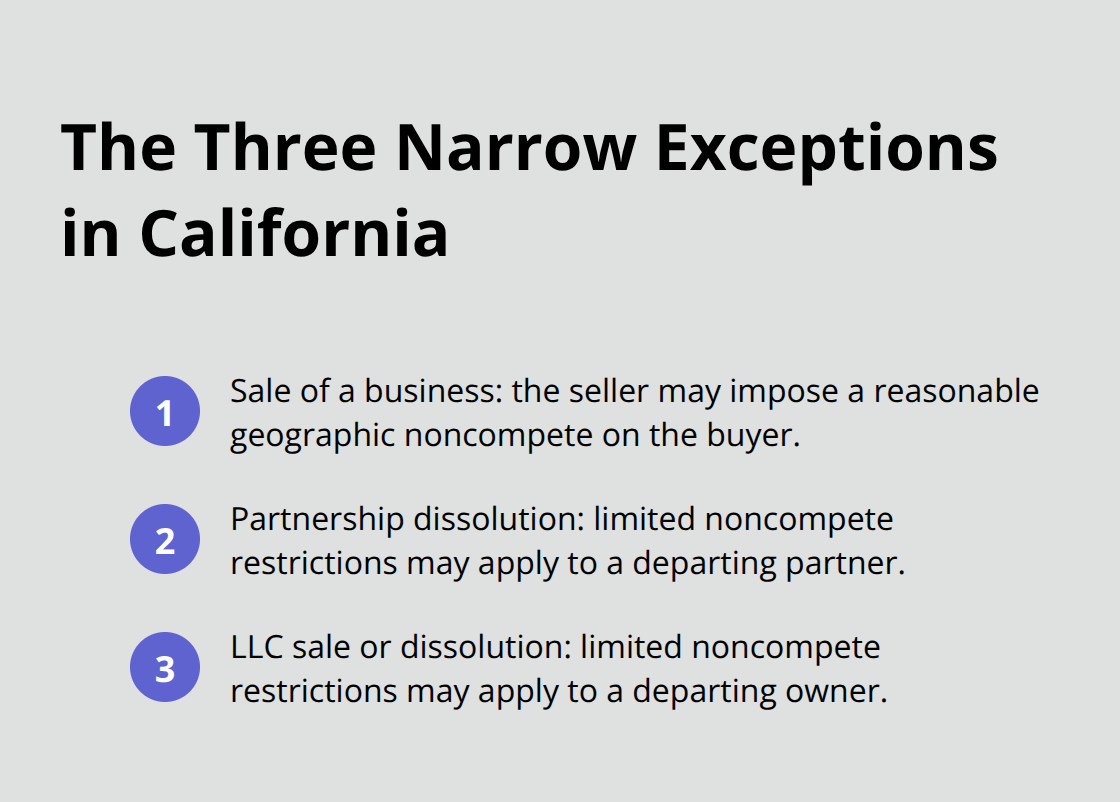
Outside these three narrow windows, noncompetes are void. Orange County employers frequently misunderstand this distinction: they assume that because noncompetes might be enforceable in other states, they can use them for employee retention. This misunderstanding is costly. If you enforce a void noncompete, employees can recover damages and attorney’s fees, and courts may sanction your company for frivolous enforcement.
The practical reality is straightforward: stop relying on noncompetes entirely. Instead, Orange County businesses need to shift their focus toward legal tools that actually protect your interests-and those alternatives are far more effective than any noncompete ever could be.
What Actually Works Instead of Noncompetes
Trade Secrets and Confidentiality Agreements Provide Real Protection
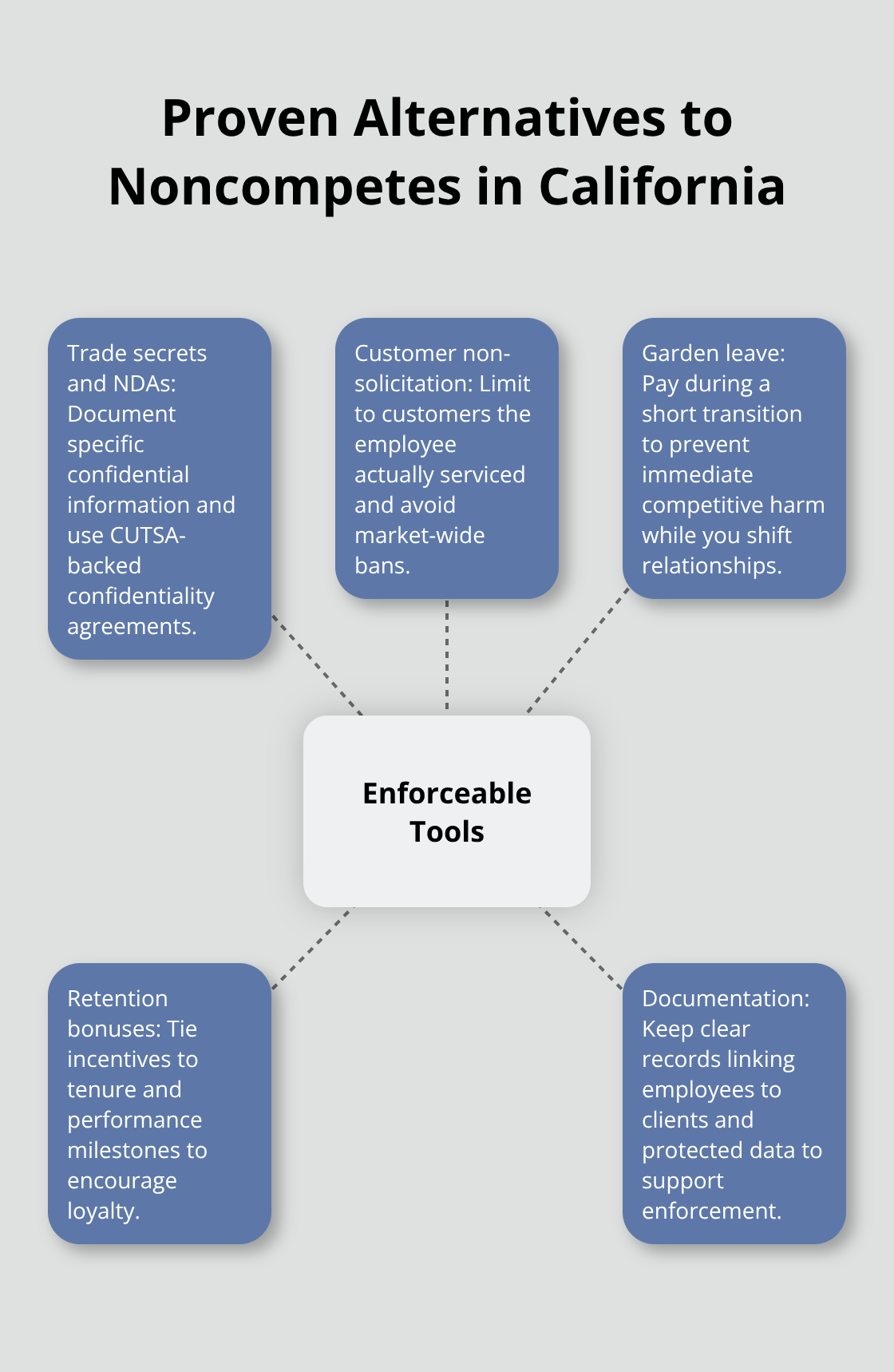
Trade secret protections and narrowly tailored confidentiality agreements form your strongest defense in California. The California Uniform Trade Secrets Act (CUTSA) allows you to obtain injunctive relief, damages, and attorney’s fees when someone misappropriates a genuine trade secret-information that derives value from not being generally known. This protection carries real weight. Unlike a noncompete, which courts will strike down, a well-documented trade secret claim survives judicial scrutiny because it protects specific confidential information, not merely the right to work in an industry.
Document what qualifies as a trade secret with precision: customer lists with non-public contact information, pricing strategies, proprietary processes, software code, and manufacturing techniques all count. Vague assertions that everything is confidential fail. The stronger your documentation, the stronger your claim. Courts recognize that protecting legitimate business information is reasonable; restricting someone from working is not.
Non-Solicitation Agreements Require Careful Drafting
Non-solicitation agreements occupy a gray area in California, and you must draft them carefully. Customer non-solicitation clauses that ban departing employees from contacting specific clients they serviced can work-but only if they target actual customers, not broad market segments, and only if they do not function as a backdoor noncompete. An agreement that effectively prevents someone from practicing their profession will fail under Section 16600.
In AMN Healthcare, Inc. v. Aya Healthcare Services, Inc. (2018), California courts rejected an overly broad non-solicitation that would have decimated a healthcare worker’s ability to work. The lesson is clear: limit non-solicitation to the customers your employee actually touched, not the entire market your business serves. Confidentiality agreements work best when they identify specific categories of protected information-trade secrets, client data, financial projections, strategic plans-rather than claiming everything is confidential. Courts enforce these narrowly tailored NDAs because they protect legitimate interests without restraining competition.
Garden Leave and Retention Bonuses Create Enforceable Alternatives
Garden leave provisions offer another practical path. You pay a departing employee during a transition period (typically three to six months) during which they cannot work for a competitor or solicit your clients. This is enforceable because the employee receives compensation and the restriction is temporary. California case law on garden leaves remains limited, so courts have not fully mapped the boundaries, but the concept aligns with California’s preference for legitimate protections over blanket bans.
A six-month garden leave at full or partial salary costs money upfront but prevents immediate competitive harm and gives you time to transition client relationships. Retention bonuses tied to performance milestones also work: if an employee stays for two years and hits revenue targets, they receive a substantial bonus. This incentivizes loyalty without restricting future work.
Building a Layered Protection Strategy
Orange County businesses should combine these tools strategically. Use confidentiality agreements to protect genuine trade secrets, apply non-solicitation narrowly to actual customers, implement garden leave for key departing employees, and offer retention bonuses for high-value staff. This layered approach protects your interests far more effectively than a noncompete ever could-and it survives California courts. When disputes arise over trade secrets or customer relationships, the strength of your documentation and the specificity of your agreements determine whether you recover damages and protect your business.
The next section examines the enforceability challenges that Orange County businesses face when restrictive covenants are challenged in court.
Enforceability Challenges for Businesses in Orange County
Common Mistakes Orange County Employers Make with Restrictive Covenants
Orange County employers draft restrictive covenants as if California were any other state. They copy non-solicitation language from templates, broaden confidentiality clauses to cover entire industries, or attempt to enforce agreements that courts will immediately strike down. The result is wasted legal fees, employee litigation, and exposure to damages. Orange County businesses often fail to distinguish between what protects legitimate interests and what merely restrains competition. A confidentiality agreement that claims everything from email communications to general industry knowledge is confidential will fail because it functions as a disguised noncompete. Courts reject overly broad language consistently.
The California Attorney General has actively pursued employers for attempting to enforce void noncompetes, including settlements with companies that ignored the statutory notification requirements under Assembly Bill 1076. Employers must notify current and former employees by February 14, 2024 that their noncompete agreements are void. Failure to provide this notice creates liability under unfair competition law.
Another critical mistake is conflating non-solicitation with non-competition. An agreement that bans an employee from contacting any customer or prospect the company has ever targeted functions as a noncompete and will be voided under Section 16600. The AMN Healthcare decision illustrates this danger: California courts struck down a provision that would have prevented a healthcare worker from soliciting customers across an entire market segment, even though the language appeared narrowly tailored on its face.
How Courts Interpret Restrictive Agreements in California
Courts interpret restrictive agreements against the drafter and read them in the context of California’s strong policy favoring worker mobility. When language is ambiguous, judges resolve doubts in favor of the employee. An agreement that could reasonably be read as restraining someone from practicing their profession will be voided entirely, not narrowed to a permissible scope. This means poorly drafted non-solicitation clauses often fail completely rather than being reformed by the court.
Orange County employers also frequently mishandle trade secret claims by failing to implement reasonable protective measures. If you do not treat information as confidential internally, courts will not treat it as a trade secret in litigation. You must restrict access, use confidentiality agreements with employees, and document what qualifies as proprietary information. Without this foundation, your trade secret claim collapses.
Practical Steps to Protect Your Business Interests
The practical path forward requires shifting your mindset from restriction to documentation. Implement robust trade secret protocols: identify confidential information with specificity, limit access to employees who need it, require written acknowledgment of confidentiality obligations, and document the measures you take to protect secrets. When a departing employee joins a competitor, you can pursue injunctive relief and damages if they misappropriate identifiable trade secrets, not merely because they work in the same industry.
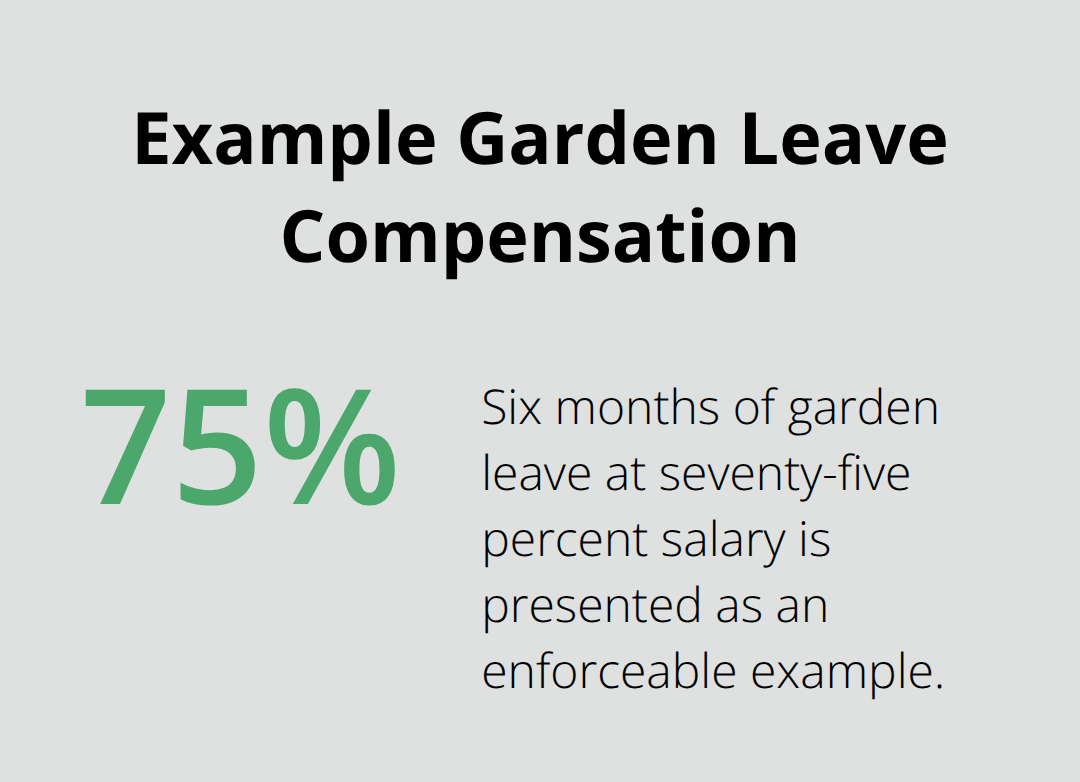
For key employees, use garden leave provisions with written agreements specifying the compensation and duration of the restriction. Six months of garden leave at seventy-five percent salary is enforceable and far more effective than an unenforceable noncompete. Retain detailed records of which customers each employee serviced so that if you need to enforce a narrow non-solicitation, you can prove the restriction targets actual business relationships, not market segments.
Orange County businesses should audit existing restrictive covenants immediately and remove any language that functions as a noncompete. Provide written acknowledgment to affected employees that such agreements are void under California law. This transparency reduces litigation risk and demonstrates good faith compliance. When disputes arise, the specificity of your documentation and the narrowness of your agreements determine whether you recover damages or face sanctions for frivolous enforcement. The strength of your evidence and the precision of your contractual language control the outcome in court.
Final Thoughts
California’s noncompete enforceability landscape has shifted decisively toward worker mobility, and Assembly Bill 1076 and Senate Bill 699 have eliminated any remaining ambiguity. Orange County businesses that continue relying on noncompetes expose themselves to civil penalties up to $2,500 per violation, employee lawsuits, and attorney’s fees. The California Labor Commissioner’s 300 percent spike in worker complaints demonstrates that employees now understand their rights and will challenge restrictions aggressively.
The path forward requires abandoning noncompetes entirely and building a protection strategy around tools that actually survive California courts. Trade secret documentation, narrowly tailored confidentiality agreements, and garden leave provisions deliver real enforceability without legal exposure. When you identify specific confidential information, limit non-solicitation to actual customer relationships, and compensate employees during transition periods, you protect your business interests while respecting California’s commitment to worker freedom.
Orange County employers who audit their existing agreements today and remove void noncompete language demonstrate good faith compliance and reduce litigation risk. We at Raul Garcia Law Firm help Orange County businesses implement protection strategies that hold up in court and navigate noncompete enforceability California requirements with confidence. Contact us to discuss how we can protect your competitive interests within California’s legal framework.