
Contract disputes in California cost businesses millions annually in lost time and resources. At Raul Garcia Law Firm, we’ve seen how unclear agreements and misunderstandings escalate into expensive legal battles that could have been prevented.
This guide walks you through the most common disputes, practical resolution strategies, and the remedies available to protect your business interests.
What Causes Most Contract Disputes in Orange County
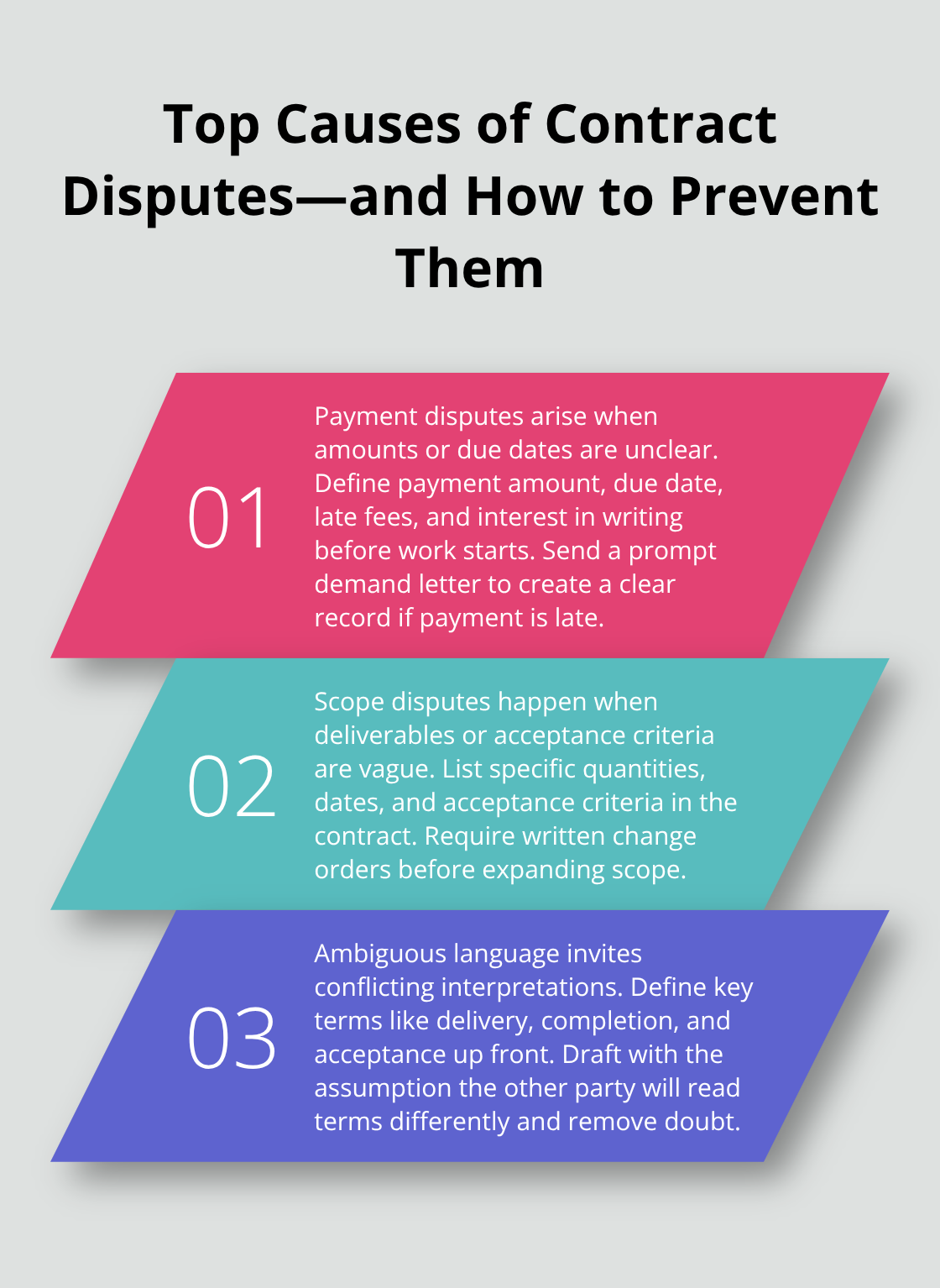
Payment disputes dominate Orange County contract litigation. Clients owe money past the agreed deadline, or they dispute the amount owed entirely. Under California Civil Code Section 3302, damages for monetary breaches include the amount due plus interest-yet many businesses fail to calculate interest or document the exact sum owed, weakening their position if the case reaches court. Non-payment often stems from cash flow problems, but contractors and vendors rarely maintain written proof of payment terms, delivery dates, or invoice acceptance. Document everything in writing before work starts. Specify the payment amount, due date, late fees, and interest rate. If payment doesn’t arrive on time, send a formal demand letter within 10 days, not weeks later. This creates a clear record and often prompts settlement without litigation.
Scope Disputes and Undisclosed Requirements
When scope disputes arise-the client claims you delivered less than promised, or you claim the client added undisclosed requirements-the contract language becomes everything. Vague phrases like “as needed” or “industry standard” invite conflict. Instead, list deliverables with specific quantities, dates, and acceptance criteria. Include a change order process that requires written approval before scope expands.
Track all communications about scope changes via email, never verbally. If a dispute emerges, you’ll have documented evidence of what was promised and what the client approved.
The Ambiguity Problem
Misinterpretation of contract terms causes unnecessary litigation in Orange County. One party reads “completion by March 31” to mean the final invoice is due that day; the other interprets it as the work finished by that date, with payment due 30 days later. California courts enforce contracts according to their plain language, but if terms are truly ambiguous, courts interpret them against the drafter. This means if you wrote the contract and left room for doubt, the judge will rule in the other party’s favor. Avoid this by defining every key term upfront. If you use “delivery,” clarify whether it means the item leaves your facility, arrives at the client’s location, or is installed and tested. If the contract involves real property, Section 3304 of the California Civil Code addresses breach remedies for covenants-but only if your contract clearly identifies which covenants apply. Write contracts with the assumption that the other party will interpret every phrase differently than you intend, then make that interpretation impossible.
Moving Toward Resolution
These three dispute triggers-payment delays, scope creep, and ambiguous language-account for most Orange County contract conflicts. The good news is that all three are preventable with clear drafting and documentation. Once a dispute surfaces, your next step involves choosing the right resolution path, whether that’s negotiation, mediation, or court action.
Settling Disputes Before They Reach Court
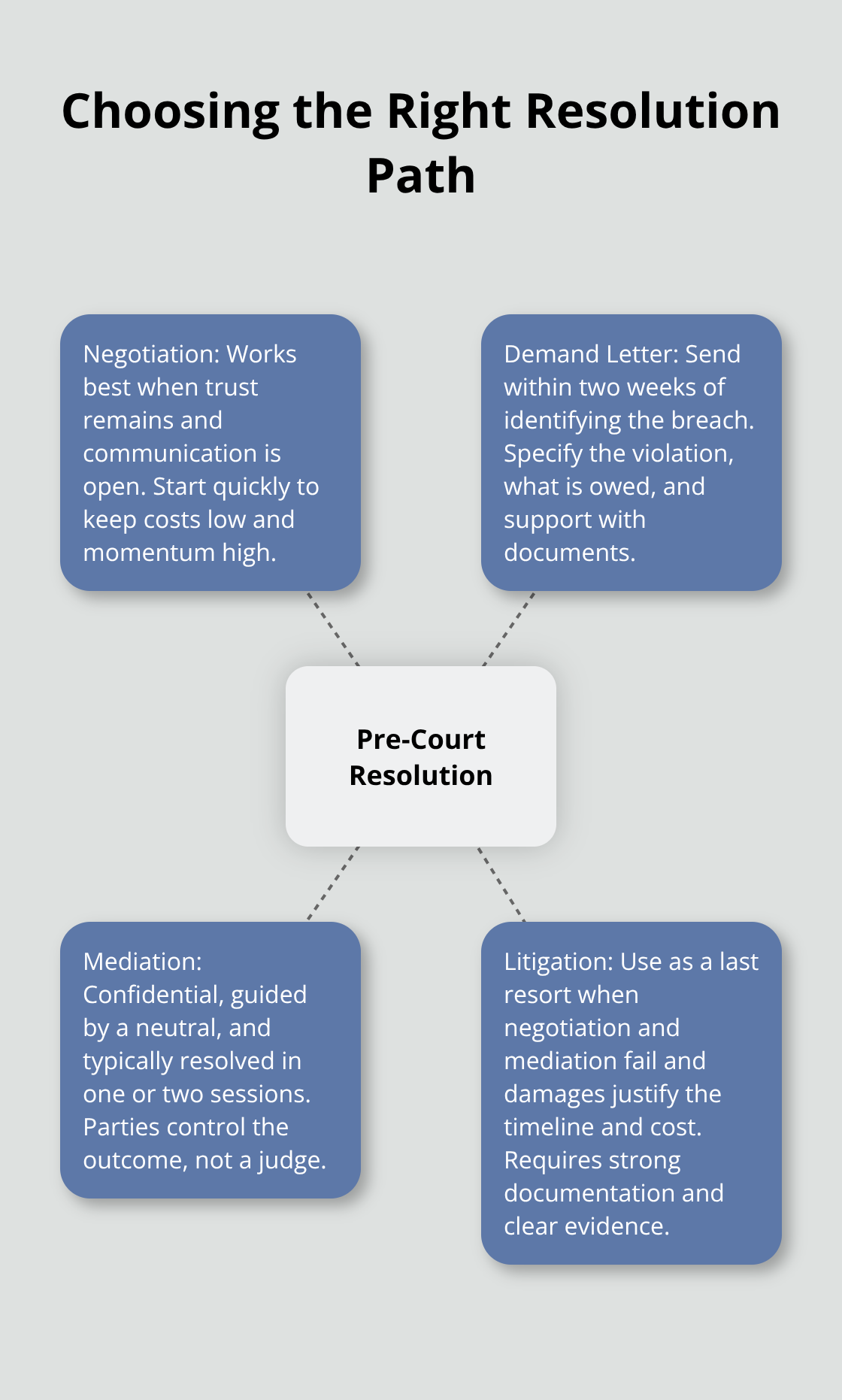
Most Orange County contract disputes never reach a judge. The businesses that resolve them fastest and cheapest pursue negotiation first, mediation second, and litigation only when those fail.
Negotiation and Demand Letters
Negotiation works best when both parties still trust each other enough to communicate. Send a detailed demand letter within two weeks of identifying the breach, not months later. The letter must specify exactly what the other party owes, the contract section they violated, and your calculation of damages.
Include supporting documents: invoices, emails showing non-performance, proof of payment, or photographs of defective work. Many disputes settle at this stage because the demand letter forces the other party to take the problem seriously and quantify their exposure.
Mediation as a Cost-Effective Alternative
If negotiation stalls, mediation becomes your next move. Unlike litigation, mediation keeps both parties in control of the outcome. A neutral mediator guides discussion but cannot force a settlement. Orange County mediators typically charge between $60 and $200 per hour depending on case complexity, and most disputes resolve in one or two sessions. The process remains confidential, meaning nothing said in mediation can be used later in court if settlement fails. This protects both sides and encourages honest discussion about the real issues. Many California contracts now include mediation clauses requiring it before litigation, which reduces costs and preserves business relationships.
When Litigation Becomes Necessary
When negotiation and mediation fail, litigation becomes necessary, but it should be your last resort. California state courts in Orange County handle contract disputes, and the process takes 18 to 36 months from filing to trial. Court costs, expert witnesses, and attorney fees typically exceed $50,000 for cases involving less than $250,000 in damages, making litigation economically irrational for smaller disputes. However, litigation becomes justified when the other party refuses to negotiate, the breach is clear and documented, and damages exceed six figures.
Evaluating Your Case Before Filing
Before filing suit, conduct a thorough case evaluation to assess your evidence, calculate realistic damages under California Civil Code Section 3301, and estimate the cost of litigation against potential recovery. Some cases settle during discovery when the other party realizes the strength of your evidence. Others require trial, where a judge or jury decides liability and damages. The key is entering litigation with clear documentation, strong legal arguments, and realistic expectations about timeline and cost. Once you understand your legal position and the remedies available to you, the next step involves identifying which specific remedy-damages, specific performance, or contract reformation-best fits your situation and strengthens your negotiating position.
What Remedies Can You Actually Recover in Orange County
Once you establish that the other party breached the contract, California law provides three primary remedies. Selecting the right one determines whether you recover your full losses or settle for less.
Damages: The Default Remedy
Damages represent the most common remedy courts award in contract disputes. Under California Civil Code Section 3301, you can recover the detriment proximately caused by the breach, but only if you document it clearly. This means receipts, invoices, emails showing non-performance, and a direct causal link between the breach and your loss. If a contractor failed to deliver equipment on time and that delay forced you to halt production for two weeks, you calculate damages as the lost revenue from those two weeks minus any costs you avoided by not operating.
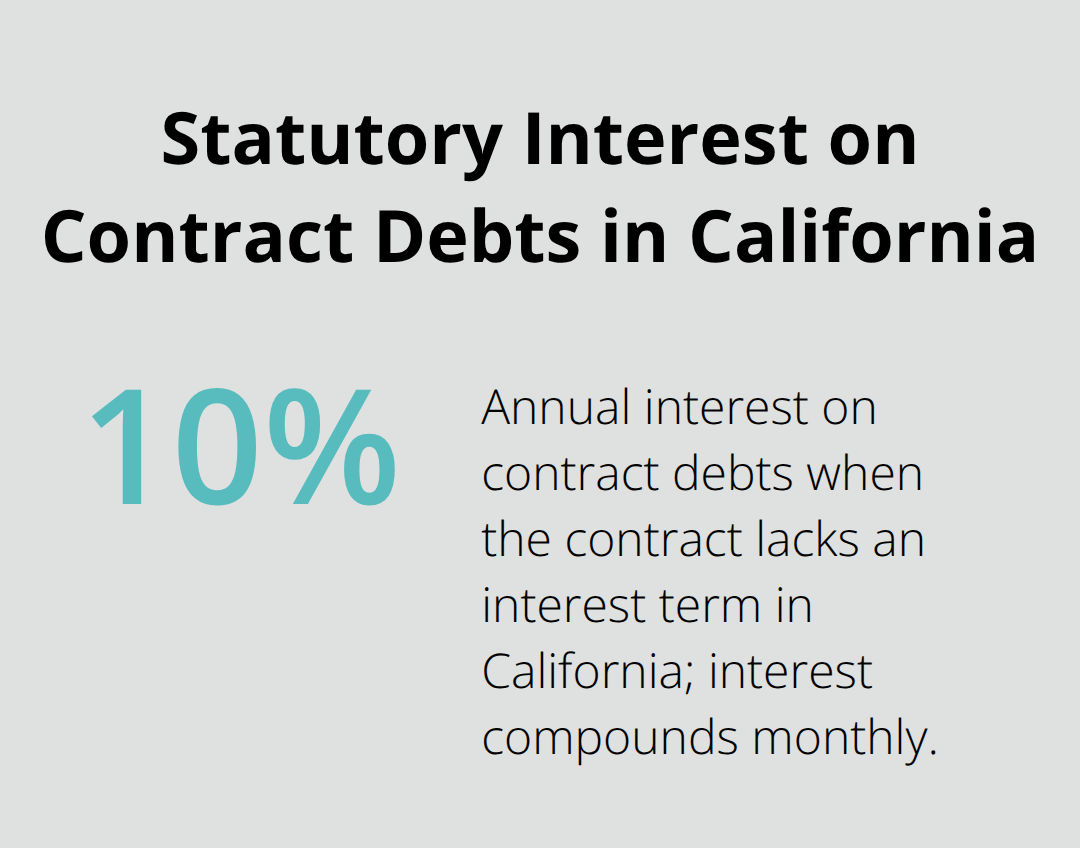
Section 3302 covers monetary breaches specifically: you recover the amount due plus interest, assuming the contract specifies an interest rate. Many businesses overlook interest entirely, leaving money on the table. If your contract doesn’t specify interest, California imposes 10% annual interest on contract debts, which compounds monthly. For a $50,000 overdue payment sitting unpaid for six months, that equals $2,500 in recoverable interest alone.
The challenge is that damages must be clearly ascertainable in both nature and origin. Speculative losses don’t count. If you claim you would have won three additional contracts if the breach hadn’t occurred, a court won’t award damages for those hypothetical deals because you cannot prove them with certainty.
Specific Performance: Forcing Actual Compliance
Specific performance means the court orders the other party to actually perform the contract obligation rather than pay damages. This works when the contract involves unique property or services that cannot be replaced with cash. If you contracted to purchase a specific commercial building and the seller refuses to close, specific performance forces them to sell. But if you contracted to buy standard office supplies that you can purchase elsewhere, specific performance is unavailable because damages adequately compensate you.
Courts rarely grant specific performance in service contracts because forcing someone to work against their will is impractical and potentially unconstitutional. This remedy becomes critical when the contract involves irreplaceable property or when standard monetary compensation fails to address your actual loss.
Contract Reformation: Correcting Mistakes
Contract reformation applies when both parties made a mutual mistake about the contract’s terms or when one party fraudulently induced the other into signing. If you and a vendor both intended the price to be $10,000 but the contract was typed as $100,000, reformation corrects that error to reflect what you actually agreed to. Reformation requires clear and convincing evidence of the mistake or fraud, which is a higher standard than the normal preponderance of evidence used in other contract cases. You need testimony from witnesses, contemporaneous emails, or prior drafts showing your actual intent.
Rescission: Canceling the Entire Agreement
Rescission cancels the entire contract and returns both parties to their pre-contract positions. This remedy applies when fraud, duress, or material misrepresentation induced you to sign. If a vendor promised their software would integrate with your existing systems and then it never could, you might rescind the contract and recover all payments plus damages for wasted implementation costs. Rescission is drastic and courts approve it only when the breach or fraud goes to the heart of the agreement.
Selecting Your Remedy Strategy
In Orange County contract disputes, damages dominate because they are straightforward to calculate and award. Specific performance and reformation are rarer and harder to prove, but they become critical when the contract involves irreplaceable property or when a fundamental mistake undermines the entire deal. Selecting your remedy strategy early shapes your negotiation approach and litigation position. If damages are your only realistic remedy, your settlement demand focuses on quantifying losses with documentation. If specific performance is available, you have leverage to force actual performance or extract a higher settlement because the other party faces the prospect of court-ordered compliance. Many disputes can be resolved without going to court through negotiation or mediation, which may preserve business relationships while still recovering your losses.
Final Thoughts
Contract disputes in California drain resources and damage business relationships, but they’re preventable with clear drafting and resolvable without litigation if you act fast. The three dispute triggers-payment delays, scope creep, and ambiguous language-account for most Orange County conflicts, and preventing them requires written agreements that specify payment amounts, due dates, deliverables, and change order procedures. Once a dispute surfaces, your resolution path matters enormously: negotiation and demand letters work when both parties still communicate, mediation costs far less than litigation and keeps you in control of the outcome, and litigation becomes necessary only when the other party refuses to settle and damages justify the 18 to 36-month timeline and $50,000-plus cost.
Understanding your available remedies shapes your entire strategy. Damages are straightforward to calculate and award, but specific performance and reformation become critical when the contract involves irreplaceable property or fundamental mistakes. The businesses that resolve contract disputes fastest and cheapest document everything from day one, send demand letters within two weeks of identifying a breach, and pursue mediation before litigation.
We at Raul Garcia Law Firm represent businesses, owners, and professionals in complex commercial disputes across Orange County, combining practical business insight with aggressive negotiation and courtroom representation to protect your financial interests and minimize operational disruption. Whether your dispute involves contract interpretation, payment disagreements, or scope conflicts, early legal guidance identifies your leverage, calculates realistic damages, and positions you for favorable resolution. Contact us to discuss your situation and explore the resolution strategy that protects your business.