

A broken contract can cost your Orange County business thousands in lost revenue and operational chaos. Most disputes escalate because companies wait too long to act, turning manageable disagreements into expensive litigation.
We at Raul Garcia Law Firm help businesses implement contract enforcement strategies that protect their interests before problems spiral. The right approach-combining clear documentation, early negotiation, and smart legal choices-makes the difference between a quick resolution and years of costly disputes.
Why Contract Enforcement Matters for Your Orange County Business
Unresolved contract disputes drain cash faster than most business owners realize. The average cost of commercial litigation in California ranges from $50,000 to $250,000 depending on complexity, according to data from business litigation cost studies. But the real damage extends far beyond legal fees. When a vendor fails to deliver, a partner misappropriates funds, or a customer refuses payment, your operations grind to a halt. Orange County’s four major business clusters-Irvine tech and IP, Costa Mesa retail and hospitality, Huntington Beach manufacturing and logistics, and South County family businesses-each face distinct contract risks tied to their industries. A manufacturing firm in Huntington Beach waiting months for resolution on a supplier breach loses production capacity and customer relationships. A Costa Mesa hospitality business caught in a service agreement dispute faces immediate cash flow problems. An Irvine tech company with a stolen trade secret faces irreversible competitive damage if enforcement doesn’t happen within days, not weeks.
The Financial Hemorrhage of Delayed Action
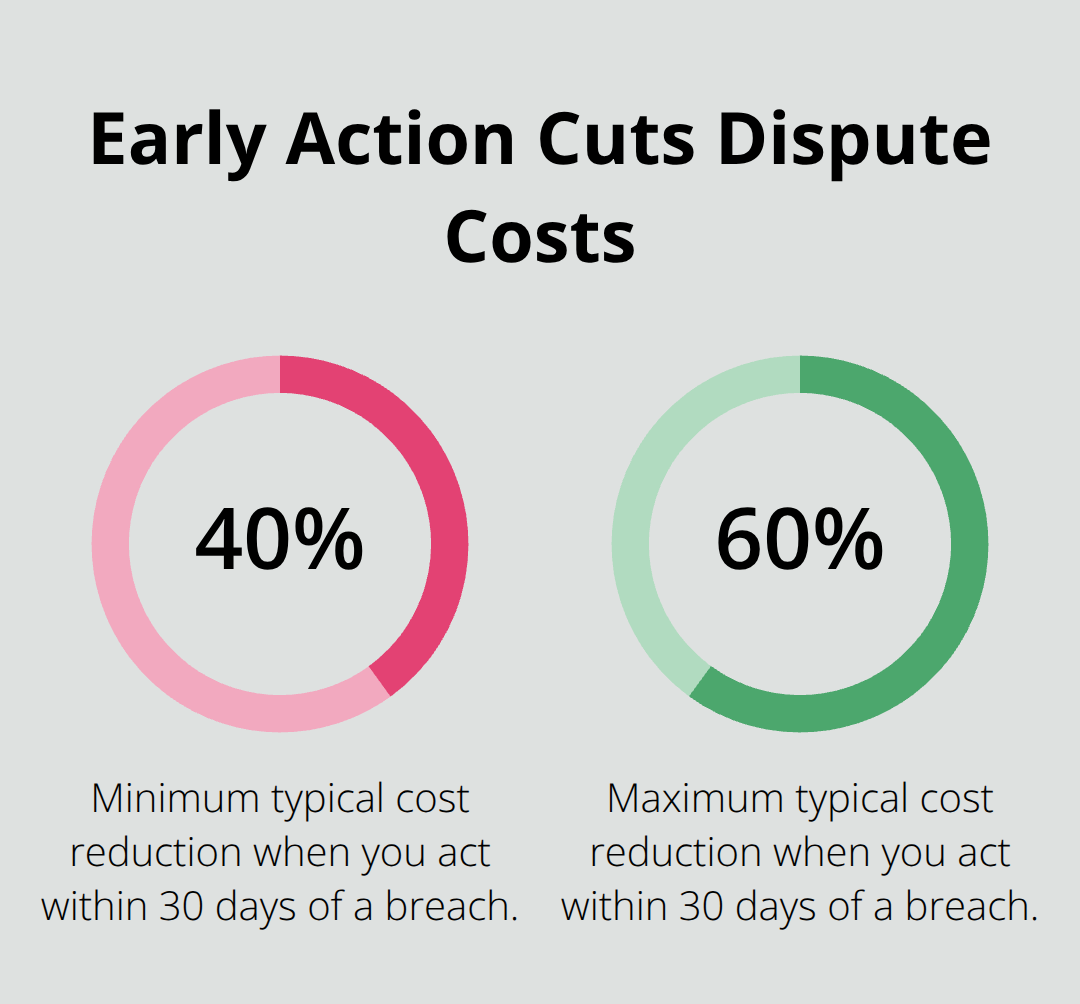
Money lost to unresolved disputes compounds quickly. Beyond the $50,000 to $250,000 in direct litigation costs, you face indirect losses: delayed revenue from unpaid invoices, operational inefficiencies while management focuses on the dispute, and lost opportunities because capital sits tied up in legal proceedings instead of growth. Businesses that act within 30 days of a breach typically resolve disputes for 40 to 60 percent less than those who wait six months. Early documentation and prompt communication preserve your negotiating position and reduce the likelihood of escalation.
A single unpaid contract worth $100,000 that drags on for a year costs far more than the invoice itself when you factor in financing costs, management time, and the opportunity cost of deploying that capital elsewhere.
Operational Continuity Depends on Swift Resolution
Contract disputes create cascading operational failures. If a key supplier breaches an agreement, you scramble to find alternatives, often at higher cost and lower quality. If a partner or employee violates a non-compete or confidentiality clause, your competitive position erodes immediately. Orange County courts handle complex business disputes at the Civil Complex Center in Santa Ana for cases involving multiple parties or novel legal issues, and non-complex disputes at the Central Justice Center, also in Santa Ana. Understanding which court handles your case matters because it shapes both timeline and strategy from day one. A business that delays enforcement of a trade secret or non-compete provision risks permanent loss of customer relationships or market share. The longer a former employee operates in violation of a non-solicitation agreement, the harder it becomes to recover lost clients. Immediate action-including injunctive relief to stop ongoing harm-protects your operational continuity and preserves your market position while the dispute resolves.
Why Speed Matters More Than You Think
The window for effective enforcement closes fast. Trade secret misappropriation requires action within days to prevent irreversible competitive harm. Non-compete violations demand swift injunctive relief before a former employee solidifies client relationships or market presence. Vendor disputes that sit unaddressed for months allow the breaching party to shift assets or disappear entirely, making recovery impossible. Your first 30 days determine whether you negotiate from strength or weakness. Documentation collected immediately after a breach-emails, invoices, performance records, witness statements-carries far more weight than reconstructed evidence months later. Courts and arbitrators respect parties who act promptly and preserve evidence, viewing delayed action as a sign of weak commitment to the claim.
How to Build an Enforcement Strategy That Actually Works
Preserve Evidence From Day One
Documentation is your first line of defense, and most Orange County businesses get it wrong. You need more than a signed contract sitting in a folder. From the moment you execute an agreement, maintain a contemporaneous record of performance: emails confirming deliverables, invoices showing payment terms, timestamped photographs or reports documenting work completed, and notes from critical conversations. When a dispute surfaces months later, reconstructed evidence loses credibility with judges and arbitrators. The California Courts Self-Help Center emphasizes that breach claims require proof of what was promised, what was performed, and what went wrong. Courts expect parties to preserve evidence immediately after a breach occurs. If you wait six months to start collecting emails and witness statements, the other side will argue you never took the dispute seriously.
Store contracts, amendments, and all correspondence in a centralized system with version control. This matters because contract disputes often hinge on which version governs or when modifications occurred. Vendor disputes in Huntington Beach manufacturing operations or payment delays in Costa Mesa hospitality businesses demand clear timelines showing when work was due, when payment was promised, and exactly when the breach happened. Without this documentation, your strongest claim becomes your weakest one.
Act Within the First 30 Days
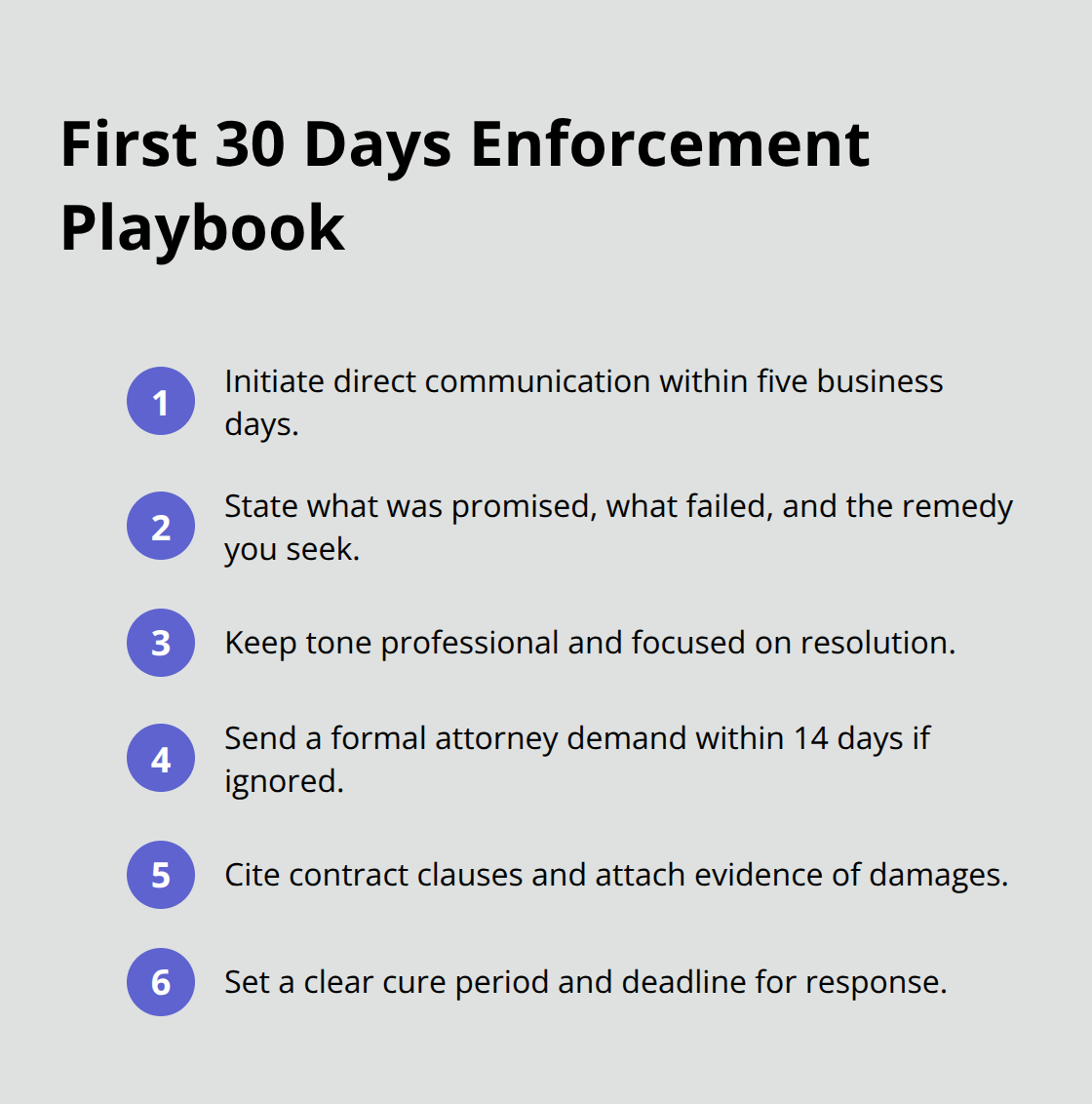
The moment you identify a breach, initiate direct communication with the other party within five business days. This accomplishes two goals: it signals you take the breach seriously, and it creates written documentation of the dispute that courts respect. Most Orange County contract disputes settle through negotiation or mediation rather than full litigation, which means your opening communication sets the tone for resolution. Avoid emotional language or threats; instead, clearly state what was promised, what failed to occur, and what you need to make it right.
If the other party is unresponsive or dismissive, escalate to a formal demand letter from counsel within 14 days. This letter should reference specific contract language, quantify your damages with supporting documentation, and outline a reasonable cure period or settlement deadline. Businesses that move from informal negotiation to formal demand within two weeks resolve disputes 40 to 60 percent more cost-effectively than those who delay.
Navigate Orange County’s Court System
Understand that Orange County’s court system routes complex business disputes involving multiple parties or novel legal issues to the Civil Complex Center in Santa Ana, while simpler contract cases go to the Central Justice Center. Knowing your likely venue helps you assess litigation costs and timelines before you commit resources. If mediation or arbitration clauses exist in your contract, you must follow them before filing suit, which means identifying these requirements immediately and scheduling sessions promptly.
The difference between a $15,000 mediation and a $100,000 litigation path often comes down to whether you negotiated seriously or waited for a lawsuit to force the issue. Strategic negotiation paired with clear documentation positions you to resolve disputes efficiently-but only if you move fast and follow the procedural requirements your contract specifies.
Choosing Between Litigation and Faster Resolution Methods
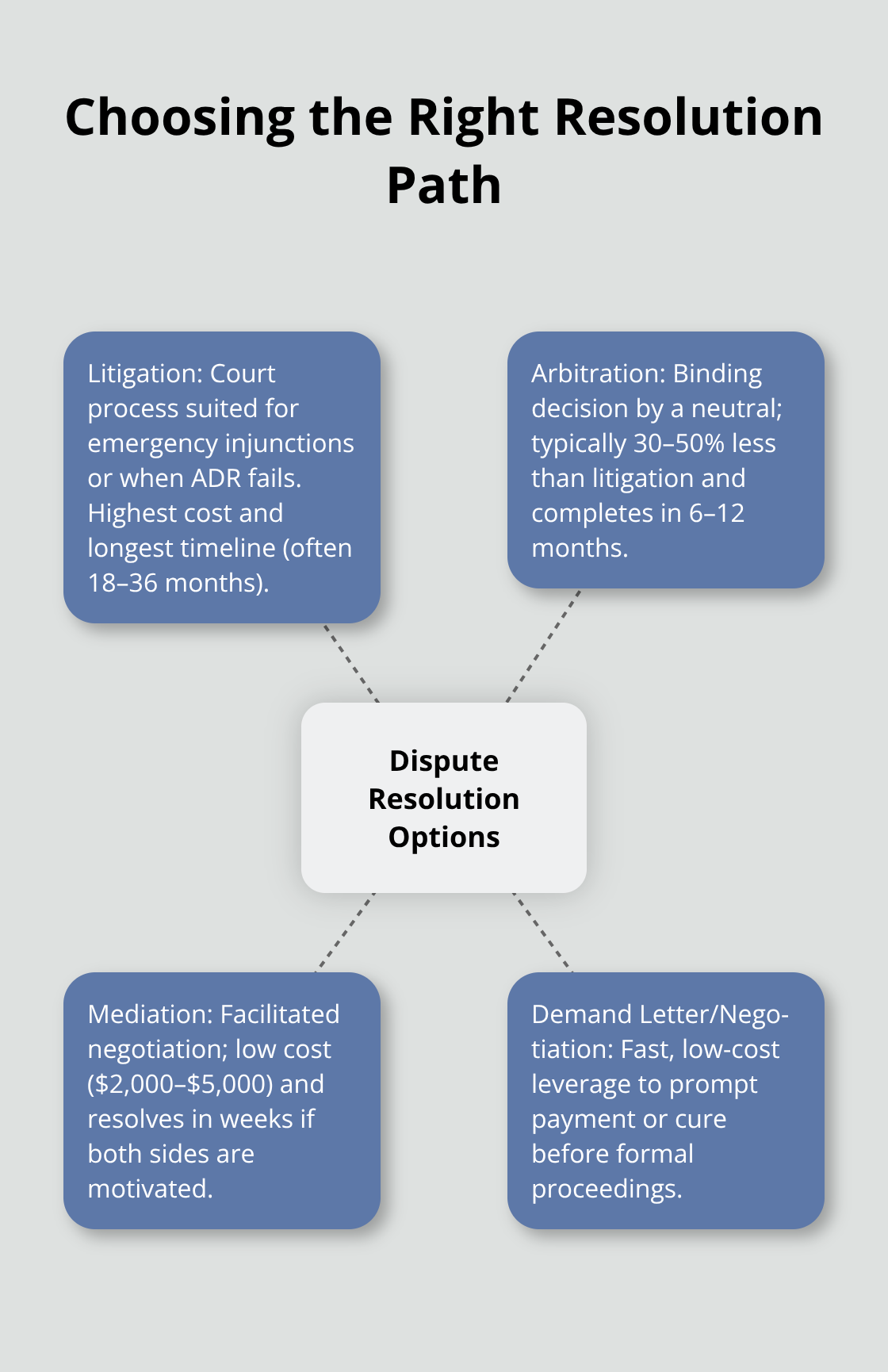
Most Orange County businesses assume contract disputes end in courtrooms, but they shouldn’t. Litigation in California costs between $50,000 and $250,000 depending on complexity, according to business litigation cost studies, and it consumes 18 to 36 months from filing to resolution. That timeline destroys cash flow for companies already bleeding money from the breach itself. The better path depends on what you need: immediate injunctive relief to stop ongoing harm, a binding decision from a neutral party, or a negotiated settlement that preserves the business relationship.
When Speed Matters Most
Trade secret theft or non-compete violations demand litigation or expedited arbitration because you need court orders within days to prevent irreversible competitive damage. Unpaid invoices or service disputes often resolve faster through mediation or demand letters that cost a fraction of litigation. The decision hinges on three factors: whether you need a court order to stop the breach immediately, whether both parties are willing to negotiate, and whether the contract specifies arbitration or mediation as mandatory steps before litigation.
Most Orange County contracts include arbitration clauses that require binding arbitration instead of court proceedings, which means filing a lawsuit violates the contract terms and gets dismissed. Arbitration typically costs 30 to 50 percent less than litigation and resolves in 6 to 12 months instead of 18 to 36 months. Mediation works only when both parties want to settle; it costs $2,000 to $5,000 and takes weeks, not months.
Why You Need a Lawyer Before Escalation
Hiring counsel before the dispute escalates separates businesses that recover damages from those that lose everything. Most Orange County business owners wait until litigation becomes unavoidable, which means they’ve already lost leverage, evidence, and negotiating room. Experienced contract attorneys assess whether your claim is worth pursuing, calculate realistic damages, and identify which dispute resolution path recovers the most money at the lowest cost.
A lawyer’s early assessment prevents you from spending $30,000 in litigation costs to recover $20,000 in damages. Counsel also preserves evidence, issues preservation letters to prevent document destruction, and identifies procedural deadlines that determine whether you can even pursue your claim. The statute of limitations for written contracts in California is four years and two years for oral contracts, but moving to negotiation quickly within 30 to 60 days of identifying the problem destroys your negotiating position if delayed. Attorneys with Orange County court experience know which judges handle complex business disputes at the Civil Complex Center and which procedural tactics work with specific court assignments. They also draft demand letters that signal serious intent without triggering unnecessary escalation, positioning you to settle efficiently or move to binding resolution if negotiation fails.
Arbitration Delivers Speed Without Court Backlogs
Arbitration clauses appear in roughly 70 percent of Orange County commercial contracts, according to contract analysis data, yet most business owners ignore them until disputes surface. Arbitration means a neutral arbitrator hears evidence and issues a binding decision instead of a judge or jury, and it happens in private rather than in public court. The timeline advantage is substantial: arbitration resolves in 6 to 12 months compared to 18 to 36 months for litigation, and you avoid court backlogs entirely.
Costs run $15,000 to $50,000 depending on the amount in dispute and arbitrator fees, versus $50,000 to $250,000 for litigation. The downside is that arbitration decisions are final with almost no appeal rights, so you need a strong case before committing. Mediation works differently and should happen first when both parties agree: a neutral mediator facilitates negotiation but doesn’t impose a decision, and either party can walk away. Mediation costs $2,000 to $5,000 and resolves disputes in 4 to 8 weeks when parties are genuinely motivated to settle.
When Litigation Becomes Necessary
Orange County contract disputes involving payment delays, scope disputes, or performance disagreements settle in mediation roughly 60 to 70 percent of the time. Litigation becomes necessary only when arbitration or mediation fails, when you need emergency injunctive relief to stop an ongoing breach, or when the contract lacks alternative dispute resolution provisions. The right Orange County litigation firm combines subject-matter depth in breach of contract, fraud, trade secrets, and fiduciary disputes with early counsel engagement and familiarity of local court procedures and judge assignments.
Final Thoughts
Contract enforcement strategies succeed when you act decisively and align your legal approach with operational reality. The businesses that recover damages fastest document performance immediately, initiate communication within 30 days of a breach, and understand whether mediation, arbitration, or litigation serves their interests best. Waiting costs money-directly through litigation expenses and indirectly through lost revenue, operational disruption, and competitive damage that compounds daily.
Proactive contract management prevents most disputes from escalating. Clear documentation from day one, regular contract reviews, and early legal consultation when problems surface separate businesses that resolve disputes efficiently from those that hemorrhage resources for years. Orange County’s court system, arbitration framework, and mediation options all work, but only if you choose the right tool for your specific situation-a trade secret theft demands immediate litigation or expedited arbitration, while an unpaid invoice often settles through a demand letter and negotiation.
The cost of inaction exceeds the cost of early counsel engagement by a factor of three to five. Businesses that consult attorneys within 30 days of identifying a breach typically resolve disputes for 40 to 60 percent less than those who delay. Contact our team to discuss your contract enforcement situation and next steps.