
Real estate investments in Southern California come with significant financial stakes, and disputes can derail your portfolio quickly. Partnership conflicts, tenant disagreements, and title issues happen more often than most investors realize.
We at Raul Garcia Law Firm help investors navigate SoCal real estate disputes before they become costly problems. This guide walks you through common conflicts, resolution strategies, and concrete steps to protect your assets.
What Real Estate Disputes Cost Orange County Investors
Partnership Disputes Drain Capital and Control
Partnership disputes in Orange County real estate destroy deals regularly, and the financial exposure runs deep. When co-owners or partners disagree on property management, capital contributions, or exit strategies, the conflict typically escalates into costly litigation. The average partnership dissolution in California real estate involves disputes over profit allocation, governance failures, and fiduciary breaches-issues that demand immediate attention before they metastasize.
Co-ownership conflicts frequently lead to partition actions, which force a court-ordered sale of the property and division of proceeds among owners. This outcome rarely satisfies anyone. Investors lose control over timing, buyer selection, and final price. The court process adds legal fees, appraisal costs, and market uncertainty that can drain 15 to 25 percent of the property’s value before settlement.
Tenant Disputes Block Cash Flow and Tie Up Capital
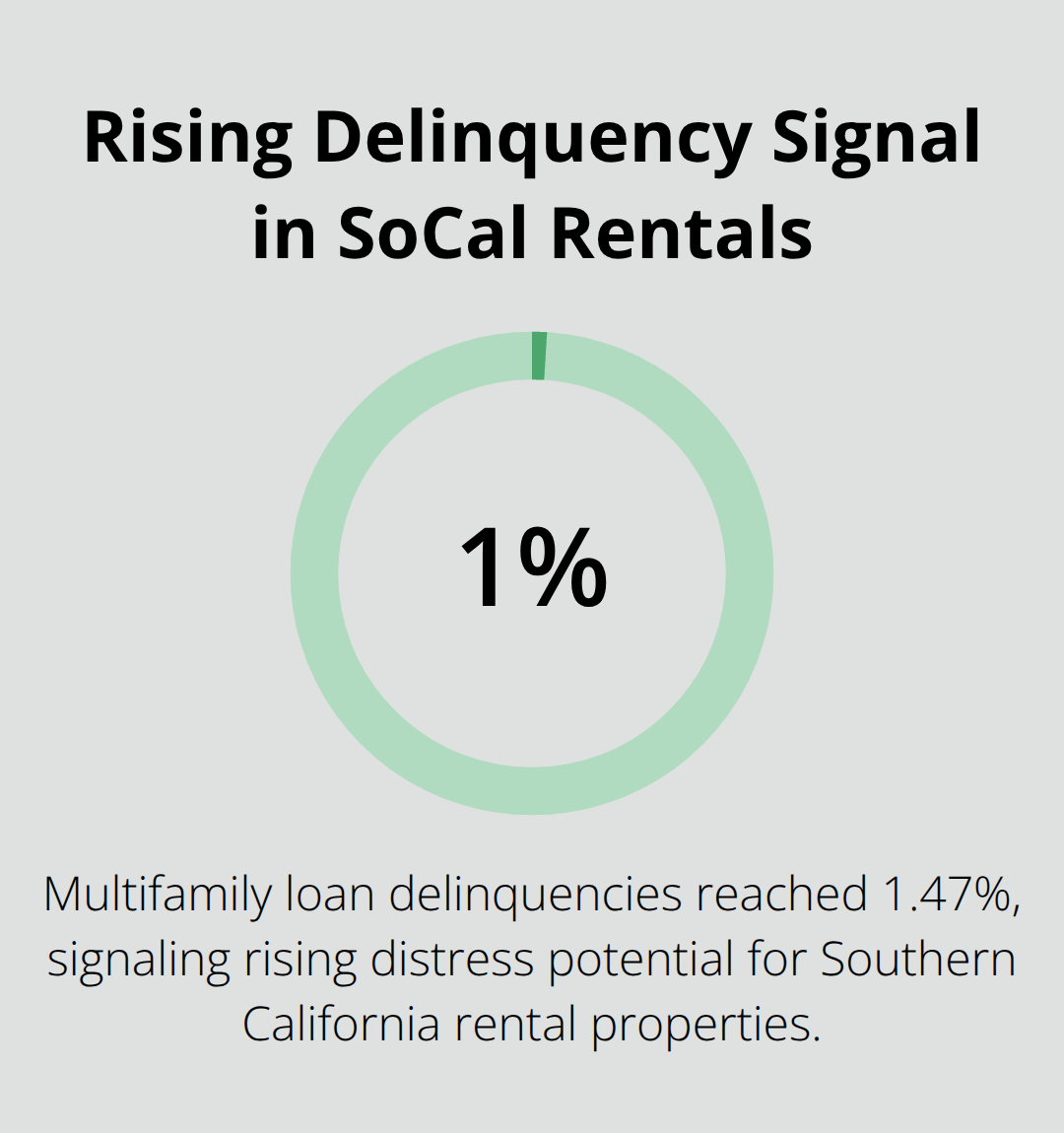
Landlord-tenant disputes hit differently because they involve ongoing cash flow and operational control. Multifamily loan delinquencies rose 88 basis points year over year to 1.47% according to the Chambers Real Estate Litigation 2026 guide, signaling rising distress potential for rental properties in Southern California markets. When tenants default on rent or refuse to vacate, the dispute blocks income and ties up capital.
Commercial rent enforcement debates have sharpened post-pandemic, with refinements to tenant concessions making eviction timelines unpredictable. An eviction action in Orange County can take four to six months minimum, during which you cover carrying costs without tenant revenue. This extended timeline compounds your losses and creates operational uncertainty.
Title and Boundary Issues Cloud Ownership
Title and boundary disputes pose a different threat because they cloud ownership itself. Quiet title actions remain the standard remedy in Orange County to resolve competing ownership claims and clarify who holds valid title under California law. Boundary conflicts hinge on reliable surveys and historical property records; inaccurate surveys frequently drive litigation and impact easement interpretations.
When a neighbor encroaches or your title contains defects, the property becomes difficult to refinance, sell, or develop. Title insurance may not cover all defects, leaving you exposed to claims from previous owners or creditors. This exposure can persist for years and affect your ability to leverage the asset.
How Disputes Originate and Escalate
Partnership disagreements typically stem from undocumented profit splits or vague governance terms in partnership agreements. Landlord-tenant conflicts arise when lease language fails to address maintenance responsibilities, rent escalation disputes, or lease renewal expectations. Title issues emerge from incomplete chain-of-title documentation, survey inconsistencies, or easement ambiguities that nobody addressed during acquisition.
Each category demands a different resolution approach and timeline. Partnership disputes require immediate intervention because they often block business operations and capital decisions. Tenant disputes need swift action to preserve cash flow and prevent prolonged vacancy. Title disputes demand thorough documentary evidence-deeds, title records, purchase agreements, survey reports, and written communications-because they affect long-term asset value. Investors who address these disputes early, before escalation, preserve capital and maintain control over outcomes. Understanding which resolution strategy fits your situation determines whether you recover losses or compound them further.
How to Resolve Orange County Real Estate Disputes Without Destroying Your Timeline
Start with Direct Negotiation to Control Costs and Pace
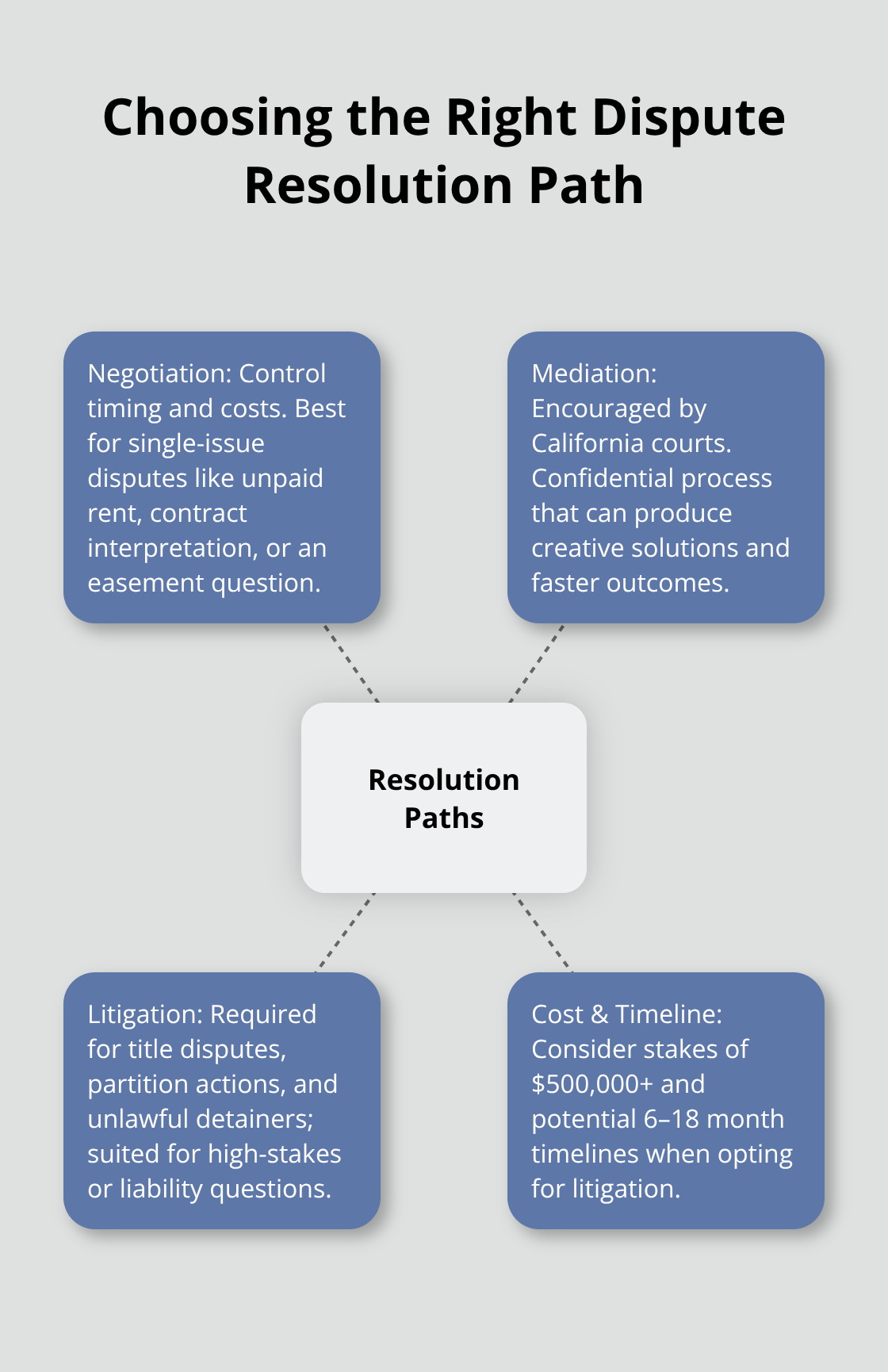
Direct negotiation works first because it gives you control over timing and expenses. Most Orange County real estate disputes settle faster when both parties communicate openly about financial exposure and business objectives. This approach works best when the dispute involves a single issue-unpaid rent, a contract interpretation disagreement, or an easement boundary question. You control the pace, the costs stay minimal, and you can walk away if the other side refuses to move.
Set a firm deadline for negotiation (typically two to four weeks) and document every offer and counteroffer in writing. Email confirmations matter because they establish a clear record if the dispute escalates later. Demand letters resolve many contract disputes before filing suit and save significant legal costs, with both parties often settling within weeks once they understand their exposure.
Mediation Offers Speed and Confidentiality When Negotiation Stalls
Mediation becomes your next practical step when direct negotiation stalls but you want to avoid court. California courts actually encourage mediation, and many Orange County judges now require it before trial. A neutral mediator helps both parties identify common ground and explore settlement options that litigation cannot offer.
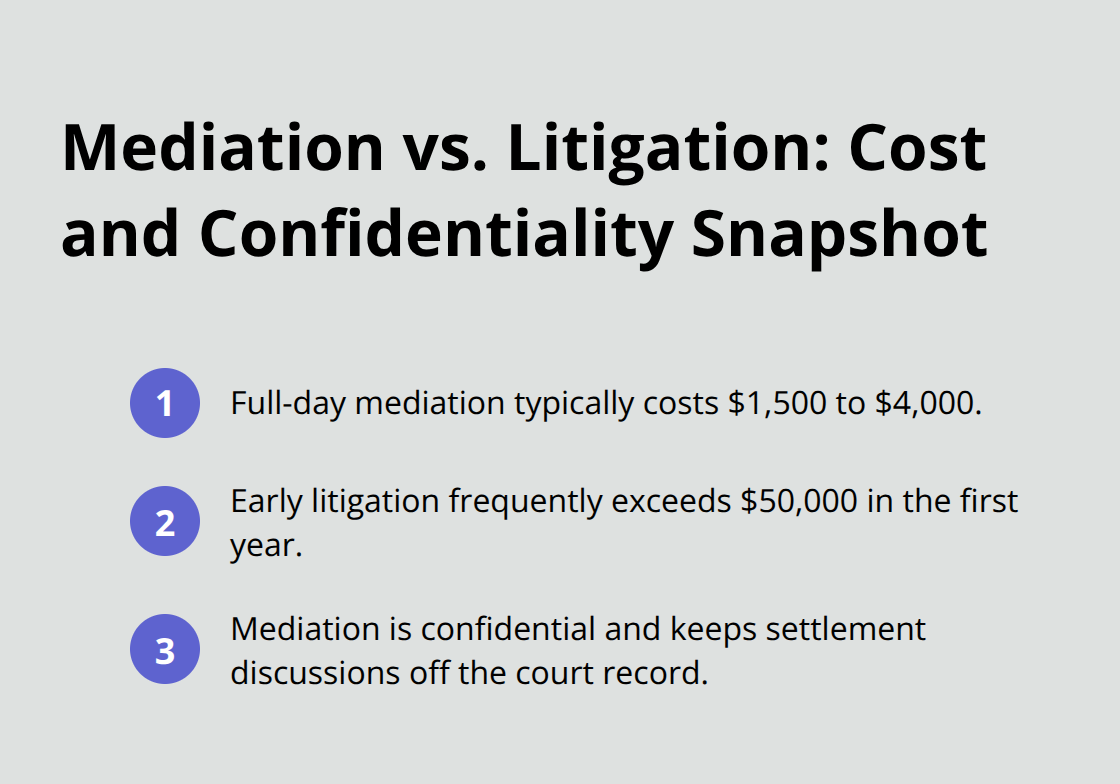
Mediation costs between $1,500 and $4,000 for a full day session, depending on the mediator’s rate, compared to litigation costs that frequently exceed $50,000 within the first year. The process is confidential, which means statements made during mediation cannot be used in court if settlement fails. This confidentiality removes the pressure of creating a permanent record. Mediation typically resolves landlord-tenant disputes, partnership disagreements over profit splits, and boundary conflicts more efficiently than litigation because the mediator can suggest creative solutions-lease modifications, phased buyouts, or property line adjustments-that a judge cannot order.
However, mediation only works if both parties genuinely want to settle. If one side uses mediation as a delay tactic while they transfer assets or hide income, you’ve wasted time and money. Assess the other party’s good faith before committing to mediation.
Litigation Becomes Necessary for Title Disputes and Formal Remedies
Litigation becomes necessary when the other party refuses to negotiate reasonably or when the dispute involves a legal principle that affects your future deals. Title disputes, for example, often require litigation because quiet title actions and partition proceedings are formal court remedies with no practical alternative. Partnership dissolutions frequently end up in court when fiduciary breaches or fraud allegations emerge, because mediation cannot resolve questions of legal liability or personal misconduct.
Eviction actions against commercial tenants in Orange County require court filing because California law mandates formal unlawful detainer procedures; you cannot bypass the courts even if the tenant’s breach is obvious. Commercial real estate disputes often involve multiple parties (lenders, contractors, agencies), which multiplies complexity and extends resolution timelines. Litigation also becomes your only option when the financial stakes justify the cost. If a dispute involves $500,000 or more and settlement offers fall significantly short of your position, litigation provides a path to full recovery even though the timeline extends six to eighteen months.
Evaluate Your Dispute Category Before Committing Resources
The right strategy depends on the specific facts, the other party’s behavior, and your tolerance for timeline uncertainty. Investors who choose the wrong approach waste capital on unnecessary procedures or settle for inadequate recoveries when stronger leverage existed. Early consultation helps you evaluate whether your dispute fits the negotiation, mediation, or litigation category and identify which path protects your financial interests most effectively. Understanding these three resolution tracks positions you to move forward strategically rather than reactively, which matters significantly when your cash flow and asset control hang in the balance.
How to Build Real Estate Agreements That Prevent Disputes in Orange County
Create Partnership and Co-Ownership Documents That Address Conflict Before It Happens
Most Orange County partnership disputes originate from vague or missing language in the original partnership agreement, not from unexpected market conditions. Investors repeat the same mistake: they partner with someone they trust, skip detailed written terms, and assume disagreements will resolve easily later. This assumption costs tens of thousands in legal fees and lost capital when disputes emerge.
Your partnership agreement must specify profit allocation percentages, capital contribution schedules, decision-making authority for major expenses, buyout procedures, and exit triggers that define what happens if one partner wants out or cannot perform. Include specific language around what constitutes a major decision requiring unanimous consent versus routine operational matters requiring only one partner’s approval. Define how distributions flow, when they occur, and what happens to retained earnings. Address scenarios explicitly: what happens if a partner dies, becomes disabled, or faces a lawsuit from creditors? Without these provisions, California law defaults to rigid statutory rules that rarely match your business intent, and you end up in court interpreting ambiguous language under pressure.
Address Lease Language That Prevents Tenant Conflicts
Landlord-tenant disputes similarly stem from incomplete lease language. Your commercial lease must address rent escalation formulas, maintenance responsibilities for structural versus cosmetic repairs, renewal options with specific notice deadlines, and remedies for default that go beyond eviction. Include force majeure language that clarifies tenant obligations during economic disruption or pandemic scenarios, since multifamily loan delinquencies rose 88 basis points year over year to 1.47% according to the Chambers Real Estate Litigation 2026 guide, reflecting ongoing stress from business interruptions.
Specify subleasing restrictions and assignment procedures so you maintain control over tenant quality. Define insurance requirements and indemnification obligations clearly. This precision prevents misunderstandings that later escalate into costly disputes.
Preserve Your Position Through Systematic Documentation
Courts award damages based on evidence, not on what actually happened. Your emails, text messages, photographs, payment records, and written communications become your proof if a dispute escalates. Document every transaction, every agreement modification, and every breach immediately after it occurs. When a tenant misses rent, send a written notice that day and save the response or non-response. When a partner proposes a capital call or requests a distribution, confirm it in writing and document the decision and reasoning.
When you discover a property defect or boundary encroachment, photograph it with timestamps and obtain a professional survey or inspection report dated and signed. This systematic approach costs nothing during normal operations but becomes invaluable if litigation arrives. Courts reject oral testimony about handshake deals or vague understandings because memory fades and competing accounts conflict. Written records establish facts that neither party can later dispute.
Maintain Complete Title Documentation and Chain of Records
Title documentation demands the same rigor as operational records: maintain a complete chain of title file that includes all deeds, title insurance policies, survey reports, and easement documents. When you acquire a property, order a title commitment and review it thoroughly before closing. If defects or exceptions appear, address them in writing and document the resolution. This preventive step stops title disputes before they cloud your ownership or complicate future refinancing and sales.
Understand Your Legal Obligations Before Disputes Arise
California real estate law imposes specific disclosure and performance obligations that many investors overlook until a dispute teaches them the hard way. California Civil Code Section 1102 requires sellers to disclose known material defects to buyers; failure to disclose can form the basis for litigation and damages awards that exceed your original sale price. If you sell a property with known foundation issues, roof leaks, or environmental contamination and fail to disclose, the buyer can sue for rescission or damages years after closing.
Understand your indemnification obligations in partnership agreements and purchase contracts because they can expose you to liability for actions you did not control. Review insurance coverage before disputes arise and understand what your builder’s risk, commercial property, general liability, and professional liability policies actually cover. Many investors discover gaps in coverage only after a claim is denied. Know your local Orange County zoning restrictions and land use regulations because they affect your development rights and can trigger regulatory disputes with city agencies. Understand easement language in your deed because easements can restrict your use and limit future development potential. Work with counsel early to understand these obligations and structure your agreements to align with your risk tolerance and business objectives.
Final Thoughts on Orange County Real Estate Disputes
SoCal real estate disputes respond to early intervention far more effectively than delayed action. Investors who address disagreements within weeks through negotiation or mediation recover more capital and maintain operational control compared to those who wait until litigation becomes unavoidable. Mediation costs a fraction of litigation expenses and resolves many conflicts faster because both parties can explore solutions that courts cannot order, while title disputes and formal remedies require litigation as the only viable path forward.
Your agreements prevent the majority of disputes before they start. Partnership documents that specify profit allocation, decision-making authority, and exit procedures stop co-ownership conflicts from festering, lease language that addresses maintenance responsibilities and rent escalation prevents tenant disputes from escalating, and title documentation maintained throughout ownership protects you from claims and simplifies future refinancing or sales. Understanding your legal obligations under California law before disputes arise positions you to structure transactions that align with your risk tolerance and business objectives.
We at Raul Garcia Law Firm represent businesses and owners in complex real estate disputes across Orange County, combining practical business insight with aggressive negotiation and courtroom representation to protect your assets and minimize operational disruption. Review your existing agreements for gaps, document your current transactions systematically, and reach out for guidance before disputes arrive.