Property title disputes can derail your real estate plans and drain your finances. In Orange County, these conflicts range from boundary disagreements to fraudulent documents, and they happen more often than most property owners realize.
We at Raul Garcia Law Firm have seen how quickly a title issue can spiral without proper intervention. This guide walks you through the most common disputes, proven resolution tactics, and steps to protect your property before problems start.
What Triggers Title Disputes in Orange County
Boundary Conflicts Between Neighbors
Boundary conflicts between neighbors remain the most frequent source of title disputes we see in Orange County. These disagreements stem from inaccurate property surveys, fence placements that deviate from legal descriptions, or driveways and structures that encroach onto adjacent land. The problem intensifies when older properties lack updated surveys or when property records contain conflicting descriptions. A survey from the county assessor’s office costs between $300 and $1,000 but prevents far costlier litigation. Many property owners discover boundary issues only after purchasing, when a neighbor challenges the fence line or when refinancing triggers a lender’s title review.
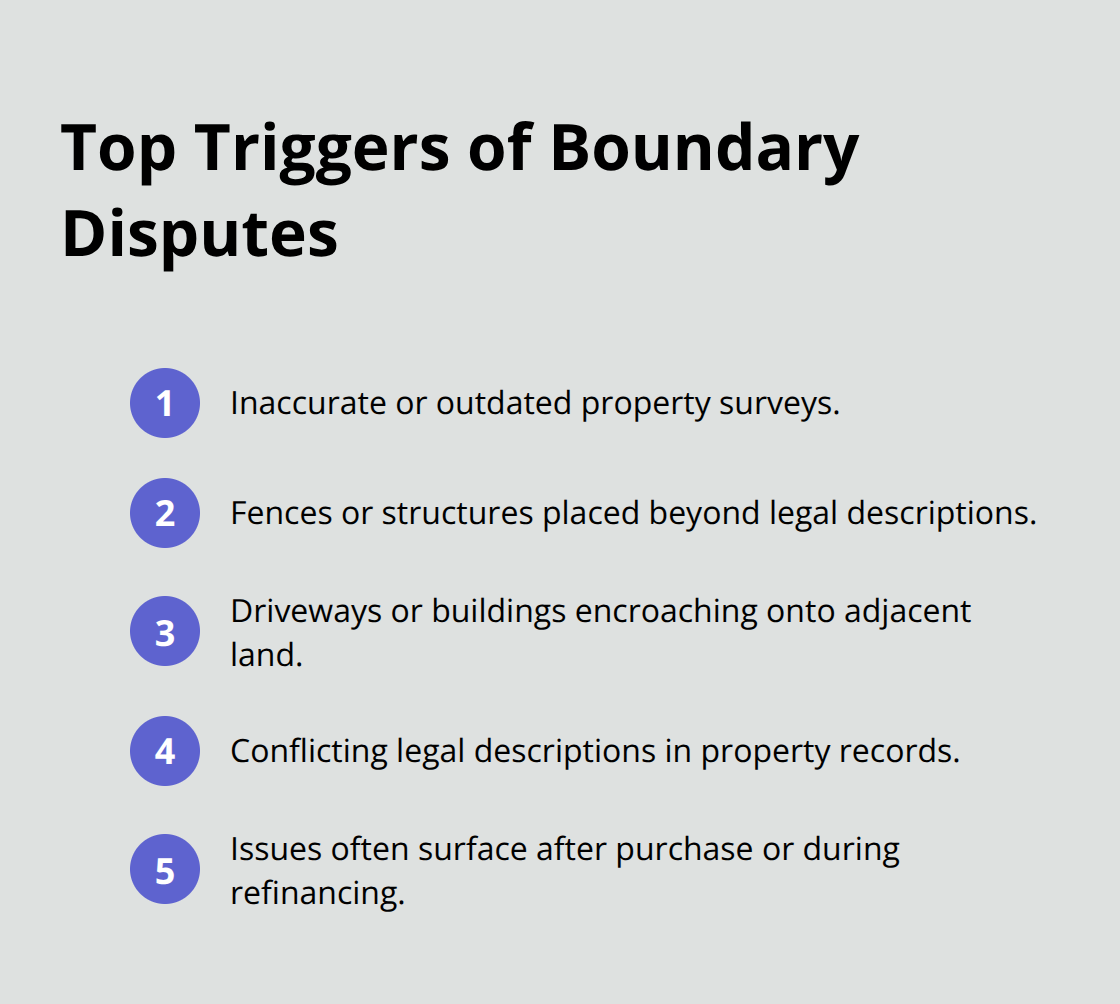
Precise survey evidence and clear legal descriptions aligned with recorded deeds resolve these conflicts.
Liens and Hidden Encumbrances
Liens and encumbrances represent the second major category of title disputes in Orange County. Tax liens from unpaid property taxes, mortgage liens from previous owners, HOA liens for unpaid assessments, and judgment liens from court cases all cloud a title and block financing or sale. A title commitment-the document issued before closing-lists these issues in the Requirements section, which must be cleared before closing. Many disputes arise when sellers fail to disclose existing liens or when title searches miss older encumbrances buried in county records. Lien resolution typically involves contacting the lienholder, negotiating a payoff amount, and obtaining a release document. If a lien holder cannot be located or refuses to release the lien, quiet title litigation may be necessary to remove the erroneous claim. Coordination with recorder’s offices and lien holders helps verify information and clear title efficiently.
Forged Deeds and Recording Errors
Forged deeds, fraudulent signatures, and recording errors create the most serious title disputes. These issues occur when someone transfers property without authorization, when a deed contains an incorrect legal description, or when documents fail to meet recording requirements. Orange County’s high property values make real estate fraud increasingly common, with perpetrators targeting vulnerable owners or exploiting gaps in title records. A thorough title search reveals most recording errors and conflicting claims, but some fraud surfaces only after purchase when a previous owner or creditor challenges the chain of title. Resolving fraud-related disputes requires court intervention through quiet title actions, which establish clear ownership against fraudulent or adverse claims. The process demands precise evidence (original deeds, notarized documents, and proof of rightful ownership) and typically takes several months to over a year depending on case complexity and whether the defendant contests the action. Understanding these fraud patterns helps property owners recognize warning signs and take protective action before disputes escalate into costly litigation.
How to Resolve Title Disputes Efficiently
Start with a Comprehensive Title Search and Document Review
A comprehensive title search and document review form the foundation of any resolution strategy. This step reveals the exact nature of the dispute, identifies all parties with claims against the property, and uncovers whether the issue stems from a recording error, a legitimate lien, or fraudulent activity. A title commitment from your title company breaks down problems into three sections: Schedule A lists the property details, the Requirements section shows what must be cleared before closing, and the Exceptions section lists issues that won’t block closing but remain on record. Request copies of all recorded documents related to your property from the Orange County Recorder’s Office, including deeds, liens, easements, and any court judgments. Many title disputes resolve simply through this review phase when property owners and their attorneys discover that a lien holder is defunct, a recorded claim was paid but never released, or a boundary dispute stems from an outdated survey rather than an actual encroachment. The cost of a professional title search typically ranges from $200 to $500 and prevents far more expensive litigation down the road.
Pursue Negotiation and Direct Settlement First
Negotiation and direct settlement should always precede litigation. Contact the party holding the adverse claim and attempt to reach agreement on a resolution that satisfies both sides. If a tax lien blocks your sale, contact the county tax assessor’s office to arrange payment or a payment plan. If an HOA lien exists, negotiate with the association to settle unpaid assessments or work out a lien release agreement. If a neighbor disputes a boundary line, hire a surveyor to establish the true property lines, then present the survey evidence to your neighbor as a basis for settlement. Most real estate disputes in Orange County resolve through negotiation or mediation without courtroom intervention. Mediation costs between $1,500 and $3,000 per party but avoids the thousands in attorney fees and months of delay that litigation demands. Many title disputes that seem intractable initially yield to professional negotiation when both parties understand the costs and timelines of court action.
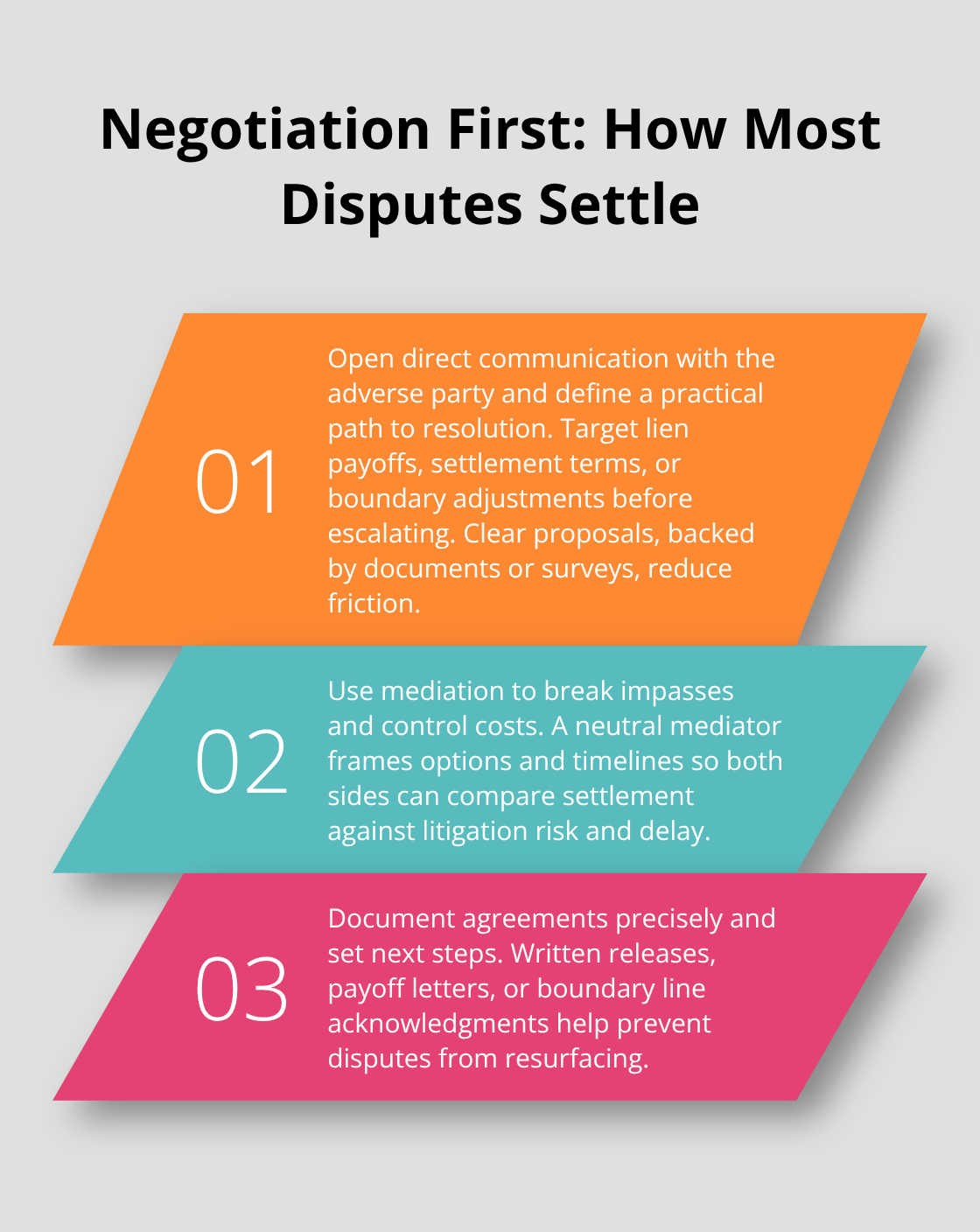
If direct negotiation stalls, a neutral mediator often helps parties find common ground and reach settlement faster than litigation timelines would allow.
Turn to Litigation When Negotiation Fails
Litigation through quiet title actions becomes necessary only when negotiation fails or when fraudulent claims or forged documents require court intervention to establish clear ownership. A quiet title action asks the court to determine who holds valid title against all adverse claims, and it is the standard remedy when the chain of title is clouded or ownership is genuinely disputed. Courts in Orange County typically require clear and convincing evidence of your ownership rights, supported by original deeds, title records, and any evidence disproving the adverse claim. These cases take several months to over a year depending on complexity and whether the defendant contests the action, so litigation should be your final option after negotiation has genuinely failed. The decision to litigate should rest on solid legal grounds, realistic cost projections, and a clear understanding that settlement attempts have been exhausted.
Once you understand your resolution options-from document review through settlement to litigation-the next critical step involves protecting your property rights before disputes ever arise in the first place.
Protect Your Title Before Problems Start
Review Your Title Commitment and Recorded Documents
The most effective defense against title disputes happens before you close on a property. A title search costs $200 to $500 and takes a few days, yet it prevents disputes that can cost $10,000 to $50,000 in legal fees and months of delayed transactions. Request a title commitment from your title company as soon as you enter escrow, then review all three sections carefully with your attorney. Schedule A contains your property address and legal description-verify these match your purchase agreement exactly, as mismatched descriptions create serious problems later. The Requirements section lists items that must be cleared before closing, such as outstanding liens or easements that need release documents. The Exceptions section shows issues that won’t block closing but remain on the property record, like utility easements or existing HOA restrictions.
Contact the Orange County Recorder’s Office directly and obtain copies of every recorded document affecting your property, including deeds, liens, judgments, and easements going back at least 40 years. This reveals whether liens are legitimate or forgotten, whether boundary descriptions match current surveys, and whether any fraudulent claims exist in the chain of title. Many disputes dissolve at this stage when you discover that a tax lien was paid but never released, or that a boundary conflict stems from a 30-year-old survey that no longer reflects actual property lines. Have an attorney review the title commitment and recorded documents before you commit funds to escrow-this early intervention identifies problems when you still have leverage to negotiate solutions.
Secure Title Insurance and Extended Coverage
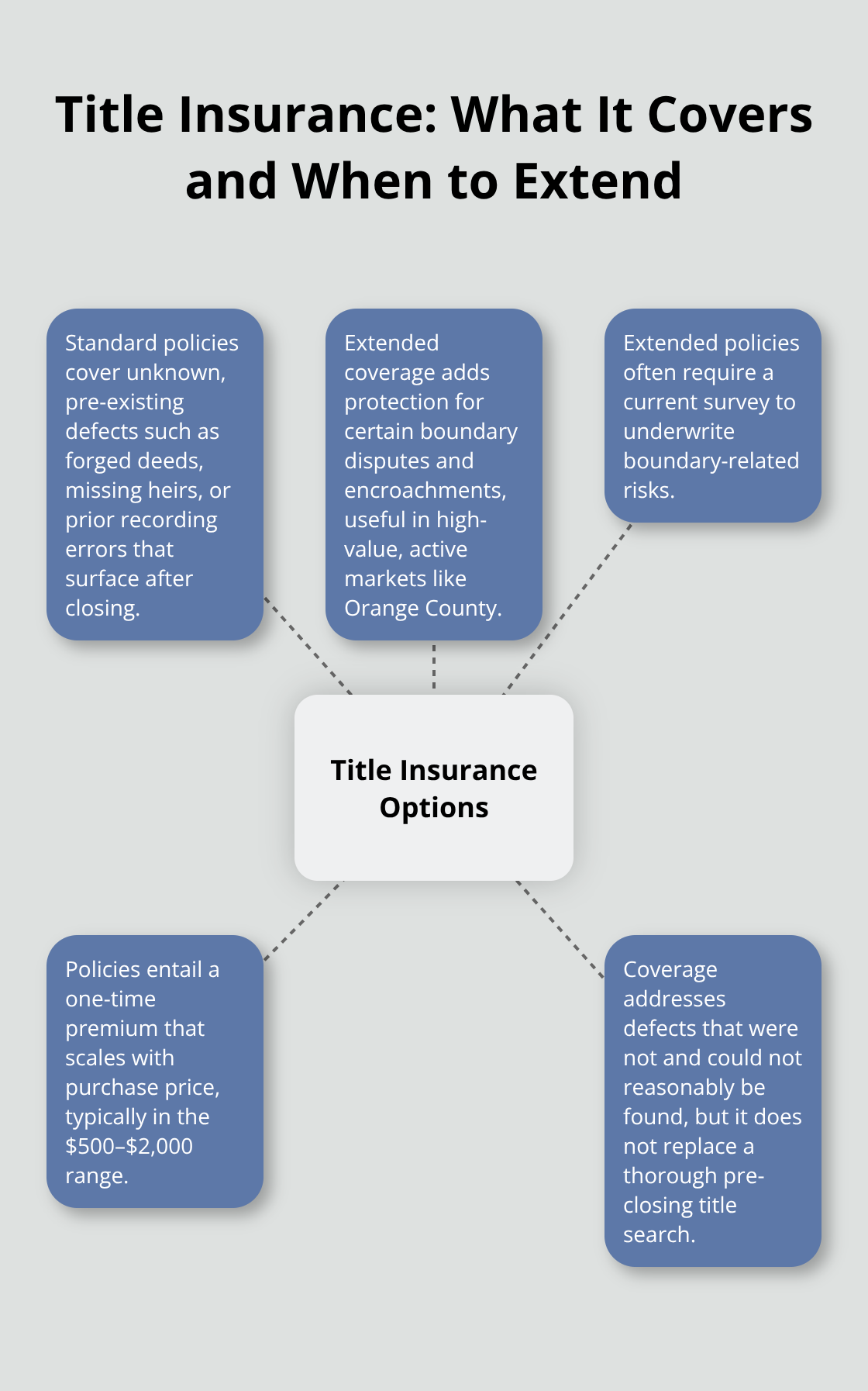
Title insurance protects you from defects discovered after closing, but it does not cover issues that should have been revealed by a proper title search. Standard title insurance policies cost $500 to $2,000 depending on purchase price and cover unknown defects like forged deeds, missing heirs, or recording errors that pre-date your purchase. Extended coverage policies offer additional protection for boundary disputes and encroachments, though they cost more and typically require a current survey. These policies (especially extended coverage) provide critical protection in Orange County’s active real estate market, where property values and redevelopment activity fuel disputes over ownership and boundaries.
Maintain Organized Records and Documentation
Maintain a detailed file containing your deed, title insurance policy, survey, HOA documents, property tax records, and any correspondence with lien holders or neighbors regarding boundaries or easements. Keep original documents in a safe deposit box and digital copies backed up securely. When you refinance, sell, or dispute a boundary with a neighbor, this documentation proves your ownership history and protects against claims that you failed to act on known issues.
Document Compliance and Update Surveys Regularly
Orange County’s stringent zoning and land-use regulations mean that easements, setback requirements, and HOA restrictions often surprise property owners years after purchase. Document compliance with these requirements in writing and photograph property conditions annually, creating a record that protects you if a neighbor later claims encroachment or if an HOA dispute arises. Property owners who maintain organized records and obtain updated surveys every 10 to 15 years avoid most boundary disputes entirely, because precise documentation eliminates the ambiguity that sparks litigation.
Final Thoughts
Property title disputes drain time, money, and peace of mind, but early intervention prevents the worst outcomes. A title search that costs $300 to $500 stops disputes that can cost $10,000 to $50,000 in legal fees and months of transaction delays. Property owners who invest in title due diligence upfront, maintain detailed records, and act decisively when problems surface avoid the costly battles that plague those who ignore warning signs.
If you face a title dispute now, a comprehensive title search and document review reveal whether the issue stems from a simple recording error, a legitimate lien needing payoff, or a serious claim requiring court intervention. Most disputes resolve through negotiation once both parties understand the costs and timelines of litigation. Contact Raul Garcia Law Firm to discuss your situation and develop a strategy tailored to your property and goals.