Title disputes in California can paralyze property ownership and drain your finances. Whether you’re facing boundary disagreements, deed errors, or hidden liens, these conflicts demand immediate legal attention.
At Raul Garcia Law Firm, we’ve resolved countless title disputes for Orange County property owners. This guide walks you through the causes, legal remedies, and how we fight to protect your property rights.
What Creates Title Problems in Orange County
Boundary Disputes Accumulate Across Decades
Boundary disputes top the list of title conflicts we see in Orange County. Property lines shift in records, surveys from decades ago contradict current maps, and neighbors interpret old deeds differently. The Orange County Clerk-Recorder handles thousands of recorded documents annually, and when a property changes hands multiple times, discrepancies accumulate. A 1985 survey might show a fence five feet inside your property line, but the 2015 deed description places it differently. These gaps force owners into expensive litigation or settlement negotiations. A current professional survey before purchasing-not after discovering the problem-prevents most boundary wars. Most buyers skip this step to save money, then spend ten times more fighting disputes later.
Deed Records Contain Hidden Defects
Conflicting documentation errors plague Orange County title transfers constantly. Forged signatures, misspelled names, incorrect legal descriptions, and missing notarizations create clouds on title that prevent clean sales. When you try to sell a property and the title company flags a 1998 deed with a signature that doesn’t match county records, your closing stalls immediately. Fixing these issues retroactively takes months and requires affidavits, court orders, or quit claim deeds from original parties who may be deceased or unreachable. The Orange County Superior Court processes quiet title actions specifically to clear these defects, but prevention works better. Thorough title examination before purchase reveals these problems while you can still negotiate seller responsibility or walk away.
Undisclosed Liens Block Refinancing and Sales
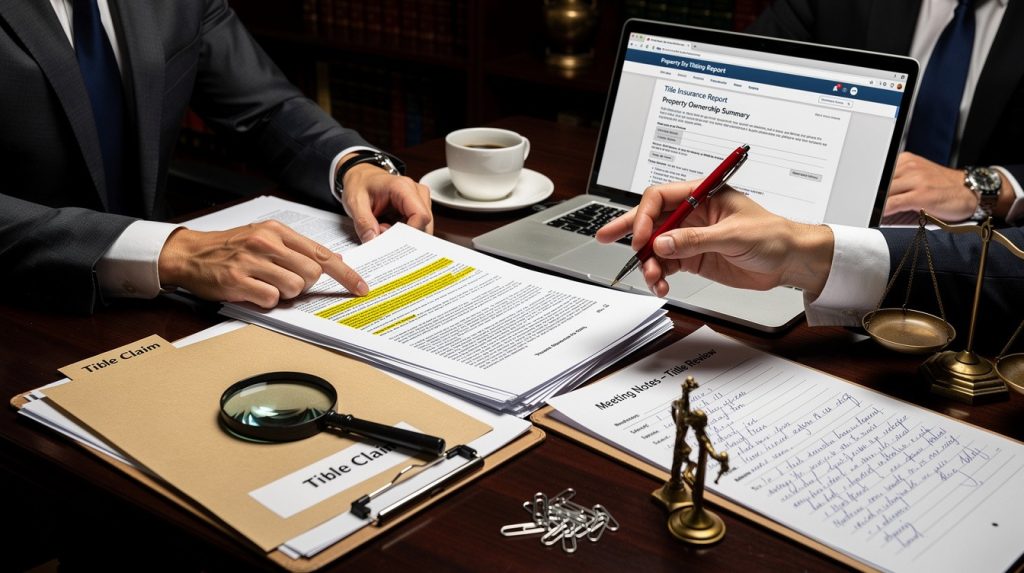
Undisclosed liens represent the most dangerous title surprise. A property may carry mechanic’s liens from construction work the previous owner never paid, property tax liens from years of delinquency, or judgment liens from lawsuits unrelated to the property itself. These attachments cloud your title and prevent refinancing or sale until resolved. Orange County properties sometimes carry easements for utility companies, drainage rights for neighbors, or access rights that weren’t clearly disclosed at purchase (utility easements, in particular, restrict development options significantly). You discover these only when attempting to develop the land or refinance. Title insurance helps but doesn’t cover everything, especially if disclosures were inadequate. Ordering a preliminary title report before purchase-not just at closing-gives you time to investigate and negotiate removal of problematic liens before your money is at risk.
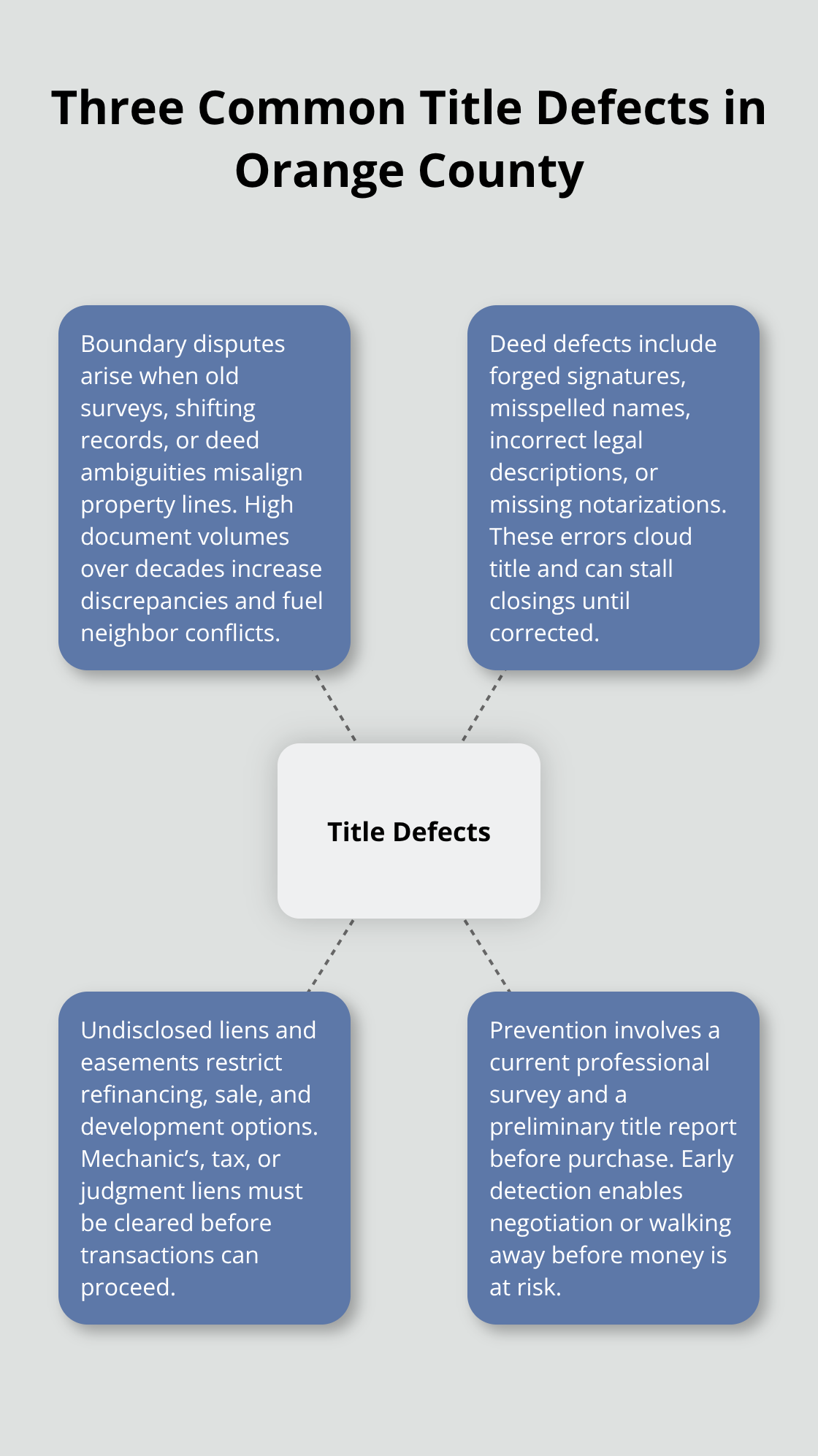
Understanding these three categories of title defects positions you to act strategically. The next section explains the legal process for resolving these conflicts once they surface.
How Courts and Settlements Resolve Title Disputes
Quiet Title Actions Clear Ownership in Court
When boundary disputes, deed defects, or hidden liens surface, you face two fundamental paths: court action or negotiated settlement. Most Orange County property owners mistakenly believe litigation is their only option, but the actual sequence involves strategic evidence gathering first, then a calculated decision about whether to file suit or pursue settlement. A quiet title action in California Superior Court targets ownership disputes directly by asking a judge to declare who holds valid title and remove clouds from the record.
Filing requires a detailed complaint showing your legal interest in the property, the specific defect clouding title, and why you deserve judicial relief. The Orange County Superior Court processes these filings routinely, but success hinges entirely on evidence quality.
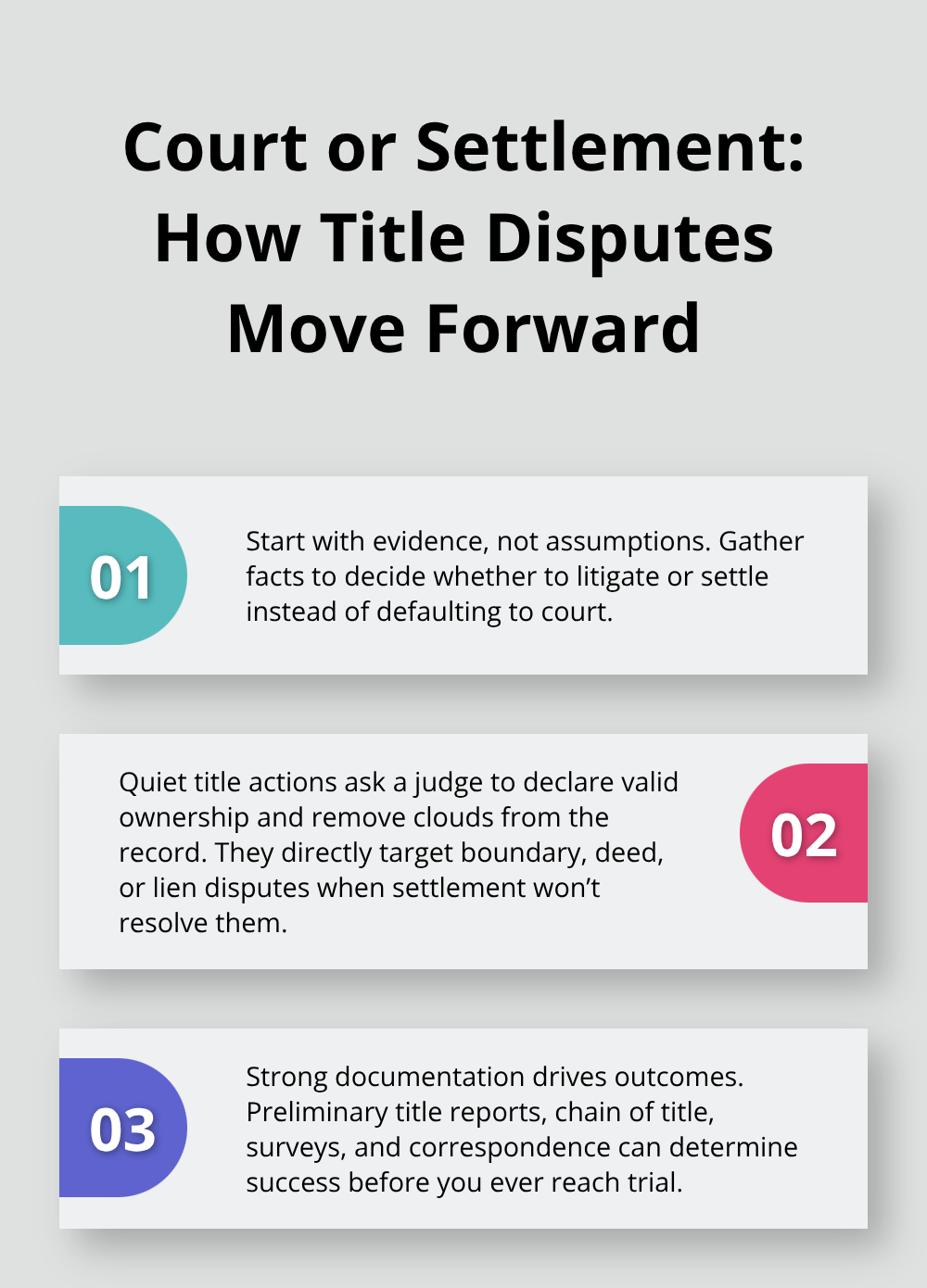
You’ll need the preliminary title report showing the defect, your chain of title documents, any surveys contradicting deed descriptions, and correspondence with the opposing party.
Evidence Determines Case Outcomes
If a 1992 mechanic’s lien still attaches to your property despite the contractor being out of business for twenty years, you must prove the lien is invalid or unenforceable through documentation and expert testimony. Courts rarely grant relief based on arguments alone. Many property owners spend months gathering scattered documents from county records, title companies, and previous owners before they’re ready to file. This preparation phase determines whether your case succeeds or collapses under cross-examination.
Settlement Negotiations Reduce Time and Expense
Settlement negotiations typically begin during evidence gathering and should continue aggressively before trial. Orange County judges increasingly push parties toward mediation or arbitration rather than full litigation, citing court backlogs and the expense of title trials. A mediator helps both sides evaluate their actual risk exposure: your neighbor’s boundary dispute might cost ten thousand dollars to litigate but settle for three thousand if both parties acknowledge the survey uncertainty.
If your property carries an undisclosed lien, the lienholder often accepts payment plus interest rather than forcing you through quiet title litigation. Title companies sometimes contribute to settlement funds when disclosure failures contributed to the dispute. Negotiating directly with opposing counsel, rather than waiting for court dates, typically reduces timelines from eighteen months to four or five months and cuts legal costs significantly.
Assess Your Claim’s Strength Realistically
Settlement requires realistic assessment of your claim’s strength. If the deed in your favor is clear and unambiguous, accepting a weak settlement wastes leverage. Conversely, if the opposing party’s documentation is equally strong, holding out for trial guarantees expensive discovery battles and uncertain outcomes. Experienced counsel evaluates both paths objectively rather than assuming litigation is inevitable. This honest evaluation of your position-combined with the opposing party’s likely assessment of theirs-shapes whether settlement or court action makes financial sense for your situation.
How We Resolve Your Title Dispute
Assessment Determines Your Path Forward
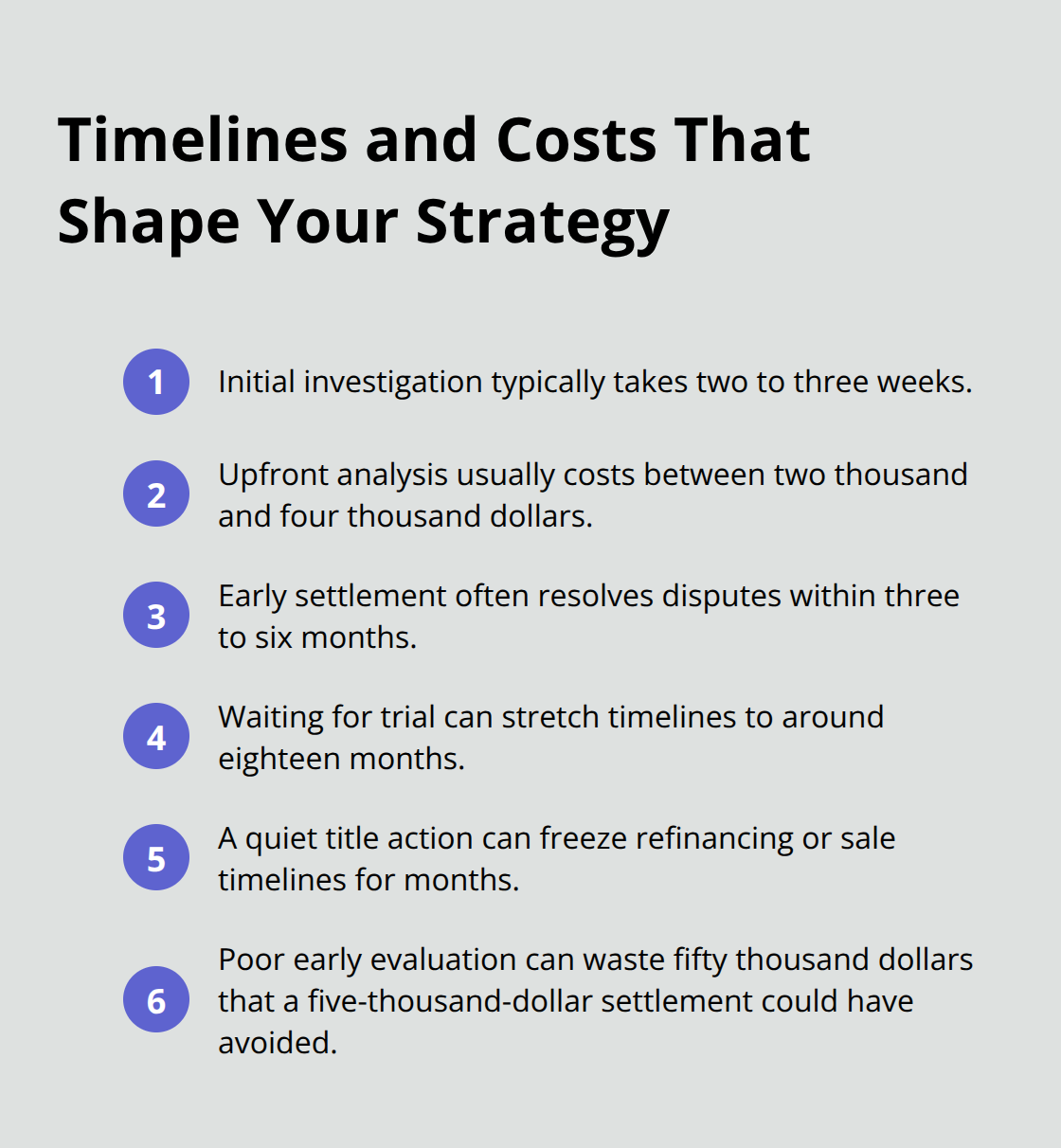
We at Raul Garcia Law Firm start every title dispute with a brutally honest assessment of your position, not what you want to hear. Many property owners arrive convinced their claim is airtight, but documentation tells a different story. We order the preliminary title report, trace your chain of title back through county records, request surveys, examine deeds, and review any correspondence with opposing parties. This investigation typically takes two to three weeks and costs between two thousand and four thousand dollars depending on property history complexity. That upfront investment prevents costly surprises during litigation.
We’ve observed clients waste fifty thousand dollars fighting cases they should have settled for five thousand because nobody conducted proper evidence evaluation at the start. Once we understand your claim’s actual strength, we tell you directly whether court action makes financial sense or settlement negotiation saves you money and time.
Strategic Negotiation Reduces Timeline and Cost
Our representation focuses on minimizing the disruption title disputes create to your business and finances. If you own rental properties, a quiet title action freezes refinancing and sale timelines for months. If you operate a commercial development, boundary disputes halt construction and tie up capital. We push hard for early settlement when the math supports it, meaning we negotiate aggressively with opposing counsel, title companies, and lienholders to reach resolution within three to six months rather than waiting eighteen months for trial.
Settlement requires realistic assessment of your claim’s strength. If the deed in your favor is clear and unambiguous, accepting a weak settlement wastes leverage. Conversely, if the opposing party’s documentation is equally strong, holding out for trial guarantees expensive discovery battles and uncertain outcomes.
Courtroom Preparation When Settlement Fails
When settlement fails and court becomes necessary, we file strategically, gather expert testimony from surveyors or title professionals as required, and present evidence that judges find compelling. Our approach combines practical business judgment with courtroom preparation-we don’t litigate for litigation’s sake, but when we file, we file to win. The Orange County Superior Court processes title cases routinely, and local experience with judges, court procedures, and opposing counsel matters significantly in achieving favorable outcomes and avoiding procedural delays that extend timelines unnecessarily.
Final Thoughts
Title disputes in California demand speed and precision. The longer a dispute lingers, the more it costs you in legal fees, operational delays, and lost opportunities. Property owners who act immediately after discovering boundary problems, deed defects, or hidden liens typically resolve conflicts within three to six months through settlement, while those who delay often face eighteen-month court battles that drain resources and create uncertainty.
The fastest path forward combines three essential steps: order a preliminary title report and conduct thorough evidence gathering before making decisions about settlement or litigation; engage experienced counsel who evaluates your claim objectively rather than pushing you toward expensive court action when settlement makes financial sense; and pursue aggressive negotiation with opposing parties, title companies, and lienholders while your evidence is fresh and both sides can still assess their actual risk exposure. Local attorneys understand how judges handle title disputes California cases, which procedural shortcuts save time, and how to negotiate effectively with title companies and opposing counsel who operate in the same market.
Contact Raul Garcia Law Firm for a direct evaluation of your position and a realistic timeline for resolution. The sooner you act, the sooner you reclaim clear title and move forward.