

Unfair competition in Southern California can devastate your business, whether through stolen trade secrets, misleading marketing, or poached employees. We at Raul Garcia Law Firm help business owners understand their rights and fight back.
This guide covers what constitutes unfair competition, how to build a strong case, and what remedies you can pursue to protect your interests.
What Counts as Unfair Competition in Orange County
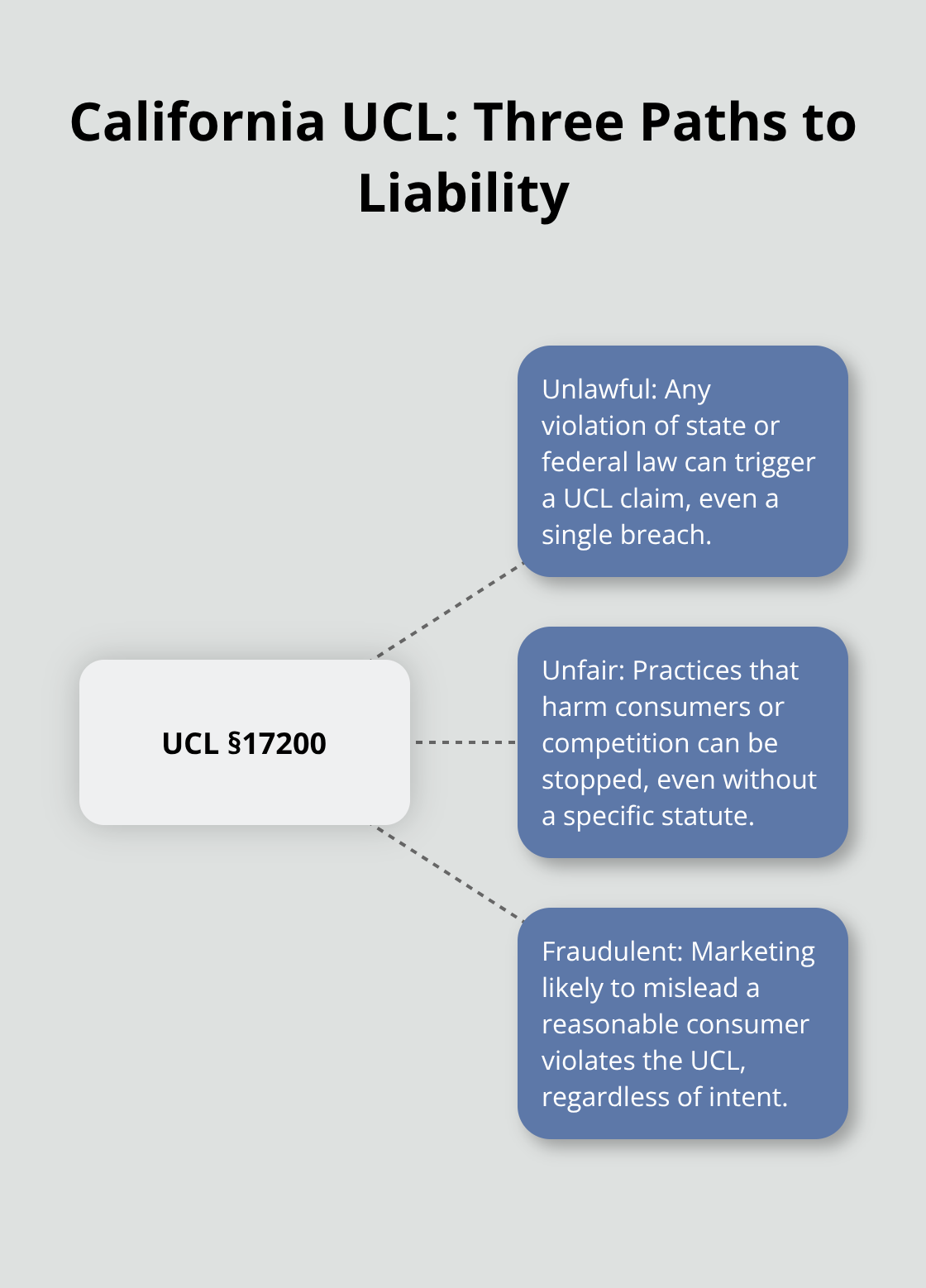
Unfair competition under California’s Business and Professions Code Section 17200 covers three distinct categories of wrongdoing, and understanding which applies to your situation shapes your litigation strategy. An unlawful act occurs when someone violates state or federal law-even a single violation triggers a UCL claim, which means a competitor stealing your trade secrets through a breach of fiduciary duty or an employee signing a non-compete agreement and then immediately launching a competing business both create immediate liability. An unfair act harms consumers or competition broadly; courts give themselves wide discretion here, which means novel or particularly aggressive business tactics can be stopped even without a specific statute being broken. A fraudulent act involves misleading or deceiving consumers in a way likely to deceive a reasonable person, and here intent doesn’t matter-even truthful advertising can violate the UCL if the overall presentation is likely to mislead. The statute of limitations runs four years from when you discover or reasonably should discover the injury, so timing your claim matters significantly.
Protecting Trade Secrets from Theft and Misuse
Trade secret theft happens fast in Orange County’s competitive business environment, and most companies don’t realize what happened until damage occurs. Your trade secrets must be genuinely secret, meaning you’ve taken reasonable steps to keep information confidential-sloppy access controls or failure to mark documents confidential weakens your position substantially. When an employee leaves with customer lists, pricing formulas, or proprietary processes, or when a business partner uses your confidential information after termination, you have grounds for a UCL claim that can result in injunctions stopping the competitor from using what they stole and restitution forcing them to return profits gained. Non-compete and non-solicitation agreements carry weight in California only when they’re narrowly tailored to protect legitimate business interests like trade secrets or customer relationships, and courts scrutinize overly broad restrictions. You should preserve everything immediately when you suspect misappropriation-emails, access logs, and employment records that show what information left your company and when all matter for your case.
Stopping False Advertising and Deceptive Marketing
False advertising claims under the UCL focus on what a reasonable consumer would understand from the total information presented, not just isolated statements. Misleading reference pricing, hidden fees that only appear at checkout, exaggerated product claims, or subscription auto-renewals buried in fine print all violate California law, and enforcement actions in 2025-2026 have expanded significantly around these practices. If a competitor makes false claims about their product, your business, or market conditions to steal your customers, the UCL provides injunctive relief to stop them immediately, which often ends the damage faster than waiting for damages. Courts increasingly allow technical theories in these cases-ingredient claims, pricing displays, and disclosure completeness all matter. You should document the deceptive practice with screenshots, timestamps, and evidence of how it misleads consumers, then assess whether an injunction or demand letter makes sense before committing to full litigation.
Moving Forward with Your Case
The path forward depends on which category of unfair competition you face and how quickly you act. Your next step involves gathering the evidence that proves the violation and demonstrates the harm to your business, which we address in the litigation strategies section.
Litigation Strategies for Orange County Unfair Competition Cases
Winning an unfair competition case hinges on collecting the right evidence before your opponent destroys it. The moment you suspect misconduct, issue a litigation hold to every employee and system that might contain relevant materials-emails, Slack messages, access logs, financial records, marketing files, and anything showing what information left your company or how a competitor obtained it. Courts move slowly, but evidence disappears fast; internal policy changes, deleted emails, and revised documents all vanish within weeks if you don’t lock them down immediately.
Gathering and Preserving Critical Evidence
Screenshot deceptive advertising the day you see it, capture pricing displays with timestamps, and record any customer complaints about misleading claims because these become invaluable during discovery when the other side claims they never said those things. Create a detailed timeline showing when the wrongdoing started, what harm resulted, and how much money you lost-this narrative becomes your roadmap through depositions and settlement talks. Organize documents by category: employment records for non-compete violations, customer lists and pricing data for trade secret claims, and marketing materials for false advertising disputes. Internal audits of your own practices help you avoid giving ammunition for counterclaims about your conduct.
Managing Discovery and Depositions
Discovery in Orange County unfair competition cases typically takes six to twelve months and costs between fifty thousand and two hundred thousand dollars depending on case complexity, so budget accordingly and stay disciplined about proportionality objections when requests become unreasonable. Expect the other side to request massive amounts of your own documents during this phase.
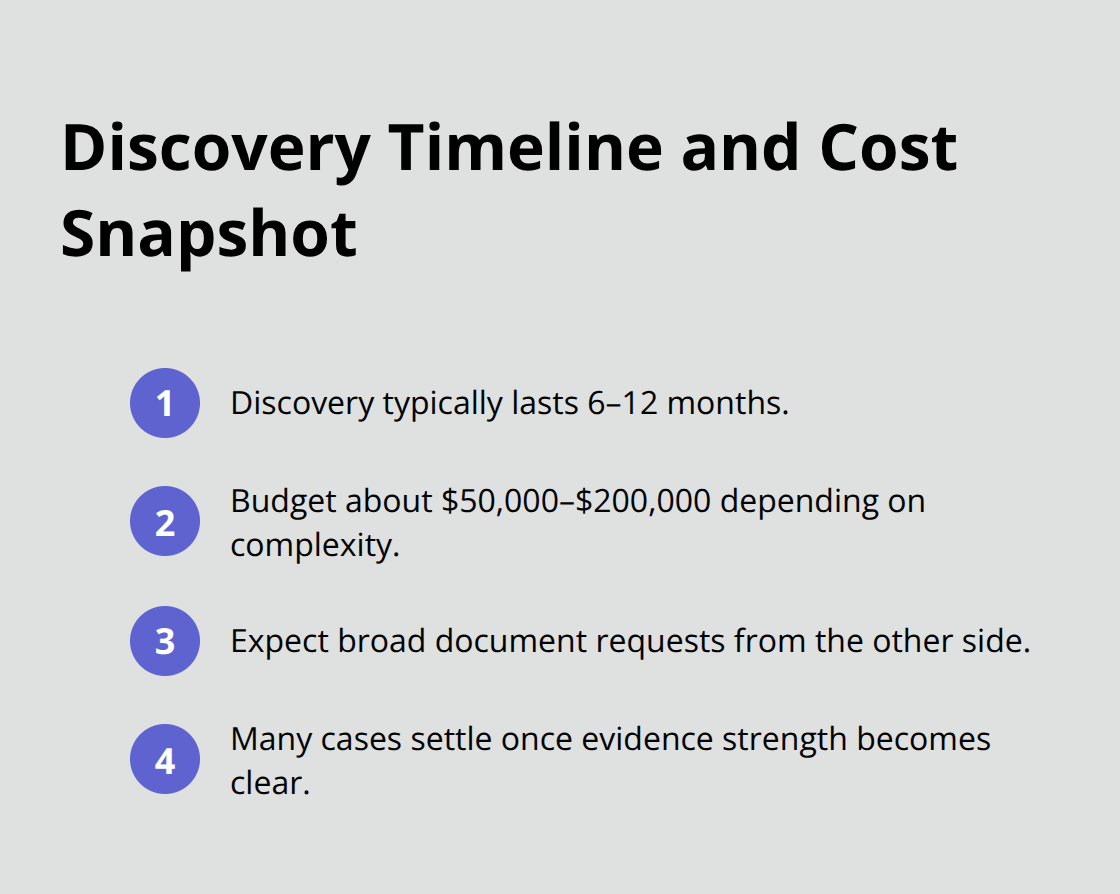
Depositions matter enormously here-prepare your witnesses to explain how the competitor’s conduct directly injured your business, not just that it annoyed you or seemed unfair. Many cases settle during discovery once both sides understand the strength of evidence and realize litigation costs will dwarf any recovery.
Resolving Disputes Through Settlement
Early motion practice and settlement conferences often resolve disputes faster than trial. If the other side has genuinely stolen your trade secrets or made false claims that cost you customers, an aggressive demand letter backed by solid evidence frequently prompts settlement discussions within weeks. Waiting six months for trial discovery to conclude rarely serves your interests better than negotiating from a position of documented strength.
Once you understand what evidence you hold and what discovery reveals about the other side’s conduct, you can evaluate what remedies actually matter for your business-whether stopping the conduct through an injunction, recovering money through restitution, or both.
Remedies Available in Orange County Unfair Competition Disputes
California’s unfair competition law provides three distinct remedies, and understanding which ones matter for your situation separates successful recoveries from expensive litigation that leaves you with a hollow victory. Injunctions stop the wrongdoing immediately-if a competitor steals your trade secrets and launches a competing business, you can obtain a court order halting their use of that information within days or weeks rather than waiting months for trial. Restitution forces the other side to return profits they gained through unfair conduct, which matters when a competitor has already pulled customers away or sold products using your stolen formulas. Attorney fees under California’s Unfair Competition Law remain limited compared to some other statutes, but when you pair UCL claims with Consumers Legal Remedies Act violations, fee recovery shifts the financial burden of litigation onto the losing party. Most Orange County businesses obtain injunctive relief far more easily than monetary damages, which means your first priority should focus on stopping the harmful conduct rather than pursuing money that may never materialize.
Injunctive Relief and Cease-and-Desist Orders
Injunctions work fastest when you move immediately after discovering misconduct, because judges grant preliminary injunctions before trial if you demonstrate a likelihood of success on the merits, irreparable harm, and that the balance of equities favors stopping the conduct. A competitor using your stolen customer list to solicit business causes irreparable harm that money cannot fix, so courts routinely issue preliminary injunctions within two to four weeks if your evidence is solid. The cost runs between fifteen thousand and forty thousand dollars for the motion itself, but stopping a competitor from using your secrets often prevents six figures or more in lost business.
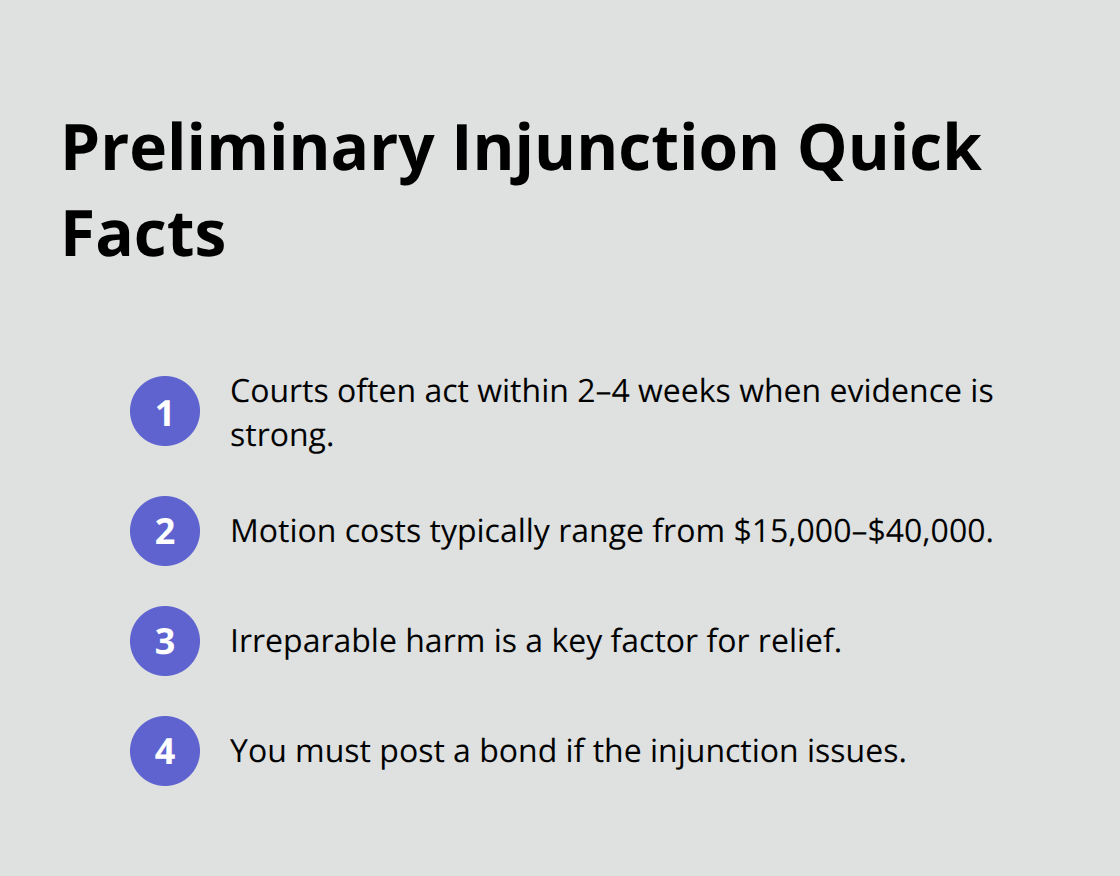
Preliminary injunctions require you to post a bond (typically a modest amount) that protects the other side if the court later determines the injunction was wrongfully issued.
Monetary Damages and Restitution
Restitution requires you to prove a direct connection between the unfair conduct and the money the other side obtained, which means you need clear evidence showing customers left you because of false advertising or because a departing employee took your client list. Courts will not award restitution as a penalty; they award it to restore you to the position you would have occupied but for the wrongdoing. If a competitor makes false claims that directly cause you to lose ten customers worth fifty thousand dollars each, you can pursue restitution for those lost profits, but you must prove causation with specificity. Documentation of lost sales, customer testimony about why they switched, and comparative financial records all strengthen restitution claims.
Attorney Fees and Cost Recovery
Attorney fees under the UCL alone are unavailable, which surprises many business owners, but when CLRA violations accompany your UCL claim, fee-shifting provisions apply, potentially recovering all reasonable costs of pursuing the case. This distinction matters significantly-a case that combines both statutes can shift the entire financial burden to the losing party, while a UCL-only claim leaves you responsible for your own legal costs regardless of outcome. Courts scrutinize fee requests carefully, so detailed time records and reasonable billing rates become essential to recovery.
Final Thoughts on Orange County Unfair Competition
Southern California unfair competition claims demand immediate action once you recognize the wrongdoing. The three-part framework under California’s Unfair Competition Law-unlawful acts, unfair conduct, and fraudulent deception-gives you multiple pathways to stop competitors and recover losses, but only if you move fast and preserve evidence within days of discovering misconduct. Injunctive relief stops the harm fastest, restitution recovers money when causation is clear, and attorney fees shift costs to the losing party when CLRA violations accompany your UCL claim.
Most Orange County businesses obtain preliminary injunctions within weeks if evidence is solid, which means you can halt a competitor’s use of stolen trade secrets or false advertising long before trial. The four-year statute of limitations gives you time to act, but waiting months to gather evidence or consult counsel costs you money in lost business and weakens your position during settlement negotiations. Early consultation helps you understand which remedies matter most for your situation, whether an injunction alone solves your problem or whether restitution and fee recovery should drive your strategy.
Contact Raul Garcia Law Firm when you first suspect unfair competition, not after damage accumulates for months. We represent Orange County businesses in these disputes, combining practical business insight with aggressive negotiation and courtroom representation to protect your financial interests and minimize operational disruption. The moment you see false advertising, suspect trade secret theft, or learn that a departing employee is launching a competing business, contact us immediately.