

Orange County businesses face a shifting legal landscape. Remote work arrangements, data privacy rules, and commercial disputes are reshaping how companies operate and protect themselves.
At Raul Garcia Law Firm, we’ve seen firsthand how preventable legal problems drain resources and damage growth. The good news: businesses that act strategically now can avoid costly conflicts later.
What’s Really Changing in Orange County Business Law
Remote work has become standard across Orange County, but most businesses still operate with employment agreements written for 2015. California’s wage-and-hour rules haven’t softened-they’ve gotten stricter. Employers misclassifying workers as independent contractors face wage claims that spiral into class actions. The state Department of Industrial Relations reported that wage-and-hour violations topped the complaint list in 2025, with remote-work arrangements creating gray zones around meal breaks, rest periods, and overtime calculations.
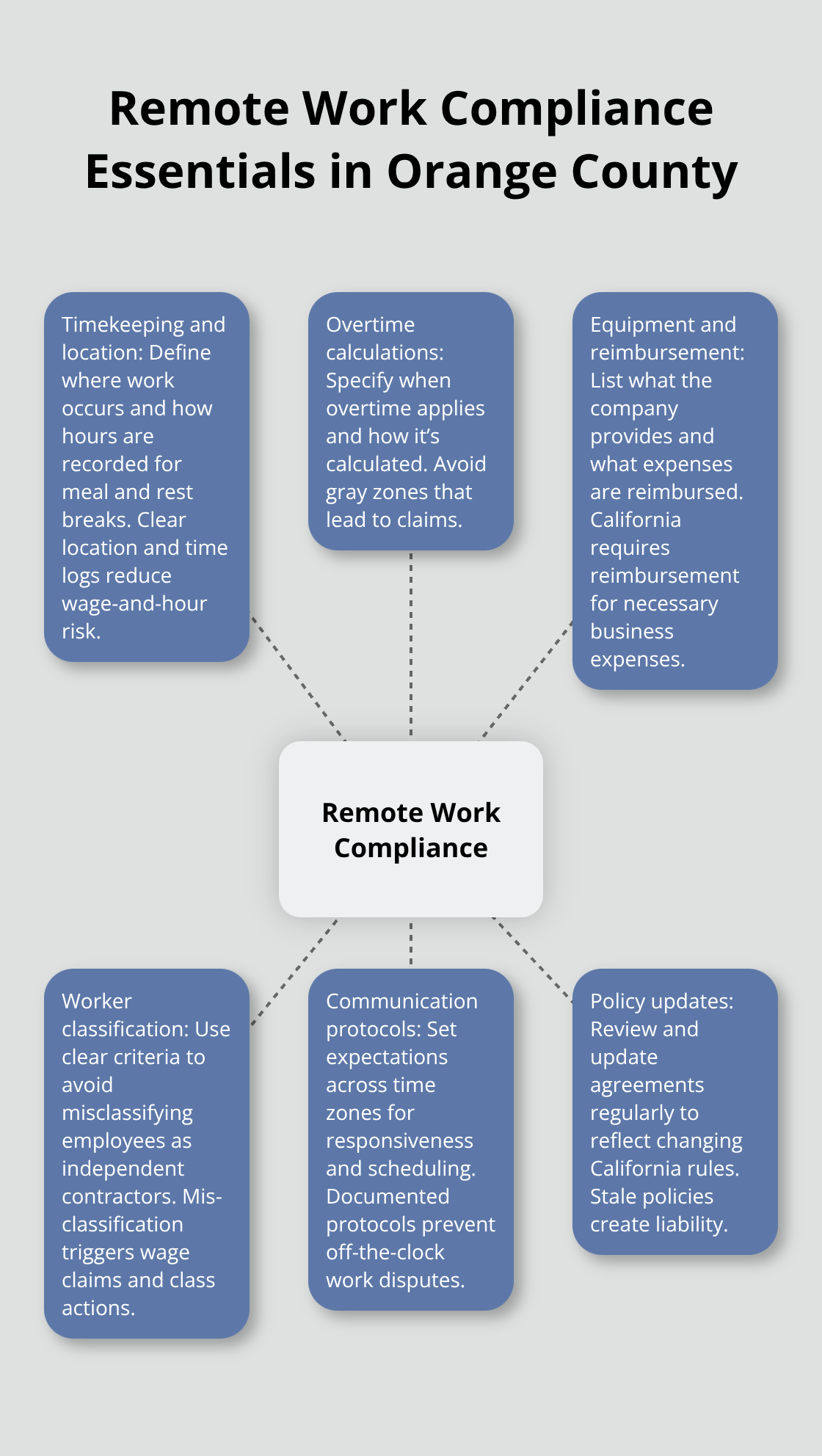
Orange County startups especially struggle here because they grow fast and skip the written agreements that prevent disputes later. Remote work agreements need specifics: where the employee works, how overtime gets tracked, what equipment the company provides, and how communication happens across time zones. Vague language about flexible schedules invites claims that hours weren’t properly recorded.
These disputes arise when a business scales from five to twenty employees without updating its policies. The fix is straightforward-written remote-work policies that address California’s strict rules on compensation, breaks, and reimbursement before problems start.
Data Privacy Demands Action Now
Data privacy laws in California shifted dramatically. The California Consumer Privacy Act requires businesses handling customer data to disclose what they collect, how they use it, and who can access it. Fines for violations reach $2,500 per violation or $7,500 per intentional violation.
Orange County tech firms, healthcare providers, and e-commerce businesses face the biggest targets because they hold sensitive information. Cybersecurity compliance isn’t optional-it’s a legal requirement backed by enforcement. Businesses should audit what data they collect, where it’s stored, and who has access. Implement written data-retention policies that specify how long customer information stays on file before deletion. Train staff on handling sensitive data because human error causes most breaches, not hackers.
Commercial Real Estate Disputes Are Rising
Commercial real estate litigation in Orange County has accelerated because property values fluctuate, lease terms get disputed, and buyer-seller conflicts over condition or title defects land in court. Misrepresentation claims arise when sellers fail to disclose known property problems or environmental issues. Partition actions split jointly owned properties when co-owners disagree on use or sale. Quiet title actions remove clouds on property ownership.
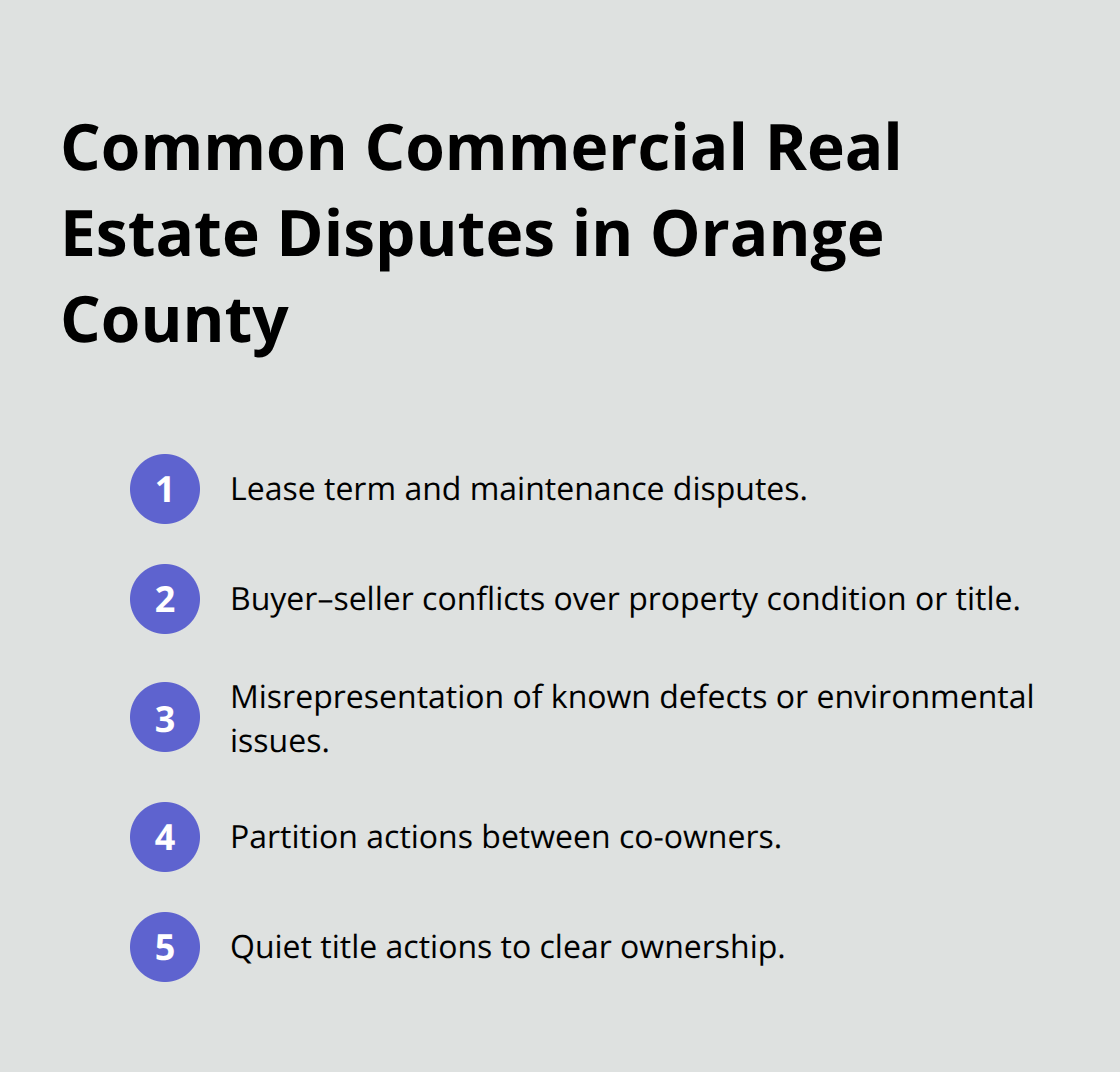
These disputes are expensive-litigation costs easily reach six figures before trial. Clear written contracts that specify condition, inspection periods, disclosure obligations, and remedies if problems surface protect both parties. Contracts should address repair responsibility, insurance, and what happens if environmental issues emerge post-closing. Mediation early in a dispute saves time and money compared to courtroom battles, and it often preserves business relationships that litigation destroys.
Partnership and shareholder conflicts operate differently-they involve internal governance, profit distribution, and control disputes that require specialized attention to operating agreements and shareholder rights.
Major Legal Risks Facing Orange County Businesses
Inside Orange County companies, the worst conflicts often hide in plain sight. A partnership agreement written on a napkin, a shareholder handshake deal, or a vendor contract copied from the internet sets the stage for six-figure disputes that destroy relationships and drain cash flow. When Orange County business owners skip written agreements, they invite partnership conflicts, contract breaches, and property disputes that turn operational problems into legal nightmares.
Partnership and Shareholder Conflicts Cost More Than Most Realize
Partnership and shareholder disputes rank among the costliest problems Orange County businesses face because they involve control, profit distribution, and fundamental disagreements about the company’s direction. One partner wants to sell; the other wants to expand. One shareholder demands dividends; another reinvests profits. Without a written operating agreement or shareholder agreement that addresses buyout triggers, decision-making authority, and dispute resolution, these disagreements escalate fast.
The California Secretary of State reports that partnership dissolution filings spike during economic uncertainty, and most disputes could have been prevented with clear written terms established upfront. A basic operating agreement costs $1,500 to $3,000 but prevents disputes that cost $50,000 or more in legal fees and lost business time. Specify who controls day-to-day decisions, what requires unanimous consent, how profits split, what happens if a partner leaves or dies, and how to resolve deadlocks through mediation or arbitration before litigation becomes necessary.
Breach of Contract and Trade Secret Theft Multiply Damage Over Time
Breach of contract claims and trade secret theft cut deeper because they involve money owed or competitive damage that multiplies over time. An Orange County manufacturing company signs a supply contract with vague payment terms, delivery schedules, and quality standards. When the supplier misses deadlines or delivers substandard materials, the buyer withholds payment, and the supplier sues for breach. Both sides claim the other violated the agreement because the contract never defined what substandard means or what constitutes acceptable delay.
Trade secret theft happens when an employee leaves for a competitor and takes customer lists, pricing data, or proprietary processes. Without a written non-compete agreement, confidentiality provision, or clear IP assignment clause in the employment contract, the departing employee can legally use that information at the new job. California law restricts non-compete agreements under Business and Professions Code Section 16600, but confidentiality agreements and IP ownership clauses remain enforceable.
The fix requires contracts that specify exactly what each party owes, when performance must happen, what happens if someone breaches, and what remedies apply. Include clear language that customer information, pricing, and business processes belong to the company, not the employee. Require departing employees to sign exit agreements confirming they return all proprietary information.
Landlord-Tenant and Property Title Disputes Demand Precision
Landlord-tenant disputes and property title issues plague Orange County real estate transactions because property values fluctuate, lease terms get misinterpreted, and sellers conceal known defects. A tenant claims the landlord failed to maintain the property; the landlord claims the tenant caused the damage. A buyer discovers environmental contamination after closing and sues the seller for misrepresentation. A co-owner wants to sell the property, but the other co-owner refuses, creating a partition action that costs both parties tens of thousands in legal fees.
Title defects-liens, easements, or prior ownership claims-cloud property ownership and prevent sale or refinancing. These disputes demand written lease agreements that specify maintenance responsibility, repair timelines, insurance coverage, and what constitutes a lease violation. Property purchase agreements should include detailed inspection periods, clear disclosure of known defects, and specific remedies if undisclosed problems surface after closing.
Mediation resolves many of these conflicts faster than court, but clarity in the original agreement prevents most disputes from starting. Orange County businesses that invest in solid written agreements at the front end spend far less on lawyers fighting disputes at the back end. The next section shows how to build those protections before problems arise.
How Orange County Businesses Stop Disputes Before They Start
Orange County companies that avoid six-figure legal battles invest in written agreements before problems emerge. Handshake deals and internet template contracts inevitably lead to disputes that cost far more than proper documentation would have. We at Raul Garcia Law Firm see the pattern repeatedly-a partnership dissolves, a supplier breaches terms, or a tenant disputes maintenance responsibility, and the business owner discovers the contract is so vague it proves nothing in court. The solution isn’t reactive litigation; it’s proactive contract development that anticipates conflicts and establishes clear remedies before disputes start.
Written Contracts in Orange County Create Enforceability
California contract law enforces written terms precisely because they eliminate the he-said-she-said arguments that destroy relationships and drain resources. A manufacturing company signs a supply agreement without specifying delivery schedules, quality standards, or payment terms. When the supplier misses deadlines, the buyer withholds payment, and both sides claim the other breached. In court, a judge looks at the vague contract and rules against whoever can’t prove their interpretation was the parties’ intent. The winning side still spends $30,000 to $60,000 in legal fees to reach that outcome. A contract written upfront that defines substandard materials, acceptable delays, and payment triggers prevents that entire battle.
Remote work agreements need specifics: work location, overtime tracking methods, equipment the company provides, and communication protocols across time zones. Lease agreements must address maintenance responsibility, repair timelines, insurance obligations, and consequences for violations. Supply contracts require delivery schedules, quality metrics, inspection periods, and remedies for breach. Contracts that leave these details to interpretation invite disputes; contracts that nail them down eliminate arguments before they start. Orange County businesses should review all existing agreements annually because California law changes frequently, and outdated terms expose companies to unexpected liability.
Operating Agreements in Orange County Prevent Partnership Conflicts
Partnership and shareholder disputes destroy companies because they involve control, profit distribution, and fundamental disagreements about direction. One partner wants to sell the business; the other wants to expand. One shareholder demands distributions; the other reinvests profits. Without a written operating agreement, these disagreements escalate from conversation to courtroom in weeks. An operating agreement costs $1,500 to $3,000 but prevents disputes that cost $50,000 or more in legal fees and lost business time.
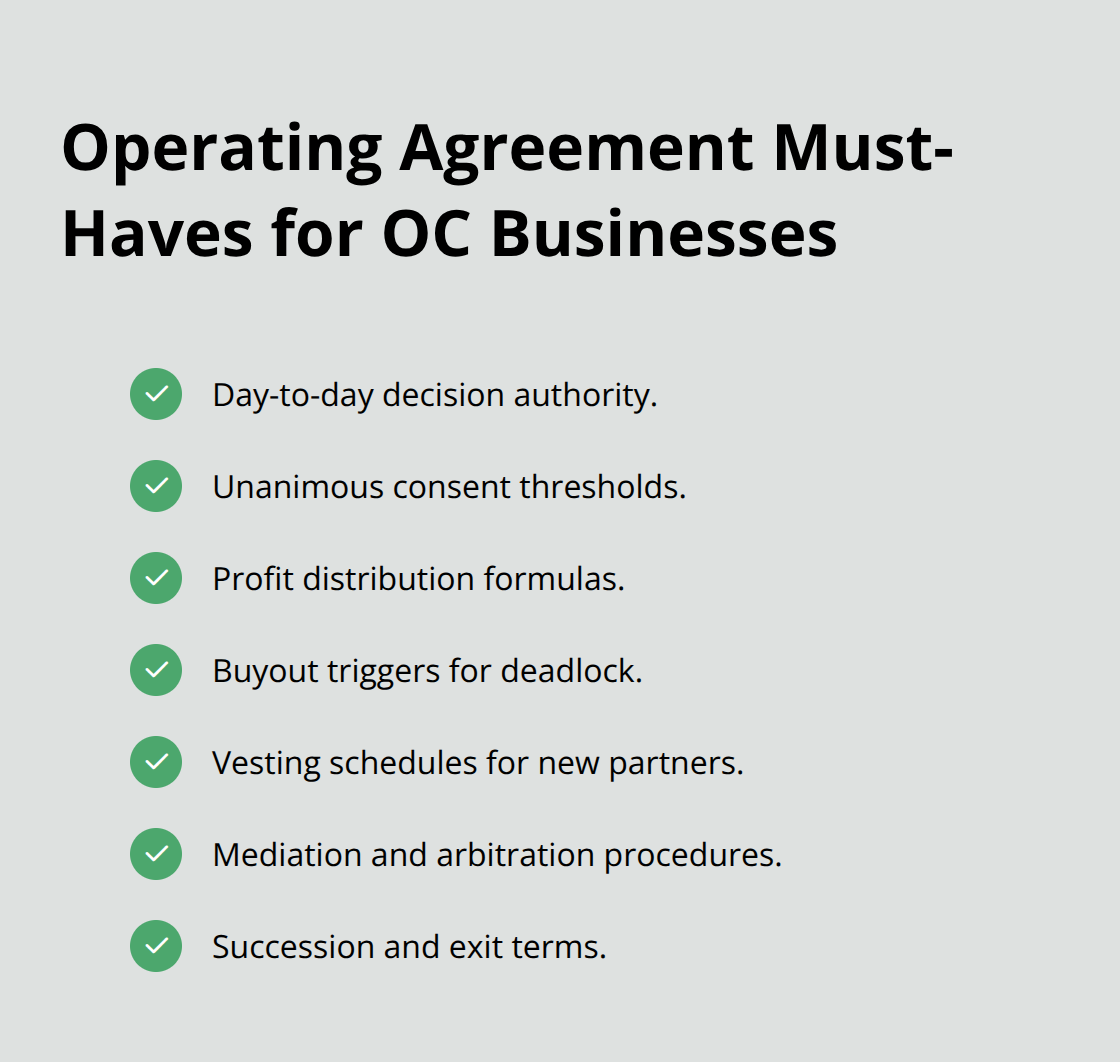
The agreement should specify day-to-day decision authority, what requires unanimous consent, profit distribution formulas, what happens if a partner leaves or dies, and how to resolve deadlocks through mediation or arbitration before litigation becomes necessary. A buyout trigger-a clause that forces a sale or buyout if partners reach deadlock-prevents situations where one partner holds the company hostage. Vesting schedules protect the company if a new partner leaves early; the company buys back their ownership stake at a reduced price if they depart within three years.
The California Secretary of State reports that partnership dissolution filings spike during economic uncertainty, and most disputes could have been prevented with clear written terms established upfront. Orange County businesses that add these protections early operate with confidence because everyone knows what happens if disagreement emerges.
Intellectual Property Documentation in Orange County Protects Competitive Advantage
Trade secret theft and IP disputes happen because employees and contractors don’t understand what information belongs to the company versus what they can take elsewhere. An Orange County software developer leaves for a competitor and uses customer lists, pricing models, and proprietary code written while employed. Without a written IP assignment clause in the employment contract or a confidentiality agreement, the developer can legally use that information at the new job. California law restricts non-compete agreements under Business and Professions Code Section 16600, but confidentiality agreements and IP ownership clauses remain fully enforceable.
Every employment contract should include language stating that work product, customer information, business processes, and proprietary methods belong to the company, not the employee. Exit agreements should confirm that departing employees return all proprietary information and understand that using trade secrets invites legal action. Trademark registration with the U.S. Patent and Trademark Office protects brand identity; the USPTO database establishes priority and prevents competitors from using confusingly similar marks. Trade secret protection requires documenting what constitutes a trade secret, limiting access, and training staff on confidentiality obligations. A manufacturing company that documents its proprietary process, restricts who can access it, and requires confidentiality agreements from everyone who touches it creates enforceable protection. A company that leaves trade secrets unprotected loses all legal recourse when someone walks out the door with them. Orange County businesses that implement these protections early avoid the situation where a departing employee becomes a competitor armed with insider knowledge.
Final Thoughts on Orange County Business Law
Orange County business law continues to shift as remote work becomes permanent, data privacy rules tighten, and commercial disputes multiply. Businesses that operate without written agreements face escalating legal costs, and those that skip proactive planning invite partnership conflicts, contract breaches, and property disputes that drain resources and damage growth. The trends are clear, and the risks are real but preventable.
Partnership and shareholder disputes, trade secret theft, and landlord-tenant conflicts destroy companies not because the law is unfair but because business owners delay written documentation until problems explode. A $2,000 operating agreement prevents a $75,000 partnership dissolution battle, and a clear supply contract eliminates the breach-of-contract lawsuit that costs both parties six figures. IP assignment clauses in employment contracts stop departing employees from walking out with customer lists and proprietary processes (a loss that often proves irreversible).
Strategic legal planning separates Orange County businesses that thrive from those that struggle. We at Raul Garcia Law Firm represent businesses in the disputes that could have been prevented with proper planning, and we help companies build the legal foundation that protects growth. If your business operates without solid written agreements or faces an existing dispute, contact us for a consultation on protecting your financial interests and minimizing operational disruption.