

A poorly drafted nondisclosure agreement can leave your business vulnerable to costly breaches and litigation. Many Southern California companies discover their NDAs lack the legal teeth needed to protect sensitive information when disputes arise.
We at Raul Garcia Law Firm have seen firsthand how vague language, missing clauses, and weak enforcement mechanisms undermine even well-intentioned confidentiality agreements. This guide walks you through the practices that actually work.
What Makes an NDA Actually Enforceable in Orange County
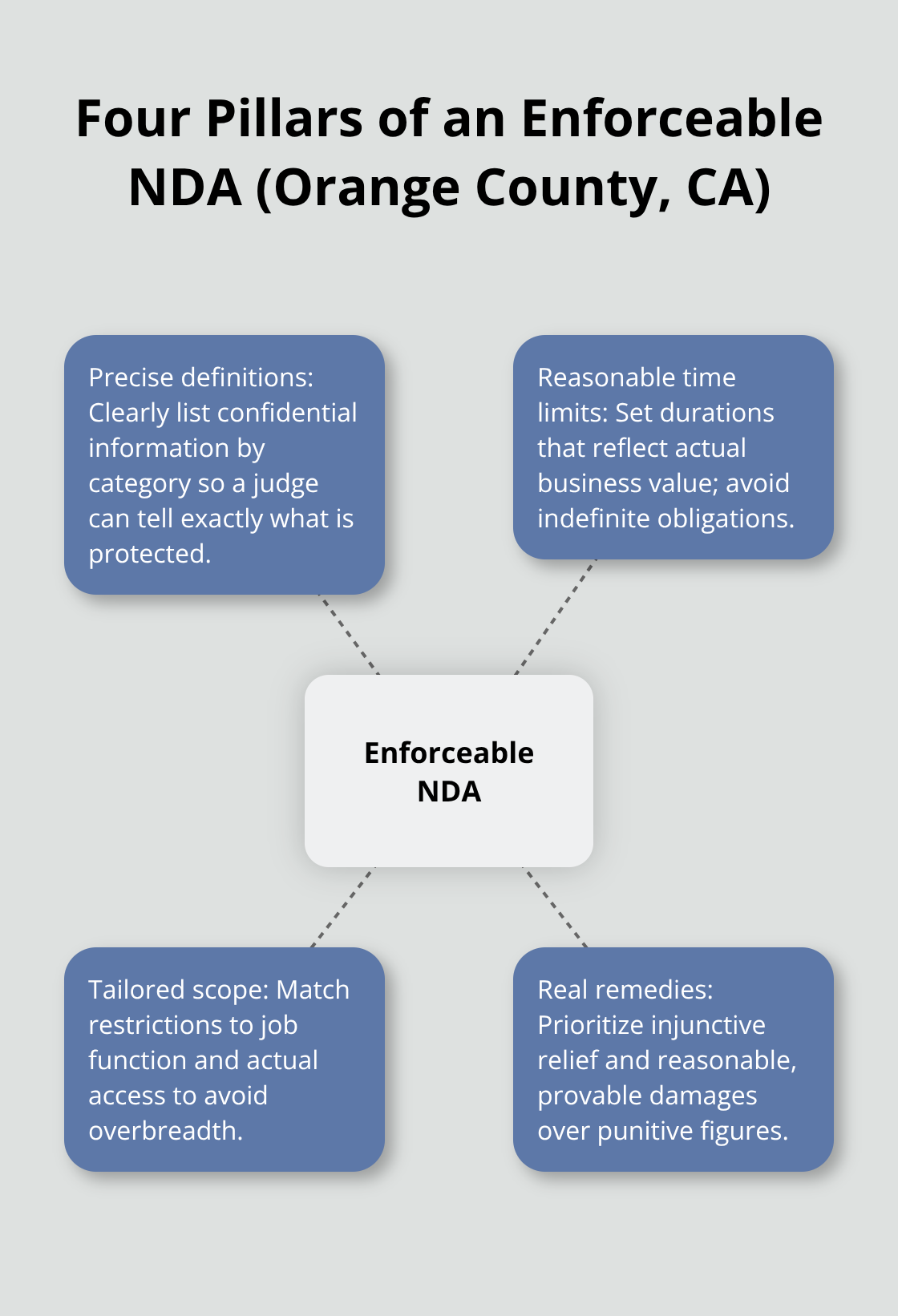
A well-built NDA rests on four non-negotiable foundations: precise definition of what you’re protecting, reasonable time limits on confidentiality obligations, clear scope that matches your legitimate business interests, and remedies that courts will actually enforce. Southern California courts reject NDAs with vague language or overly broad restrictions, so specificity is not optional.
Define Confidential Information by Category
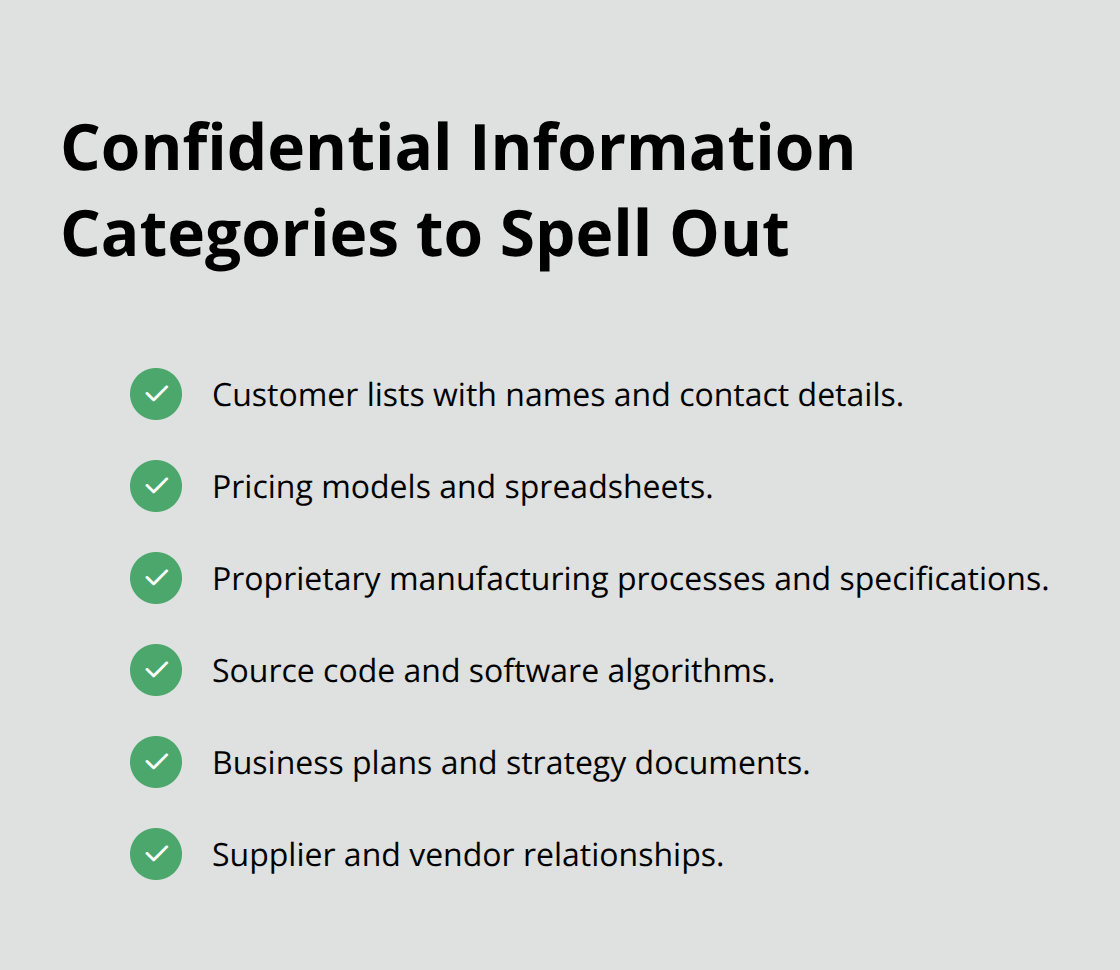
You must list exactly what counts as confidential rather than using sweeping terms. Instead of saying “information that gives competitive advantage,” specify the actual items: customer lists with names and contact details, pricing models, proprietary manufacturing processes, source code, business plans, or supplier relationships. This categorical approach prevents courts from striking down your agreement as too vague.
California Labor Code Section 2870 creates another critical layer-you must carve out inventions employees develop on their own time using personal resources, or courts will strike those provisions as unenforceable. This statutory protection applies regardless of what your NDA says, so acknowledge it upfront rather than fight it later.
Set Time Limits That Courts Will Honor
Duration matters enormously. Standard business information typically holds protection for two to five years, while trade secrets under California’s Uniform Trade Secrets Act can extend longer because they retain independent value. Courts scrutinize indefinite or excessively long restrictions and often narrow them without your input.
Indefinite confidentiality obligations signal overreach to judges. They view perpetual restrictions as attempts to control employee conduct beyond what the law permits. Set a definite endpoint tied to the information’s actual business value.
Tailor Scope to Job Function and Access
Scope should track the employee’s actual role and access. A software engineer needs different restrictions than a receptionist. You tailor confidentiality obligations to the job function and information the person genuinely encounters, not company-wide secrets they’ll never touch. Vague scope invites judicial rejection and weakens your entire agreement.
Remedies Must Be Realistic and Enforceable
Courts won’t enforce liquidated damages clauses that function as penalties rather than reasonable estimates of actual harm. You specify injunctive relief as your primary remedy-stopping disclosure prevents ongoing damage better than money after the fact. Include monetary damages for breach, but avoid arbitrary figures like $100,000 per violation that courts view as punitive. California law allows reasonable damages tied to actual losses.
Attorney’s fees clauses help shift costs if you pursue enforcement, but they must be mutual to withstand scrutiny. Add a severability clause so that if one provision fails, the rest survives. Courts will sometimes blue-pencil overly broad language rather than void the entire agreement, but you shouldn’t rely on that rescue.
Draft it right the first time.
Consideration and Legal Carve-Outs
Consideration is required for enforceability-at-will employment generally provides sufficient consideration for existing employees, but new hires signing NDAs should also receive something of tangible value like a signing bonus, promotion, or new role assignment. Without clear consideration, a court may deem the NDA unenforceable.
You must include explicit carve-outs for legally required disclosures. Employees can share information if subpoenaed, ordered by law, or reporting violations under California Labor Code Section 232.5. Prohibiting these disclosures violates public policy and voids the entire NDA. Courts will strike down any confidentiality language that attempts to silence whistleblowing or workplace misconduct reports, so build these exceptions into your agreement from the start rather than discovering them during litigation.
What Kills NDAs in Orange County Courts
The gap between what Southern California companies think their NDAs protect and what courts actually enforce is enormous. We at Raul Garcia Law Firm regularly encounter agreements drafted so poorly that they offer almost no protection when breach occurs. The three most destructive mistakes appear repeatedly: language so vague that judges cannot determine what information qualifies as confidential, scope so broad that it violates California public policy, and remedies so disconnected from actual damages that courts refuse to honor them.
Vague Language Destroys Enforceability
Vague language is the fastest way to watch a court strike down your NDA. Phrases like “information that provides competitive advantage” or “proprietary business information” fail because they lack specificity. Orange County courts demand categorical precision. Instead of generic terms, you must list exact items: client names and contact information, pricing spreadsheets, manufacturing specifications, software algorithms, or vendor agreements. Your NDA must protect specific trade secrets and confidential business information, not restrict where employees work afterward. The difference matters because if a judge cannot determine what you intended to protect, the entire agreement becomes unenforceable. Ambiguity always favors the party challenging the NDA, and vagueness creates disputes about what the employee actually agreed to protect.
Overly Broad Scope Triggers Judicial Rejection
Overly broad scope destroys enforceability faster than almost any other flaw. Many Southern California companies attempt to restrict information the employee never accessed or information that has nothing to do with the person’s job function. A marketing coordinator does not need restrictions on proprietary code. A warehouse supervisor should not face confidentiality obligations covering client strategy meetings. Courts view overbroad restrictions as attempts to control employee mobility and competitive activity beyond what California law permits. This overreach triggers judicial rejection of the entire provision or, in some cases, the whole agreement. California Business and Professions Code Section 16600 already prohibits non-compete agreements, so courts scrutinize NDAs carefully to ensure they function as legitimate confidentiality protections rather than disguised non-competes. When scope does not match job function and actual access, judges often conclude you drafted the agreement to restrain competition rather than protect secrets, which violates public policy.
Inadequate Remedies Signal Weakness
Inadequate remedies signal that you never actually believed breach would cause serious harm. Liquidated damages clauses stating $50,000 per violation without any connection to actual business loss appear punitive to judges, and California courts reject penalties. Courts will award injunctive relief to stop ongoing disclosure, but you must request it immediately upon discovering breach, not weeks later. Monetary damages must correlate to provable losses like lost customer revenue or costs to mitigate exposure. If your NDA specifies attorney’s fees, that clause must apply mutually to both parties or courts may strike it as one-sided. Many agreements fail to include severability language, meaning one invalid provision can collapse the entire NDA rather than leaving the rest intact. Southern California courts have authority to blue-pencil overly broad language and narrow it to reasonable scope, but this judicial rescue happens inconsistently and you cannot rely on it.
The Path Forward for Orange County Businesses
Draft the agreement correctly the first time rather than hoping a judge will fix your mistakes during litigation. The foundation matters most: precise definitions, reasonable time limits, tailored scope, and enforceable remedies work together to create protection that survives court challenge. When these elements align with your actual business operations and California law, your NDA becomes a genuine shield against confidential information loss. The next section examines how to implement practical procedures that reinforce your written agreements and prevent breaches before they occur.
How to Build an NDA Program That Actually Works in Orange County
A single well-drafted NDA accomplishes little without systems to enforce it. Companies with ironclad confidentiality agreements often fail to protect information because they never implement the operational procedures that make those agreements meaningful. Your NDA is a legal document, but it only functions as protection if your team knows what counts as confidential, who can access it, and how to handle it.
Map Your Information Flows Across Roles
Start by mapping your actual information flows. Identify which employees, contractors, and vendors touch sensitive data in your daily operations. A construction company’s subcontractors need different restrictions than its accounting staff. A technology firm’s developers face entirely different confidentiality requirements than its sales team. Instead of applying one standard NDA across your entire organization, customize restrictions to match what each role actually encounters. This targeted approach survives judicial scrutiny because it demonstrates you tailored scope to legitimate business needs rather than attempting blanket control.
Document which information categories apply to which positions. Create a simple spreadsheet listing job functions, the specific confidential information each function accesses, and the corresponding NDA provisions that apply. This documentation protects you during disputes because it shows the court that you applied reasonable restrictions matched to actual job responsibilities.
Restrict Access and Control Information Flow
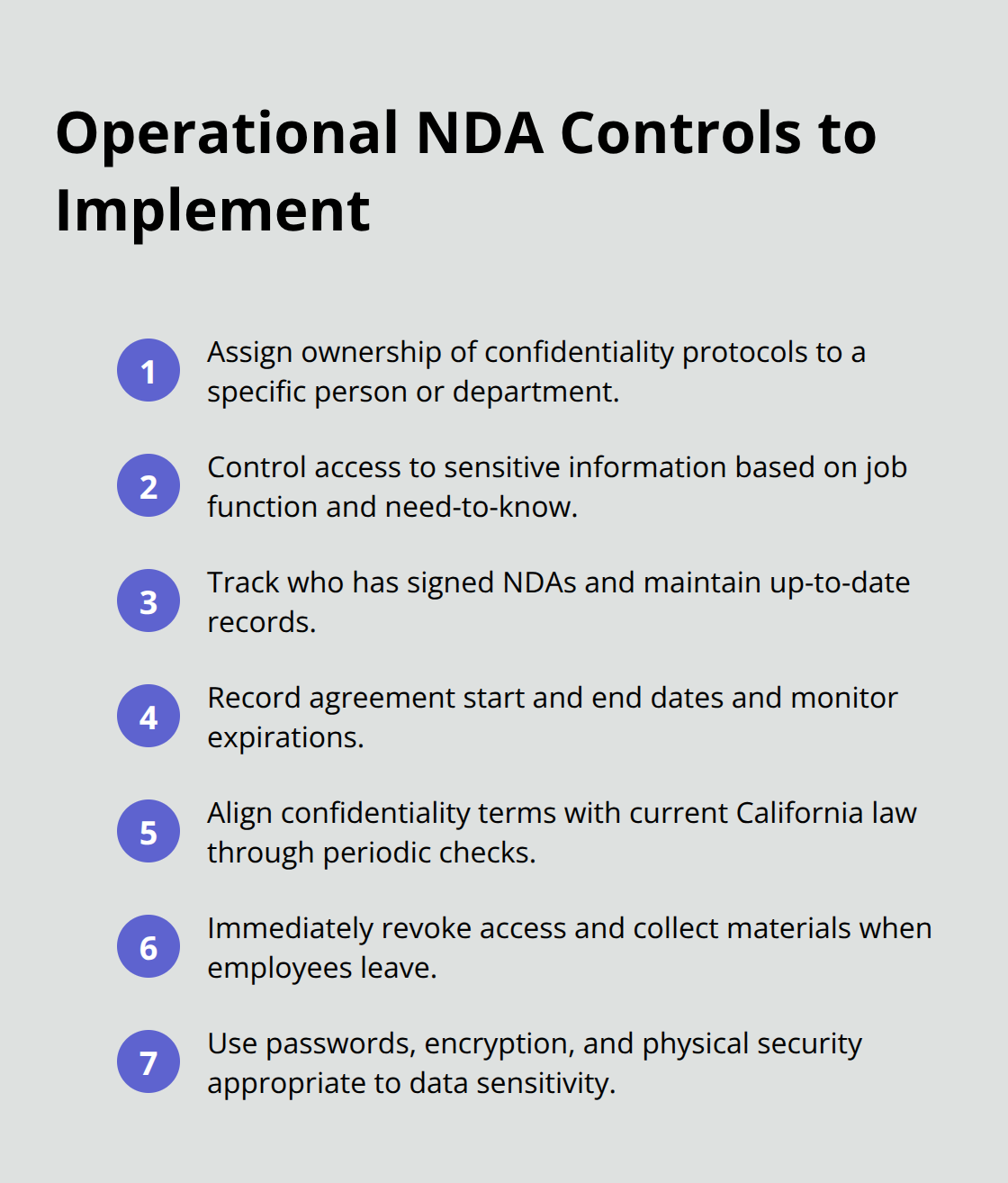
Implementation procedures separate companies that actually protect secrets from those with impressive-looking agreements that fail in practice. Assign ownership of confidentiality protocols to a specific person or department. That individual should control access to sensitive information, track who has signed NDAs, maintain records of when agreements expire, and monitor whether confidentiality terms align with current California law.
Many Orange County businesses store confidential information across multiple systems without access controls or audit trails. Restrict access to customer lists, pricing documents, and proprietary processes to only the employees who need them for their specific functions. Use password protection, encryption, or physical security measures appropriate to the information’s sensitivity. When employees leave, your procedures should immediately revoke access, collect all confidential materials, and confirm destruction or return.
This operational discipline prevents breaches far more effectively than litigation after the fact.
Conduct Annual Reviews and Legal Updates
Review and update your NDA program annually, particularly when California employment law changes. The Silenced No More Act, AB 51 restrictions on mandatory arbitration, and evolving wage transparency requirements continually reshape what confidentiality provisions courts will enforce. An NDA that complied with California law in 2024 may contain unenforceable language in 2026. Schedule a yearly audit to confirm your agreements reflect current statutes, Orange County court precedent, and your actual business operations.
If your company has expanded into new markets, acquired other businesses, or shifted your product lines, your confidentiality restrictions may no longer match your legitimate business interests. Courts view NDAs through the lens of what you actually needed to protect at the time you drafted them, so agreements that once fit your operations may become overly broad as your business evolves. When your business changes significantly, your NDA program should change with it. This proactive approach prevents the costly gap between what your NDAs claim to protect and what courts will actually enforce when disputes arise.
Final Thoughts on Protecting Your Orange County Business
Nondisclosure agreements in Southern California only work when you combine precise legal language with operational discipline and swift enforcement. A beautifully drafted NDA sitting in a file drawer protects nothing-the companies that actually prevent confidential information loss treat their agreements as living documents tied to real business procedures, regular legal updates, and immediate response when breaches occur. Courts grant preliminary injunctions only when you demonstrate likelihood of success on the merits, irreparable harm from continued disclosure, and balance of equities favoring your business, which means your NDA must be airtight before breach happens.
Real disputes over nondisclosure agreements in Southern California typically involve either an employee departing to a competitor and taking customer lists, or a vendor disclosing your proprietary processes to a rival. In the first scenario, you need documented proof that the employee signed your NDA, that customer lists qualify as confidential under your agreement’s categorical definitions, and that the employee actually accessed those lists in their job function. In the second, you must show the vendor breached a clear confidentiality obligation and caused measurable harm (courts award damages based on provable losses, not arbitrary figures).
Raul Garcia Law Firm represents Orange County businesses in NDA disputes, handling everything from drafting agreements that survive judicial scrutiny to pursuing enforcement when breaches occur. We combine strategic negotiation with aggressive courtroom representation to protect your confidential information and minimize operational disruption. Contact us for a consultation about protecting your business interests if your current NDAs lack enforceability or you face a breach situation.