
Title insurance disputes can derail even the most carefully planned real estate transactions in Orange County. A single missing document or undisclosed claim can cost you thousands of dollars and months of legal battles.
We at Raul Garcia Law Firm have seen how proper title insurance protection and early dispute resolution save buyers and sellers from devastating losses. This guide walks you through what title insurance covers, common problems that trigger disputes, and how to resolve them efficiently.
What Title Insurance Actually Protects in Orange County
Understanding Your Two Policies
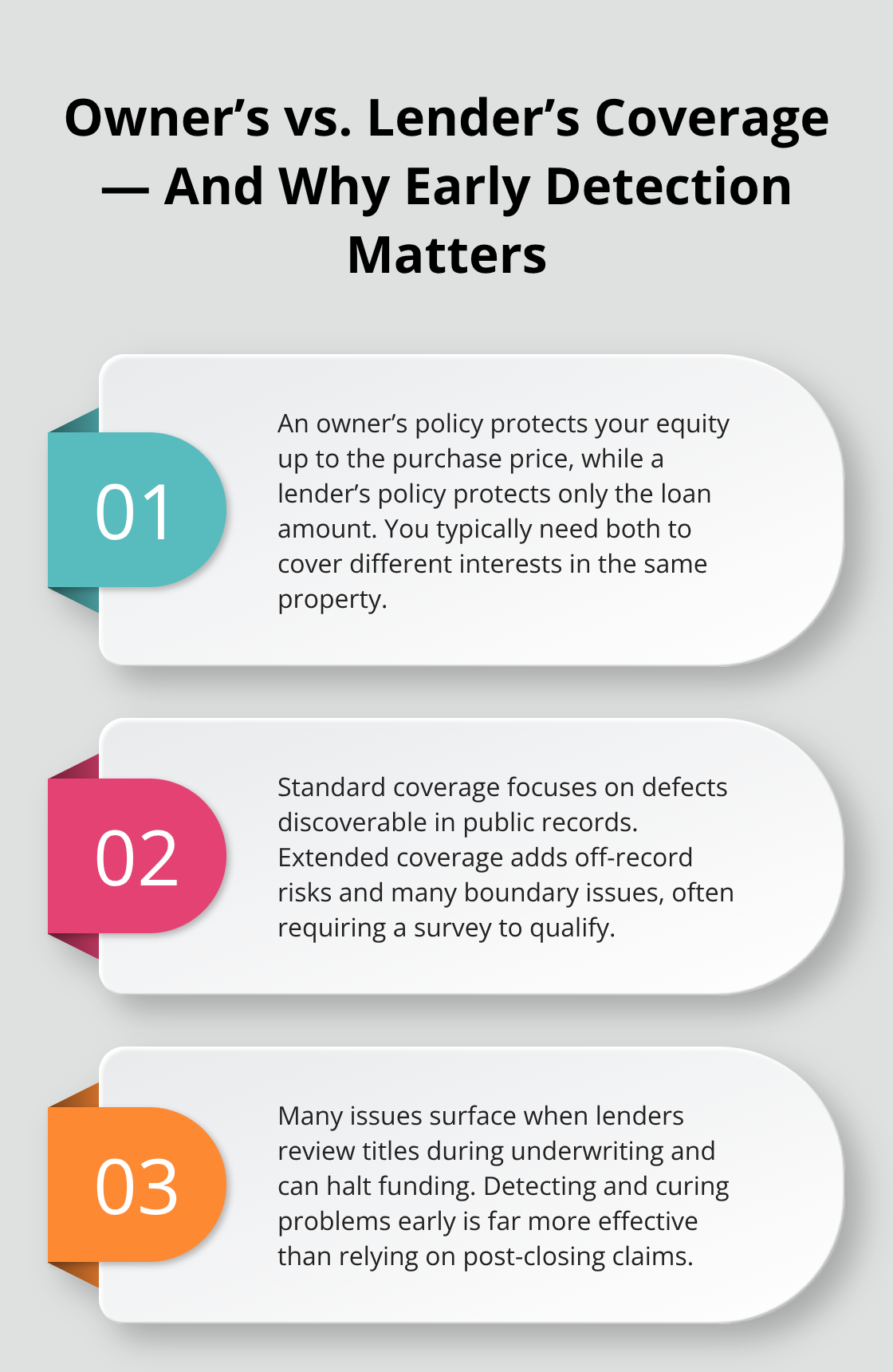
Title insurance in Orange County serves three distinct protective functions that most property owners misunderstand. The California Department of Insurance clarifies that title insurance protects against losses caused by title defects unknown at purchase, not just verification of current ownership. Your owner’s policy covers the purchase price amount, while your lender’s policy covers only the loan amount-which means you need both policies for complete protection. Standard policies cover defects discoverable in public records, but extended coverage adds off-record defects and boundary issues, typically requiring a property survey. According to the California Department of Insurance, most title problems arise when the buyer’s lender rejects the title during underwriting, underscoring why early detection matters far more than post-closing claims.
How Title Searches Reveal Hidden Problems
The verification process starts with a title search that examines title plants and public records to confirm ownership and identify liens or encumbrances. This search produces a preliminary title report or commitment that reveals what your title insurance will and won’t cover. A clear chain of title is essential because even small defects can trigger loan funding problems and stall a real estate sale. Lenders in Orange County won’t fund transactions with cloudy titles, so identifying fraud, forgery, or undisclosed heirs before closing prevents costly delays.
Clearing Liens and Defects Before Closing
Liens from unpaid taxes, mortgages, or contractors must be cleared or released before closing, and your attorney negotiates with payoff lenders during the curative period after the title commitment is issued. If a covered title claim arises, the policy pays losses up to the policy limit and covers defense costs, making the upfront premium a genuine investment rather than an unnecessary expense. The policy’s effective date should match your closing date, and the description must accurately identify the correct property and interests being insured to avoid coverage gaps.
What Happens When Title Problems Surface
These title defects don’t resolve themselves-they compound. When lenders spot issues, they halt funding until your legal team coordinates with recorders’ offices and lien holders to cure the problems. The next section examines the specific title issues that most frequently trigger disputes in Orange County transactions.
Common Title Issues That Derail Orange County Real Estate Deals
Documentation Errors Create Chain-of-Title Gaps
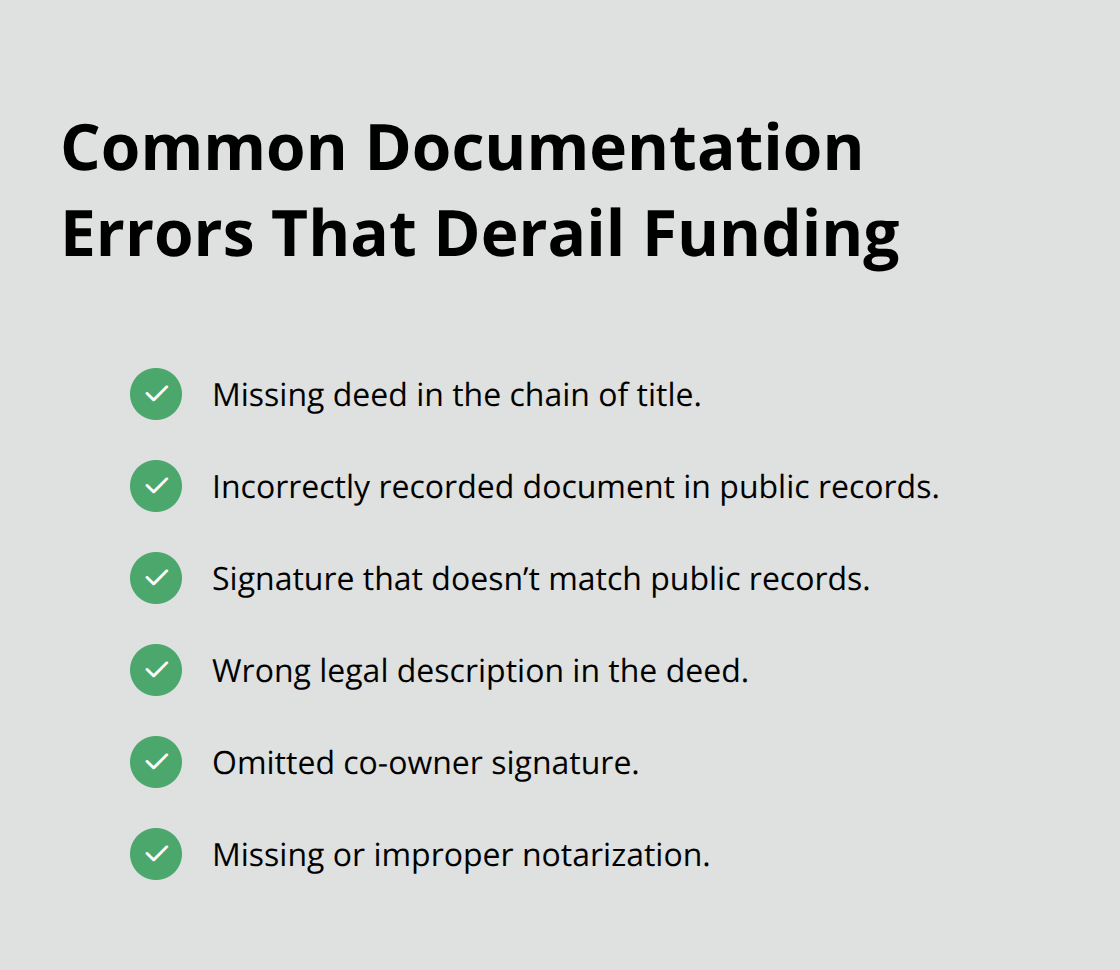
Documentation errors account for a substantial portion of title disputes in Orange County, yet most property owners discover them only after their lender rejects the title commitment. Missing deeds, incorrectly recorded documents, or signatures that don’t match public records create gaps in the chain of title that underwriters refuse to insure. A defective deed might list the wrong legal description, omit a co-owner’s signature, or fail to include necessary notarization-issues that seem minor until your lender demands resolution before funding.
The California Department of Insurance emphasizes that standard title policies cover defects discoverable in public records, but only if title professionals identify and cure them before closing. When documentation errors surface during underwriting, the curative period becomes your window to correct them, and delays compound quickly. Engaging a title attorney immediately after receiving your title commitment prevents casual mistakes from becoming expensive litigation.
Undisclosed Heirs and Fractured Ownership
Undisclosed heirs and fractured ownership interests represent a different category of title problem that title insurance cannot fully protect against without extensive investigation beforehand. When a property owner dies intestate or a prior owner’s estate was never properly settled, heirs may emerge years later claiming rightful ownership. These claims can halt transactions and trigger quiet title actions, which require proving ownership through clear and convincing evidence-a process that demands detailed documentation of the property description and the chain of ownership history.
Easements and Rights of Way Conflicts
Easements and rights of way that title companies fail to properly disclose in the preliminary title report trigger disputes, particularly in Orange County where shared driveways, utility access, and boundary lines frequently create conflicts between neighboring properties. These encumbrances restrict how you use your property and may affect its marketability or refinancing potential. A thorough title search identifies these issues before closing, allowing you to negotiate solutions or adjust your purchase price accordingly.
Taking Action During the Curative Period
Obtain your preliminary title report as early as possible in the transaction timeline and thoroughly review every exception and requirement listed by the title company. Work with your attorney to investigate and cure issues before your lender locks in funding conditions. Title problems that remain unresolved at closing typically move into the Exceptions section of your policy, meaning they won’t be covered by title insurance and may resurface as costly disputes later.
The specific steps you take during the curative period determine whether title issues disappear or follow you into ownership. Your next move involves understanding how to resolve these problems efficiently before they derail your closing.
Resolving Title Issues Before Your Lender Stops the Deal
Start Your Title Search Immediately After Making an Offer
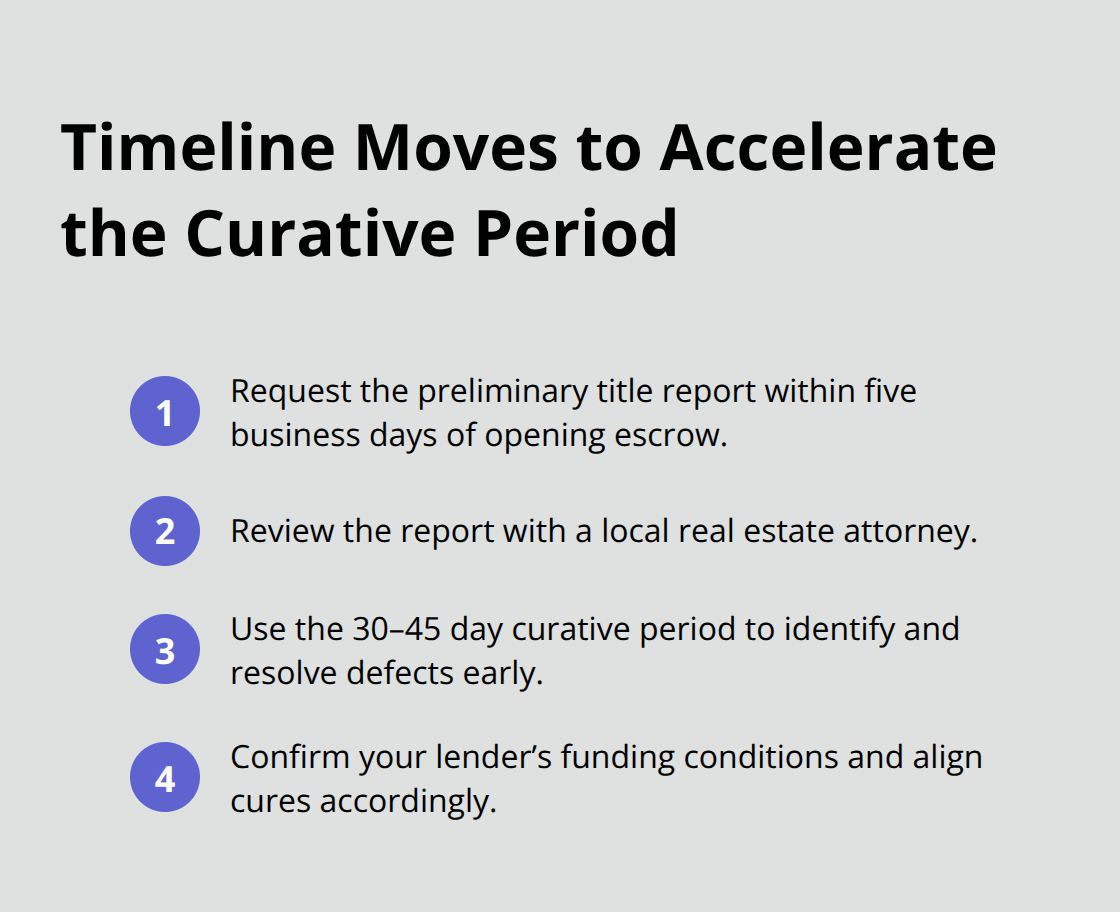
Initiate your title search immediately after making an offer, not after your lender approves financing. The California Department of Insurance confirms that most title problems emerge when lenders reject the title during underwriting, which means waiting until the last moment guarantees delays. Request the preliminary title report within five business days of opening escrow and review it thoroughly with an attorney who understands Orange County recording practices. This early action gives you the curative period-typically 30 to 45 days depending on your title company-to identify and resolve defects before your lender locks in funding conditions.
Understand the Three Sections of Your Title Commitment
Title companies list problems in three sections that determine your next steps. Schedule A covers property details and insured parties, Requirements identifies items you must resolve before closing, and Exceptions lists issues that will remain uninsured. Treat Requirements as non-negotiable; these are the defects your lender will demand you cure. Exceptions become permanent gaps in your coverage, so challenge any exception that shouldn’t be there by requesting the title company investigate further or provide documentation supporting their exception claim.
Coordinate Your Legal Team and Title Professionals in Parallel
Work directly with title professionals and your attorney simultaneously rather than sequentially. Many Orange County buyers waste weeks waiting for title companies to respond when they should have their attorney contact lien holders, recorders’ offices, and prior owners in parallel. If a boundary encroachment or other title issue appears on your title report, your attorney negotiates the resolution with the responsible party while the title company prepares the necessary documents. If a prior mortgage wasn’t properly released, your attorney locates the original lender or their successor and requests a reconveyance deed. The curative process accelerates when your legal team coordinates with multiple parties instead of relying solely on the title company’s timeline.
Negotiate Solutions Based on What Your Lender Actually Requires
Settlement agreements work best when you understand what your lender actually requires versus what the title company initially excepted. Lenders care about enforceability and their security position; a utility easement that doesn’t restrict your intended use may not block funding even if the title company lists it as an exception. An experienced real estate attorney understands which exceptions your lender will tolerate and negotiates with title companies to remove or clarify issues that don’t genuinely affect your property rights or financing. This targeted approach prevents you from paying unnecessary fees to cure non-material defects while addressing the problems that actually matter to your lender and your future ability to refinance or sell the property.
Final Thoughts
Title insurance disputes in Orange County stem from preventable oversights, yet they remain costly because most property owners treat title protection as a checkbox rather than a strategic priority. Your title insurance only protects against problems you identify and cure before closing. Once you own the property, exceptions in your policy become permanent gaps that no amount of negotiation can fix.
The practical foundation for avoiding disputes rests on three actions: obtain your preliminary title report within days of opening escrow, engage an attorney immediately to review every requirement and exception, and coordinate your legal team with title professionals in parallel rather than waiting for sequential responses. These steps compress the curative period and prevent lenders from discovering problems at the last moment when solutions become expensive and time-consuming. Due diligence in real estate transactions means treating title investigation as seriously as you treat property inspections or appraisals.
A defective title can make a property harder to market, difficult to sell, or impossible to refinance years after closing. The cost of early investigation pales against the cost of litigation or title defects that surface after you own the property. Contact Raul Garcia Law Firm the moment your lender flags title issues or your title company lists requirements you don’t understand, and we will help you protect your financial interests and minimize operational disruption.