

Closing a business in California involves more than just shutting the doors. The business dissolution process in California requires specific legal steps, documentation, and compliance with state regulations.
At Raul Garcia Law Firm, we guide Orange County business owners through each phase of dissolution. This roadmap breaks down what you need to do, when you need to do it, and how to avoid costly mistakes.
What Counts as Business Dissolution and Why It Matters
Business dissolution in California means legally terminating your company’s existence as a state-registered entity. This differs from simply closing your doors or stopping operations. When you dissolve, you file official paperwork with the California Secretary of State to formally end the business’s legal standing. For a domestic corporation, you file Articles of Dissolution. For an LLC, you file a Certificate of Cancellation. For a partnership, you file a Certificate of Cancellation as well. The type of entity you operate determines which form you submit, and this distinction matters because filing the wrong document delays the process and leaves you liable for ongoing taxes and penalties.
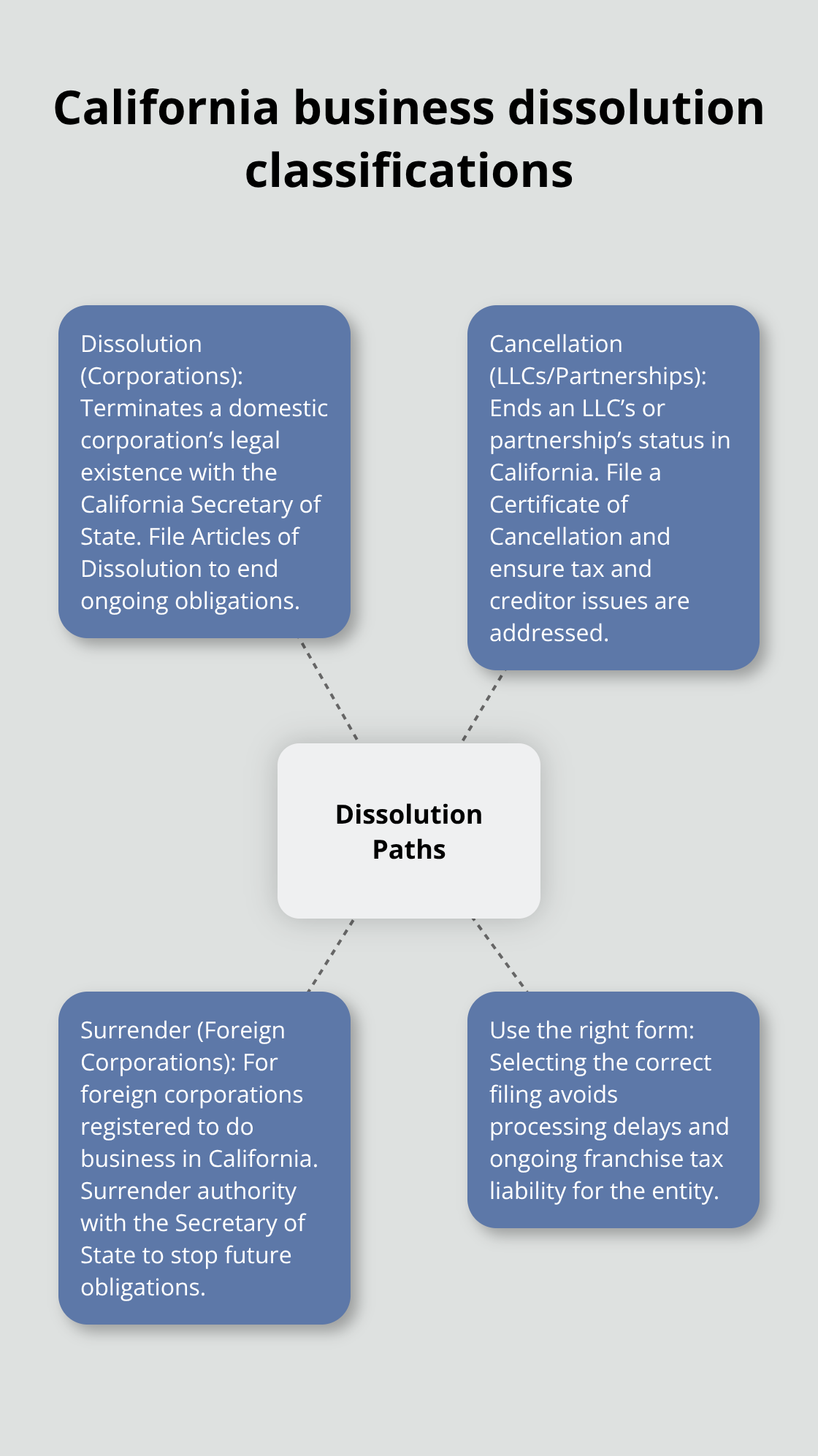
California law distinguishes between dissolution (for corporations), surrender (for foreign corporations), and cancellation (for LLCs and partnerships). Getting this classification right from the start saves months of back-and-forth with the Secretary of State.
Why Orange County Businesses Dissolve
Orange County business owners dissolve for specific reasons. Some shift to a different business structure or relocate operations outside California entirely. Others face market changes that make continuing unprofitable. A significant number dissolve due to partnership disputes or ownership conflicts that make ongoing operations untenable. The California Secretary of State does not require you to justify dissolution, but understanding your reason helps determine the fastest path forward. If you dissolve due to a partnership conflict, you may need court involvement and mediation before you file dissolution documents. If you relocate, you simply need to complete tax clearance and file the appropriate forms. The timeline and costs shift dramatically based on your situation. Contested dissolutions involving litigation often cost $15,000 to $50,000 or more, while uncontested dissolutions with no disputes typically run $2,000 to $5,000 in professional fees and filing costs combined.
Timeline Realities for Orange County
Most straightforward dissolutions take six to nine months from start to finish. This assumes you have no tax issues, no creditor disputes, and all members or shareholders agree to dissolve. The Franchise Tax Board requires you to file a final tax return and obtain tax clearance before the Secretary of State accepts your dissolution documents. That step alone takes four to eight weeks.
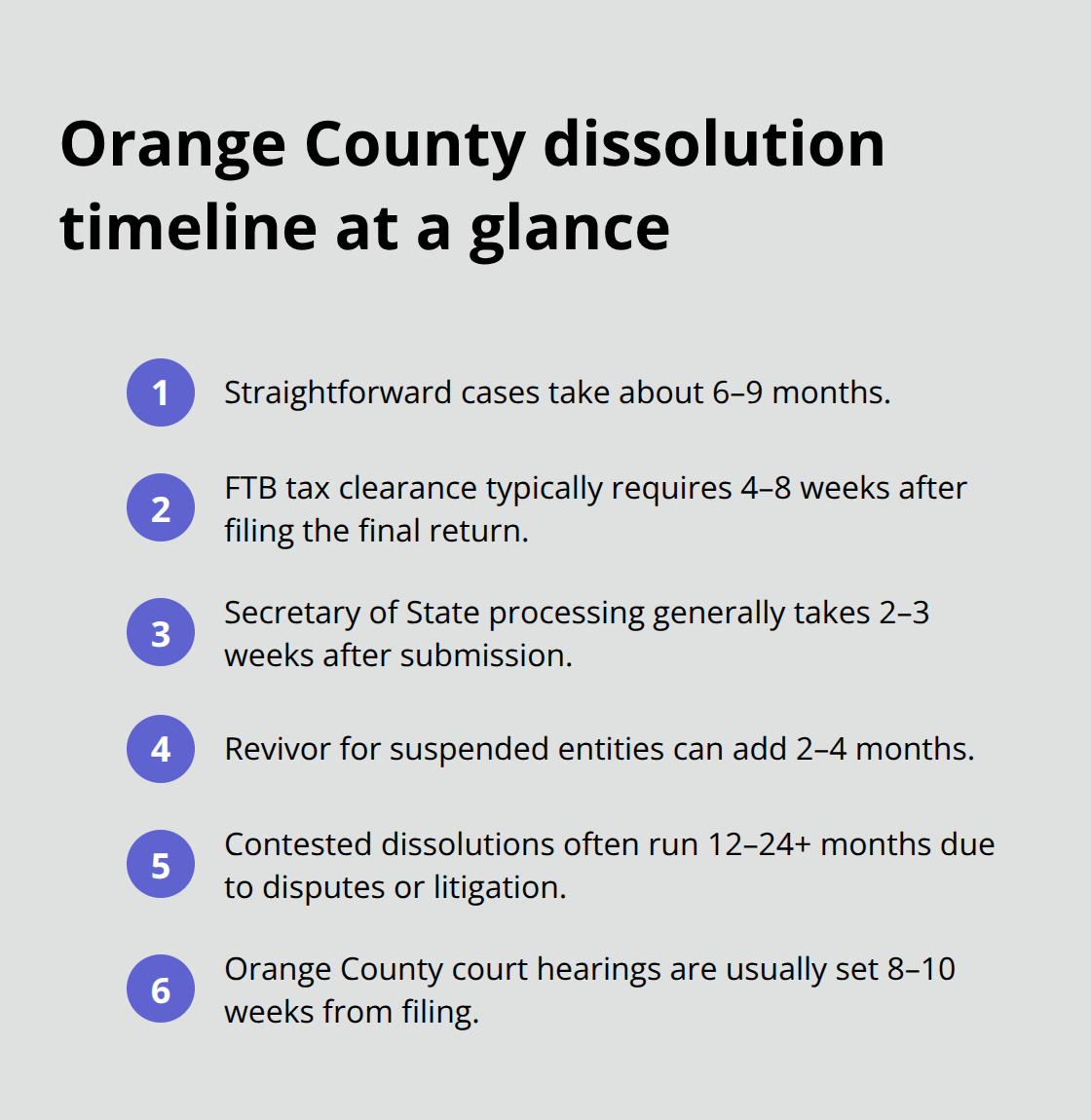
After you file with the Secretary of State, processing typically takes two to three weeks. However, if your business has suspended status with the FTB due to unpaid taxes or missed filings, you must first file all delinquent returns and pay all balances including penalties and interest. This revivor process can add two to four months. If members or shareholders dispute the dissolution, you face twelve to twenty-four months minimum, potentially longer if litigation becomes necessary. Orange County courts typically schedule hearings within eight to ten weeks of filing, but settlement negotiations often extend the overall timeline.
What Happens When Disputes Arise
Partnership and shareholder conflicts transform a routine dissolution into a complex legal matter. When co-owners cannot agree on dissolution terms, asset distribution, or liability allocation, the process moves into contested territory. You may need to pursue mediation or court intervention to resolve these disagreements before you can proceed with formal dissolution filings. The costs escalate significantly-contested matters routinely exceed $15,000 in legal fees alone. If you face a partnership dispute, Raul Garcia Law Firm represents business owners in these complex shareholder and partnership disputes, combining practical business insight with aggressive negotiation to protect your financial interests and minimize operational disruption.
The distinction between uncontested and contested dissolution determines not just your timeline but your entire strategy moving forward.
The Mechanics of Formal Dissolution
Filing dissolution documents with the California Secretary of State marks the legal endpoint, but the real work happens before that moment. The process demands precise sequencing: you cannot file dissolution papers until you obtain tax clearance from the Franchise Tax Board, and you cannot distribute assets to owners until all creditor claims are resolved. Orange County business owners who skip steps or file documents out of order face rejected filings, extended timelines, and ongoing franchise tax liability. The Secretary of State will not accept your dissolution documents if the FTB has flagged your account as suspended or delinquent.
Filing Your Final Tax Return and Obtaining Clearance
Start by filing your final California tax return with the FTB and mark it clearly as final. Write the word “final” across the top of the form on page one. The FTB processes final returns within four to eight weeks and issues a tax clearance certificate once all balances, penalties, and interest are paid. Only after you receive this clearance should you proceed to the Secretary of State.
For domestic corporations, file Articles of Dissolution using the DISS STK form. For LLCs, file a Certificate of Cancellation using the LLC-4/7 form. For partnerships, file a Certificate of Cancellation using the LLP-4 form. The Secretary of State charges $75 to $100 in filing fees depending on your entity type. Processing takes two to three weeks after submission. Keep copies of everything you file and maintain records of all dissolution documents for at least seven years.
Notifying Creditors and Publishing Dissolution Notices
California law requires you to notify known creditors in writing of your intent to dissolve and your expected timeline for final distribution. Mail notice to every vendor, lender, contractor, and service provider with whom you have an outstanding obligation. Set a specific deadline for creditors to submit claims-typically thirty to sixty days from your notification date.
Publish a dissolution notice in a newspaper of general circulation in Orange County where your principal office is located. This protects you from unknown creditors who might otherwise pursue claims against distributed assets. The newspaper notice costs between $200 and $500 depending on the publication and number of insertions required. Once the notice period expires, you can settle claims you have received and reject or negotiate claims you dispute.
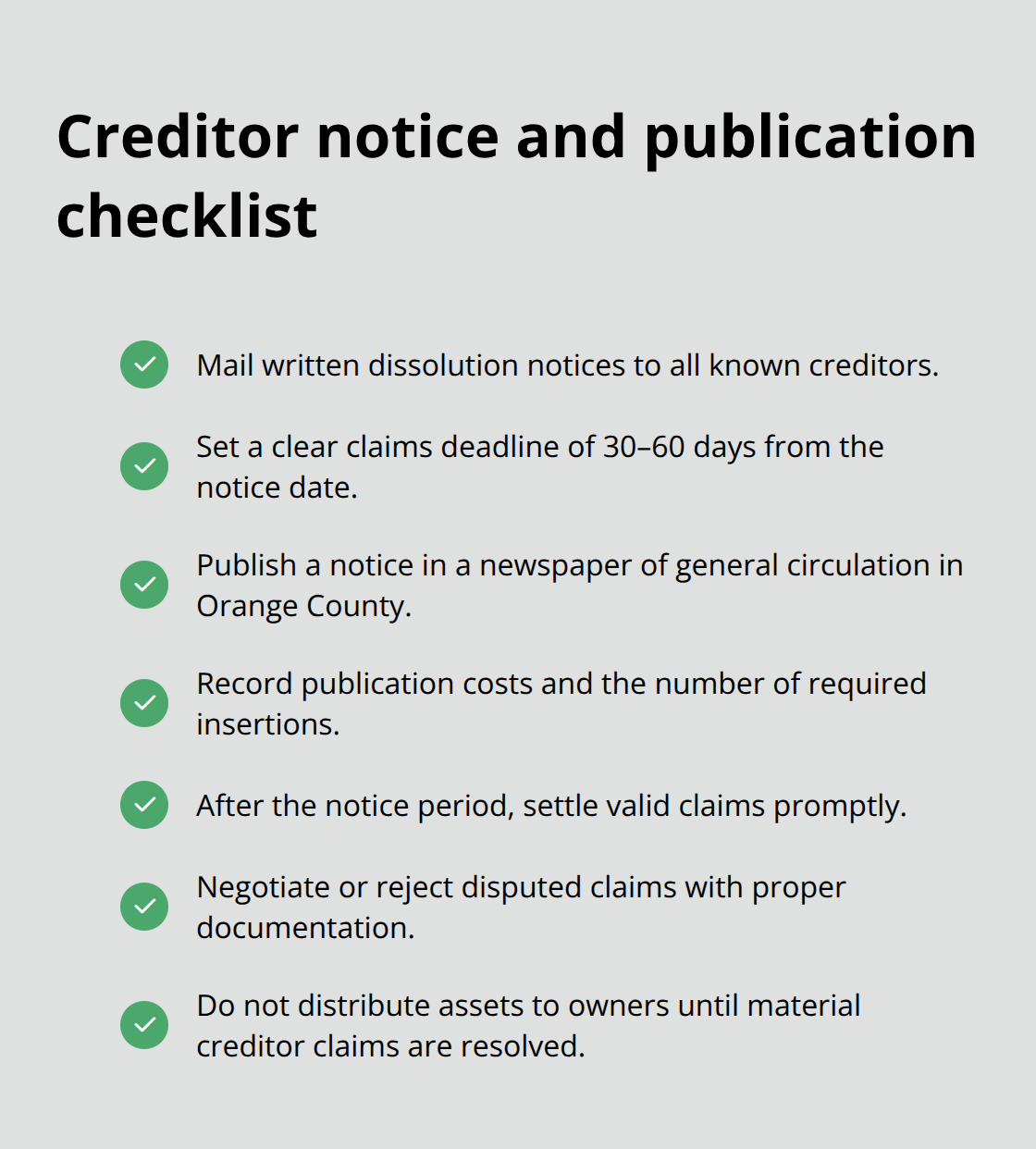
Do not distribute assets to owners until you have resolved all material creditor claims. If you distribute assets before settling debts, creditors can pursue those assets in the hands of members or shareholders, creating personal liability that dissolution was meant to eliminate. Close all business bank accounts and lines of credit after you have paid final bills and settled creditor claims. Confirm that all outstanding invoices are paid and that no automatic recurring charges remain active on business credit cards or merchant accounts. This step takes two to three weeks to complete fully because some vendors process final invoices after month-end closing.
Distributing Assets According to Legal Priority
Asset distribution follows a strict priority order under California law. First, pay all creditor claims and outstanding business debts. Second, return each member’s or shareholder’s original capital contributions if assets remain. Third, distribute any remaining assets according to the distribution rights specified in your operating agreement or bylaws. Most operating agreements specify equal distribution among members unless stated otherwise.
If members dispute the value of assets or disagree on distribution methodology, you face mediation or litigation before distributions can proceed. Avoid distributing assets during disputes because creditors or disgruntled owners can challenge those distributions and pursue recovery. If your LLC or corporation owns real property, you must address any mortgages or liens before transfer. Refinance the property, pay off the loan, or transfer it subject to the existing lien.
Real property transfers trigger reassessment under California Revenue and Taxation Code Section 64 if ownership changes by more than fifty percent. This reassessment can increase property taxes significantly for the new owner. Disclose this reassessment risk to members before distribution so they understand the full tax impact. Document all distributions in writing with dates, amounts, and recipient signatures. File the appropriate dissolution documents with the Secretary of State only after you have completed asset distribution or established that no assets remain to distribute. Once you finalize these mechanics, you must address the employment and contractual obligations that extend beyond the formal filing.
Tax Obligations and Operational Closure
Managing Franchise Tax Board Requirements
The Franchise Tax Board acts as your primary gatekeeper during dissolution. You cannot file dissolution documents with the Secretary of State until you obtain a tax clearance certificate from the FTB, which requires resolving every outstanding tax liability first. File your final California tax return and mark it as final by writing “final” across the top of page one. The FTB processes final returns within four to eight weeks, but this timeline extends significantly if you carry unpaid balances, penalties, or interest owed.
If your business holds suspended status due to missed filings or delinquent taxes, you must file all missing returns and pay all balances including penalties and interest before the FTB issues clearance. This revivor requirement adds two to four months to your dissolution timeline. Treat all tax obligations as due and payable before filing dissolution documents. The FTB may abate unpaid taxes, interest, penalties, and fees after the Secretary of State officially cancels your entity, but you cannot rely on this possibility. Once the FTB issues your clearance certificate, you can proceed to the Secretary of State with confidence that your filing will not face rejection.
Closing Licenses, Permits, and Regulatory Authorizations
Closing business licenses and permits requires systematic attention to every regulatory authorization your business holds. Contact the California Department of Tax and Fee Administration to close your seller’s permit, which is not transferable and must be formally closed when you cease operations. Notify your local city and county offices about your dissolution, updating your DBA registration and canceling all local business licenses specific to your industry or location. Use the CalGOLD portal to identify which agencies require notification in Orange County, as requirements vary by business type and location.
Transfer or terminate any professional licenses, franchises, or special permits your business holds, as these cannot simply be abandoned without formal cancellation. Close all business bank accounts and credit cards only after all bills are paid and all delinquent amounts are settled, which typically requires two to three weeks for final vendor invoices to process.
Handling Employment and Payroll Obligations
If you had employees, file final payroll tax deposits with the Employment Development Department using Form DE 88 and final wage reports using Form DE 9 or DE 9C within ten days of your last payroll. You can deactivate your employer account online through EDD e-Services once these documents are submitted. Provide written notice of closure to all employees and address final payroll, accrued vacation, and benefits obligations. California law requires compliance with the California WARN Act if you have 75 or more employees, which mandates 60 days advance notice of plant closures or mass layoffs.
For federal obligations, file your final federal tax return with the IRS and, if applicable, final employment tax returns. The IRS Closing a Business Checklist provides detailed steps for federal filings, and you should consult it alongside your state obligations to avoid missing deadlines.
Resolving Contractual and Operational Obligations
Resolve all contractual obligations before asset distribution occurs. Review every service agreement, lease, supply contract, and licensing arrangement your business maintains. Some contracts contain termination fees or early exit penalties that reduce the assets available for distribution to owners. Renegotiate or settle these obligations where possible, and document all termination communications in writing. These steps protect you from creditors pursuing distributed assets and from owners discovering hidden liabilities after they receive their distributions.
Final Thoughts
Business dissolution in California demands precision at every stage. You must sequence your actions correctly: obtain tax clearance from the Franchise Tax Board before filing with the Secretary of State, notify creditors before distributing assets, and resolve all contractual obligations before members receive their final distributions. Skipping steps or filing documents out of order creates rejected filings, extended timelines, and ongoing tax liability that defeats the purpose of dissolving.
Most straightforward dissolutions take six to nine months when all parties agree and no tax issues exist. Contested dissolutions involving partnership disputes or shareholder conflicts extend to twelve to twenty-four months or longer, with costs escalating from $2,000 to $5,000 for uncontested matters to $15,000 or more for litigation. The financial and operational stakes justify professional guidance, especially when your business faces suspended status with the FTB, partnership disputes, or complex asset distribution questions.
We at Raul Garcia Law Firm represent Orange County business owners navigating the business dissolution process in California, from contested dissolutions to shareholder disputes and complex asset distribution issues. Our team combines practical business insight with aggressive negotiation to protect your financial interests and minimize operational disruption. Contact Raul Garcia Law Firm to discuss your specific situation and determine the fastest, most cost-effective path forward.