

Trade secret misappropriation claims can devastate a business, especially when competitors gain access to your most valuable information. At Raul Garcia Law Firm, we help Orange County business owners understand their legal options when facing these disputes.
Whether you’re defending against allegations or pursuing a claim, knowing the litigation paths and available defenses makes all the difference. This guide walks you through the legal landscape and practical steps to protect what matters most.
What Counts as Trade Secret Misappropriation
Legal Definition Under California Law
California law defines a trade secret as information with independent economic value that derives from not being generally known, coupled with reasonable efforts to maintain its secrecy under Civil Code sections 3426 through 3426.11. This definition matters because vague claims fail in court. You must identify the specific information at stake with particularity-not just claim someone stole your competitive edge. Courts in cases like Kwikset Corp. v. Superior Court require you to describe the trade secret clearly enough that a judge understands exactly what you’re protecting before discovery even begins.
What Information Qualifies
Customer lists, manufacturing processes, software source code, pricing structures, vendor relationships, and marketing strategies all qualify as trade secrets, but only if you took reasonable steps to keep them confidential. A customer database that took years to develop counts as a trade secret; a simple phone list does not. The distinction lies in the effort, cost, and competitive advantage the information provides.
How Misappropriation Occurs
Misappropriation happens through improper means-theft, bribery, misrepresentation, breach of a confidentiality duty, or espionage. The critical point: reverse engineering or independent discovery alone does not constitute improper conduct. If a competitor analyzes your product and figures out how you made it through legitimate analysis, that is not misappropriation.
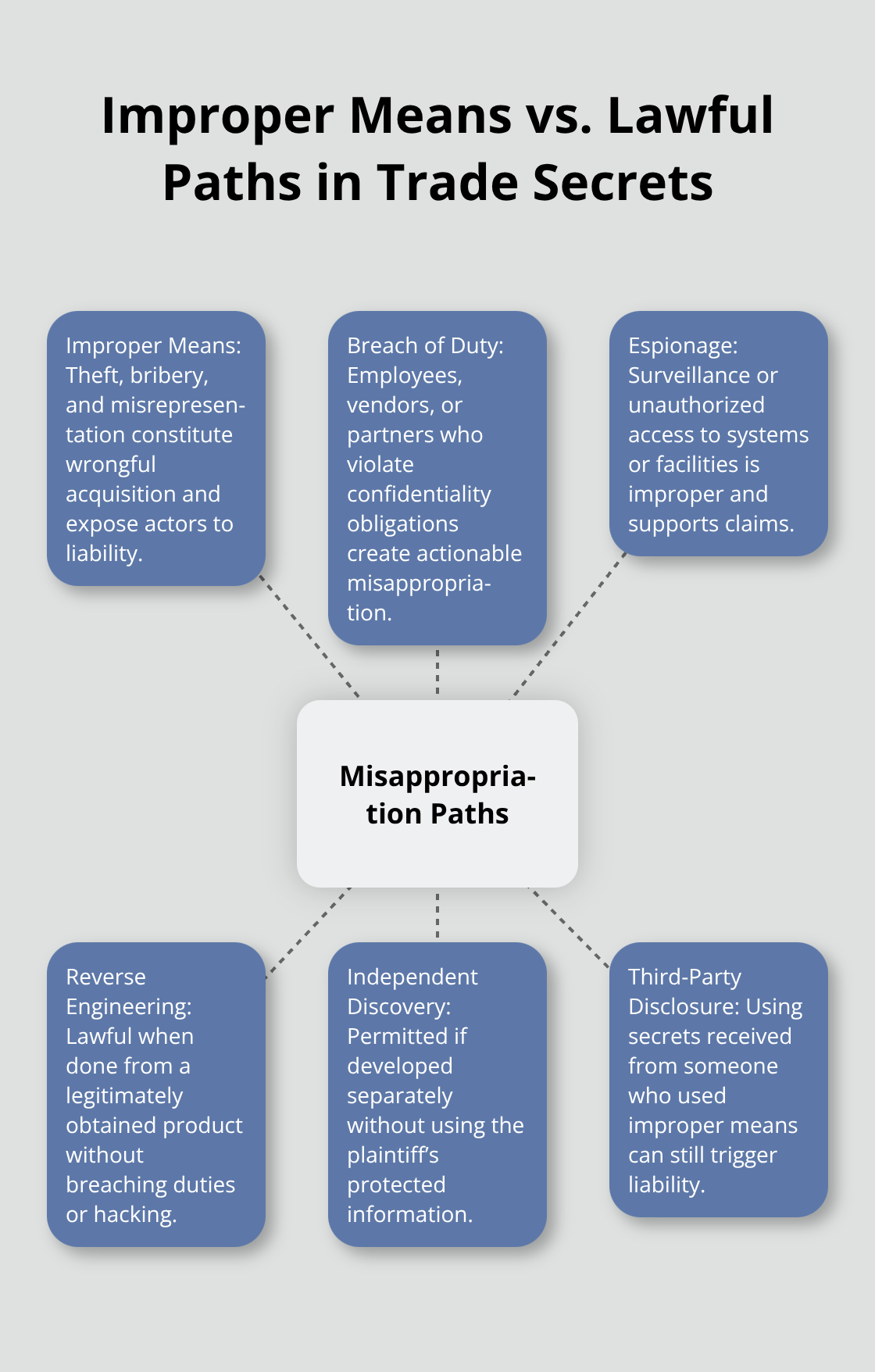
But if an employee downloads your entire customer database before leaving for a competitor, or a vendor discloses your pricing to a rival after you trusted them with confidential information, that is actionable.
The Defend Trade Secrets Act at the federal level and California’s Uniform Trade Secrets Act both recognize that someone who knew or should have known they obtained a trade secret improperly, or who derived it from someone who used improper means, faces liability. Orange County businesses frequently encounter misappropriation when key employees depart, vendor relationships sour, or partners exit acrimoniously.
The Two-Factor Test for Strength
In these high-stakes moments, the strength of your claim hinges on two factors: whether the information actually qualifies as a trade secret under the law, and whether you implemented reasonable secrecy measures beforehand. Without documented confidentiality agreements, access restrictions, and clear labeling of sensitive materials, courts will reject your claim regardless of how valuable the information is. Protection starts long before litigation-through layered safeguards (confidentiality policies, role-based access controls, and exit procedures) that prove you treated the information as genuinely confidential.
Understanding what qualifies as misappropriation sets the foundation for your litigation strategy. Next, we examine the specific paths available to pursue or defend against these claims in Orange County courts.
How to Navigate Trade Secret Litigation in Orange County
Once you identify misappropriation, the path forward demands speed and strategy. Orange County businesses frequently make critical mistakes by waiting too long or underestimating the complexity ahead. The litigation process moves fast, and delay costs money and competitive advantage.
Preserve Evidence and Send a Demand Letter
The first step happens outside the courtroom. If you suspect misappropriation, preserve everything immediately-emails, access logs, device activity, confidentiality agreements, and exit records. Courts favor parties who documented their secrecy measures and acted decisively when they discovered the breach.
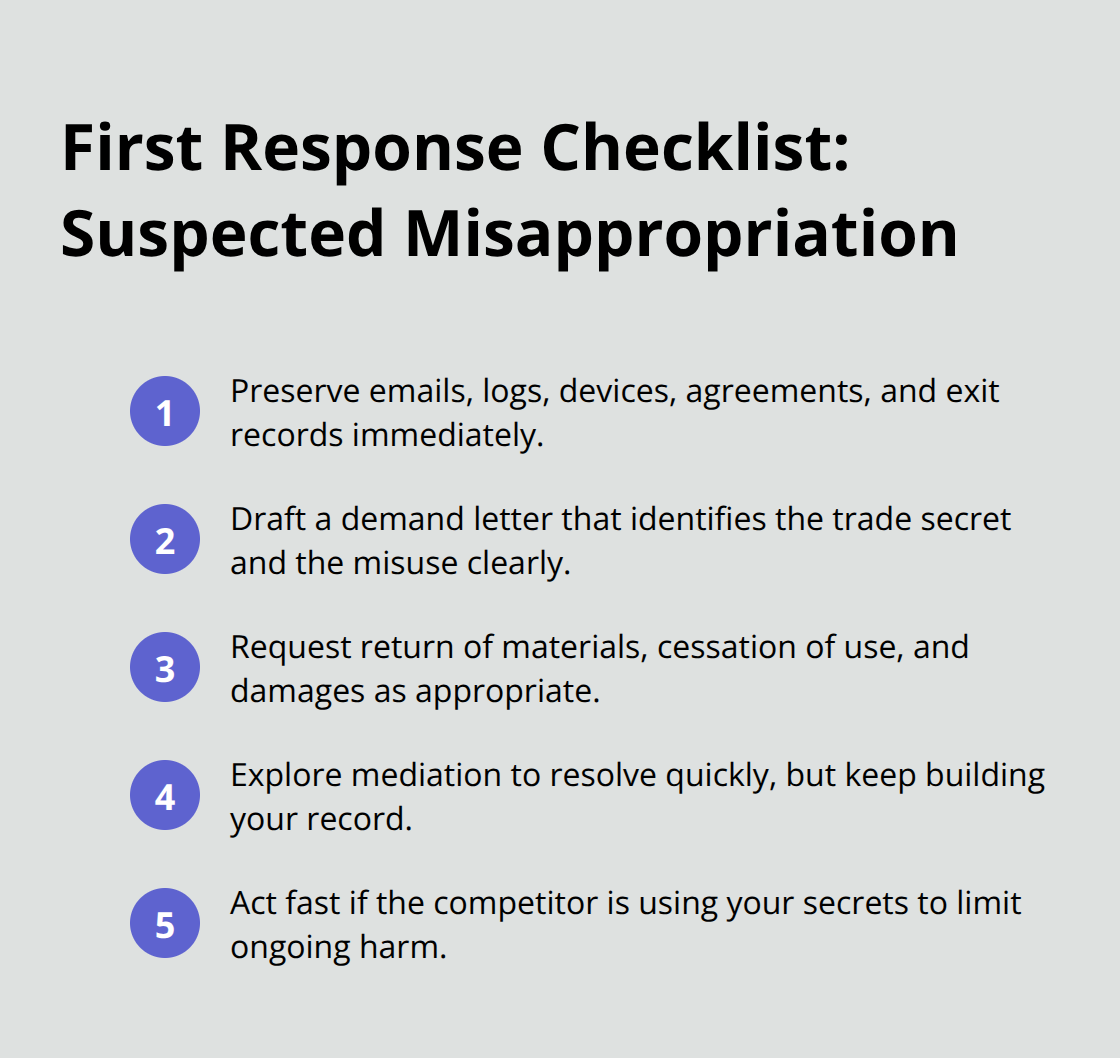
Draft a demand letter that clearly identifies the trade secret, explains how someone misappropriated it, and specifies what you want (return of materials, cessation of use, or damages). A well-crafted demand often prompts settlement talks or reveals weaknesses in your case before expensive litigation begins. Some Orange County businesses resolve misappropriation disputes through mediation at this stage, avoiding trial entirely and recovering value faster. However, do not delay sending a demand if the competitor actively uses your secrets-every day of use strengthens their defense and damages your case.
File Suit and Control Discovery
Once you file suit, discovery becomes your primary weapon. Request all documents related to how the defendant obtained the information, who accessed it, and how they used it. Depositions of key employees often expose contradictions and admissions. Interrogatories and requests for production of documents force the defendant to reveal their communications and development timelines. Courts in Orange County expect you to identify the trade secret with reasonable particularity before discovery advances, as emphasized in California case law. Vague claims collapse under scrutiny.
Navigate Motion Practice and Summary Judgment
Motion practice follows discovery-expect the defendant to challenge whether the information qualifies as a trade secret at all, or argue they developed it independently. Summary judgment motions at this stage can end cases before trial if the evidence strongly favors one side. Defendants frequently argue reverse engineering or independent discovery, claiming they never obtained your secrets improperly. Your evidence must show improper means: a departing employee’s laptop containing your customer database, emails proving a vendor disclosed your pricing, or suspicious file downloads before a competitor launched a copycat product.
Present Evidence at Trial
If you reach trial, Orange County juries understand that trade secrets drive competitive advantage. Present clear evidence of secrecy measures, the breach, and resulting harm to win damages or injunctive relief that stops ongoing misuse. The strength of your presentation determines whether you recover full damages or face a partial loss. With the litigation path mapped, understanding the defenses the other side will raise becomes equally important.
Common Defenses Against Misappropriation Claims
The Trade Secret Status Challenge
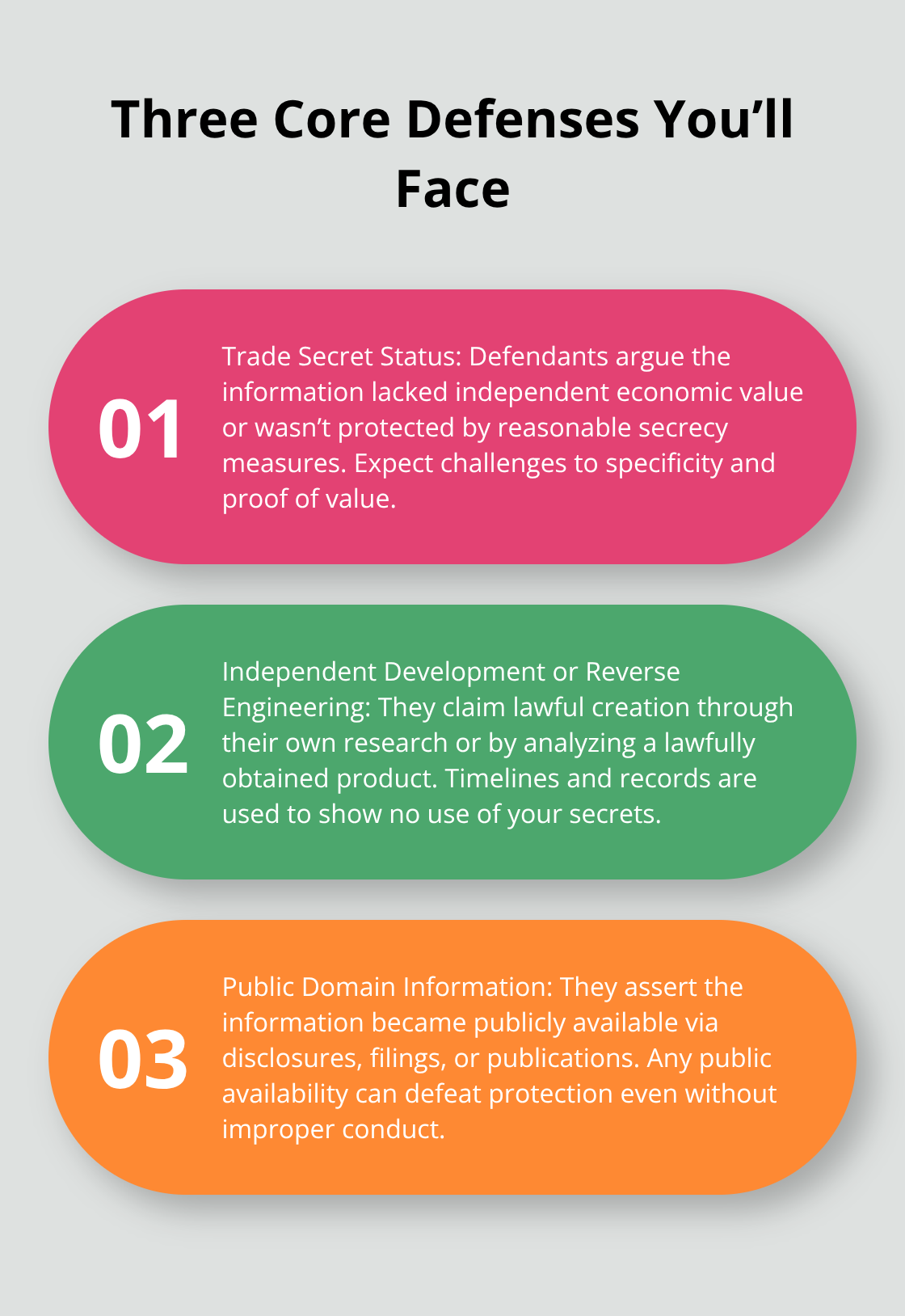
Defendants in Orange County misappropriation cases attack the foundation of your claim first. Courts require you to prove the information had independent economic value precisely because it was not generally known, and that you implemented reasonable secrecy measures. If your customer list came from public directories, or your pricing formula could be reverse-engineered from your public product offerings, the defendant will argue no trade secret exists. This defense succeeds frequently because many business owners assume confidentiality alone makes something a trade secret-it does not. You must demonstrate the information took substantial time, effort, or resources to develop, and that competitors would pay money to obtain it. Depositions of your employees often expose weaknesses here. If your team cannot articulate what makes the information valuable or what secrecy measures actually protected it, the judge may dismiss the case before discovery completes.
Independent Development and Reverse Engineering
The second defense challenges how the defendant obtained the information. Reverse engineering is entirely legal under California law. If a competitor purchased your product, analyzed it, and figured out your manufacturing process through legitimate means, they committed no misappropriation. The defendant will produce evidence showing independent development-their own research timeline, employee work records, product development notes-to prove they did not use your secrets. This defense proves particularly effective when the defendant has a strong research team or prior experience in the field. Courts accept this argument readily because California law explicitly permits independent discovery as a lawful path to competitive information.
Public Domain Information
The third defense argues the information entered the public domain, either through your own disclosures, regulatory filings, or industry publications. If you disclosed the information to customers without confidentiality agreements, or if it appeared in patent filings or trade publications, the defendant will argue it lost protected status. Orange County courts take this seriously; public disclosure, even inadvertent, can destroy your entire claim. Before filing suit, audit your disclosures carefully and document exactly which information remained confidential and which did not. The defendant’s burden is lower than you might expect-they need only show the information became publicly available through any means other than their improper conduct.
Employee Testimony and Credibility Issues
Depositions frequently reveal contradictions in your secrecy narrative. If employees cannot consistently describe what information qualified as confidential, or if they admit sharing details with outsiders, the defendant gains substantial leverage. Your team must understand the scope of confidentiality obligations and demonstrate they followed them. Inconsistent testimony across multiple employees signals weakness and invites summary judgment motions that end cases before trial.
Timing and Statute of Limitations
Defendants also challenge whether you filed suit within the three-year statute of limitations under California law. The clock starts when you discovered (or should have discovered) the misappropriation, not when it occurred. If you waited years to act, the defendant will argue you waived your claim or that the delay itself proves the information was not truly valuable. Courts view prompt action as evidence of genuine harm and unfair competition claims require demonstrating reasonable secrecy measures.
Final Thoughts
Trade secret misappropriation claims demand immediate action and strategic planning. The businesses that succeed in Orange County courts invested in protection before disputes arose, implementing robust confidentiality agreements, documented access controls, and clear labeling of sensitive materials. Without these foundations, even valuable information fails to qualify for protection under California law, and vague claims collapse under judicial scrutiny.
The litigation path you choose depends on your specific circumstances-some Orange County business owners resolve disputes through demand letters and settlement negotiations, while others proceed through discovery and motion practice to build evidence that forces favorable outcomes before trial. Speed matters because every day a competitor uses your secrets strengthens their independent development defense and weakens your damages claim. Defending against misappropriation allegations requires equally strategic thinking, as courts scrutinize whether the information truly qualifies as a trade secret, whether you implemented reasonable secrecy measures, and whether the defendant obtained it through improper means or legitimate reverse engineering.
The most effective strategy is prevention, so implement layered safeguards now through confidentiality policies, role-based access controls, exit procedures, and regular employee training on what constitutes confidential information. When disputes arise, preserve evidence immediately and consult experienced counsel without delay. Contact Raul Garcia Law Firm for a free case evaluation to discuss your trade secret misappropriation situation and explore your options.