
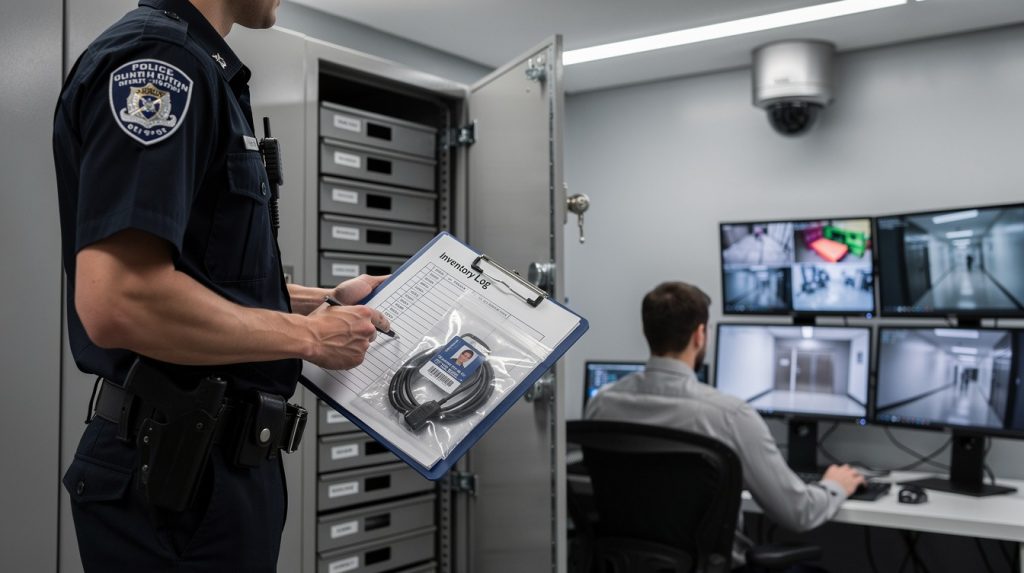
Theft of company assets costs Orange County businesses thousands of dollars annually, yet many owners don’t realize it’s happening until significant damage occurs. The warning signs are often hiding in plain sight-unusual inventory gaps, financial discrepancies, and behavioral shifts among staff members.
We at Raul Garcia Law Firm help business owners identify theft early and take decisive action. This guide walks you through detection methods, prevention strategies, and the legal pathways available to recover losses and hold perpetrators accountable.
Spotting Asset Theft Before It Spirals
Inventory Discrepancies Signal Trouble
Internal theft rarely announces itself loudly. It starts with small discrepancies that compound into serious losses. The most effective detection happens when you know what to watch for and act on it quickly. Inventory shrinkage of just 1-2% annually might seem minor, but for a mid-sized Orange County operation with $2 million in stock, that translates to $20,000-$40,000 in unaccounted assets per year.

Many business owners miss these patterns because they lack a systematic approach to tracking what happens on the ground.
Look for inventory counts that don’t match your records, especially in high-value or easily portable items. Schedule surprise audits on random days-Monday morning counts catch weekend disappearances that regular Friday inventories might miss. Compare what your system says you have against what’s physically present, and investigate gaps larger than your normal shrinkage allowance immediately.
Financial Red Flags Demand Investigation
Financial records reveal patterns that point to theft. Unusually high discounts, frequent refunds to the same customers, or missing receipts for cash transactions signal potential manipulation. An employee who processes refunds without corresponding purchases or applies excessive discounts to friends deserves scrutiny. These financial anomalies often precede larger losses, so address them before they escalate.
Behavioral Changes Warrant Attention
Employees with access to merchandise, cash, or equipment represent your highest theft risk, and catching it early determines whether you recover losses or write them off. Watch for employees who resist audits, avoid taking time off, or become defensive about access procedures-these behavioral shifts often accompany theft. Someone suddenly working overtime without clear business reasons, accessing systems outside their normal duties, or appearing anxious when inventory checks occur warrants closer attention.
Documentation Creates Your Foundation
The key is establishing baseline expectations for your operation, then monitoring deviations. Don’t dismiss small red flags as coincidence. A missing $50 item today might indicate someone testing whether detection systems work before attempting larger thefts tomorrow. When you notice discrepancies, document everything with dates, amounts, and circumstances. This documentation becomes essential if you later pursue legal recovery or need to support criminal prosecution. Orange County courts see substantial theft cases annually, and solid evidence collection from the beginning strengthens your position significantly. With detection systems in place and documentation habits established, you’re ready to implement prevention strategies that stop theft before it starts.
Prevention Strategies for Protecting Business Assets
Access Control Stops Theft at the Source
Preventing theft requires more than hoping employees stay honest. You need physical barriers, smart hiring, and systems that make stealing difficult enough that potential thieves move on to easier targets. Start with access control-limit who can reach high-value assets and when. Don’t give every employee a key to the stockroom or access to the cash register. Assign access based on job function only, and rotate responsibilities so no single person controls an entire process. If someone normally restocks shelves, they shouldn’t also reconcile inventory counts.
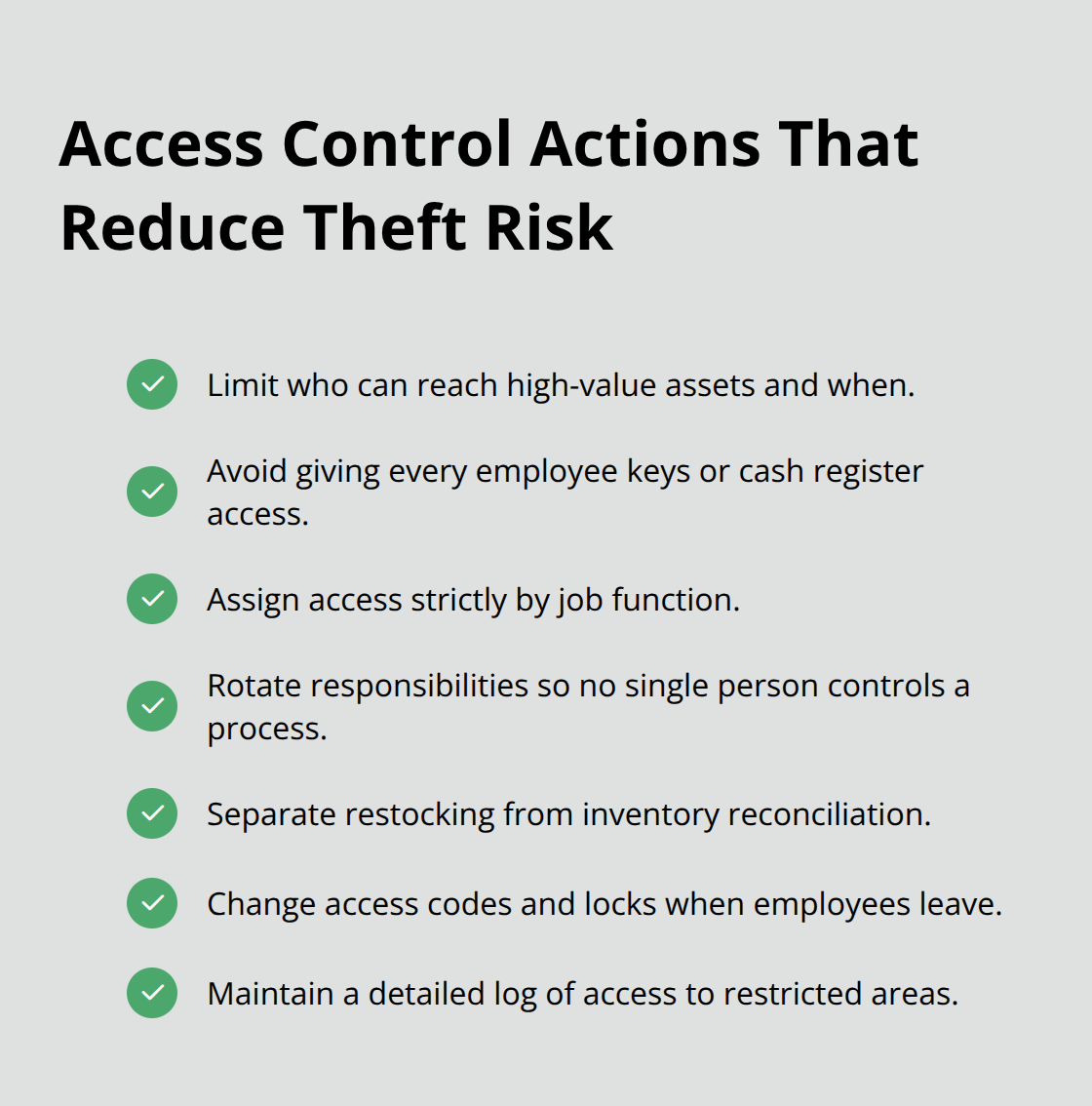
Change access codes and locks when employees leave, and maintain a log of who accessed restricted areas and when. This separation of duties catches mistakes and deters intentional manipulation.
Technology Tracks Assets and Deters Thieves
RFID asset management systems track merchandise in real time across warehouses, retail spaces, and loading docks. They deter theft by making it obvious when items move without authorization and enable rapid location of missing inventory. For Orange County businesses handling significant inventory, the investment in RFID typically pays for itself within months through reduced shrinkage and faster asset recovery. Digital video systems paired with monitoring services provide surveillance coverage that deters theft and creates evidence for investigations. Position cameras at cash registers, stockroom entrances, and loading docks where valuable items move. Maintain tamper-evident, auditable logs of who accessed what and when-this data accelerates investigations if theft occurs and supports insurance claims.
Hiring Practices Shape Your Theft Risk
Your hiring process shapes your theft risk more than any technology. Background checks catch individuals with prior theft convictions, but you need to go deeper. Contact previous employers directly and ask specific questions about attendance, cash handling, and why they left. Candidates who refuse to authorize background checks or have suspicious employment gaps deserve extra scrutiny. Once hired, keep engagement high-employees who feel undervalued and disconnected steal more frequently than those who feel invested in the company’s success.
Audits and Monitoring Create Detection Habits
Conduct regular audits on random schedules, not predictable Fridays. Monday morning inventory counts reveal weekend disappearances, and surprise audits on Wednesday catch patterns that routine schedules miss. Train staff to recognize suspicious activity and establish clear reporting procedures that protect whistleblowers from retaliation. Employees who fear punishment for reporting problems stay silent while theft grows. When you implement these layers together-controlled access, careful hiring, surprise audits, and visible monitoring-you shift the calculus for potential thieves. They see detection as likely and consequences as certain, making your business a harder target than the operation down the street. Yet even the strongest prevention systems occasionally fail, which is why understanding what happens when theft does occur matters just as much as stopping it before it starts.
Recovering Losses When Theft Occurs
Civil Litigation Recovers Money Directly
When theft happens despite your prevention efforts, Orange County business owners face a critical choice: pursue civil recovery, criminal prosecution, or both. Civil litigation recovers money directly from the perpetrator through court judgment, while criminal prosecution holds them accountable through the justice system and potentially secures restitution orders. The distinction matters because civil cases require a lower standard of proof (preponderance of the evidence) compared to criminal cases (beyond reasonable doubt), meaning you can win civilly even if criminal prosecution fails. Orange County courts issued several seven and eight-figure judgments annually in recent years, reflecting the substantial litigation activity around asset losses.
Civil litigation works best when you have clear documentation of what was stolen, its value, and evidence connecting the perpetrator to the loss. Bring your RFID logs, video footage, access records, and financial discrepancies to your attorney immediately after discovering theft. These materials establish liability and quantify damages, which judges and juries understand clearly. Hiring counsel before the dispute escalates separates businesses that recover damages from those that lose everything.
Criminal Prosecution Holds Perpetrators Accountable
Criminal prosecution requires you to report the theft to local law enforcement, who investigate and decide whether to pursue charges under California Penal Codes 484 and 503, which define embezzlement as fraudulently taking property entrusted to you. Prosecutors must prove four elements: the property was entrusted to the accused, the owner trusted them with it, they converted it fraudulently, and they intended to deprive the owner of its use. Entrustment is the critical factor-if property was merely accessible rather than entrusted, embezzlement charges typically fail.
Once criminal charges are filed and conviction occurs, restitution orders force the defendant to repay the victim, though collecting from someone without assets remains challenging. The criminal process moves at its own pace, and conviction takes months or years. During this time, your business loses money while waiting for justice.
Running Both Processes Simultaneously Strengthens Your Position
Civil and criminal processes work together effectively. Civil discovery uncovers evidence that supports criminal prosecution, and criminal conviction strengthens your civil case significantly. A guilty verdict in criminal court makes civil liability nearly certain, which accelerates settlement negotiations or simplifies trial preparation. You don’t have to choose between these pathways-pursuing both maximizes your chances of recovery and holds the perpetrator accountable through multiple legal channels.
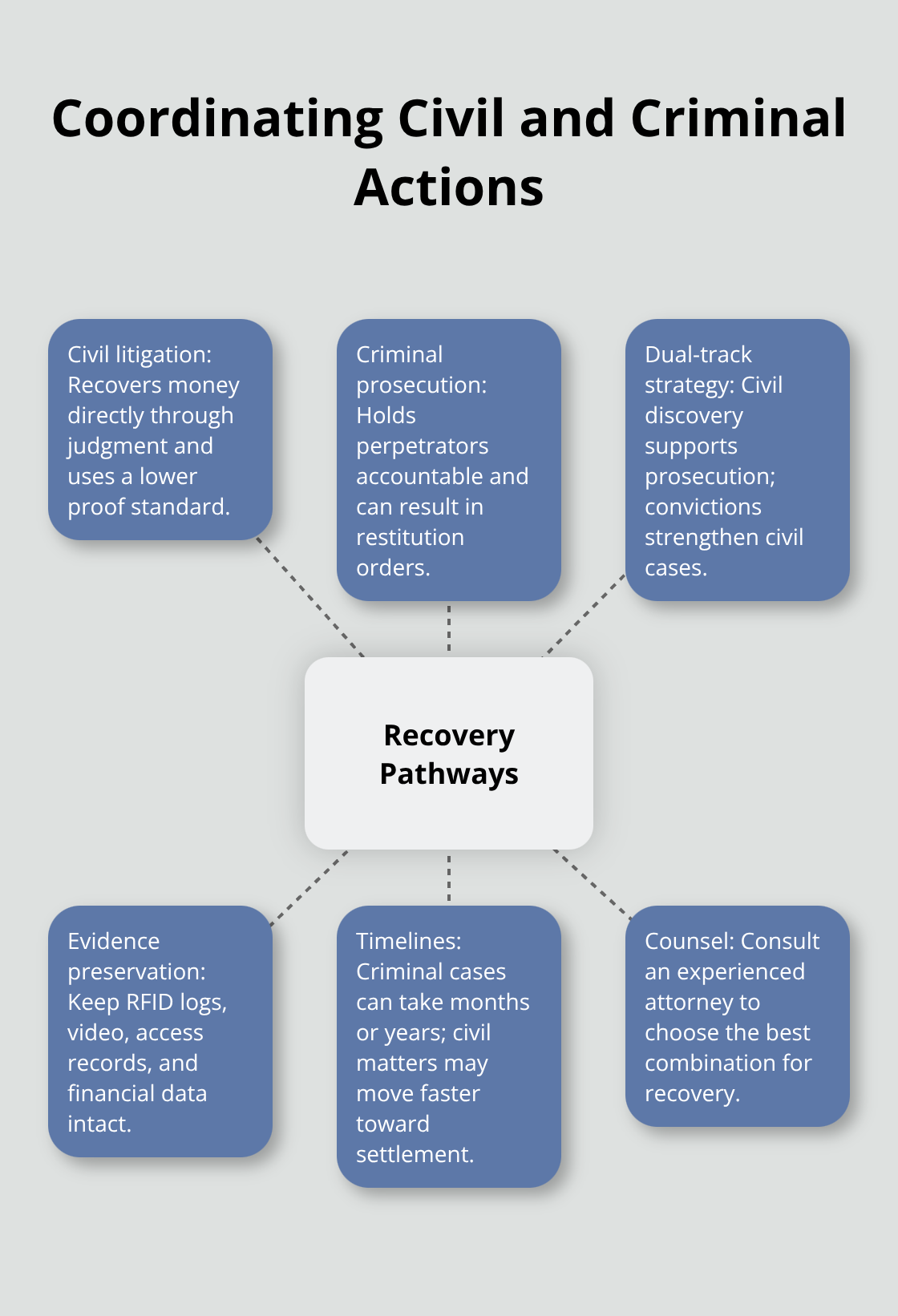
Start by preserving everything immediately-emails, access logs, device activity, and financial records. Report serious theft to law enforcement immediately. Consult with an attorney experienced in commercial theft cases to determine which pathway-or combination-best recovers your losses and protects your business interests going forward.
Final Thoughts
Theft of company assets in Orange County demands a three-part response: detect it early through systematic monitoring, prevent it through layered controls, and recover losses through decisive legal action. Detection methods-inventory audits, financial analysis, and behavioral observation-work only when you implement them consistently and act on discrepancies immediately. Prevention requires controlled access, careful hiring, surprise audits, and technology like RFID systems that make stealing difficult and detection likely.
Civil litigation and criminal prosecution offer different paths forward, and pursuing both simultaneously strengthens your position significantly. Civil cases recover money directly through court judgment, while criminal prosecution holds perpetrators accountable and can generate restitution orders. Orange County courts see substantial asset theft cases annually, and businesses with solid evidence collection from the start win more often than those scrambling to reconstruct what happened months later.
If theft has already happened, preserve all evidence immediately-access logs, financial records, video footage, and RFID data-and report serious cases to law enforcement without delay. Contact Raul Garcia Law Firm to discuss your situation and determine which legal pathways best recover your losses and protect your business going forward.