

Starting a business in Orange County requires more than just a good idea-you need a solid legal foundation. Business formation in California law involves specific steps that protect your personal assets and set you up for long-term success.
We at Raul Garcia Law Firm help entrepreneurs navigate these requirements without costly mistakes. This guide walks you through the essential decisions and filings you’ll need to make.
Which Business Structure Protects Your Personal Assets
Choosing the right business structure determines how much personal liability you face and how much you’ll pay in taxes. A sole proprietorship offers simplicity but leaves your personal assets exposed to business debts and lawsuits. If a customer sues your business or you default on a loan, creditors can pursue your house, savings, and personal property. California law treats you and your business as one entity, meaning no legal separation exists between personal and business finances. This structure works only if you have minimal risk exposure and no employees.
Partnerships Create Joint Liability Problems
General partnerships sound appealing because two or more people share the workload, but California law makes all partners personally liable for the debts and actions of the partnership. If your partner signs a contract or causes injury, you become responsible even if you did not authorize it. Limited partnerships offer more protection for limited partners who invest capital but do not manage operations, yet the general partner still carries unlimited personal liability. Most entrepreneurs avoid general partnerships because the liability risk outweighs the administrative convenience. If you work with others, an LLC provides better protection without the exposure that partnerships create.
LLCs and Corporations Separate Your Personal Wealth
Corporations and limited liability companies create a legal wall between your personal assets and business obligations. If the business owes money or faces a lawsuit, creditors cannot touch your personal bank accounts or property. California charges a minimum $800 annual franchise tax for both structures (according to the Franchise Tax Board), so you pay this regardless of profit. Filing Articles of Incorporation costs $100, while Articles of Organization for an LLC costs $70 through the California Secretary of State. The real difference lies in taxation and management flexibility.
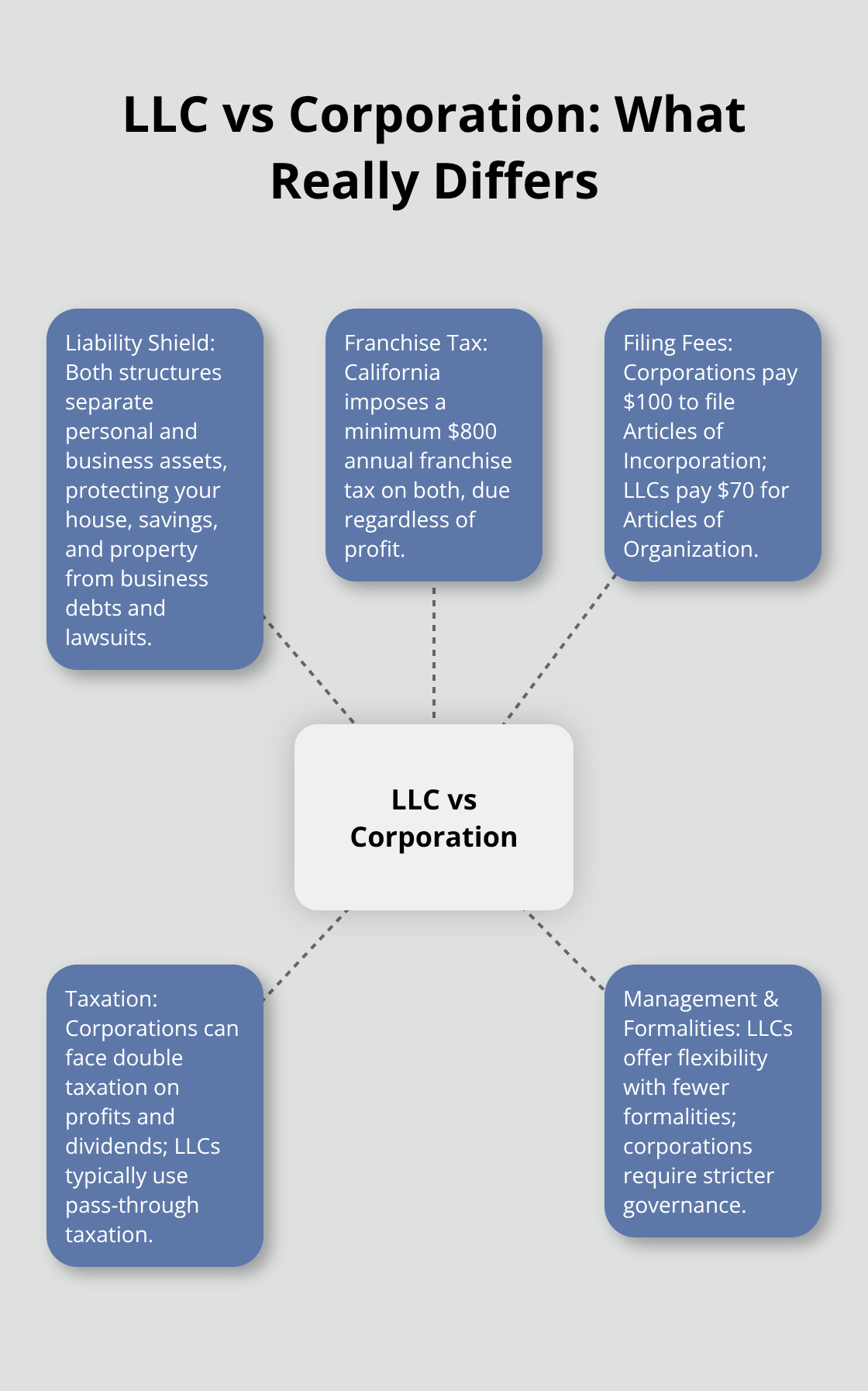
Corporations face double taxation when the business profits and you take dividends, while LLCs allow pass-through taxation where profits flow to your personal tax return. For most Orange County startups, an LLC provides the right balance of liability protection without the tax complexity and administrative formality that corporations require.
Operating Agreements Define Your Business Relationships
You still need an operating agreement to define member roles and profit distribution, which prevents disputes when disagreements arise. This document clarifies who makes decisions, how profits split among members, and what happens if a member wants to leave. Without a written agreement, California law applies default rules that may not match your intentions. A well-drafted operating agreement protects all members and makes your business structure work as intended. The next section covers the essential filings and tax identification steps you must complete after you select your entity type.
Filing Your Formation Documents and Getting Tax IDs
File Your Articles of Organization or Incorporation Online
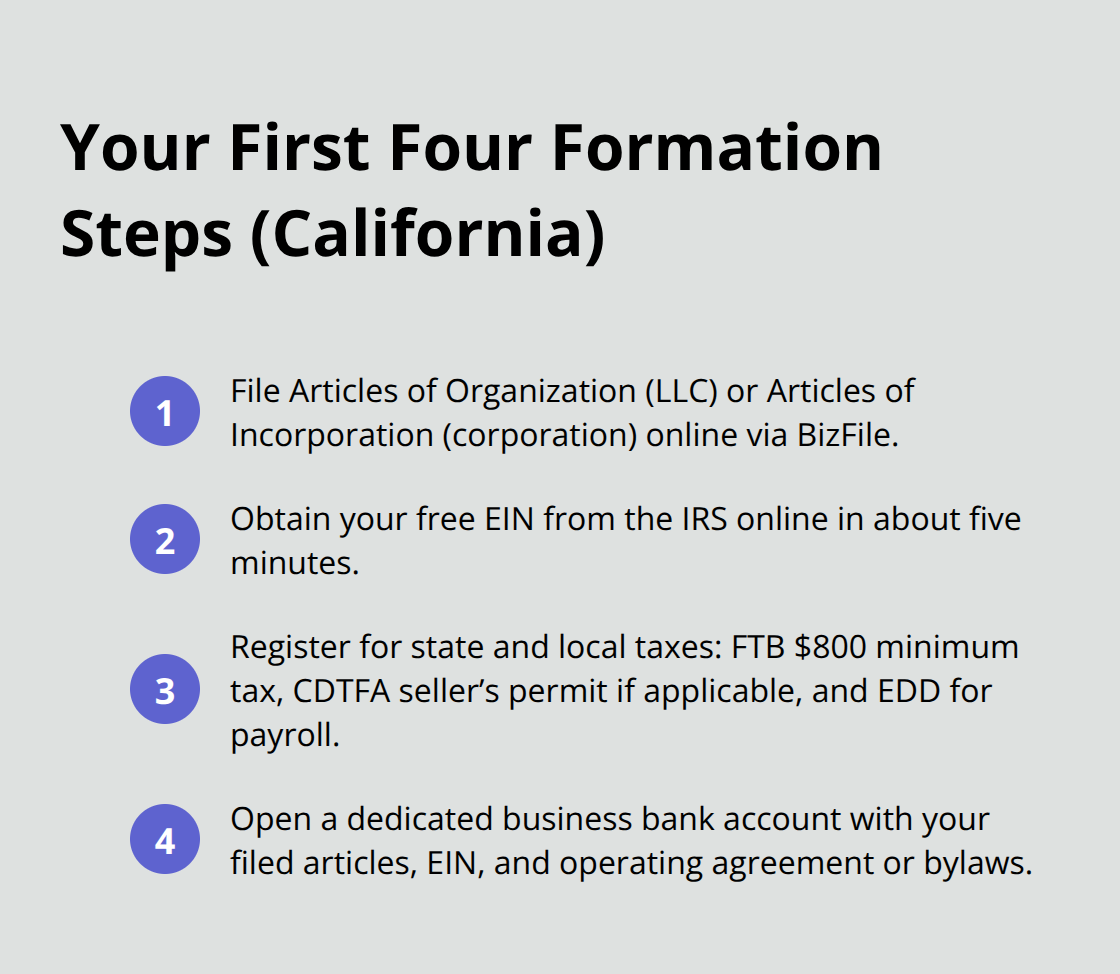
The moment you decide on your business structure, you file the right documents with California’s Secretary of State. Articles of Organization for an LLC cost $70 and take about 15 minutes to complete online through the California Secretary of State’s BizFile Online portal. Articles of Incorporation for a corporation cost $100 and follow the same online process. Most entrepreneurs file both documents themselves rather than paying formation service companies that charge $200 to $500 for the same work. The state processes electronic filings within 48 hours, which matters if you have a lease deadline or need to open a business bank account quickly. After filing, you receive a confirmation email with your entity number, which you’ll need immediately.
Obtain Your Free Employer Identification Number
Your next critical step involves obtaining an Employer Identification Number from the IRS, which is completely free and takes five minutes to apply for online. You need this number to open a business bank account, hire employees, and file federal tax returns, regardless of whether you plan to hire staff immediately. Many entrepreneurs skip this step and use their personal Social Security number instead, which creates a nightmare when they later hire employees or need to separate personal and business finances.
Register for State and Local Tax Obligations
The California Franchise Tax Board requires an $800 minimum annual franchise tax payment for both LLCs and corporations, even if you earn zero revenue in your first year. You must also register with the California Department of Tax and Fee Administration if you sell tangible goods or certain services. If you hire anyone, you register with the Employment Development Department to handle payroll tax obligations. These registrations establish your tax compliance profile and prevent penalties down the road.
Open a Business Bank Account Immediately
Opening a dedicated business bank account immediately after filing separates your personal and business finances, which protects your liability shield and makes accounting infinitely simpler. Bring your Articles of Organization or Incorporation, your EIN confirmation, and your operating agreement or bylaws to the bank. Many entrepreneurs wait months to open this account, mixing personal and business expenses, then face complications when the IRS or state audits their records or when they need to prove their business legitimacy to lenders. A separate account also enables you to accept merchant payments and build business credit, which strengthens your financial position as you grow.
With your formation documents filed, tax IDs obtained, and bank account open, you’ve established the financial and legal infrastructure your business needs. The next phase involves understanding the compliance requirements that keep your business in good standing with California regulators and protect the liability protection you’ve created.
Staying Compliant After Formation
Pay Your Annual Franchise Tax on Time
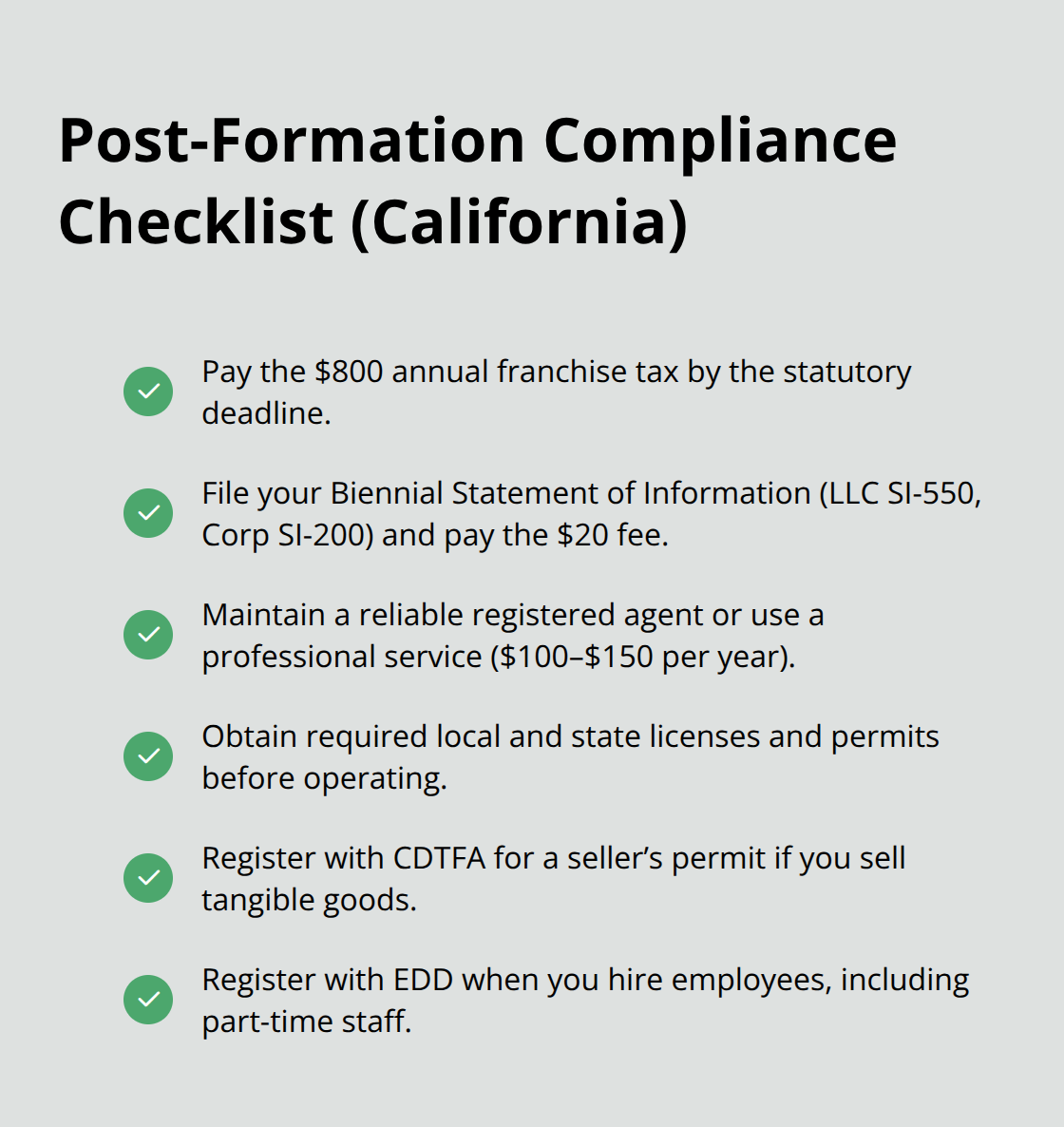
After you file your formation documents and obtain your EIN, compliance becomes your ongoing responsibility. California regulators expect businesses to maintain proper registrations, pay annual taxes, and hold the right licenses for their specific industry. The Franchise Tax Board collects a minimum $800 annual franchise tax from both LLCs and corporations regardless of profit, and this payment is due by the 15th day of the fourth month after your fiscal year ends (typically April 15th for calendar-year businesses). Many entrepreneurs miss this deadline because they assume no tax is owed in unprofitable years, then face penalties and interest charges that compound quickly. Skipping these payments costs far more than staying ahead of them.
File Your Biennial Statement of Information
You must file a Biennial Statement of Information with the California Secretary of State every two years-LLCs file Form SI-550 while corporations file SI-200, each with a $20 fee. Missing this deadline results in administrative penalties and potential loss of your liability protection, which defeats the entire purpose of forming an LLC or corporation in the first place. Set calendar reminders two years from your formation date so you never miss this requirement.
Designate a Registered Agent to Receive Legal Documents
Your registered agent receives all legal documents, tax notices, and regulatory correspondence on behalf of your business, so this person or service must monitor mail consistently and forward items to you immediately. Many small business owners designate themselves as the registered agent, which works fine if you stay organized, but a professional registered agent service costs roughly $100 to $150 annually and removes the burden entirely. This investment protects you from missing critical deadlines that could jeopardize your business standing.
Obtain Industry-Specific Licenses and Permits
If you operate a physical storefront or service-based business, you likely need local city and county licenses specific to your industry. Restaurants require health department permits from the Orange County Health Care Agency, construction contractors must carry California Department of Industrial Relations licensing, and certain professions like accounting or architecture require specific state certifications. The California Department of Tax and Fee Administration requires sellers of tangible goods to register for a seller’s permit, and the Employment Development Department mandates registration if you hire any employees, even one part-time worker. Use the CalGold Permit Assistance Tool to identify every license and permit your business needs before you open your doors, because operating without required permits exposes you to fines, forced closure, and personal liability that your business structure cannot shield.
Final Thoughts
Forming a business in Orange County requires attention to detail at every stage, from selecting your entity type through maintaining compliance year after year. The entrepreneurs who succeed treat formation as the foundation, not an afterthought. Business formation in California law demands specific filings, tax registrations, and ongoing obligations that protect your personal assets only when you follow through consistently.
The most common mistakes we see involve entrepreneurs who file their formation documents correctly but then neglect the annual requirements that maintain their liability protection. Missing a Franchise Tax Board payment or skipping your Biennial Statement of Information strips away the legal shield you paid to create. Mixing personal and business finances because the business bank account never opened complicates accounting and raises red flags during audits, while failing to obtain required industry licenses before opening your doors exposes you to fines and forced closure.
If you have not yet formed your business, select your entity type based on liability exposure and tax implications, then file your Articles of Organization or Incorporation through the California Secretary of State’s BizFile Online portal within the next week. Raul Garcia Law Firm represents Orange County businesses through formation, disputes, and growth challenges, combining practical business insight with aggressive advocacy to protect your financial interests.