

Your business secrets are your competitive advantage. Without proper legal protection, they’re vulnerable to theft, misuse, or unauthorized disclosure.
A well-drafted nondisclosure agreement is your first line of defense. We at Raul Garcia Law Firm have seen countless businesses lose valuable information because their NDAs lacked critical protections or contained enforceable gaps. This guide covers nondisclosure agreement tips that actually work in Orange County and California.
What Makes an NDA Legally Binding in Orange County
An NDA is only as strong as its language and structure. California courts enforce NDAs when they meet specific statutory requirements under the Uniform Trade Secrets Act, but vague wording, missing definitions, or one-sided terms often render them unenforceable. The California Civil Code Section 3426 requires that confidential information have independent economic value from not being generally known and that the owner take reasonable efforts to maintain secrecy. Courts scrutinize whether the agreement clearly identifies what qualifies as confidential, who can access it, and what happens if someone breaches it. Many business owners assume that simply having an NDA in place protects them, but Orange County judges have rejected agreements that fail to define confidential information with specificity or that impose unreasonable restrictions on the receiving party. An NDA naming vague categories like sensitive business information without listing customer lists, pricing formulas, manufacturing processes, or source code creates enforcement problems when you need to prove a breach actually occurred.
Defining Your Confidential Information With Precision
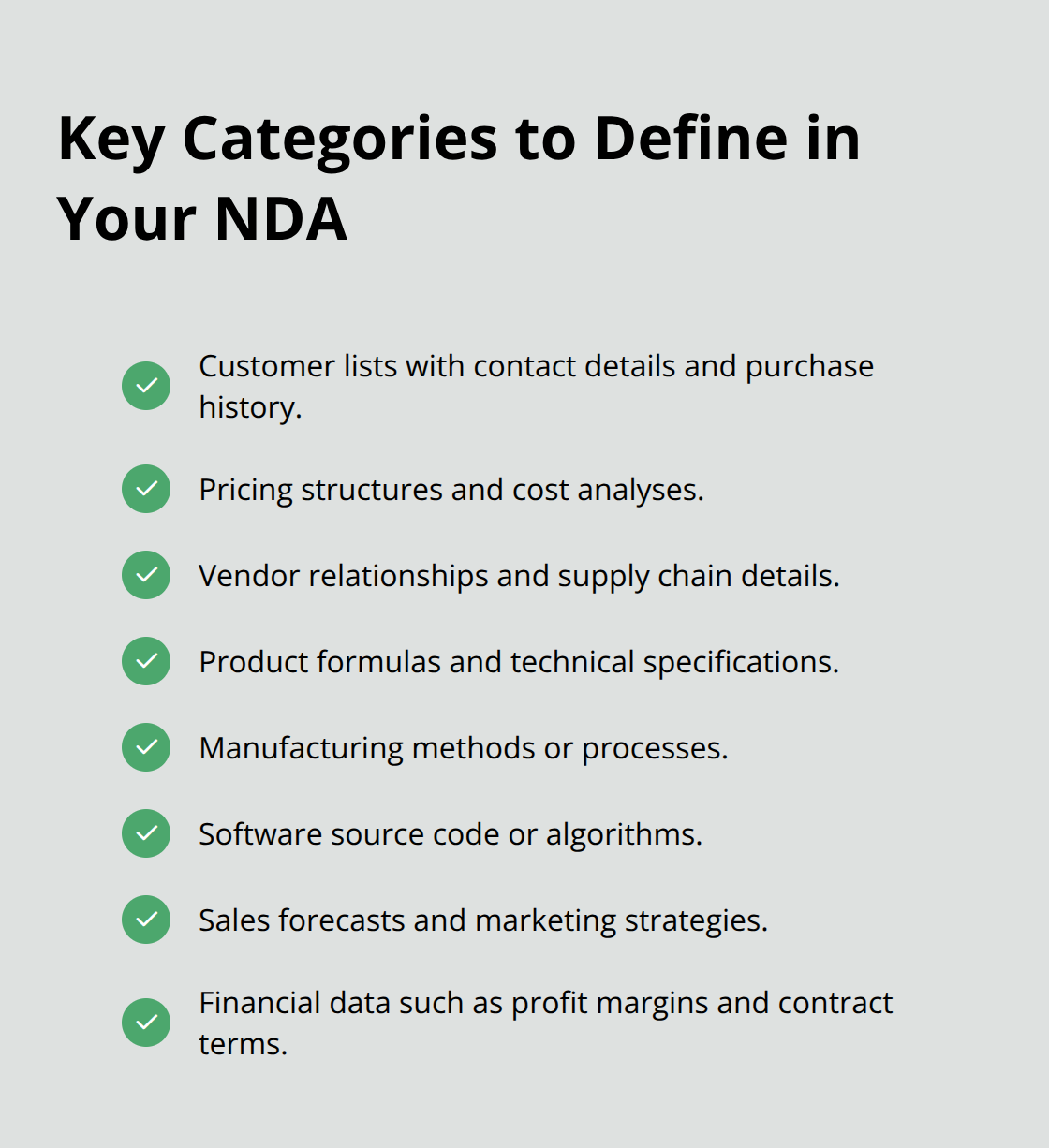
The difference between a winning and losing NDA often comes down to how clearly you identify what you’re protecting. Rather than writing that the agreement covers proprietary information or trade secrets, list specific categories: customer lists with contact details and purchase history, pricing structures and cost analyses, vendor relationships and supply chain details, product formulas or technical specifications, manufacturing methods or processes, software code or algorithms, sales forecasts and marketing strategies, and financial data like profit margins or contract terms. California courts have found that when confidential information is defined narrowly and specifically, judges are far more likely to grant injunctions and damages if someone misappropriates it. Oral disclosures create additional complexity, so require that any sensitive information shared verbally be documented in writing within five business days to preserve confidentiality protection. Information derived from your confidential data-such as analyses, reports, or internal notes incorporating your secrets-must also be explicitly covered under the agreement. This prevents someone from claiming that their summary or interpretation of your information falls outside the NDA’s scope.
Crafting Terms That Survive Court Challenges
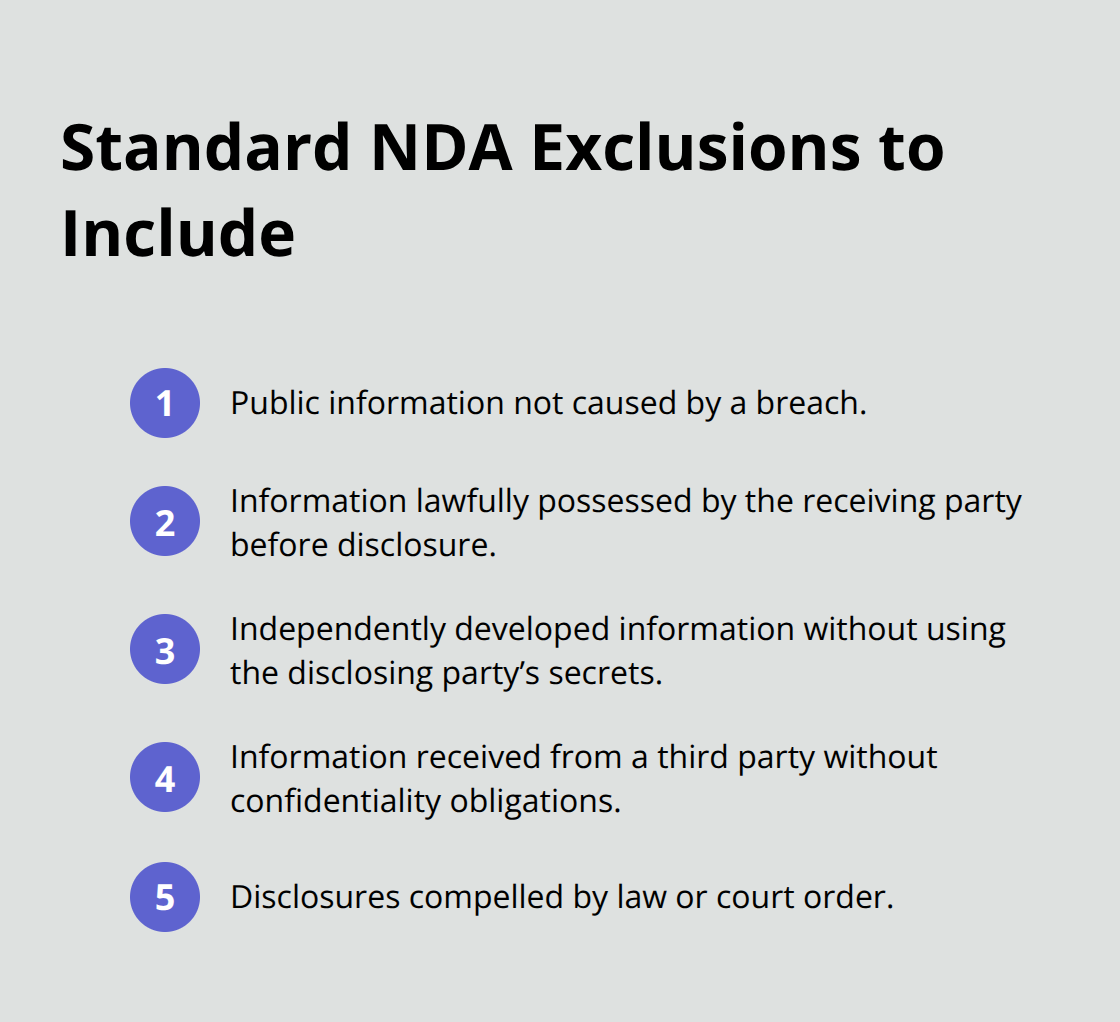
Duration matters more than most business owners realize. A perpetual or indefinitely long NDA for non-trade-secret information often fails enforceability review because California courts view overly restrictive terms as unreasonable restraints on business. Trade secrets can receive indefinite protection under California law, but general business information typically should have a defined term between one and five years depending on how quickly the information loses competitive value. If your customer list becomes outdated within two years as clients naturally churn, a ten-year restriction looks unreasonable to a judge. Remedies must be proportionate to actual harm-avoid liquidated damages clauses that don’t reflect realistic injury, as courts strike them down as penalties. Standard exclusions must be clearly listed: information that becomes public through no breach by the receiving party, information the receiving party already possessed lawfully before the disclosure, information independently developed without using your secrets, information received from a third party without confidentiality obligations, and disclosures compelled by law or court order. Without these carve-outs, an NDA may be deemed unenforceable because it overreaches into information that shouldn’t be restricted. The agreement should require the receiving party to return or certify destruction of all confidential materials within thirty days of termination, with specific procedures for how destruction occurs.
Avoiding Common Mistakes That Weaken Your NDA
One-sided language that heavily favors the disclosing party often backfires in Orange County courts. If your NDA imposes burdensome obligations on the receiving party without reasonable justification, a judge may refuse to enforce it entirely. Overly broad non-compete or non-solicitation provisions (especially those that restrict an employee’s ability to work in their field for years) frequently fail enforceability scrutiny under California law. Missing carve-outs for legally compelled disclosures create another critical flaw-your NDA cannot override a court order or regulatory requirement to disclose information, so the agreement must explicitly allow such disclosures. Failing to include whistleblower protections under federal statutes like the Defend Trade Secrets Act can expose you to liability if an employee reports suspected violations to government officials. The agreement must also clearly state what happens if information becomes public through legitimate means (such as reverse engineering or independent development) so that neither party faces liability for information that no longer qualifies as confidential. These mistakes transform what should be a protective tool into a liability.
Structuring Mutual vs. Unilateral Agreements
The choice between a mutual NDA and a unilateral agreement significantly affects enforceability and business relationships. A unilateral NDA protects only the disclosing party and works well when one party (such as an investor or potential acquirer) receives sensitive information from your company. A mutual NDA imposes confidentiality obligations on both parties and suits situations where both sides share proprietary information during partnership discussions or joint ventures. Courts in Orange County treat mutual agreements more favorably because they reflect balanced obligations and genuine business negotiations. When you present an NDA, the timing and tone matter-introduce it early in discussions before sensitive information changes hands, and frame it as a standard business practice rather than a sign of distrust. This approach reduces friction and increases the likelihood that the other party will sign without demanding extensive modifications that weaken your protections.
What Should Your Orange County NDA Actually Say
Your NDA’s language determines whether a court will enforce it when someone breaches confidentiality. Generic templates fail because they lack the specificity Orange County judges demand. California Civil Code Section 3426 requires that you identify what qualifies as confidential information with enough clarity that a reasonable person understands what’s protected and what isn’t. Start by listing concrete categories rather than abstract terms. Instead of writing proprietary information, specify customer lists with transaction history and contact details, pricing formulas and cost breakdowns, manufacturing processes and technical specifications, software source code and algorithms, vendor relationships and supply chains, sales forecasts and marketing strategies, and financial data including profit margins and contract terms. When you present an NDA to an employee, contractor, or business partner, the receiving party needs to know exactly what they cannot share.
Define Confidential Information With Precision
Courts have rejected NDAs in California where the definition was so vague that enforcement became impossible. The Defend Trade Secrets Act at the federal level also requires reasonable efforts to maintain secrecy, which means your agreement must demonstrate that you took concrete steps to protect the information. Oral disclosures create enforceability problems, so require that any sensitive information shared verbally be summarized in writing within five business days. This written documentation becomes evidence that the information qualified for protection and that both parties understood its confidential status.
Information derived from your secrets-analyses, reports, summaries, or internal notes that incorporate your confidential data-must be explicitly covered. Without this language, someone could claim their interpretation or summary of your information falls outside the agreement’s scope.
Set Duration and Scope Based on Actual Business Value
Duration and scope determine whether a judge views your NDA as reasonable or overreaching. Trade secrets under California law can receive indefinite protection, but general business information typically requires a defined term between one and five years. If your competitive advantage in a customer list lasts only two years before those customers become publicly known or relationships naturally change, a ten-year restriction looks unreasonable to Orange County courts and they will refuse enforcement. Set your term based on how long the information actually maintains competitive value, not on how long you wish to restrict the receiving party.
Structure Remedies and Exclusions for Enforceability
Remedies for breach must be proportionate to realistic harm. Courts strike down liquidated damages clauses that don’t reflect actual injury because they view disproportionate penalties as unenforceable. Standard exclusions protect both parties and increase enforceability: information that becomes public through no breach by the receiving party, information already lawfully possessed before disclosure, information independently developed without using your secrets, information received from a third party without confidentiality obligations, and disclosures compelled by law or court order. These carve-outs prevent your NDA from overreaching into information that shouldn’t be restricted.
Include Whistleblower Protections and Destruction Procedures
Include explicit whistleblower protections under the Defend Trade Secrets Act and statutes like the Sarbanes-Oxley Act so your agreement doesn’t inadvertently silence protected disclosures to government officials. Require the receiving party to return or certify destruction of all confidential materials within thirty days of termination, specifying exactly how destruction occurs-deletion of electronic files, shredding of documents, or return of physical materials. This creates a paper trail proving compliance and reduces disputes about whether information was actually secured. When you implement these provisions correctly, your NDA transforms from a generic document into a targeted protection mechanism that Orange County courts will actually enforce when disputes arise.
How to Actually Implement NDAs in Orange County
The moment you decide to share sensitive information with an employee, contractor, or business partner is when your NDA implementation strategy determines success or failure. Timing matters far more than most business owners realize. Present your NDA before you disclose any confidential information, not after casual conversation has already revealed your secrets. If you wait until someone has already learned about your customer pricing or manufacturing process to introduce an NDA, a court will question whether they actually agreed to protect information they already possessed. The best approach requires NDA signatures during the hiring process, before the first day of employment, or at the very beginning of partnership negotiations. Companies that introduce NDAs early in relationships experience significantly fewer disputes than those that retrofit agreements after information has already been shared. Frame the NDA as standard business practice rather than a sign of distrust, and provide a copy well in advance so the other party can review it without pressure. When someone feels rushed into signing, they’re more likely to challenge the agreement’s enforceability later if a breach occurs. Set clear expectations about what confidential information includes through specific examples relevant to your industry during the presentation, ensuring the receiving party understands exactly what they must protect.
Control Access Through Documentation and Monitoring
Documentation and access controls transform a well-written NDA from a theoretical protection into practical enforcement. Maintain detailed records showing who accessed confidential information, when they accessed it, and what they viewed or downloaded. If a departing employee or contractor later misuses your secrets, these access logs become critical evidence proving they had knowledge of the information and opportunity to misappropriate it.
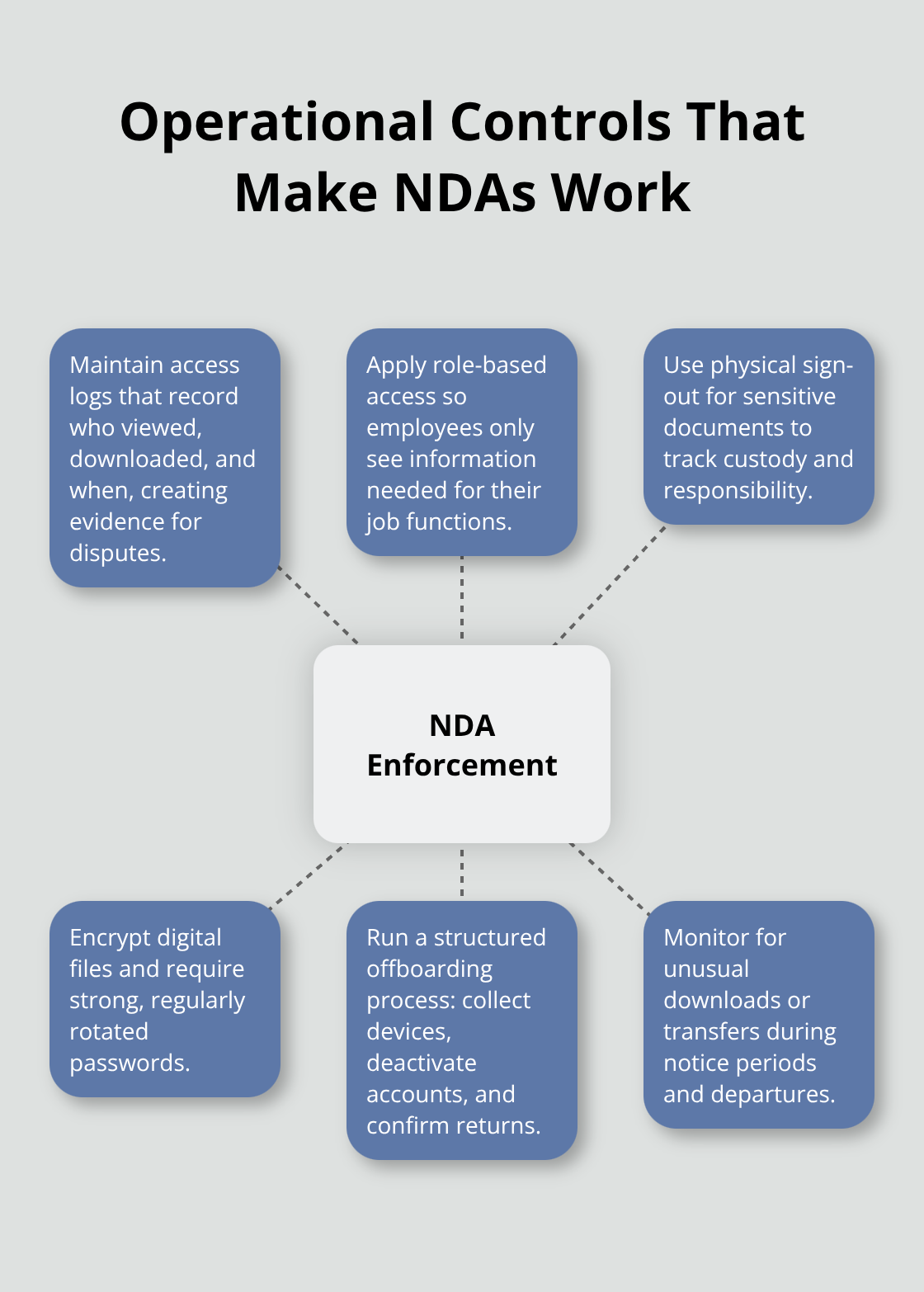
Implement role-based access restrictions so employees only see information necessary for their specific job functions rather than granting blanket access to all company secrets. Require physical sign-out procedures for documents containing trade secrets, maintain encrypted digital files with password protection, and establish a clear offboarding process that includes device collection, account deactivation, and a return-of-property checklist completed before an employee’s final paycheck. The moment someone announces their departure is when misappropriation risk spikes, so monitor for unusual downloads, file transfers, or email activity during notice periods.
Audit Systems and Update Agreements Regularly
Schedule regular audits of your confidential information systems at least twice yearly to identify gaps in access controls or documentation procedures that could undermine NDA enforceability. Review your NDA agreements annually because business changes, personnel turnover, and new competitive threats often require adjustments to scope or definitions of confidential information. If you acquire a new product line or enter a new market, update your NDA to reflect what now qualifies as proprietary. Similarly, if information you once protected has become industry standard knowledge, you can reasonably narrow its protection period without weakening other safeguards.
Final Thoughts
Your nondisclosure agreement only protects your business when you draft it with precision, implement it strategically, and maintain it actively. The components we’ve covered-specific definitions of confidential information, reasonable duration terms, proportionate remedies, clear exclusions, and whistleblower protections-work together to create an enforceable agreement that Orange County courts will uphold. Without these nondisclosure agreement tips integrated throughout your document, your NDA becomes a liability rather than a shield.
A strong NDA produces measurable results that extend far beyond legal paperwork. Businesses that implement these protections correctly experience reduced trade secret theft, lower employee defection to competitors, and stronger negotiating positions during partnerships or acquisitions. When departing employees or business partners understand that confidentiality obligations are clearly defined and actively enforced, they avoid misusing your secrets. Access controls, documentation procedures, and regular audits transform your NDA from theoretical protection into practical enforcement that demonstrates you took reasonable efforts to maintain secrecy-a requirement under California law.
The cost of inaction far exceeds the investment in proper NDA protection. A single breach of your customer list, pricing formulas, or manufacturing processes can cost thousands in lost revenue and competitive advantage. We at Raul Garcia Law Firm help Orange County businesses protect their most valuable assets through strategic NDA drafting, implementation guidance, and enforcement when breaches occur-contact our team to discuss your specific situation and develop a targeted protection strategy that actually works.