
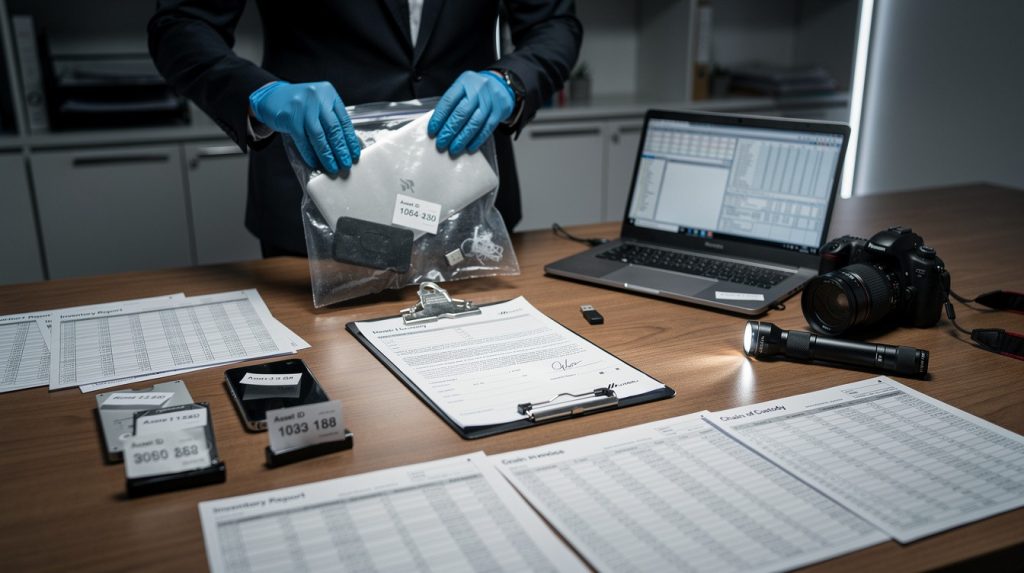
Business asset theft happens faster than most owners realize. Employees with access to accounts, inventory, or financial systems can drain resources before anyone notices the problem.
We at Raul Garcia Law Firm help Orange County business owners identify misappropriated business assets early and recover what was taken. The faster you act, the better your chances of getting your money back.
What Red Flags Tell You Assets Are Being Stolen in Orange County
Cash disappears without matching invoices. Bank reconciliations show transfers no one authorized. Inventory counts fall short of system records. These are not accounting errors-they are signals that someone inside your business is taking what belongs to you. The Association of Certified Fraud Examiners reports that organizations lose roughly 5% of annual revenue to fraud, with the median loss hitting around $145,000 per case. Most schemes run for about a year before detection. Smaller and mid-sized Orange County businesses face the highest risk because lean staffing means fewer people reviewing financial activity and overlapping job responsibilities create blind spots. When one person handles cash deposits, reconciliations, and vendor payments without oversight, they control the entire process-and no one catches the theft until substantial damage occurs.
Spot Cash Flow That Doesn’t Add Up
Unexplained gaps between what you deposit and what your records show are the clearest warning sign. Compare monthly bank statements directly against your accounting software line by line. Look for deposits that appear in the bank but not in your books, or vice versa. Check whether the timing of cash receipts matches your actual business cycle. If you run a service business that typically collects payment within 30 days, but cash arrives weeks earlier or later than normal, investigate. The same applies to outgoing payments-legitimate vendor payments follow patterns. Sudden unusual transfers, especially to new vendors or unfamiliar accounts, deserve immediate attention. Request your bank provide a full transaction history and have someone outside accounting verify it against your general ledger. This single step catches most embezzlement schemes because perpetrators cannot hide the bank record itself.
Track Employee Behavior and System Access
Employees who refuse to take vacations, resist delegating tasks, or become defensive when questioned about their work show behavioral red flags documented by the ACFE. Fraud perpetrators often avoid time off because they need to control the records and prevent others from discovering discrepancies. Someone who has worked at your company longer and holds higher education credentials poses greater risk-the ACFE data shows these individuals steal larger amounts when they commit fraud. Monitor who accesses your accounting systems and when. If an employee logs in outside normal business hours or accesses records they should not need for their job, that access pattern is abnormal. System alerts for unusual login times, large transaction entries, or modifications to vendor files should trigger immediate review. Pay attention to relationships too-if an employee shows unusual closeness with a vendor, takes frequent meetings with outside parties, or seems unusually interested in how payments are processed, those connections warrant scrutiny.
Verify Missing or Altered Documentation
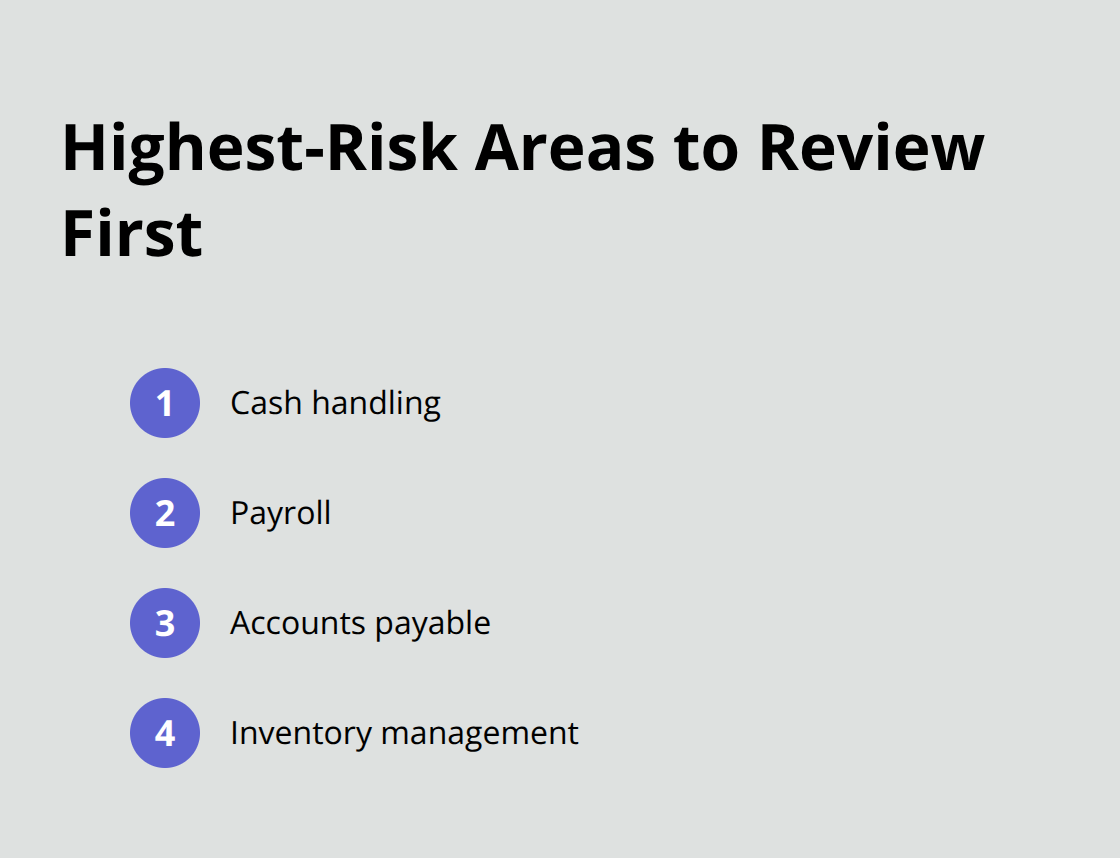
Physical documents tell the truth when digital records do not. Missing invoices, purchase orders without corresponding payments, or payment documentation that lacks proper approvals indicate someone is hiding the transaction trail. Altered records (dates changed, amounts modified, or signatures that appear inconsistent) require forensic examination. Request original documents from your bank, vendors, and service providers rather than relying solely on copies your employee provides. Compare signatures on checks and authorization forms to known exemplars. If documentation is missing altogether, that absence itself is evidence. Someone who cannot produce an invoice for a large payment, a purchase order for inventory received, or a vendor contract for ongoing services is concealing the transaction deliberately. Start with your highest-risk areas first-cash handling, payroll, accounts payable, and inventory management. These processes involve actual assets or direct access to funds, making them primary targets for theft. Once you identify red flags, the next step is determining how to investigate what happened and who is responsible.
How to Investigate Misappropriated Assets in Orange County
Suspecting theft is one thing. Proving it requires systematic investigation that documents the money trail and identifies who took it. Internal audits alone rarely uncover the full scope of misappropriation because perpetrators design their schemes to pass routine reviews. You need a structured approach that combines financial analysis with digital forensics and proper legal oversight.
Secure Evidence Before It Disappears
Act immediately to secure all financial records-bank statements, accounting software backups, email communications, and system access logs. Waiting for the next audit cycle gives the perpetrator time to delete evidence or move assets further away. Request your bank provide complete transaction histories going back at least two years, even if you suspect the theft is recent. Historical patterns reveal when the scheme began and how much was actually taken.
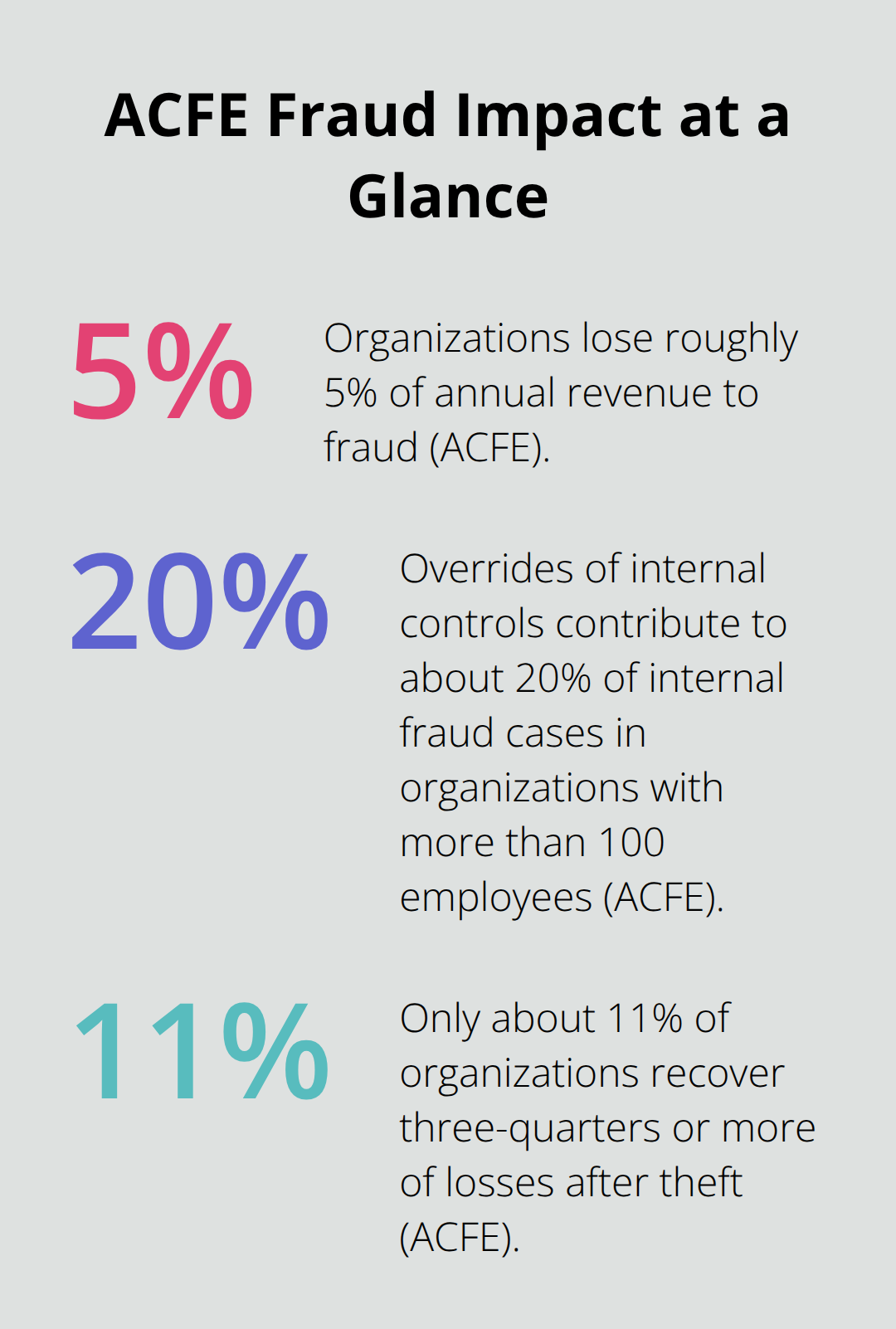
Compare every deposit and withdrawal against supporting documentation. The ACFE reports that overrides of internal controls contribute to roughly 20% of internal fraud cases in organizations with more than 100 employees, which means your existing safeguards likely failed at a specific point. Identify where that breakdown occurred. If one person could approve and execute payments without secondary review, that is where the theft happened.
Reconstruct the Financial Trail
Forensic accountants reconstruct financial activity using specialized software that detects anomalies humans miss. They perform source and application of funds analysis, comparing known income against expenditures and acquisitions to uncover unexplained wealth. They conduct net worth analysis, tracking changes in employee assets and living expenses over time to show funds that do not align with legitimate income. They examine bank reconciliations and transaction matching to identify unmatched items that may indicate stolen funds or concealment vehicles. These techniques produce court-admissible documentation that proves the theft occurred, how much was taken, and who benefited.
Examine Digital Evidence
Digital forensics examines computers, phones, and servers for deleted files, hidden communications, and metadata that reveals intent. Emails discussing vendor relationships, transfers to personal accounts, or attempts to hide transactions become evidence. System logs show when files were accessed, modified, or deleted. This digital trail often contradicts what the perpetrator claims happened.
Engage Law Enforcement and Legal Counsel
Once you have gathered financial and digital evidence, contact law enforcement and legal counsel immediately. Orange County law enforcement agencies have fraud units that investigate embezzlement cases, and their involvement signals seriousness to the perpetrator and strengthens your position in recovery. File a report with the Orange County District Attorney’s office or local police department, providing your documentation so they can determine whether criminal charges are appropriate.
Simultaneously, retain legal counsel to protect your civil remedies. Civil litigation moves faster than criminal prosecution and does not require proof beyond a reasonable doubt-the lower civil standard of preponderance of the evidence is sufficient to win a judgment. Your attorney will file suit to recover the stolen funds plus interest and damages, and will pursue asset tracing to identify where the money went. If the perpetrator transferred funds to bank accounts, purchased real estate, invested in vehicles or jewelry, or moved assets offshore, forensic asset tracing locates those holdings so the court can order their return or seizure. The sooner you initiate this process, the greater your chance of recovery before assets disappear permanently. Once you have identified stolen assets and their locations, the legal system offers multiple tools to freeze, recover, and return what belongs to your business.
How to Recover Stolen Assets in Orange County
Civil litigation moves faster than criminal prosecution and produces immediate financial remedies without waiting for a prosecutor’s decision. The civil standard of preponderance of the evidence is lower than the criminal standard of beyond a reasonable doubt, meaning you can win a judgment to recover stolen funds with less stringent proof. File suit against the perpetrator to recover the principal amount plus interest and damages. Your attorney will pursue asset tracing simultaneously, which involves reconstructing the money trail to identify where stolen funds were transferred.
Locate and Freeze Assets Before They Vanish
If the perpetrator deposited embezzled cash into bank accounts, purchased real estate, bought vehicles or jewelry, or moved assets offshore, forensic asset tracing locates those holdings. Blockchain forensics can trace cryptocurrency transactions to identify real-world identities behind digital wallet addresses, converting perceived anonymity into documented evidence. Once assets are located, the court can issue orders freezing those accounts or seizing those properties to prevent further dissipation. The ACFE reports that only about 11% of organizations recover three-quarters or more of their losses after theft occurs, which underscores why speed matters enormously. Every week of delay increases the risk that the perpetrator transfers funds beyond your reach or converts assets into forms harder to trace.
Use Injunctive Relief for Immediate Protection
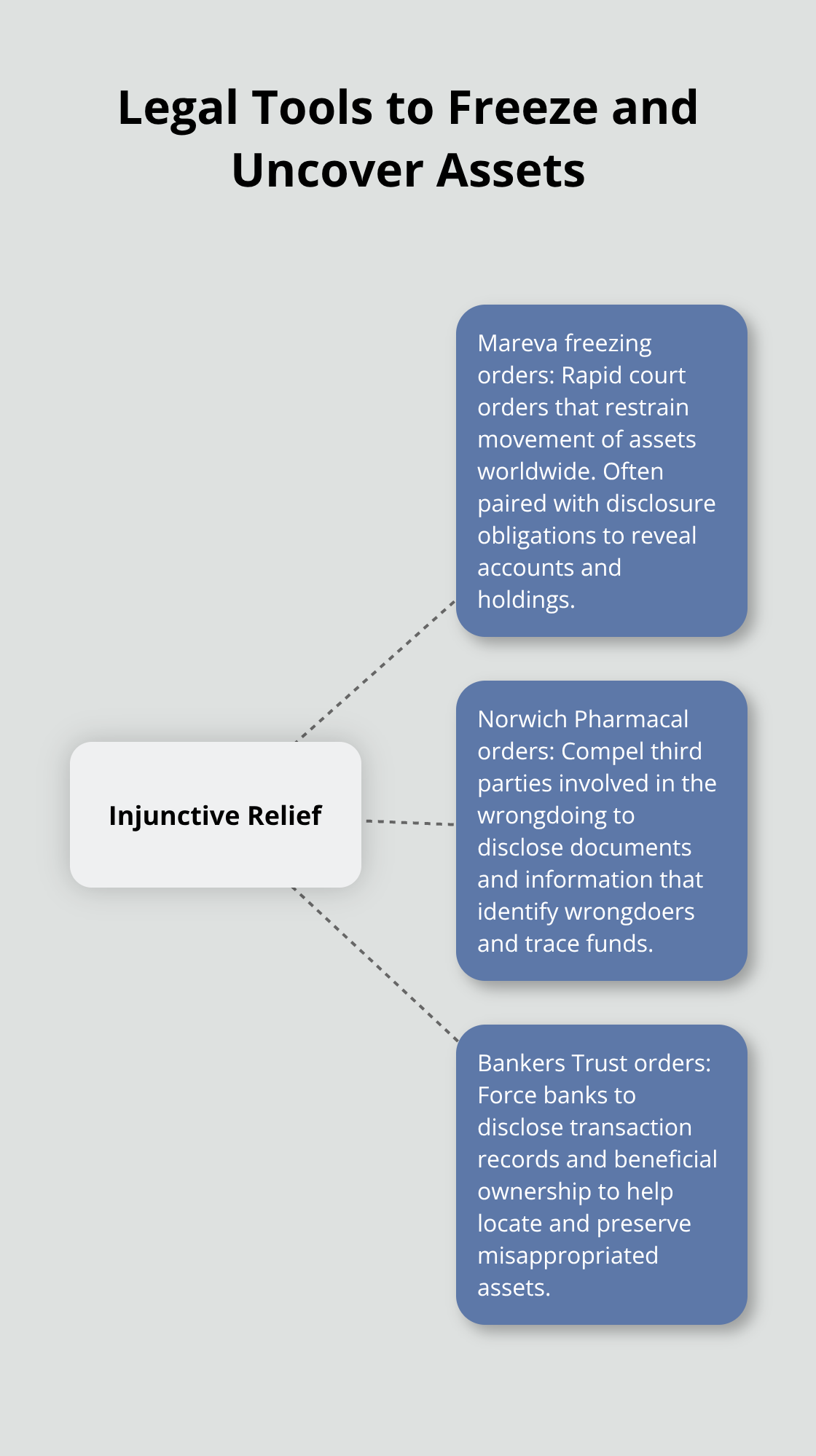
Injunctive relief provides immediate protection before a full trial concludes. Courts can issue Mareva freezing orders within days to restrain movement of assets worldwide, often paired with disclosure obligations requiring the perpetrator to reveal all account holdings, asset locations, and ownership details. Norwich Pharmacal and Bankers Trust disclosure orders compel third parties like banks and registered office providers to disclose transaction records and beneficial ownership information without waiting for the perpetrator’s cooperation. If the perpetrator formed shell companies or layered corporate structures to hide stolen funds, these orders force disclosure of directors, accounts, and addresses that connect back to your money.
Pursue Settlement When Evidence Is Strong
Negotiated settlements often resolve cases faster than litigation, particularly when you present the perpetrator with clear forensic evidence showing exactly what was taken and where it went. Most individuals facing documented proof of theft and the prospect of civil judgment plus criminal prosecution choose to settle rather than fight in court. Settlement agreements typically require immediate restitution plus interest calculated from the theft date, and they can include non-disparagement clauses and employment restrictions preventing the perpetrator from accessing similar positions elsewhere.
Act Immediately to Maximize Recovery
Initiate civil recovery immediately upon discovering misappropriation. Combine asset tracing with injunctive relief to freeze assets before they vanish, and engage the perpetrator’s counsel with your forensic findings to encourage rapid settlement. The sooner you move, the greater your chances of recovering what your business lost.
Final Thoughts on Misappropriated Business Assets in Orange County
Detecting and recovering misappropriated business assets requires speed and precision. The financial trail left behind by theft is traceable when you act immediately-cash flow discrepancies, altered records, and unusual employee behavior signal that something is wrong. Organizations lose roughly 5% of annual revenue to fraud, with median losses around $145,000 per case, yet only about 11% of businesses recover three-quarters or more of what was stolen.
Your best defense combines prevention with rapid response. Implement segregation of duties so no single employee controls cash deposits, reconciliations, and vendor payments without oversight, and monitor system access logs to catch unauthorized activity before it spreads. When red flags appear, secure evidence immediately and contact law enforcement and legal counsel the same day-every week you delay increases the risk that the perpetrator transfers assets beyond your reach or converts them into forms harder to trace.
We at Raul Garcia Law Firm help Orange County business owners recover stolen assets through aggressive civil litigation and forensic asset tracing. Contact us to discuss your situation and learn how quickly we can move to freeze assets and pursue recovery on your behalf.