Commercial title disputes can derail even well-planned real estate transactions in Orange County. A single recording error, hidden lien, or boundary disagreement can cost you thousands in legal fees and delay your investment timeline.
We at Raul Garcia Law Firm help commercial property buyers and sellers navigate these risks before they become expensive problems. This guide walks you through the most common title issues, how to spot them early, and the legal strategies that actually work.
What Causes Title Problems in Orange County Commercial Deals
Recording Errors That Sit Undetected for Months
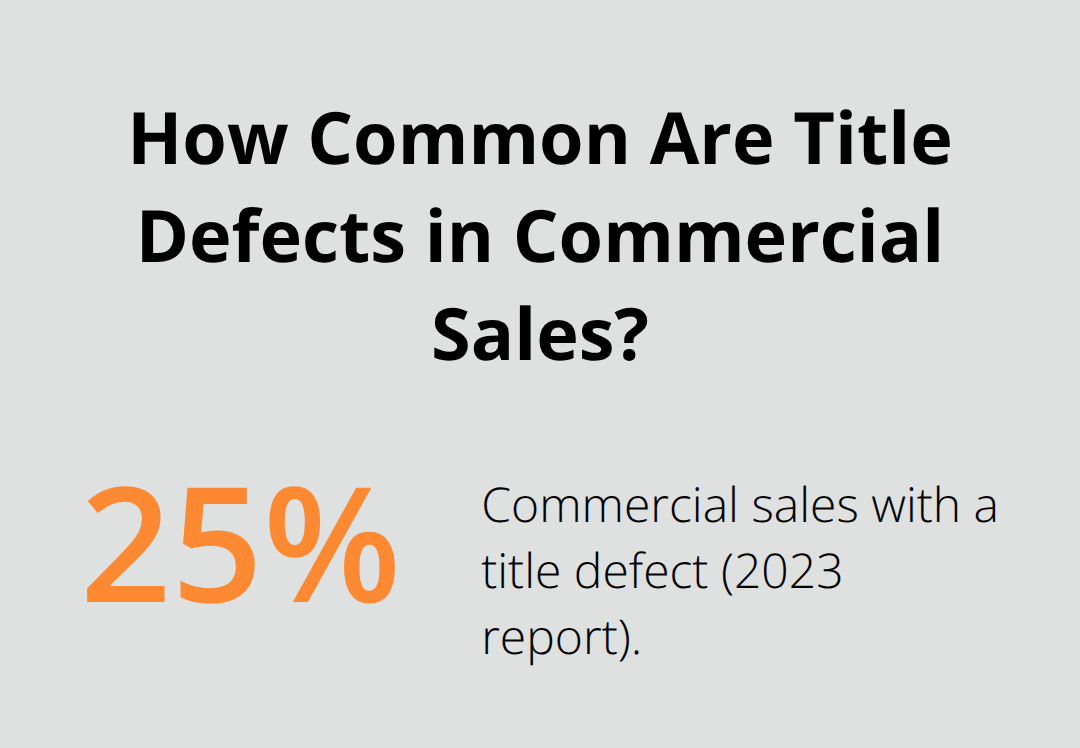
Recording errors in Orange County’s property system occur far more frequently than most buyers realize. When a deed gets filed incorrectly-missing a signature, wrong legal description, or transposed numbers in the property identifier-the recorded title no longer reflects actual ownership. These mistakes sit in the Orange County Recorder’s office for months or years before anyone notices them. A 2023 title industry report found that approximately 25% of commercial sales transactions encounter some form of title defect, with recording errors accounting for a significant portion. The problem compounds when you discover the error after closing, forcing you to hire a title company and attorney to file a corrective deed or pursue quiet title litigation.
Conduct a comprehensive title search at least 30 days before closing, not 3 days before, so there’s time to cure defects with the seller still motivated to cooperate.
Boundary Disputes and Encroachments on Your Property
Boundary disputes and encroachments represent a different category of title risk entirely. A neighbor’s fence, driveway, or structure might sit partially on your property line, and neither party knows it until a survey reveals the problem. Orange County’s mix of dense commercial corridors and high-value beachfront properties makes boundary issues particularly costly-a 5-foot encroachment on a retail property in Irvine or Newport Beach can affect lease rates, zoning compliance, or future development. These disputes often require judicial remedies like quiet title actions to establish clear ownership boundaries and protect your investment.
Undisclosed Liens That Transfer to the New Owner
Undisclosed liens present the third major threat to title security. Prior owners may have left behind mechanic’s liens from construction work, tax liens from unpaid property taxes, judgment liens from lawsuits, or HOA liens. These liens attach to the property and pass to the new owner unless paid off at closing. Title insurance protects against some hidden liens, but only those that existed before the policy issue date and were not disclosed in the preliminary report. Demand a preliminary title report from the title company at least 45 days before closing, review every exception and lien listed on Schedule B, and require the seller to clear any liens or provide proof of payoff before you wire funds. Understanding these three categories of title defects positions you to identify problems early and select the right legal strategy to resolve them.
Spotting Title Problems Before Closing Day
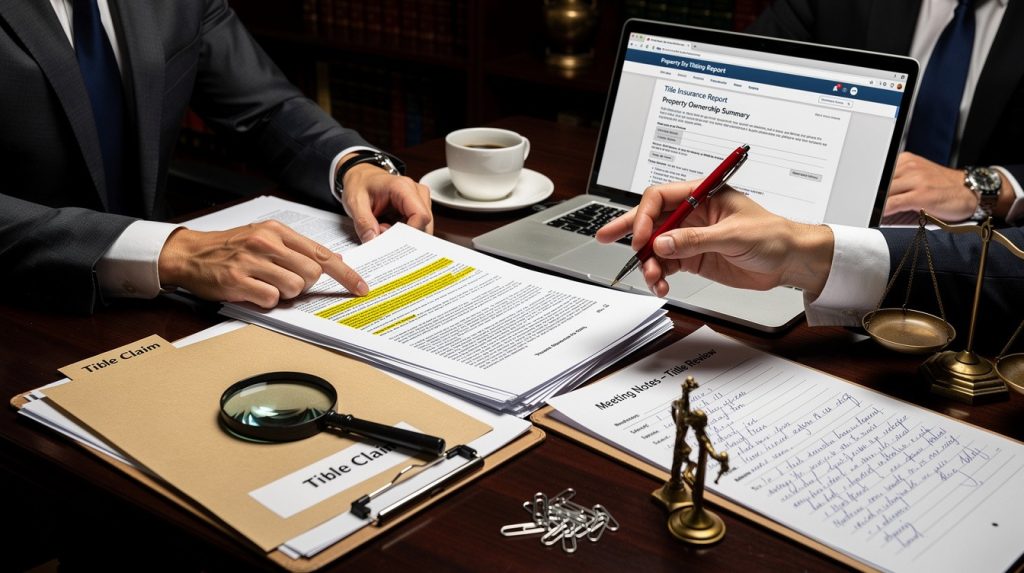
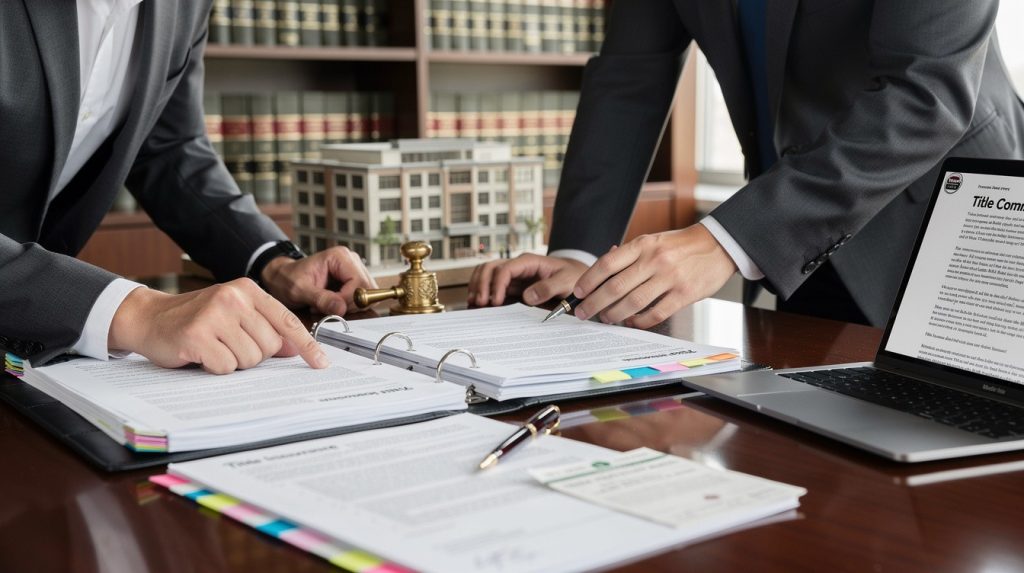
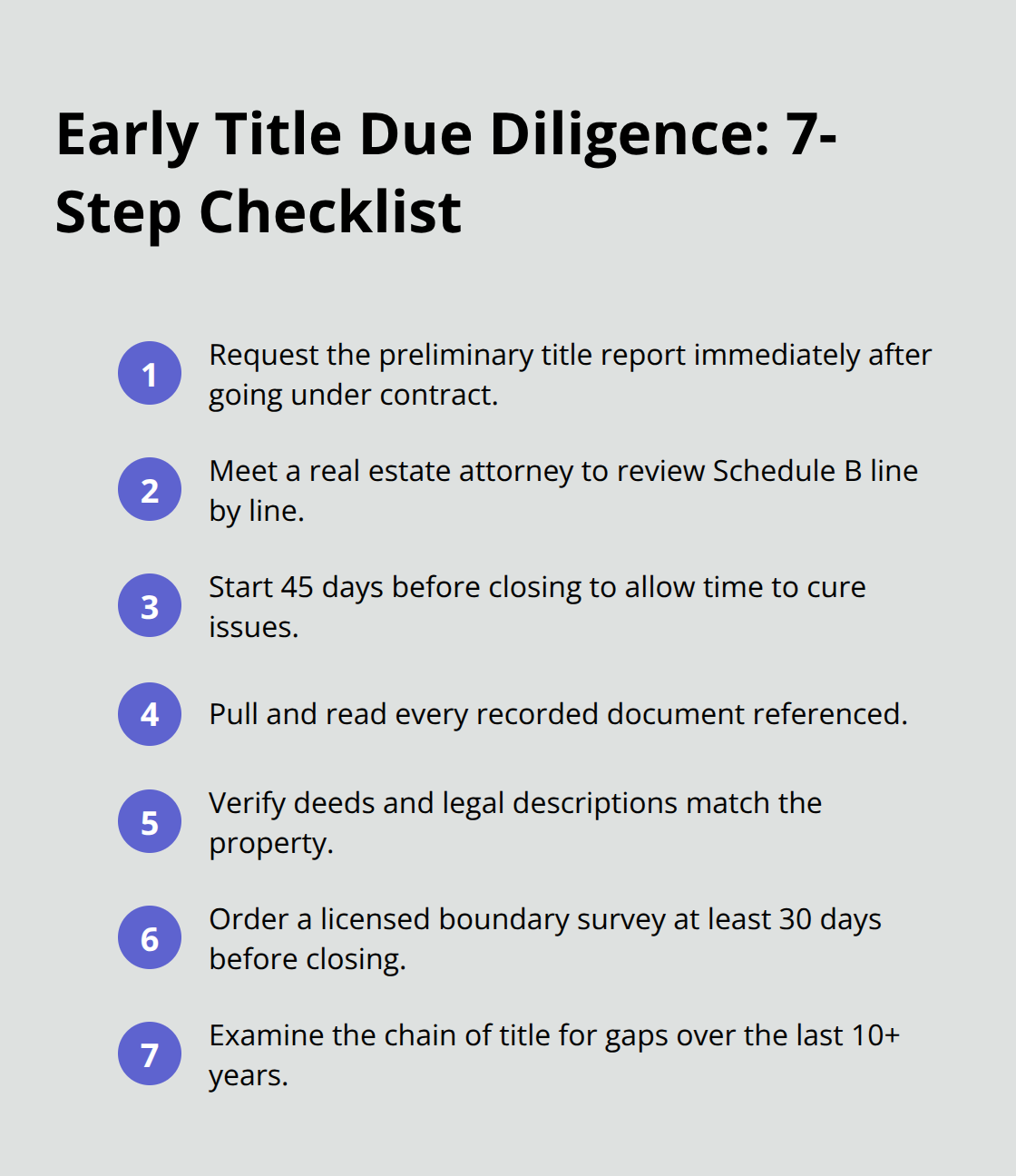
Start your title investigation 45 days before closing, not 10 days before. Request the preliminary title report from the title company immediately after going under contract, then schedule a meeting with a real estate attorney to review it line by line. The preliminary report lists every exception, lien, and encumbrance affecting the property on Schedule B. Most buyers skim this document looking for major red flags and miss the subtle defects that cause problems later. A mechanic’s lien from a contractor who worked on the building five years ago, an easement for utility lines that restricts future development, or a recorded notice of default from a prior owner all appear on Schedule B. Pull the actual recorded documents referenced in the preliminary report from the Orange County Recorder’s office or through digital title search platforms. Do not rely on the title company’s summary alone.
Read Original Deeds and Verify Legal Descriptions
Read the original deed to verify the legal description matches the property you are buying. Check that all signatures are present and that the document was recorded correctly. Review the chain of title going back at least 10 years to identify gaps or unusual transfers. A property that changed hands three times in two years, or one where an owner transferred it to an LLC and then back to themselves, raises questions about title clarity or hidden disputes. These patterns signal potential ownership conflicts that require investigation before you commit funds.
Order a Current Boundary Survey
Order a current boundary survey from a licensed surveyor before closing. Many buyers skip this step to save $1,500 to $3,000, then spend $50,000 in litigation when a neighbor’s fence encroaches on the property line or when zoning enforcement discovers that a building addition violates setback requirements. The survey shows exactly where the property lines sit, identifies any encroachments, and reveals easements that affect usable space. In Orange County commercial transactions, particularly in dense areas like Santa Ana or Irvine, surveys often uncover easements for drainage, utilities, or access rights that were recorded decades ago and forgotten. Request the survey be completed at least 30 days before closing so there is time to negotiate with the seller if encroachments or easement issues appear. If the survey reveals a neighbor’s structure sitting on your property line, you have options: negotiate with the neighbor for a boundary line agreement, require the seller to remove the encroachment, or obtain title insurance with an endorsement acknowledging the encroachment and limiting your coverage.
Examine the Chain of Title for Missing Links
Request a full chain of title report showing every recorded transaction involving the property. Title companies provide this as part of their preliminary report, but examine it carefully for missing links or suspicious transfers. If a property transferred from Owner A to Owner B in 2010, then from Owner B to Owner C in 2015, but Owner B appears to have transferred it to a trust in 2012 without transferring it out of the trust, the chain shows a gap. These gaps indicate potential unrecorded interests or disputes that could surface later. Check whether the current owner has held the property long enough to cure any title defects through adverse possession or statute of limitations. In California, adverse possession requires 5 years of continuous, exclusive possession with payment of property taxes, but title insurance does not protect against adverse possession claims.
Research Prior Ownership History and Court Records
If a property has a checkered ownership history with multiple quick transfers or transfers involving family members, estate issues, or foreclosures, conduct additional due diligence. Hire a real estate attorney to research whether prior owners faced disputes, liens, or judgments that might still attach to the title. Orange County Superior Court Civil Division maintains case records that can reveal whether the property was subject to litigation. Spend the time now to uncover problems while you can still walk away or renegotiate the purchase price, rather than discovering them after closing when your remedies are limited to quiet title actions or insurance claims. Once you identify title issues through these investigation steps, your next move involves selecting the right legal strategy to resolve them before funds transfer.
How to Resolve Title Disputes Before They Drain Your Resources
Start with Direct Negotiation and Settlement
When a title defect surfaces before closing, your instinct might be to walk away from the deal. That’s rarely necessary. Most commercial title disputes in Orange County settle through direct negotiation with the seller, title company, or opposing party long before litigation becomes unavoidable. Send a formal letter to the seller’s attorney that details the specific title defect, the cost to cure it, and your proposed resolution.
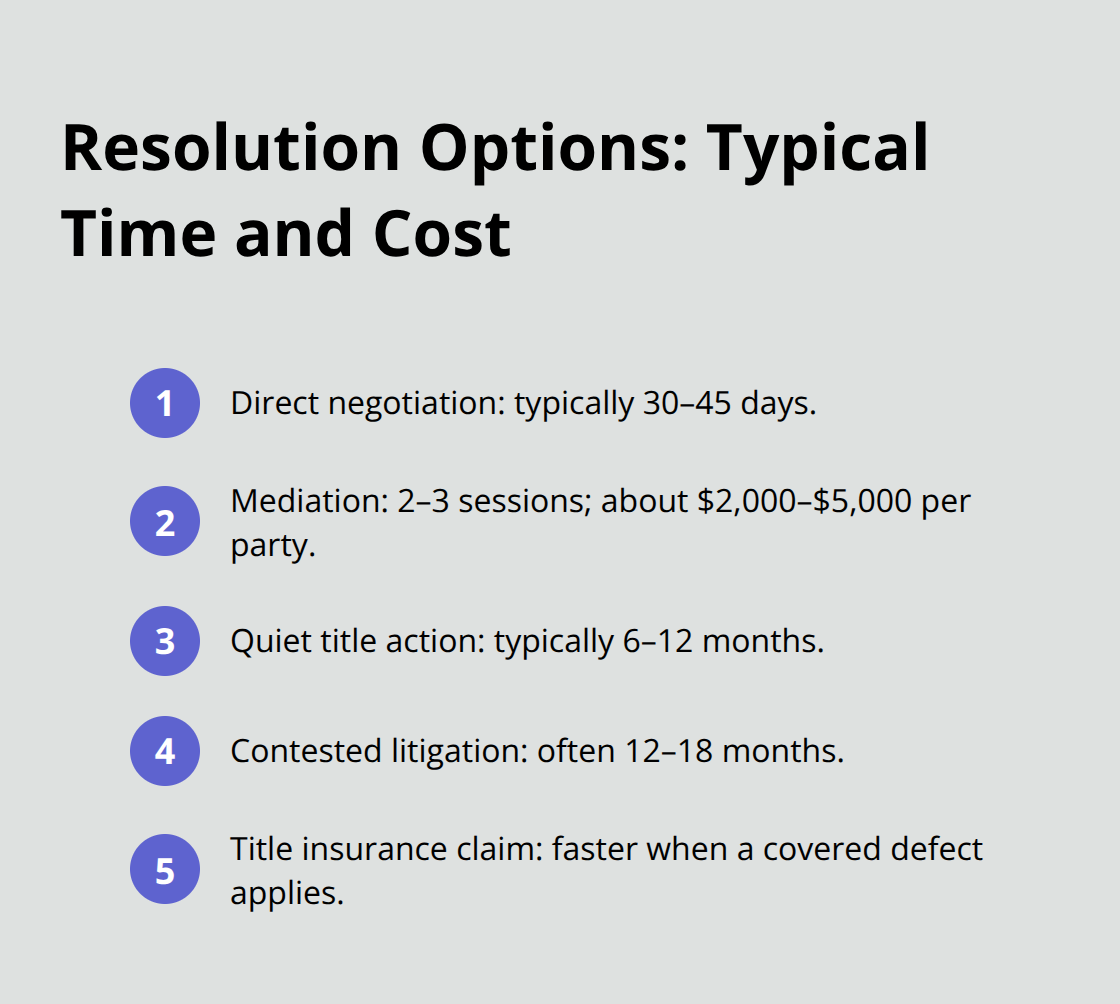
For recording errors, missing documents, or defective deeds, the seller often has strong incentive to cooperate because they want the sale to close and they may have title insurance that covers the cost of correction. Request a corrective deed, a title affidavit, or payment into escrow to cover the cost of a quiet title action if the seller disputes liability. This negotiation phase typically resolves 60 to 70 percent of title disputes within 30 to 45 days without formal litigation.
Use Mediation to Avoid Costly Litigation
If the seller refuses to cooperate or denies responsibility, escalate to mediation before filing suit. Orange County mediators experienced in real estate disputes often broker settlements in two to three sessions because both parties understand the cost and time commitment of trial. Mediation costs $2,000 to $5,000 per party but saves tens of thousands in attorney fees compared to litigation that stretches across 12 to 18 months.
File a Quiet Title Action When Necessary
When negotiation and mediation fail, quiet title actions become your primary legal remedy. This lawsuit asks the court to declare who owns the property and to eliminate competing claims or liens that cloud your title. File the quiet title action in Orange County Superior Court Civil Division and name all parties with potential claims to the property, including prior owners, lien holders, and adjacent property owners if boundary disputes are involved.
The court examines the chain of title, recorded documents, and evidence presented by both sides, then issues a judgment establishing clear ownership. Quiet title actions typically take 6 to 12 months from filing to final judgment, depending on complexity and whether the defendant contests the claim.
Pursue Title Insurance Claims for Covered Defects
Title insurance claims offer a faster alternative for certain defects. If your title insurance policy covers the specific defect and the defect was not listed as an exception on Schedule B, file a claim with the title insurer immediately upon discovery. Title insurance companies employ adjusters and counsel to investigate claims and either pay for curative measures or defend against third-party claims. The title insurer covers legal costs to defend against liens or ownership challenges, which significantly reduces your out-of-pocket expense.
However, review Schedule B carefully because title insurance excludes many items. Easements, boundary disputes, and zoning violations often appear as exceptions to coverage, meaning the insurer bears no responsibility if those issues materialize. Coordinate with the title company and your real estate attorney to determine whether a defect falls within coverage or whether quiet title litigation is your only option.
Final Thoughts
Protecting your title in Orange County commercial transactions requires three concrete actions. Start your title investigation 45 days before closing by requesting the preliminary report, ordering a boundary survey, and reviewing the chain of title with a real estate attorney. Identify defects early through document review and historical research so you can negotiate corrections with the seller while they remain motivated to cooperate. Most commercial title disputes settle through negotiation or mediation without reaching trial.
The cost of prevention is minimal compared to the cost of litigation. A $2,000 survey and $3,000 in attorney fees for early review prevent $50,000 in quiet title litigation and months of operational disruption. Title insurance protects against certain hidden defects, but it does not cover boundary disputes, easements, or zoning violations that appear as exceptions on Schedule B (you must actively manage title risk through due diligence, not passively rely on insurance alone).
Orange County’s commercial real estate market demands local expertise because OC regulations, zoning requirements, and property characteristics differ significantly from other jurisdictions. We at Raul Garcia Law Firm combine practical business insight with aggressive representation to protect your financial interests and minimize operational disruption when commercial title disputes arise. Contact Raul Garcia Law Firm to discuss your commercial transaction or title concern.