
Property disputes in Orange County can drain your finances and derail your plans. Whether you’re facing contract disagreements, boundary conflicts, or title issues, the stakes are high.
We at Raul Garcia Law Firm have helped countless property owners navigate these challenges. This guide walks you through real estate litigation strategies that protect your interests and resolve disputes efficiently.
What Disputes Most Frequently Affect Orange County Property Owners
Contract and Purchase Agreement Breaches
Contract breaches dominate Orange County real estate litigation. Buyers and sellers clash over earnest money deposits, closing timelines, and inspection contingencies on a regular basis. California Civil Code Section 1102 requires sellers to disclose known material defects, and violations of this rule trigger buyer claims for actual repair costs plus investigation expenses. The four-year statute of limitations for written contract claims means disputes can surface years after closing, particularly when defects emerge during renovations or resale.
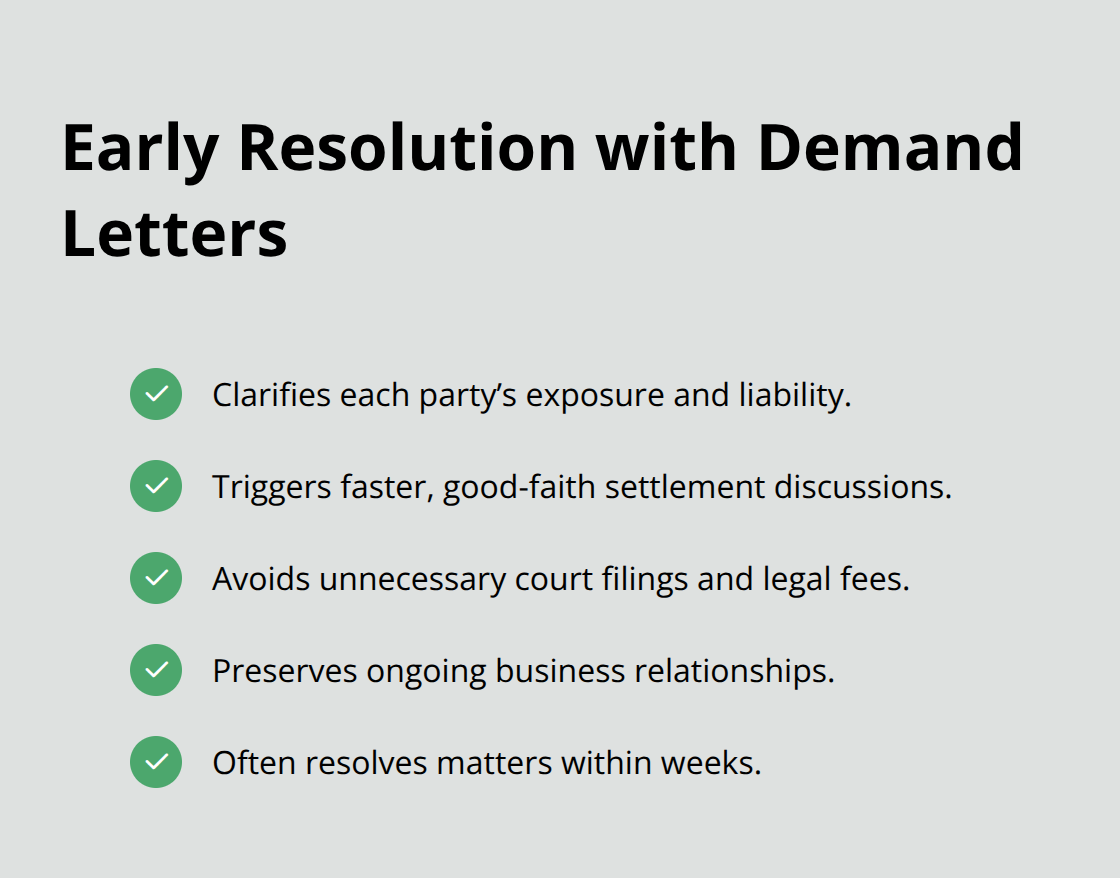
Demand letters resolve many contract disputes before filing suit and save significant legal costs. Both parties often settle within weeks once they understand their exposure and liability. This early intervention prevents unnecessary court filings and preserves business relationships where possible.
Title Defects and Ownership Complications
Title defects create another category of frequent disputes in Orange County. Quiet title actions become necessary when multiple deeds exist, prior liens cloud ownership, or easements limit development rights. Orange County properties with complex ownership chains or coastal locations frequently face title complications. Clearing these issues requires licensed land surveys plus thorough title research before proceeding to litigation.
Licensed land surveyors provide the evidence courts require to resolve ownership questions. Many disputes settle during mediation once both parties understand the actual property lines and recorded encumbrances. This approach avoids prolonged courtroom battles and reduces overall dispute costs.
Boundary Disputes and Encroachment Conflicts
Boundary disputes rank equally high among Orange County property conflicts. Competing surveys and neighbor encroachments force property owners into court regularly. Licensed surveyors establish the factual foundation that courts need to render fair decisions on property line disputes.
Landlord-Tenant Conflicts and Eviction Procedures
Landlord-tenant conflicts generate substantial caseload volume in Orange County. Unlawful detainer proceedings (evictions) require strict procedural compliance-service of notice, waiting periods, and court filing deadlines vary by situation, and missing deadlines costs landlords months of lost rent. California law protects tenants’ right to habitability, security deposit refunds, and proper notice before eviction, which means landlords cannot simply change locks or remove belongings.
Eviction timelines typically span 30 to 60 days minimum from service through judgment. Experienced counsel accelerates the process by ensuring procedural perfection at each stage. Security deposit disputes are equally contentious, with tenants challenging deductions for normal wear and tear versus legitimate damage.
Commercial Lease Disputes and Renewal Conflicts
Commercial lease disputes involving renewal terms, repair obligations, and default clauses require careful contract interpretation. Ambiguous language in leases frequently leads to disputes that could have been prevented through clearer drafting upfront. Early intervention by experienced counsel clarifies lease obligations and often prevents escalation to formal litigation, protecting both landlord and tenant interests while preserving the business relationship.
How to Resolve Property Disputes Without Years in Court
Start with Direct Negotiation
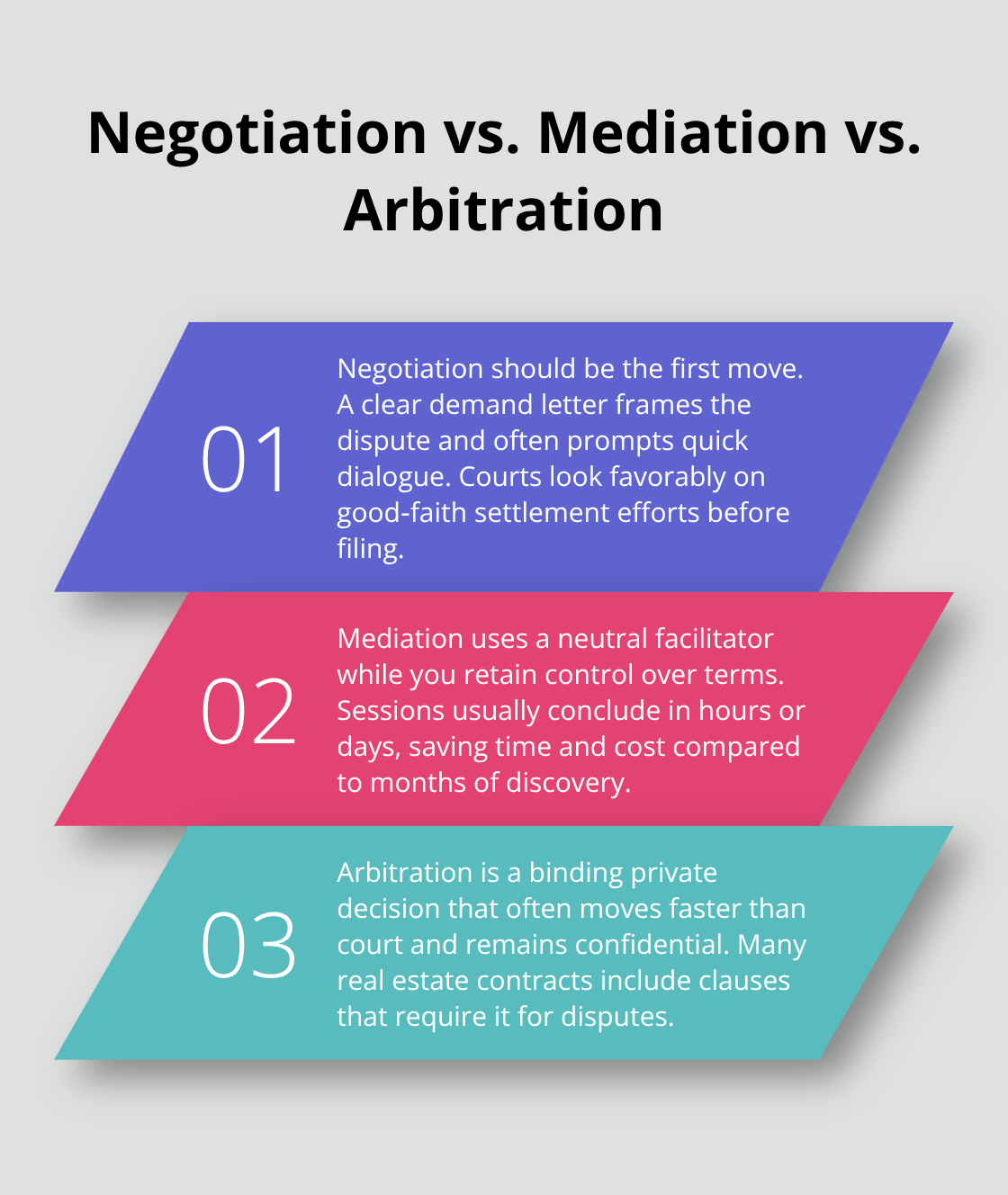
Negotiation should always be your first move in an Orange County property dispute. Most cases settle through direct discussion once both parties understand their legal exposure and the actual costs of litigation. A pre-litigation demand letter stating your position, the damages you’ve suffered, and your settlement expectations often prompts immediate response from the other side. Many property owners skip this step and jump straight to filing suit, which is a mistake-litigation in California typically costs $50,000 to $150,000 in attorney fees alone for moderately complex disputes, and timelines stretch 12 to 24 months or longer. A demand letter costs a fraction of that and frequently resolves the matter within weeks. Courts in Orange County increasingly favor parties who demonstrate good-faith settlement efforts before filing, and judges view unreasonable rejection of reasonable settlement proposals unfavorably at trial.
Use Mediation to Control Your Outcome
If direct negotiation stalls, mediation provides the next logical step and operates fundamentally differently than litigation. A neutral mediator facilitates discussion between you and the other party without deciding the outcome-you retain complete control over any settlement terms. Mediation sessions typically conclude within a few hours to a few days, compared to litigation discovery that spans months. California courts now require mediation in many civil cases before trial, so you’ll likely face it anyway; starting early saves time and legal costs.
Consider Arbitration for Speed and Privacy
Arbitration works differently and serves specific situations-it’s a binding decision by a private arbitrator rather than a judge, and many real estate contracts contain arbitration clauses that force disputes into this process. Arbitration moves faster than court litigation and keeps disputes confidential, which matters for commercial properties where public court filings damage reputation or deal flow.
Know When Litigation Becomes Necessary
Litigation remains necessary only when settlement attempts fail, the other party refuses to negotiate in good faith, or the dispute involves title issues that require court intervention to clear ownership. An experienced real estate attorney evaluates which path protects your financial interests most effectively based on the facts and the other party’s position. The strategy you select at this stage shapes your entire dispute resolution timeline and ultimate costs.
Protecting Your Financial Interests During Property Disputes
Organize Documentation to Control the Narrative
Documentation wins property disputes. The moment you recognize a potential conflict, start collecting contracts, emails, inspection reports, photographs, and any correspondence with the other party. Courts in Orange County require parties to produce documents during discovery, but the side with organized evidence controls the narrative long before trial. Missing emails or lost photographs create gaps that opposing counsel exploits mercilessly.
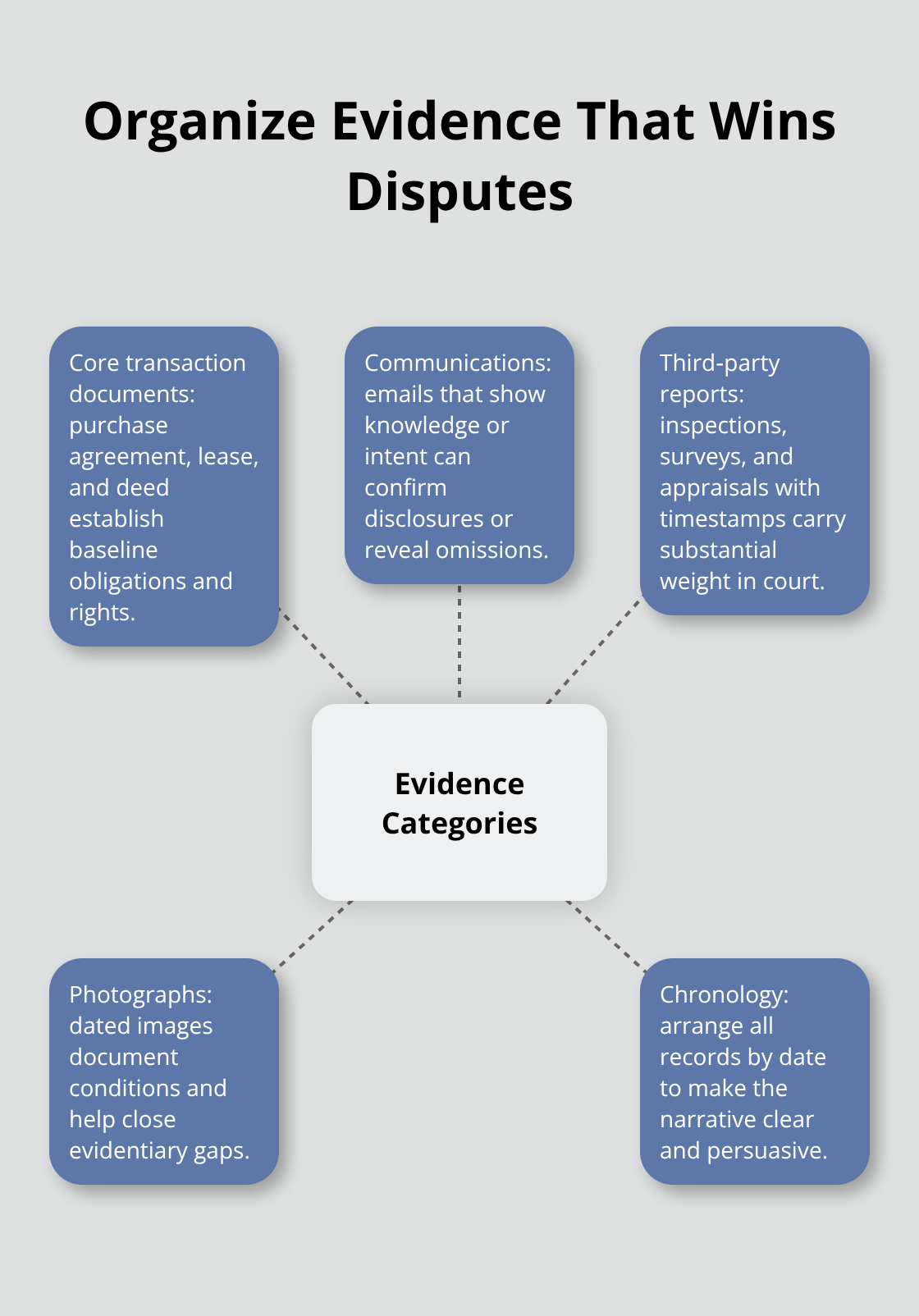
One contract dispute pattern we see regularly involves buyers claiming sellers hid defects, but when emails show the buyer conducted their own inspection and received a professional report detailing existing conditions, the buyer’s position collapses. Organize documents chronologically and separate them by category: the core transaction documents (purchase agreement, lease, deed), communications showing knowledge or intent, third-party reports (inspections, surveys, appraisals), and photographic evidence.
Leverage Professional Reports as Evidence
California Civil Code Section 1102 requires sellers to disclose known defects in writing, so any written disclosure or lack thereof becomes critical evidence. Licensed surveyors and home inspectors produce reports with timestamps and professional credentials that carry substantial weight in court. If you face a boundary dispute or construction defect claim, obtain these reports early and preserve them carefully. Start this process immediately because memories fade and documents disappear.
Understand Your Contractual Position
Read your purchase agreement or lease word-for-word and identify which party bears responsibility for specific conditions, repairs, or contingencies. Real estate contracts contain layers of obligation that most property owners never fully comprehend until disputes arise. California law recognizes remedies beyond monetary damages, including specific performance that forces the other party to complete a sale or lease closing, and contract rescission that unwinds the transaction entirely (California Civil Code Sections 3384–3395). These equitable remedies often prove more valuable than collecting money damages years after trial.
Consult Counsel Before Responding to Demands
An attorney reviews your contract’s specific language, identifies your strongest claims and weaknesses, and advises whether settlement, mediation, or litigation serves your financial interests best. Most property owners underestimate their legal position or overestimate it based on incomplete analysis, which leads to poor settlement decisions or unrealistic litigation expectations. Experienced counsel also identifies procedural requirements that vary by claim type-boundary disputes require surveys, title claims require title searches and quiet title actions, and construction defect claims require expert engineering reports. Missing these procedural steps wastes time and money later.
Identify Procedural Requirements Early
Each dispute category carries specific procedural demands that shape your evidence-gathering strategy. Title disputes require thorough title searches and potentially quiet title actions to clear ownership clouds. Boundary conflicts demand licensed land surveys that establish the factual foundation courts need to render fair decisions. Construction defect claims require expert engineering reports that document the scope and cause of defects. Addressing these requirements upfront prevents costly delays and strengthens your position in settlement negotiations or trial.
Final Thoughts
Property disputes in Orange County demand decisive action and strategic planning. The real estate litigation strategies outlined in this guide reflect patterns we see repeatedly in our practice: early negotiation prevents costly court battles, mediation resolves most disputes faster than litigation, and thorough documentation controls outcomes when settlement fails. Contract breaches, boundary conflicts, and title defects follow predictable paths once you understand the procedural requirements and your contractual position.
The difference between property owners who protect their financial interests and those who suffer unnecessary losses comes down to timing and representation. Waiting months before consulting counsel allows evidence to disappear, memories to fade, and procedural deadlines to pass. Attempting to negotiate without understanding your legal position leaves money on the table, while filing suit without exhausting settlement options wastes $50,000 to $150,000 in attorney fees that could have resolved the dispute through mediation.
Professional representation matters because experienced counsel identifies your strongest claims, evaluates settlement proposals against realistic trial outcomes, and navigates procedural requirements that vary by dispute type. We at Raul Garcia Law Firm represent businesses, owners, and professionals in complex commercial and real estate disputes across Orange County, combining practical business insight with aggressive negotiation or courtroom representation to protect your financial interests and minimize operational disruption. Contact Raul Garcia Law Firm for a confidential consultation to discuss your specific dispute, evaluate your legal position, and determine whether negotiation, mediation, or litigation serves your interests best.